
Main Courses
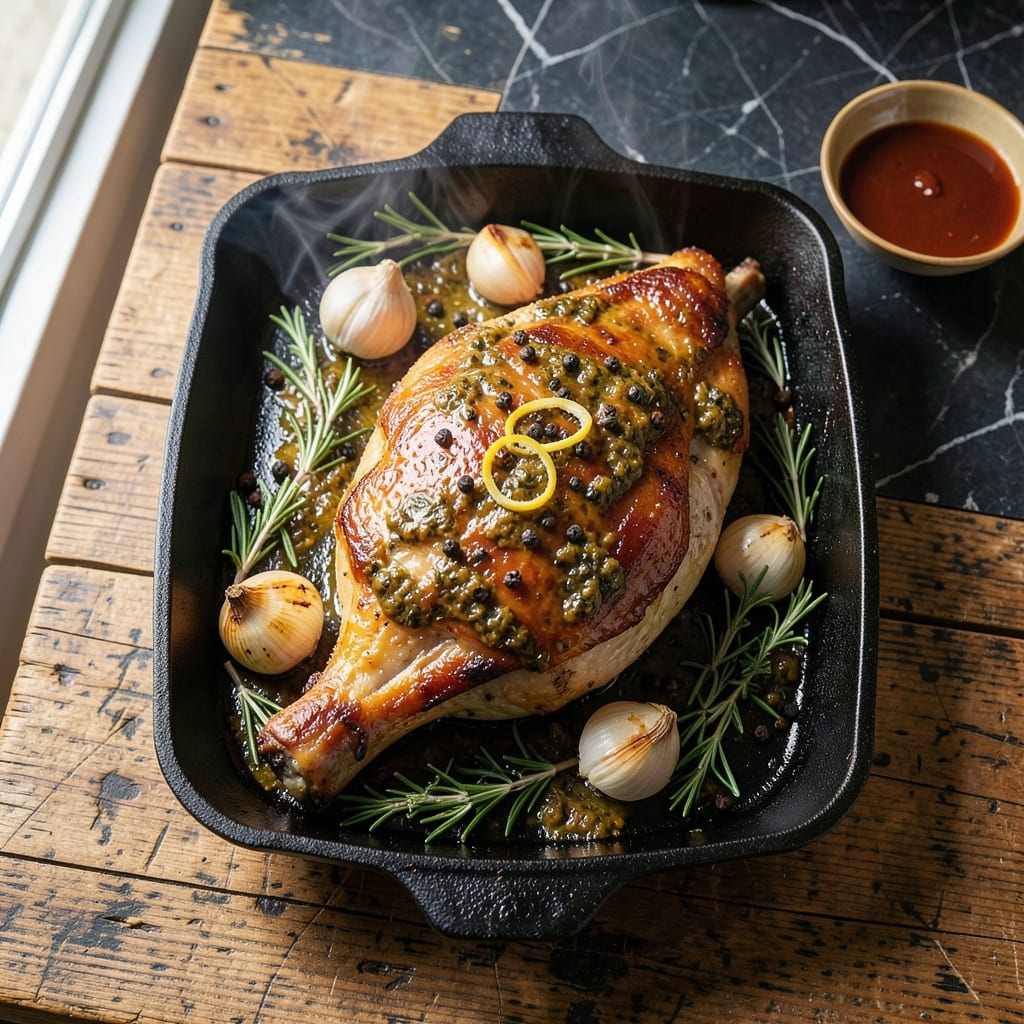
This pork leg shank roast recipe delivers slow-cooked succulence with a crisp herb crust. Growing up in Georgia, I learned that patience transforms tough cuts into tender masterpieces.
The secret lies in low, steady heat that breaks down connective tissue while a rub of fresh herbs and garlic creates an aromatic crust. My years at The Smoky Pig taught me that 275°F is the sweet spot for even cooking.
What emerges is fall-off-the-bone meat with a golden crust, rich with herbaceous notes. The collagen renders into gelatin, basting the meat from within as it roasts.
Serve with roasted root vegetables to soak up the pan juices. This method never fails to impress at Sunday suppers.
Ingredients for pork leg shank roast
Nothing exotic here—just good stuff for a Sunday supper showstopper.
| Ingredient | Amount | Notes |
|---|---|---|
| Pork Leg Shank 🍖 | 4 lb | Bone-in, skin-on preferred |
| Kosher Salt 🧂 | 2 tbsp | Diamond Crystal brand preferred |
| Black Pepper 🌶️ | 1 tbsp | Freshly ground coarse |
| Fresh Rosemary 🌿 | 2 tbsp | Finely chopped, stems removed |
| Fresh Thyme 🍃 | 2 tbsp | Finely chopped, stems removed |
| Garlic Cloves 🧄 | 8 cloves | Minced for herb crust |
| Olive Oil 🫒 | ¼ cup | Extra-virgin for richness |
| Carrots 🥕 | 3 whole | Peeled, cut into chunks |
| Celery Stalks 🌱 | 3 whole | Cut into large pieces |
| Yellow Onion 🧅 | 1 whole | Quartered with skin on |
| Chicken Stock 🥣 | 2 cups | Low-sodium preferred |
| Dijon Mustard 🟡 | 2 tbsp | For crust binding |
| Dry White Wine 🍷 | ½ cup | For deglazing pan |
The pork leg shank is the star. Bone-in, skin-on gives you that fall-apart texture and crispy finish. Look for pieces with even marbling at Whole Foods or your local butcher—they’ll often cut it to order. I learned at The Smoky Pig that 4 pounds feeds a hungry crowd with leftovers. Don’t trim the fat cap; it renders down beautifully as it roasts.
Short on fresh herbs? Dried at one-third the amount works, but fresh really shines here. No white wine? Apple cider vinegar plus water mimics the acidity. The Dijon can be swapped for whole-grain mustard (same amount). If you’re out of chicken stock, vegetable stock with a bouillon cube does the trick—just watch the salt.
This keeps 4-5 days in the fridge, and the flavors just get deeper. Freezes beautifully for 3 months if you’ve got leftovers (you won’t). Reheat gently in the oven with a splash of stock to keep it moist.
Why You'll Love This Recipe
- I’ll be real: the sandwiches the next day might be even better than the original meal.
- Hands-Off Cooking: I just season, sear, and let the oven do the work—no babysitting required.
- Herb-Crusted Perfection: That rosemary and thyme crust forms the most ridiculous flavor explosion with every bite.
- Feeds a Crowd: One shank serves six, and honestly, it’s the only thing I make when the in-laws come over.
Step-by-step instructions for pork leg shank roast
Here's my foolproof method for fall-off-the-bone tender pork with a fragrant herb crust.
Prepare the Herb Crust and Season the Pork
In a small bowl, mix the 2 tbsp Fresh Rosemary, 2 tbsp Fresh Thyme, 8 cloves Garlic Cloves, 2 tbsp Kosher Salt, 1 tbsp Black Pepper, 2 tbsp Dijon Mustard, and 0.25 cup Olive Oil into a thick paste. This paste will form the flavor-packed crust that makes this dish special.
Rub this mixture all over the 4 lb Pork Leg Shank, making sure to get it into every nook and cranny. The mustard helps the herbs adhere while adding a subtle tang. Let the pork sit at room temperature for 30 minutes while you preheat the oven to 325°F.
Sear the Pork for Deep Flavor
Heat a large oven-safe pot or Dutch oven over medium-high heat. Once hot, add the pork leg shank and sear on all sides for 3-4 minutes per side until deeply browned. This searing step develops the Maillard reaction, creating complex flavors that will carry through the entire cooking process.
Don't rush this step—you want a good crust to form on all sides. If your pot isn't large enough to accommodate the shank comfortably, use two burners or sear in batches. Once browned, transfer the pork to a plate temporarily.
Build the Braising Liquid and Vegetables
In the same pot, add the 3 whole Carrots, 3 whole Celery Stalks, and 1 whole Yellow Onion. Cook for 5 minutes until the vegetables start to soften and develop some color. This builds a flavor base for the braising liquid.
Pour in the 0.5 cup Dry White Wine to deglaze the pot, scraping up all the browned bits from the bottom. Then add the 2 cups Chicken Stock. Return the pork to the pot, nestling it among the vegetables. The liquid should come about halfway up the shank.
Slow-Roast to Perfection
Cover the pot and transfer it to the preheated oven. Roast for 3 to 3.5 hours, turning the pork every 45 minutes to ensure even cooking. You'll know it's done when the meat pulls away from the bone easily and reaches an internal temperature of 195-200°F.
The house will smell incredible as the herbs and pork render together. Check occasionally to make sure the liquid hasn't evaporated completely—if it's getting low, add a splash of water or stock.
Rest and Serve with Pan Juices
Carefully remove the pork from the pot and transfer to a cutting board. Let it rest for 15-20 minutes before serving—this allows the juices to redistribute for maximum tenderness. The pork should be so tender that it falls apart with just a nudge from your fork.
While the pork rests, strain the cooking liquid and skim off any excess fat. Serve the pork with the reduced pan juices spooned over the top, accompanied by the braised vegetables. The meat should be moist, flavorful, and melt-in-your-mouth tender with a beautiful herb crust.
Pro Tips For Making Pork Leg Shank Roast
- Score the Skin: Use a sharp knife to make shallow cuts in the pork skin before seasoning—this helps the fat render out and gives you that crispy finish. I learned this the hard way after ending up with chewy skin on my first few attempts.
- Salt Overnight: Dry-brine the shank with kosher salt at least 12 hours ahead. Sounds weird, but it works: the meat stays juicier and the seasoning goes deeper than a last-minute sprinkle.
- Resist High Heat: Start at 325°F and keep it low and slow—cranking the oven too high dries out the meat before the collagen breaks down. After burning one batch to a crisp, I finally figured out patience wins here.
- Herb Under Skin: Lift the skin and tuck fresh rosemary and thyme directly against the meat before roasting. This isn’t the prettiest method, but it’s the tastiest—way more flavor than just scattering herbs on top.
Best sauces and condiments for this pork leg shank roast
Herb-Infused Jus
Strain the cooking liquid from your roast and reduce it on the stove for 10-15 minutes until it coats the back of a spoon. I add 1 tsp fresh thyme and 1 tbsp butter at the end for silkiness. Drizzle this over each serving. 💫
Apple-Cider Glaze
Simmer 1 cup apple cider, 2 tbsp apple cider vinegar, and 1 tbsp brown sugar until syrupy—about 8-10 minutes. This Georgia classic adds a sweet-tangy contrast to the rich pork. I learned this from my grandmother’s kitchen.
Whole-Grain Mustard Sauce
Whisk 3 tbsp whole-grain mustard, 1 tbsp honey, and 2 tsp lemon juice with ¼ cup mayonnaise. The mustard echoes the crust while adding creaminess. Perfect for dipping or drizzling.
Chimichurri Variation
Blend 1 cup parsley, 3 garlic cloves, ¼ cup olive oil, 2 tbsp red wine vinegar, and ½ tsp red pepper flakes. This bright, herby sauce cuts through the richness beautifully. A nod to my Charleston days. 🌿
Spicy BBQ Mop
Combine ½ cup BBQ sauce (I use Sticky Fingers brand), 1 tbsp hot sauce, and 1 tsp smoked paprika. Brush this on during the last 30 minutes of roasting for a smoky kick. Works great with my vintage cast iron.
Creamy Horseradish
Mix ½ cup sour cream, 2 tbsp prepared horseradish, and 1 tsp Worcestershire sauce. This adds a bold, creamy punch that pairs perfectly with the tender meat. Serve chilled for contrast.
Nutrition facts
Frequently asked questions
Do I need to remove the skin before cooking?
No, keep the skin on for a crispy finish. It helps render fat and create a flavorful crust. Score it lightly if you want extra crispiness.
Can I use a slow cooker instead of an oven?
Yes, cook on low for 8-10 hours or high for 5-6 hours. Add 1 cup extra liquid since slow cookers don’t reduce as much.
Why does the recipe call for such a high internal temperature?
The 195-200°F range breaks down collagen in tough cuts, making it fork-tender. Lower temps won’t achieve the same melt-in-your-mouth texture.
How do I prevent the herb crust from burning?
Cover the pot for most of the cooking time, then uncover for the last 30 minutes to crisp the crust. Tent with foil if it browns too quickly.