
Main Courses
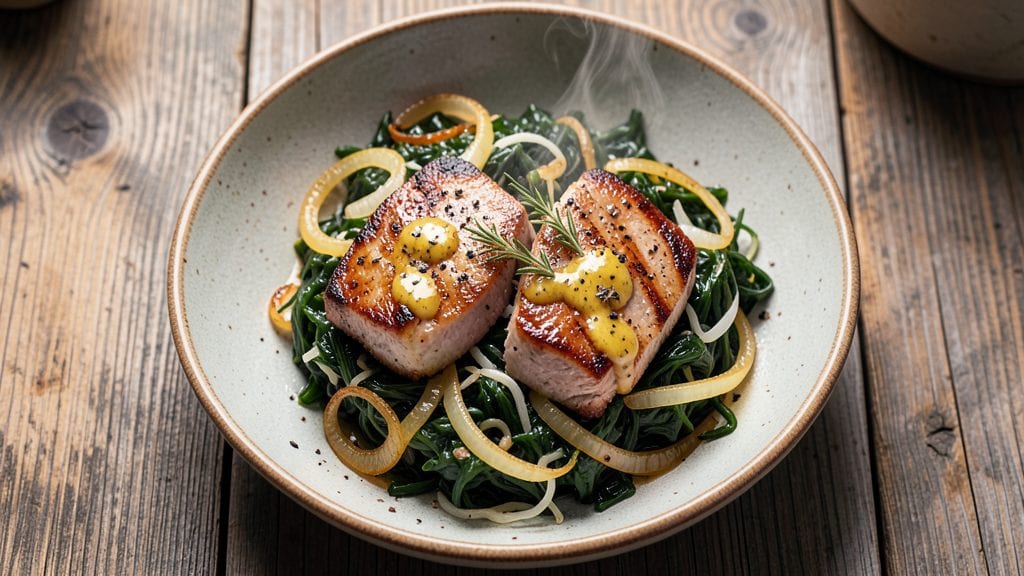
This pork loin chops and sauerkraut recipe delivers restaurant-worthy flavor with minimal effort, turning a weeknight dinner into a crispy-skinned masterpiece. This recipe combines tender, golden-brown pork with tangy, caramelized sauerkraut for a balance of textures and flavors that feels both comforting and refined.
Growing up in small-town Georgia, I learned that pork's versatility could elevate even the simplest sides into something special.
The secret to perfectly crispy pork loin chops lies in a high-heat sear and proper resting time—never skip this step. Meanwhile, the sauerkraut gets sautéed with onions and a touch of mustard to deepen its natural tanginess.
This method ensures the chops stay juicy while the sauerkraut develops a satisfying caramelized edge, creating a dish that's both hearty and nuanced.
By the time you plate these chops alongside the sauerkraut, you'll have a meal that's rich in flavor and texture. The crispy skin contrasts beautifully with the tender pork, while the sauerkraut adds a bright, tangy element that cuts through the richness.
Serve with mashed potatoes or a simple green salad to round out the dish.
This recipe is designed to be approachable yet impressive, making it perfect for both weeknight dinners and special occasions. The combination of techniques and ingredients ensures a dish that feels professional without requiring advanced skills. Let's get started on creating this perfect pairing.
Ingredients for pork loin chops and sauerkraut
Minimal ingredients deliver maximum restaurant-quality flavor in this pork loin chops and sauerkraut recipe.
| Ingredient | Amount | Notes |
|---|---|---|
| Pork Loin Chops 🐷 | 1 ½ lb | Bone-in, 1-inch thick |
| Large Yellow Onions 🧅 | 2 whole | Thinly sliced |
| Sauerkraut 🥬 | 2 cups | Undrained, high-quality |
| Unsalted Butter 🧈 | ½ cup | Full-fat, melted |
| Dijon Mustard 🍯 | 1 tbsp | Whole-grain preferred |
| Granulated Sugar 🍚 | 1 tbsp | For caramelization |
| Dried Thyme 🌿 | 1 tsp | Crushed leaves |
| Dried Rosemary 🌿 | 1 tsp | Fine leaves |
| Diamond Crystal Kosher Salt 🧂 | 1 ½ tsp | For seasoning |
| Freshly Ground Black Pepper 🌶️ | 1 tsp | Medium-coarse grind |
| Extra-Virgin Olive Oil 🫒 | ¼ cup | For searing |
| Apple Cider Vinegar 🍎 | 1 tbsp | For brightening |
The pork loin chops should be bone-in for optimal flavor and texture. Butcher shops often provide the best cuts, but high-quality grocery stores like Whole Foods or Kroger carry excellent selections. Look for chops with visible marbling—this ensures juiciness when cooked properly. The sauerkraut should be undrained and high-quality, like Brauhaus or Muir Glen brands, as the liquid adds depth to the dish. For the best results, avoid pre-shredded sauerkraut, which often contains preservatives that alter the natural tanginess.
Substitutions are possible but may affect the final texture. Dijon mustard can be replaced with whole-grain yellow mustard at a 1:1 ratio, though the flavor will be slightly milder. If you're unable to find whole-grain Dijon, regular Dijon mustard works but may lack the grainy texture. For the herbs, dried thyme and rosemary can be replaced with 1 tsp each of dried oregano and marjoram, though the flavor profile will differ. The apple cider vinegar can be omitted if desired, but it adds a bright, tangy contrast that enhances the dish’s complexity. Always use Diamond Crystal kosher salt for precise seasoning—it measures differently than table salt.
Store the pork loin chops in the refrigerator for up to 3 days before cooking, wrapped in a paper towel to absorb excess moisture. The sauerkraut can be refrigerated for up to 2 weeks in its original container. For optimal flavor, cook the chops within 24 hours of purchasing. The dish reheats beautifully, with the sauerkraut developing even more caramelization when warmed through. Serve immediately for the best texture, as the chops lose crispiness when left to sit. Portion the sauerkraut into airtight containers for 5 days of fridge storage, or freeze for up to 3 months for extended use.
Why You'll Love This Recipe
- No-Pan-Worry Night: That crispy-skinned pork searing in olive oil takes just 7 minutes total—no fancy techniques, just medium-high heat and a little patience. Between the resting time for the chops and the onions caramelizing, it’s honestly the kind of meal where you can pour yourself a glass of wine and not feel guilty about it.
- Tangy-Sweet Harmony: The sauerkraut gets a little magic here—melted butter, a splash of apple cider vinegar, and just enough sugar to turn that tang into something addictive. Pair that with the buttery, peppery pork? Chef’s kiss. My kids still beg for seconds, even though they think they hate sauerkraut.
- Leftovers That Shine: If you’ve got a crowd or just want to save money, this is your meal. The pork chops keep for 3 days in the fridge, and the sauerkraut lasts two whole weeks—so you can stretch this into breakfast (scrambled eggs with sauerkraut!) or lunch the next day without missing a beat.
- Budget-Friendly Luxe: Bone-in pork loin chops are cheaper than you think, especially when you’re using pantry staples like onions, butter, and sauerkraut. The whole-grain Dijon mustard adds a fancy touch, but honestly? The caramelized onions and buttery sauerkraut make this feel like a restaurant dish without the price tag.
Step-by-step instructions for pork loin chops with sauerkraut
Here's the method to achieve perfectly crispy-skinned pork chops balanced with tangy-sweet sauerkraut.
Season and Sear the Pork Loin Chops
Pat the 1½ lb pork loin chops dry with paper towels—this is critical for achieving crispy skin. In a small bowl, combine the 1½ tsp diamond crystal kosher salt, 1 tsp freshly ground black pepper, 1 tsp dried thyme, and 1 tsp dried rosemary. Rub this seasoning mixture evenly over both sides of each chop, pressing gently so the spices adhere.
Heat a large skillet over medium-high heat until it's just smoking hot. Add the ¼ cup extra-virgin olive oil and swirl to coat the pan. Place the seasoned chops in the skillet and let them sear undisturbed for 3-4 minutes per side, until they develop a deep golden-brown crust. Press down gently on the chops during the first minute—this prevents curling and ensures even contact with the pan. The internal temperature should reach 145°F when measured with a meat thermometer.
Caramelize the Onions and Prepare the Sauerkraut
While the chops rest for 5 minutes, reduce the heat to medium and add the 2 large yellow onions, sliced thinly, to the same skillet. Cook for 8-10 minutes, stirring occasionally, until the onions soften and begin to caramelize at the edges. This process adds natural sweetness that complements the tangy sauerkraut.
In a separate medium skillet, melt the ½ cup unsalted butter over medium heat. Add the 2 cups sauerkraut (undrained) and stir in the 1 tbsp granulated sugar and 1 tbsp apple cider vinegar. Cook for 5-7 minutes until the sauerkraut is heated through and the sugar has slightly caramelized, intensifying the tangy-sweet flavor profile. Remove from heat and stir in the 1 tbsp Dijon mustard, reserving this mixture for later.
Finish the Chops and Combine with Sauerkraut
Return the rested chops to the skillet with the caramelized onions. Increase the heat to medium-high and spoon the melted butter from the sauerkraut mixture over the chops, basting them for 1-2 minutes until the butter is fully incorporated and the chops glisten. The residual heat will gently reheat the chops while infusing them with the rich, buttery flavor.
Transfer the chops to a serving platter and spoon the sauerkraut mixture alongside, ensuring each serving gets a generous portion of both the crispy-skinned pork and the tangy-sweet sauerkraut. The contrast between the crispy exterior of the chops and the fermented tang of the sauerkraut creates a perfect balance of textures and flavors. Serve immediately while the chops are still warm and the skin remains crisp.
Pro Tips For Making Pork Loin Chops And Sauerkraut
- Press for Flatness: That first minute of searing is when pork chops make or break their crust. Press down firmly with a spatula—just enough to keep them flat against the pan. I used to skip this and end up with curled, uneven edges that never got crispy. A little pressure = even browning every time.
- Slice Onions Thin: Thinly sliced onions caramelize faster and sweeter than thick rounds. Grab a sharp knife and slice them paper-thin—almost translucent—so they soften in 8-10 minutes instead of turning mushy. Thick slices mean sad, watery onions. Trust the process.
- Don’t Skip the Rest: Those 5 minutes of resting while the onions caramelize aren’t optional. The chops need time to retain juices, or you’ll end up with dry meat. Tent with foil if you’re nervous about them cooling too much—just don’t let them sit longer than 10 minutes total.
- Butter the Sauerkraut Early: Melt that ½ cup unsalted butter before adding the sauerkraut and sugar. The butter coats the kraut better this way, and the sugar dissolves more evenly into the liquid. I learned this after a batch where the sugar clumped like sand—now it’s silky and caramelized every time.
Storing and reheating this pork loin chops and sauerkraut
Refrigerator Storage
After cooking, let your pork loin chops rest for 5 minutes before transferring them to an airtight container—I use Pyrex glass containers with snap-on lids. Store the chops with the sauerkraut in separate containers to maintain crispiness.
Keep both in the fridge at 40°F or below for up to 3 days. The sauerkraut keeps its tangy bite best when stored in its original container for 2 weeks. I always label containers with the date to track freshness. ❄️
Reheating the Chops
For best results, reheat the pork loin chops in a preheated 350°F oven for 10-12 minutes until they reach 140°F internally. This gentle heat preserves the crispy skin.
If using a skillet, heat on medium-low with 1 tbsp olive oil for 3-4 minutes per side—don't overcook, or the skin will turn rubbery. I always add a splash of water to prevent sticking.
Reviving the Sauerkraut
Reheat the sauerkraut in the same skillet used for cooking by adding 1 tbsp butter and 1 tsp sugar over medium heat for 3-4 minutes. Stir occasionally to prevent burning.
The residual caramelization enhances its flavor. For a quick option, microwave in 30-second intervals until heated through, but stir well between intervals to avoid uneven heating. 🔥
Freezing Considerations
While this dish doesn't freeze exceptionally well, you can freeze the cooked sauerkraut alone in quart-sized freezer bags for up to 3 months. Thaw overnight in the fridge before reheating.
For the chops, I recommend freezing them uncooked—pat dry, wrap tightly in plastic wrap and foil, and freeze for up to 3 months. Cook from frozen, adding 5-7 extra minutes to the searing time.
Serving Leftovers
When serving leftovers, I like to add a drizzle of apple cider vinegar (or a splash of lemon juice) to both the chops and sauerkraut to refresh the flavors. A sprinkle of fresh parsley adds a bright contrast.
Pair with mashed potatoes or a simple salad to balance the dish. The crispiness of the chops holds up surprisingly well for 2-3 days if stored properly.
Nutrition facts
Frequently asked questions
Why is patting the pork loin chops dry so important?
Drying the chops thoroughly before searing creates a perfect crust. The moisture on the surface would steam instead of crisp up, leaving you with bland, soggy skin. This step is non-negotiable for that coveted golden-brown finish—trust me, it’s worth the extra minute!
Can I use store-bought sauerkraut instead of fresh?
High-quality store-bought sauerkraut works perfectly—just ensure it’s undrained and preferably in a glass jar. The liquid adds depth to the dish, but if yours is drained, add a splash of apple cider vinegar to mimic the tang. Avoid pre-shredded sauerkraut with preservatives for the best flavor.
What if my pork chops are too thick or thin?
Adjust the cooking time accordingly. For thicker chops (over 1-inch), add 1-2 extra minutes per side to reach 145°F. Thin chops (½-inch) cook in 2-3 minutes per side—just keep an eye on them to avoid overcooking. A meat thermometer is your best friend here!
How do I keep the sauerkraut from getting watery?
Drain excess liquid from the sauerkraut before cooking, but leave a little behind for flavor. Cook it over medium heat and stir occasionally to prevent burning. If it still looks watery, reduce the heat slightly—patience is key to avoiding a soggy side dish!