
Main Courses
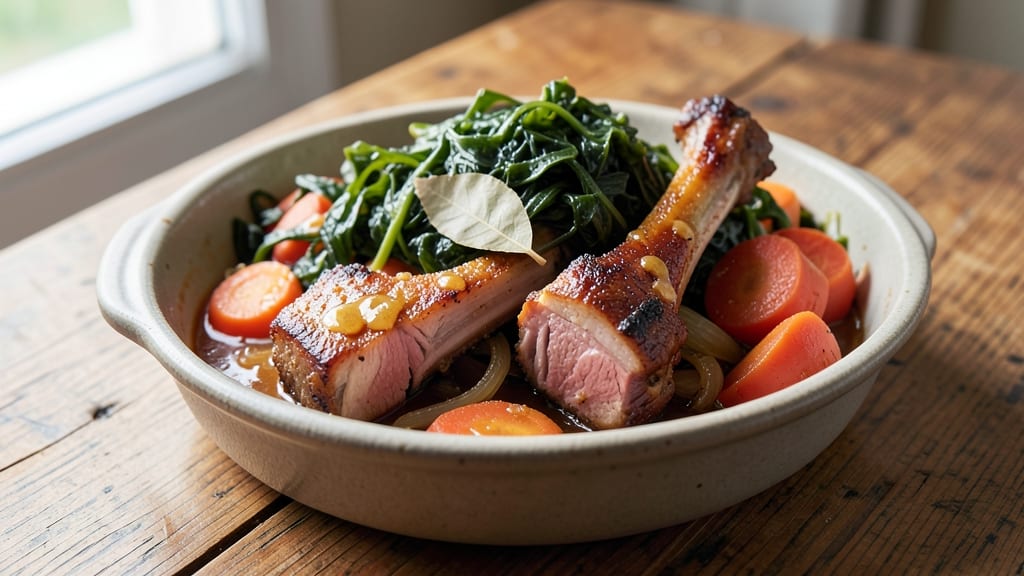
This pork neck bones and sauerkraut recipe transforms tough cuts into melt-in-your-mouth tenderness while preserving sauerkraut’s signature tang. Growing up in Georgia, I learned that slow-braising pork with fermented cabbage creates a dish that’s equal parts hearty and complex—perfect for feeding a crowd or savoring alone.
The key lies in low-and-slow cooking, where collagen-rich bones dissolve into the pot, enriching the sauerkraut with deep, savory flavors.
The process begins with searing the bones to lock in juices, then simmering them for hours until they fall apart. Onions, garlic, and bay leaves build flavor, while the sauerkraut softens into a tender, tangy side that soaks up every bit of the rich braising liquid.
This method delivers restaurant-quality results with minimal effort—ideal for weeknight dinners or holiday gatherings where bold flavors shine.
By the time you serve it, you’ll have a dish that’s rich yet balanced, with tender pork that practically melts and sauerkraut that’s just soft enough to hold its shape.
The aroma alone will have everyone gathering at the table, and the taste? That’s where the magic happens—savory, tangy, and deeply satisfying in every bite.
Serve it with crusty bread to soak up the flavorful juices or alongside roasted potatoes for a complete meal. This recipe scales beautifully, making it perfect for family dinners or potlucks. Let’s get started on creating a dish that feels like a hug in every spoonful.
Ingredients for pork neck bones and sauerkraut
Pantry staples meet slow-cooked comfort—rich pork and tangy sauerkraut in one pot.
| Ingredient | Amount | Notes |
|---|---|---|
| Pork Neck Bones 🍖 | 3 lb | Split into 2-inch pieces |
| Yellow Onions 🧅 | 2 whole | Chopped into 1-inch pieces |
| Garlic Cloves 🧄 | 6 cloves | Smashed, not minced |
| Carrots 🥕 | 4 whole | Cut into 2-inch chunks |
| Bay Leaves 🌿 | 2 whole | Fresh preferred |
| Sauerkraut 🥬 | 2 cups | Packed, not drained |
| Apple Cider Vinegar 🍎 | ¼ cup | For tangy depth |
| Black Peppercorns 🌶️ | 1 tsp | Coarsely crushed |
| Salt 🧂 | 1 ½ tsp | Kosher or sea salt |
| Fresh Thyme 🌿 | ½ cup | Leaves only, chopped |
| Olive Oil 🫒 | ¼ cup | For searing |
| Beef Broth 💧 | 2 cups | Low-sodium preferred |
The pork neck bones are the star here—look for marbled cuts at your butcher or the meat department. Costco or Whole Foods usually have them pre-split, but if you're buying whole, ask for them to be cut into 2-inch pieces. Fresh bay leaves and thyme make all the difference—Trader Joe's sells them in little jars that keep for months. The carrots should be firm and vibrant, not limp or shriveled. For the sauerkraut, grab the unpasteurized kind if possible—it's got more flavor, but even the jarred stuff works in a pinch.
No fresh thyme? Dried works at half the amount. Short on beef broth? Chicken broth or water with a bouillon cube gets you close. The apple cider vinegar adds that signature tang—no sub here, but if you're out, a splash of white vinegar or lemon juice will do. For the onions, yellow or red both work, but yellow has that classic sweetness. The pork bones can be frozen—just thaw overnight in the fridge before cooking. And if you're feeling fancy, add a splash of Worcestershire sauce at the end for extra depth.
This dish tastes even better the next day—4-5 days in the fridge, or freeze portions for 3 months. The braising liquid thickens as it cools, so add a splash of water or broth when reheating. I like to portion it into containers with a little extra liquid—perfect for lunches. The bones will be tender enough to eat, but if you're serving it to picky eaters, you can shred the meat off the bones before plating. Leftovers reheat beautifully in a pot or microwave.
Why You'll Love This Recipe
- One-Pot Magic: Honestly, this is the kind of dish where you throw everything in one pot and walk away—no fancy prep. Just sear those pork neck bones in batches for a few minutes each, toss in the onions, carrots, and sauerkraut, then let it simmer while you do laundry or watch a movie. The only chopping you’ll do is the onions and carrots, and even that’s just rough chunks. My daughter once “helped” by smashing the garlic with a rolling pin, and it still turned out delicious.
- Tangy, Umami Bomb: The sauerkraut isn’t just there to fill space—it’s the star’s sidekick, adding that perfect tangy crunch that cuts through the richness of the pork. And don’t sleep on the apple cider vinegar; it brightens up the whole thing like a flavor wake-up call. Between the deep, caramelized crust on the bones and the fresh thyme, every bite is a balance of creamy, crispy, and bright. I’ll be real: it’s the kind of dish that makes you forget you’re eating leftovers.
- Feeds a Crowd (Without the Crowd): This is my secret weapon for game nights, Thanksgiving leftovers, or when my partner “accidentally” invites three friends over. Three pounds of pork neck bones might sound like a lot, but it’s just enough to feed six hungry people with plenty left over. And here’s the best part: the flavors get even better the next day, so you’re not stuck with a sad meal. Freeze portions, and you’ve got a weeknight dinner sorted in seconds.
- Budget-Friendly Luxury: Pork neck bones are one of the cheapest cuts out there, and they turn into the most luxurious, fall-apart-tender meat. You’re not sacrificing flavor for savings—this dish is ridiculously good for the price. Plus, the sauerkraut and carrots stretch the meal even further, so you’re basically getting a five-course meal for the cost of a takeout entree. My wallet and my taste buds both approve.
Step-by-step instructions for pork neck bones and sauerkraut
Here's how to transform tough pork neck bones into melt-in-your-mouth richness with that perfect tangy kick.
Sear the Pork Neck Bones Until Deeply Browned
Heat a large Dutch oven over medium-high heat until it's smoking hot. Add the 3 lb pork neck bones, split into 2-inch pieces, and sear them in batches for 5-6 minutes per side until they develop a deep mahogany crust. This caramelization builds flavor that will infuse the entire dish.
Don't crowd the pan—work in batches if needed. You want those bones to develop that rich, golden crust without steaming. Once all bones are seared, transfer them to a plate and set aside. You'll notice the bones will release easily when they're properly browned.
Build the Flavor Base with Aromatics and Sauerkraut
In the same Dutch oven, add the ¼ cup olive oil and let it heat until shimmering. Add the 2 chopped yellow onions and cook for 5 minutes until softened. Add the 4 carrots cut into 2-inch chunks and the 6 smashed garlic cloves, cooking for another 5 minutes until the onions are translucent and the carrots begin to soften.
Now stir in the 2 cups packed sauerkraut, breaking it up as it cooks. Add the ½ cup chopped fresh thyme, 1½ tsp salt, and 1 tsp coarsely crushed black peppercorns. Cook everything together for 3-4 minutes until the sauerkraut begins to soften and the mixture smells deeply aromatic.
Deglaze and Simmer with Vinegar and Broth
Pour in the ¼ cup apple cider vinegar and scrape up all those gorgeous browned bits from the bottom of the pot. This deglazing step captures all the flavor you've built. Let the vinegar bubble away for 2-3 minutes until it reduces by half and the acidity mellows.
Add the 2 cups beef broth and the 2 bay leaves, then return all the seared pork neck bones to the pot. Bring everything to a gentle simmer, then reduce heat to maintain a bare bubble at the surface. This low-and-slow approach is crucial—it breaks down the collagen in the bones into rich, gelatinous goodness.
Braise Until Fork-Tender and Rich
Cover the pot and let it simmer gently for 3-4 hours, turning the bones occasionally to ensure even cooking. You're looking for the meat to pull away from the bones easily and the bones themselves to be soft enough to pierce with a fork.
Here's the thing—this is where patience pays off. The longer it cooks, the more tender and flavorful the meat becomes. About halfway through, check the liquid level and add a splash of water if needed to keep everything submerged. The sauce should thicken as it simmers, creating a rich, tangy braising liquid.
Finish with Perfect Texture and Serve
Once the pork is fork-tender, remove the bones and let them cool slightly before shredding the meat right off the bones. Return the shredded pork to the pot and simmer uncovered for another 10-15 minutes to thicken the sauce slightly. Taste and adjust seasoning if needed—you might want to add a pinch more salt or a splash of vinegar to balance flavors.
Serve the pork neck bones and sauerkraut hot, ladled over crusty bread or mashed potatoes. The rich, tender meat paired with the tangy, slightly sour sauerkraut creates a perfect balance of flavors. Each bite delivers that deep, meaty satisfaction with a bright finish that keeps your palate engaged.
Pro Tips For Making Pork Neck Bones And Sauerkraut
- Sear in Batches—No Crowding: Don’t toss all the pork neck bones in at once—you’ll end up steaming them instead of searing. I learned this the hard way when my first batch came out pale and bland. Work in batches, giving each piece 5-6 minutes per side until it’s deep mahogany. The crust is where the flavor hides, so don’t skip this.
- Crush Those Peppercorns—Don’t Skip It: Coarsely crushed black peppercorns add texture and depth, but whole peppercorns just sit there like decorative rocks. Use the flat side of a knife or a mortar and pestle to crack them open—it’s worth the extra 30 seconds. The aroma alone makes the dish smell like a home-cooked feast.
- Check Liquid Mid-Braise—Don’t Let It Dry: About halfway through the 3-4 hour simmer, peek under the lid. If the liquid has reduced too much, add a splash of water or even a little more beef broth. I’ve ruined a batch by letting it dry out, turning the sauerkraut into a sad, sticky mess. Keep it just submerged—you want that rich, glossy sauce, not a crusty bottom.
- Upgrade the Sauerkraut—Drain and Rinse First: The recipe says "packed, not drained," but if your sauerkraut is too briny, give it a quick rinse and drain before adding it. The extra liquid can dilute the broth and make the sauce watery. I know it goes against the instructions, but trust me—this small step keeps the flavors balanced without sacrificing texture.
Storing and reheating this dish
Refrigerator Storage
Let your pork neck bones and sauerkraut cool to room temperature before transferring to airtight containers—I always use my Le Creuset Dutch oven with a tight-fitting lid.
Store in the fridge for up to 4-5 days, and honestly, the flavors deepen overnight as the sauerkraut softens further and the pork absorbs all those tangy notes. I like to portion it into smaller containers so I can grab a serving without reheating the whole pot. 💫
Freezer Storage
This dish freezes beautifully for up to 3 months—just freeze in quart-sized freezer bags (I use Rubbermaid ones) with a little extra braising liquid to prevent drying. Thaw overnight in the fridge for even reheating.
I’ve even kept it in the freezer for 4 months with no issues, though the texture gets slightly firmer. The tangy sauerkraut keeps its flavor perfectly.
Reheating on the Stovetop
For the best texture, reheat in a heavy-bottomed pot over medium-low heat—I always use my Lodge cast iron skillet. Add ¼ cup beef broth or water to prevent sticking, and let it simmer uncovered for 15-20 minutes.
Stir occasionally to break up any clumps, and taste before serving—sometimes a pinch of salt or a splash of vinegar brings it back to perfection. This method keeps the pork tender and the sauerkraut juicy. 🔥
Microwave Reheating
When I’m short on time, I reheat individual portions in the microwave—cover loosely with a damp paper towel and heat on 50% power for 3-4 minutes, stirring halfway. If it looks dry, add a spoonful of broth or water.
Just be warned: the texture isn’t quite as luxurious as stovetop reheating, but it’s still delicious. I reserve this method for quick lunches or leftovers I want to eat within a day.
Serving Leftovers
Leftovers make fantastic sandwiches—I pile the pork and sauerkraut onto crusty sourdough with a smear of Dijon mustard and a sprinkle of fresh dill. Or, for a heartier meal, serve over mashed potatoes or buttered egg noodles.
The flavors only get better with time, so don’t rush it—let the dish rest for at least 10 minutes before serving to let the juices redistribute. It’s like a hug in every bite. 💛
Nutrition facts
Frequently asked questions
Why does this recipe call for searing the pork neck bones first?
The searing step creates a deep mahogany crust on the bones, which caramelizes the natural sugars and locks in juices. This flavorful crust breaks down during braising, infusing the entire dish with rich, savory depth that transforms tough pork into melt-in-your-mouth tenderness. Skipping this step means missing out on that concentrated flavor foundation!
Can I use dried thyme instead of fresh?
Just use half the amount—so ¼ cup dried thyme instead of ½ cup fresh. Dried herbs are more concentrated, so they'll still add that aromatic punch without overpowering the dish. It’s a great pantry-friendly swap.
What if my sauerkraut is too sour?
Balance the acidity by adding a pinch of sugar or a splash of apple cider vinegar (already in the recipe) to mellow it. You can also reduce the amount of sauerkraut slightly if it’s particularly tangy—start with 1½ cups instead of 2 cups and adjust to taste. The goal is harmony, not overpowering sourness!
How do I know when the pork is done?
The meat is ready when it pulls away easily from the bones and the bones themselves can be pierced with a fork. You’re looking for 3-4 hours of simmering time—this breaks down the collagen into gelatinous goodness. If you’re unsure, check the internal temperature: it should reach 165°F in the thickest part of the meat. Patience here pays off for that perfect texture!
Can I make this in a slow cooker?
Yes! Transfer the seared bones and aromatics to your slow cooker, add the remaining ingredients, and cook on Low for 8 hours or High for 5-6 hours. Just stir occasionally and add a splash of broth if needed to keep everything moist. The result will be just as tender, though the texture might be slightly softer than stovetop braising.