
Main Courses
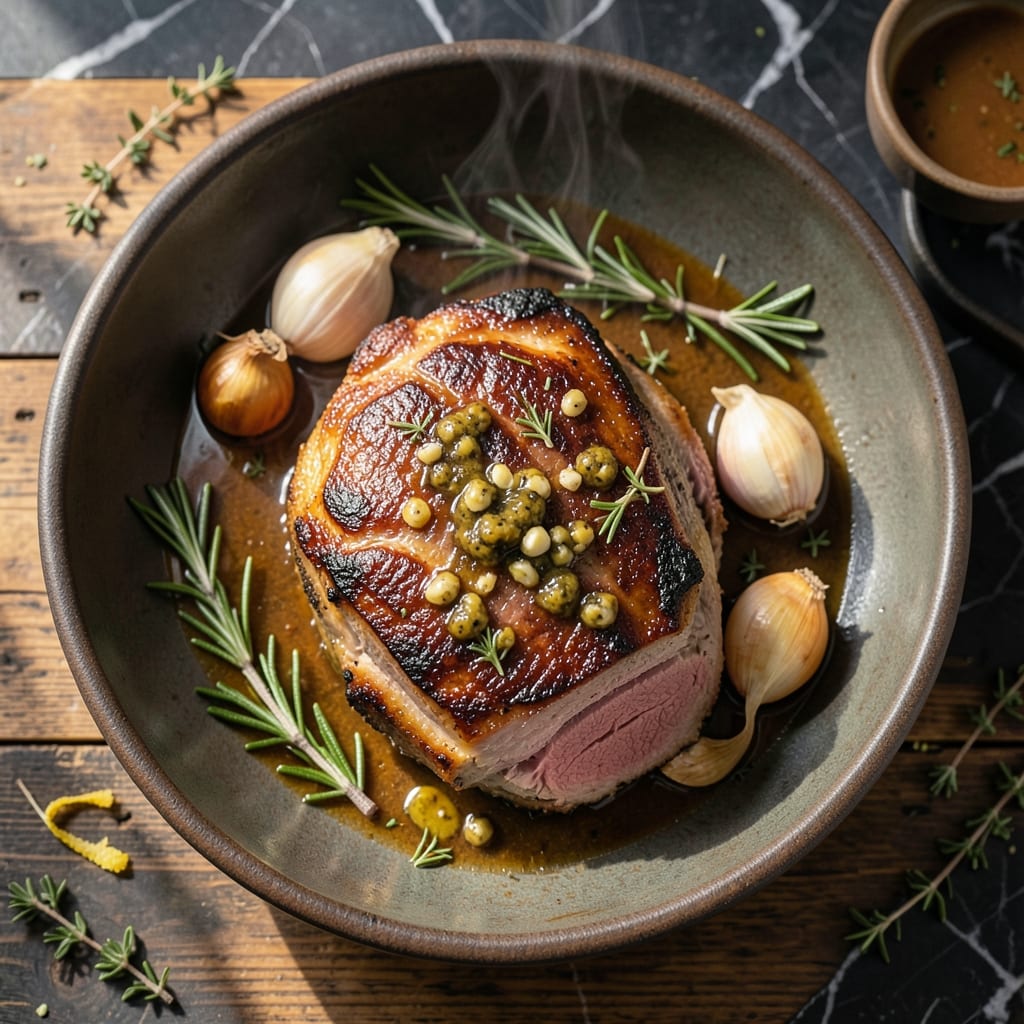
This pork porterhouse roast recipe delivers bone-in juiciness with every bite. Growing up in Georgia, I learned that pork should always be the star of the table.
The herb rub enhances the natural flavors without overpowering them. A simple blend of rosemary, thyme, and garlic creates a crust that seals in moisture.
Roasting at 375°F ensures tender meat with a caramelized exterior. The bone adds depth to the flavor profile, making each slice rich and satisfying.
Serve with roasted vegetables or mashed potatoes for a complete meal. This dish proves that great cooking starts with quality ingredients and precise technique.
Ingredients for pork porterhouse roast
Quality pork, fresh herbs, and a few pantry staples create this centerpiece dish.
| Ingredient | Amount | Notes |
|---|---|---|
| Pork Porterhouse Roast 🥩 | 3 lb | Bone-in, center-cut preferred |
| Fresh Rosemary 🌿 | 2 tbsp | Finely chopped, stems discarded |
| Fresh Thyme Leaves 🍃 | 2 tbsp | Stripped from stems |
| Garlic Cloves 🧄 | 6 cloves | Minced for maximum flavor |
| Olive Oil 🫒 | 3 tbsp | Extra-virgin for richness |
| Kosher Salt 🧂 | 2 tsp | Diamond Crystal preferred |
| Coarse Black Pepper 🌶️ | 1 ½ tsp | Freshly ground for best texture |
| Dijon Mustard 🟡 | 2 tbsp | For herb rub binding |
| Yellow Onion 🧅 | 1 whole | Large, quartered for roasting |
| Carrots 🥕 | 3 whole | Peeled, cut into chunks |
| Russet Potatoes 🥔 | 2 whole | Peeled, cut into wedges |
| Chicken Stock 🍲 | 1 cup | Low-sodium preferred for balance |
| Unsalted Butter 🧈 | 2 tbsp | For finishing sauce |
The pork porterhouse must have the bone in—it’s non-negotiable for flavor and moisture. Ask your butcher for a center-cut piece about 3 inches thick. Whole Foods or a local butcher shop will have the best selection. Look for good marbling and a bright pink color. The herb rub relies on fresh rosemary and thyme—dried simply won’t deliver the same aromatic punch. If you’re using store-bought, Trader Joe’s has reliable quality.
No fresh herbs? Use one-third the amount of dried, but the flavor profile will be less vibrant. Swap Dijon for whole-grain mustard if that’s what you have. The chicken stock can be vegetable stock in a pinch, though pork stock would be ideal. For the vegetables, any root veggies work—parsnips or sweet potatoes are great alternatives to carrots and potatoes. Just keep the chunks uniform for even cooking.
The roast can rest at room temperature for up to 2 hours before cooking. Leftovers keep 4-5 days in the fridge or freeze for 3 months. Reheat gently in a low oven to preserve moisture—microwaving will dry it out.
Why You'll Love This Recipe
- Set and Forget: I rub the pork with olive oil, garlic, rosemary and thyme, pop it in the oven, and walk away—no babysitting required.
- Herb-Crusted Heaven: The fresh rosemary and thyme form this insane crust with the garlic that makes every bite ridicuously good.
- Sunday or Tuesday: Honestly, it’s just as at home at a dinner party as it is on a random weeknight with the family.
- Leftovers for Days: One roast means sandwiches, tacos, or fried rice for the next three meals—my kind of meal prep.
Step-by-step instructions for pork porterhouse roast
Master the technique for a perfectly seared crust and tender, juicy interior every time.
Prepare the Herb Rub and Season the Roast
In a small bowl, combine the 2 tbsp fresh rosemary, 2 tbsp fresh thyme leaves, 6 cloves minced garlic, 2 tsp kosher salt, 1.5 tsp coarse black pepper, 2 tbsp Dijon mustard, and 3 tbsp olive oil. Stir until it forms a thick, fragrant paste that clings to the back of a spoon.
Pat the 3 lb pork porterhouse roast dry with paper towels—this ensures the rub adheres properly and promotes even browning. Massage the herb mixture all over the surface of the roast, pressing it into the crevices and along the bone. Let it rest at room temperature for 30 minutes to allow the flavors to penetrate.
Sear the Roast for a Flavorful Crust
Preheat your oven to 400°F. While it heats, place a large oven-safe roasting pan or Dutch oven over medium-high heat. Add the seasoned roast and sear for 2-3 minutes per side until deeply browned. The bone-in center will help conduct heat evenly.
You’ll know it’s ready to flip when it releases easily from the pan and develops a rich, golden crust. Don’t rush this step—it builds the foundation of flavor for the entire dish. Transfer the seared roast to a plate temporarily.
Roast with Vegetables for Even Cooking
Add the 1 whole quartered yellow onion, 3 whole peeled carrots (cut into chunks), and 2 whole peeled russet potatoes (cut into wedges) to the same pan. Place the seared roast on top of the vegetables, bone-side down. Pour the 1 cup chicken stock into the pan, taking care not to wash off the rub.
Transfer the pan to the preheated oven and roast uncovered for 45-60 minutes, or until an instant-read thermometer inserted into the thickest part of the meat registers 145°F. The vegetables will absorb the rendering juices, creating a flavorful base for the pan sauce.
Rest and Prepare the Pan Sauce
Remove the roast from the oven and transfer it to a cutting board. Tent loosely with foil and let it rest for 15 minutes—this allows the juices to redistribute. The internal temperature will rise to 150-155°F during resting, ensuring perfect doneness.
Place the pan with vegetables over medium heat on the stovetop. Add the 2 tbsp unsalted butter and stir, scraping up any browned bits from the bottom. Simmer for 2-3 minutes until the liquid reduces slightly and thickens into a light sauce.
Slice and Serve
After resting, slice the roast between the bone and the loin, then cut both sections into ½-inch thick slices. Arrange the slices on a platter with the roasted vegetables, and spoon the pan sauce over the top.
Each serving should include a portion of the bone-in section for maximum flavor. Serve immediately while the meat is still warm and the sauce is glossy.
Pro Tips For Making Pork Porterhouse Roast
- Sear It Hot: Crank the heat to medium-high for the initial sear—I learned this the hard way after my first few roasts came out pale and sad. A screaming hot pan locks in the juices and gives that golden crust everyone wants.
- Score the Fat: Make shallow cuts in the fat cap every inch or so before seasoning. Sounds tedious, but it helps the rosemary and thyme penetrate deeper and keeps the pork from curling as it cooks.
- Don’t Rush the Rest: Let the roast rest for at least 10 minutes after pulling it from the oven, tented loosely with foil. I used to skip this and ended up with a dry, tough cut—now I set a timer and walk away.
- Crush the Garlic: Smash the garlic cloves with the side of your knife before mincing—they’ll release more flavor into the olive oil and herbs. My grandmother swore by this, and she was right: it makes the crust taste richer.
Best sauces and condiments for these flavors
Herb-Infused Pan Jus
After resting your roast, I always make a quick pan sauce with the drippings. Deglaze with ½ cup dry white wine or additional chicken stock, then whisk in 2 tbsp unsalted butter for a glossy finish. Strain and serve over slices. 💫
Apple Cider Glaze
Simmer 1 cup apple cider with 1 tbsp apple cider vinegar and 1 tsp Dijon mustard until reduced by half. Brush over the roast during the last 15 minutes of cooking for a sweet-tangy crust. This is a nod to Georgia orchards.
Mustard Cream Sauce
Whisk ½ cup heavy cream with 1 tbsp whole-grain mustard and 1 tsp fresh thyme in the hot pan. Simmer until thickened—about 3-4 minutes. This pairs beautifully with the herb rub.
Rosemary Garlic Butter
Mix 4 tbsp softened butter with 1 tbsp minced rosemary and 2 minced garlic cloves. Serve as a compound butter on warm slices. I use this at The Smoky Pig for special occasions.
Spicy Peach Chutney
Combine 1 cup diced peaches, ¼ cup apple cider vinegar, 2 tbsp brown sugar, and ½ tsp red pepper flakes. Simmer for 10 minutes until thick. The sweet heat complements the pork perfectly.
Red Wine Reduction
Use the same pan after roasting: add 1 cup bold red wine (I prefer a Cabernet Sauvignon) and reduce by half. Finish with 1 tbsp cold butter for shine. This adds depth to the herb crust. 🍷
Nutrition facts
Frequently asked questions
What makes the porterhouse cut special for pork?
It combines tender loin meat with flavorful rib meat, all connected by the T-bone. This gives you two distinct textures in one roast. The bone also adds richness to every slice.
How do I know when it's done cooking?
Use a meat thermometer—it's done at 145°F internally. The temperature will rise to 150-155°F while resting. This ensures juicy, safe-to-eat pork every time.
Can I use dried herbs instead of fresh?
Yes, but use one-third the amount. Dried herbs are more concentrated. Fresh rosemary and thyme give the best flavor, but dried work in a pinch.
Why rest the meat before slicing?
Resting for 15 minutes lets juices redistribute. Slicing too soon causes all the moisture to spill out, leaving you with dry meat. Patience pays off here.