
Main Courses
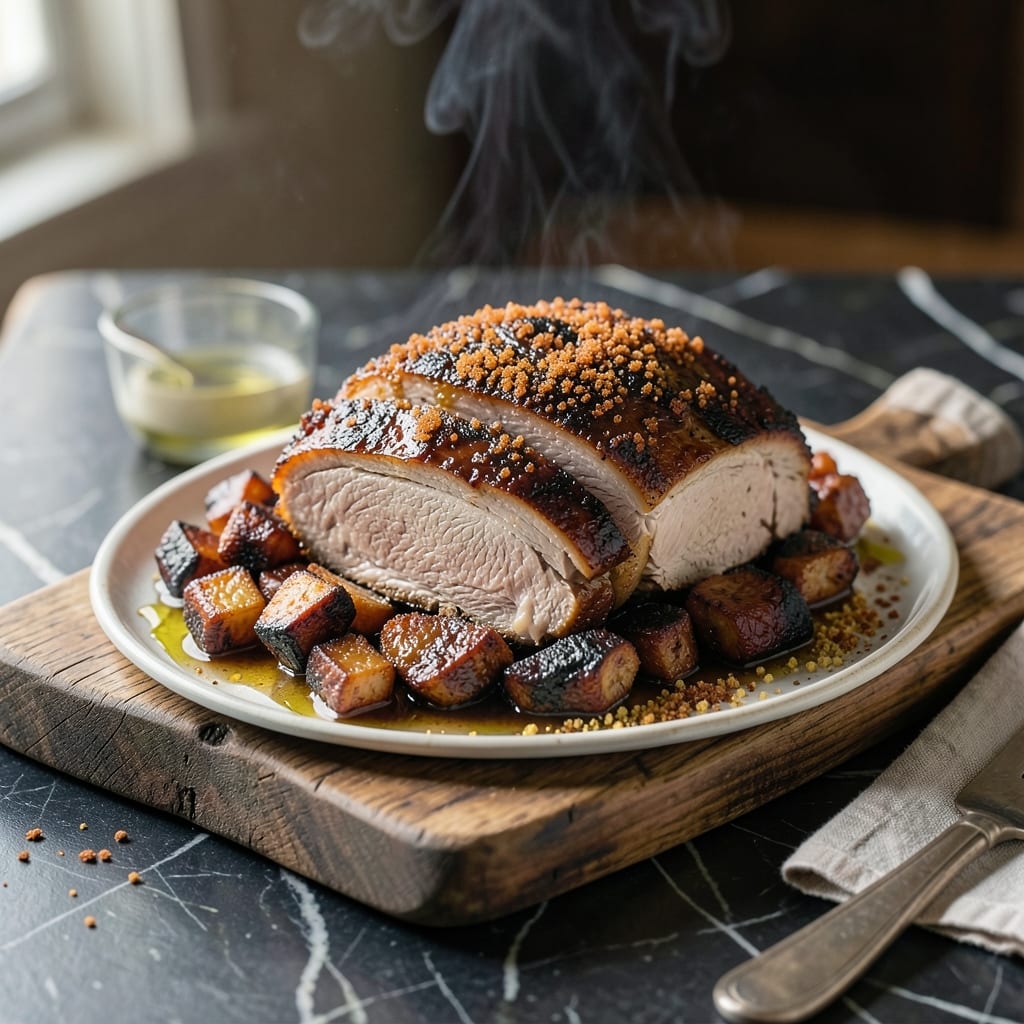
This pork roast burnt ends recipe transforms an inexpensive cut into competition-worthy BBQ that rivals any brisket. Growing up in Georgia, I learned that true smoked pork requires patience and precision—not fancy equipment.
The process starts with a well-seasoned pork shoulder, slow-cooked until tender, then cubed and returned to the smoker. My years at The Smoky Pig taught me that the magic happens in this second cook, where the edges caramelize into sticky, smoky-sweet perfection.
What emerges are bite-sized pieces with a crispy bark outside and juicy, pull-apart tenderness inside. The flavor combination of sweet rub, tangy sauce, and wood smoke creates an addictive balance that’s hard to resist.
Serve these burnt ends on a platter with pickles and white bread to soak up every last drop of flavor. This is BBQ at its finest.
Ingredients for Pork Roast Burnt Ends
Transform a humble pork shoulder into smoky-sweet burnt ends with these pantry staples and a few special touches.
| Ingredient | Amount | Notes |
|---|---|---|
| Pork Shoulder 🥩 | 4 lb | Bone-in preferred for flavor |
| Brown Sugar 🍚 | ½ cup | Light or dark variety |
| Paprika 🌶️ | 2 tbsp | Sweet or smoked variety |
| Garlic Powder 🧄 | 1 tbsp | Not garlic salt |
| Onion Powder 🧅 | 1 tbsp | Fresh ground preferred |
| Salt 🧂 | 1 tbsp | Kosher or sea salt |
| Black Pepper 🌶️ | 1 tbsp | Freshly ground preferred |
| Cayenne Pepper 🔥 | ½ tsp | Adjust for heat preference |
| Apple Cider Vinegar 🍏 | ¼ cup | For tangy balance |
| BBQ Sauce 🍯 | 1 ½ cups | Sweet and tangy variety |
| Wood Chips 🪵 | 2 cups | Hickory or apple wood |
| Butter 🧈 | ½ cup | Unsalted, cubed |
| Pickles 🥒 | 1 cup | Sliced, for serving |
| White Bread 🍞 | 8 slices | For serving |
The pork shoulder is key—bone-in gives the best flavor and moisture. I grab mine from Costco or a local butcher (they’ll often have better marbling than the grocery store). Look for a cut with good fat cap—it’ll render down beautifully during the cook. The wood chips matter too: hickory for bold smoke, apple for something sweeter. Don’t soak them (yes, really—it creates steam, not smoke).
No pork shoulder? Pork butt works the same (it’s actually the same cut, just named differently by region). Short on time? Pre-made rub saves a step, but homemade tastes better. BBQ sauce can be store-bought—Sweet Baby Ray’s is a crowd-pleaser. Want extra bark? Add 1 tsp cornstarch to the rub. The vinegar can be swapped for apple juice if you’re avoiding acidity.
Burnt ends reheat like a dream—toss them in a skillet with a splash of water to crisp the edges. Leftovers keep for 4 days in the fridge or 3 months frozen. I like to vacuum-seal portions for easy BBQ fixes (trust me, you’ll want seconds).
Why You'll Love This Recipe
- Set and Forget: I toss the pork shoulder with brown sugar and spices in the morning, and the oven does the rest.
- Pure Smoky Sweetness: That caramelized crust from the brown sugar and paprika? Ridiculously good with every bite.
- Crowd Pleaser: Honestly, it’s the first thing gone at family dinners—kids and adults alike reach for seconds.
- Stretches for Days: One pork shoulder makes enough for tacos, sandwiches, and leftovers that taste even better the next day.
Step-by-Step Instructions for Pork Roast Burnt Ends
Here's the method I use to turn pork shoulder into caramelized, smoky bites everyone will love.
Season and Smoke the Pork Shoulder
Pat the 4 lb Pork Shoulder dry with paper towels, then rub it all over with a mix of 0.5 cup Brown Sugar, 2 tbsp Paprika, 1 tbsp Garlic Powder, 1 tbsp Onion Powder, 1 tbsp Salt, 1 tbsp Black Pepper, and 0.5 tsp Cayenne Pepper. I press the rub in firmly so it forms a crust during smoking.
Soak the 2 cups Wood Chips in water for 30 minutes while the pork comes to room temperature. Preheat your smoker to 225°F and add the drained wood chips. Smoke the pork for 6-8 hours until the internal temperature reaches 165°F and the bark is dark and firm.
Cube and Sauce the Pork
Remove the pork from the smoker and let it rest for 20 minutes. This makes it easier to handle and keeps the juices inside. Using two forks, pull the pork into large chunks, then cube it into 1-inch pieces. I trim off any large fat caps but leave some for flavor.
Return the cubed pork to the smoker in a disposable aluminum pan. Drizzle with 0.25 cup Apple Cider Vinegar and 0.5 cup Butter, then toss to coat. This step adds moisture and richness before the final sauce application.
Glaze and Caramelize the Burnt Ends
Pour 1.5 cups BBQ Sauce over the pork and toss until every piece is thoroughly coated. I use a silicone spatula to scrape up all the juices from the pan and mix them into the sauce. The pork should be glossy and sticky at this point.
Spread the pork in an even layer in the pan and return it to the smoker uncovered. Smoke for another 1-2 hours at 225°F until the sauce thickens and the edges of the pork become dark and caramelized. You'll know it's ready when the sauce has reduced to a thick, sticky glaze.
Rest and Serve
Remove the burnt ends from the smoker and let them rest for 10 minutes. This allows the sauce to set slightly and makes serving easier. I like to transfer them to a serving platter and drizzle any remaining pan sauce on top.
Serve the burnt ends hot with 1 cup Pickles and 8 slices White Bread on the side. The pickles cut through the richness perfectly, and the bread is ideal for soaking up all that delicious sauce. Each bite should deliver a balance of sweet, smoky, and tender goodness.
Pro Tips For Making Pork Roast Burnt Ends
- Cube Evenly: Cut the pork shoulder into 1.5-inch cubes—any smaller and they’ll dry out, any larger and they won’t crisp properly. I learned this the hard way after pulling out chewy, uneven bits from my first few batches.
- Double the Rub: Don’t skimp on the brown sugar, paprika, garlic, and onion powder mix. Coat the cubes thoroughly, pressing it in so it forms a sticky crust. Sounds like overkill, but it’s the only way to get that deep, caramelized bark.
- Low and Slow First: Smoke or roast the pork at 225°F until it hits 195°F internally before saucing. I was skeptical until I tried it—rushing this step leaves the meat tough, no matter how much sugar you pile on.
- Sauce at the End: Toss the burnt ends in sauce only in the last 30 minutes of cooking. Adding it earlier just burns the sugar and turns your glaze into a bitter, sticky mess—ask me how I know.
Creative Variations of This Dish
Sweet Heat Carolina
Add 2 tbsp hot honey to your BBQ sauce and toss in ½ tsp cayenne for a Carolina-inspired twist. The heat builds gradually with each bite, balanced by the sweetness. I learned this variation from a pitmaster in Charleston. 🌶️
Bourbon Glazed
Mix ¼ cup bourbon into the sauce before the final cook. The alcohol burns off, leaving a deep, smoky-sweet flavor. I prefer Maker’s Mark for its caramel notes. The bourbon also tenderizes the pork further.
Asian Fusion
Swap BBQ sauce for a mix of ½ cup hoisin, 2 tbsp soy sauce, and 1 tbsp sriracha. Garnish with sesame seeds and green onions. This version nods to my time in Charleston’s diverse food scene. ✨
Spiced Maple
Replace brown sugar with ½ cup pure maple syrup in the rub. Add 1 tsp cinnamon and ½ tsp nutmeg for warmth. The maple caramelizes beautifully, creating a glossy bark.
Coffee Rubbed
Add 2 tbsp finely ground coffee to your dry rub. The coffee enhances the smoky depth without overpowering. I use local Atlanta roaster beans for freshness.
Nutrition Facts
Frequently Asked Questions
Can I make burnt ends without a smoker?
Yes! Use an oven at 225°F with a pan of water for moisture. Add liquid smoke to the rub for that authentic flavor.
How do I know when burnt ends are done?
They're ready when the internal temp hits 203°F and the sauce thickens to a glossy glaze. The edges should be dark and caramelized.
Can I use pork loin instead of shoulder?
Shoulder works best due to its fat content. Loin is too lean and will dry out during the long cook. Stick with bone-in shoulder for juicy results.
How long will burnt ends keep?
Store in an airtight container for up to 4 days in the fridge. Reheat in a skillet to crisp the edges before serving.