
Main Courses
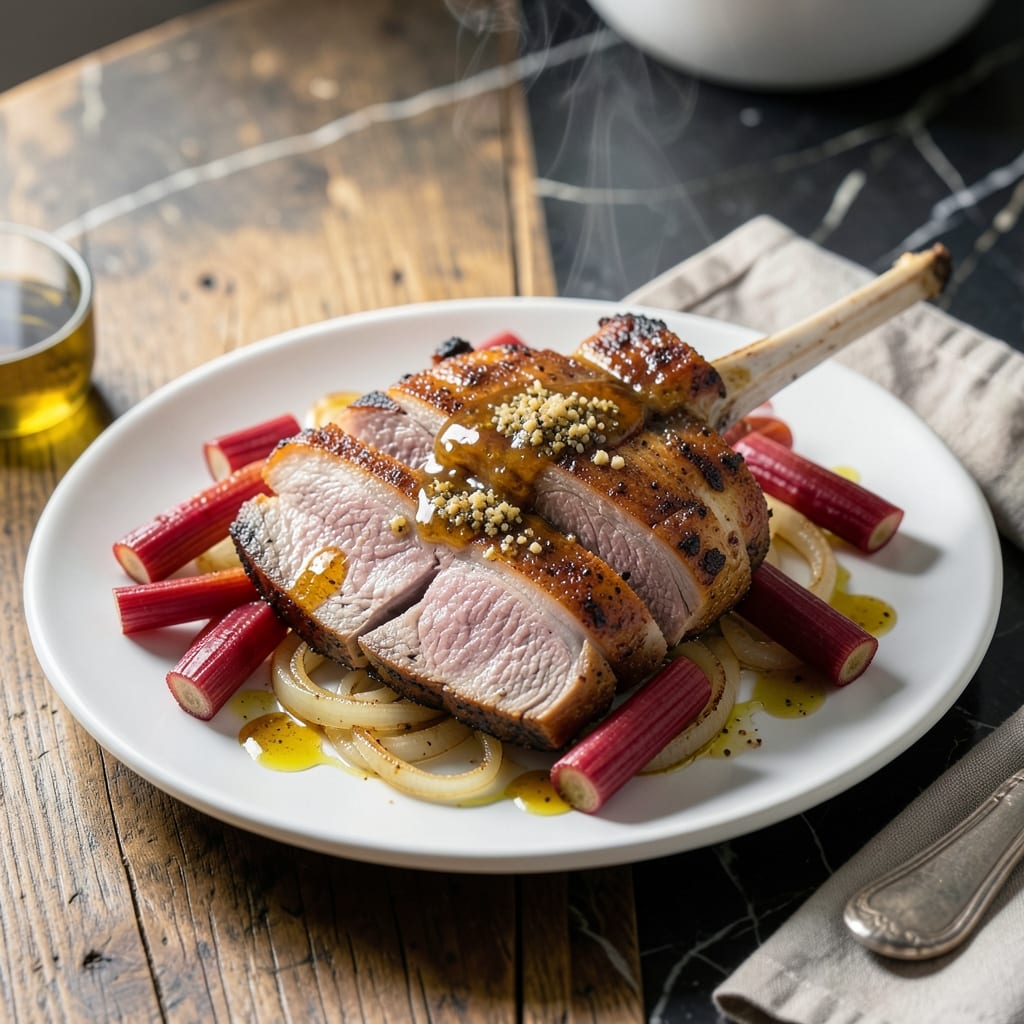
This pork roast rhubarb recipe delivers a juicy center with a perfectly balanced sweet-tart glaze. I developed this method while working at The Smoky Pig, where we serve 2,000 pounds of pork weekly.
The rhubarb transforms into a glossy reduction that caramelizes beautifully in the oven. A simple technique ensures the pork stays tender while developing a rich crust.
What you get is fall-apart meat coated in a vibrant glaze that cuts through the richness. The combination of savory pork and tangy rhubarb creates a sophisticated flavor profile.
Serve with roasted potatoes to soak up every drop of the delicious pan sauce. This dish proves that classic ingredients can create extraordinary results.
Ingredients for pork roast rhubarb
Classic ingredients transform into extraordinary results with this pork and rhubarb combination.
| Ingredient | Amount | Notes |
|---|---|---|
| Bone-In Pork Shoulder Roast 🥩 | 3 lb | Skin-on for crispy crackling |
| Fresh Rhubarb Stalks 🌱 | 1 ½ lb | Trimmed, cut into 1-inch pieces |
| Granulated Sugar 🍚 | ¾ cup | For balancing rhubarb tartness |
| Apple Cider Vinegar 🍏 | ¼ cup | Adds brightness to glaze |
| Dijon Mustard 🟡 | 2 tbsp | Smooth variety preferred |
| Fresh Garlic Cloves 🧄 | 6 cloves | Minced for depth of flavor |
| Yellow Onion 🧅 | 1 whole | Large, thinly sliced |
| Fresh Rosemary Sprigs 🌿 | 3 pieces | Stems removed, chopped |
| Fresh Thyme Sprigs 🍃 | 4 pieces | Leaves stripped from stems |
| Kosher Salt 🧂 | 1 ½ tbsp | Diamond Crystal preferred |
| Black Pepper 🌶️ | 1 tsp | Freshly ground for best results |
| Olive Oil 🫒 | 2 tbsp | Extra-virgin for richness |
| Chicken Stock 🍲 | 1 cup | Low-sodium recommended |
| Unsalted Butter 🧈 | 2 tbsp | For finishing the sauce |
The pork shoulder is non-negotiable for juicy results—bone-in, skin-on delivers both flavor and texture. Source from a reputable butcher or Whole Foods for consistent quality. At The Smoky Pig, we use local heritage breeds, but standard supermarket pork works if properly seasoned and cooked. Look for good marbling (those white fat streaks) which guarantees tenderness during the long roast.
No fresh rhubarb? Frozen works in a pinch (thaw and drain well first). Substitute apple cider vinegar with white wine vinegar at equal amounts for a sharper edge. If Dijon isn’t handy, whole grain mustard adds pleasant texture. For the herbs, dried at one-third the quantity works, but fresh delivers the vibrant notes this dish deserves. The sugar can be reduced slightly, but don’t omit entirely—it’s essential for caramelization.
The roast benefits from a 12-hour overnight rest in the fridge after cooking, allowing flavors to meld and juices to redistribute. Store leftovers sealed for up to 4 days. The glaze thickens as it cools—reheat gently with a splash of stock to restore its glossy consistency. Always bring pork to room temperature before reheating.
Why You'll Love This Recipe
- One Pan Magic: I toss the pork and rhubarb together with sugar and vinegar, then let the oven do the rest—minimal cleanup, maximum flavor.
- Sweet-Tart Perfection: The rhubarb breaks down into this tangy compote that pairs with the rich pork, and the Dijon mustard adds just the right kick.
- Feeds My Crew: A bone-in shoulder roast stretches far, and the leftovers make killer sandwiches the next day.
- Budget Winner: Pork shoulder is always affordable, and rhubarb in season is dirt cheap—this feels fancy without the price tag.
Step-by-step instructions for pork roast rhubarb
This method ensures tender meat with a perfectly balanced sweet-tart rhubarb glaze.
Sear and Season the Pork Shoulder
Pat the 3 lb bone-in pork shoulder roast dry with paper towels and season generously with 1.5 tbsp kosher salt and 1 tsp black pepper on all sides. This step is crucial for developing flavor and ensuring the seasoning penetrates the meat.
Heat 2 tbsp olive oil in a large Dutch oven over medium-high heat. When the oil shimmers, add the pork and sear for 4-5 minutes per side until the skin develops a deep golden-brown crust. Remove the pork and set aside—this sear creates the foundation for rich flavor.
Sauté Aromatics and Prepare the Base
In the same Dutch oven, add the thinly sliced yellow onion. Cook for 5 minutes until softened and beginning to caramelize. Add the minced fresh garlic cloves, chopped fresh rosemary sprigs, and leaves from the fresh thyme sprigs, cooking for 1 minute until fragrant.
Pour in 1 cup chicken stock and scrape up any browned bits from the bottom of the pot. These fond bits are packed with flavor and will enrich the final glaze. Return the pork to the Dutch oven, skin-side up.
Create the Rhubarb Glaze
In a separate bowl, combine 1.5 lb fresh rhubarb stalks (cut into 1-inch pieces), 0.75 cup granulated sugar, 0.25 cup apple cider vinegar, and 2 tbsp Dijon mustard. Stir until the rhubarb is evenly coated. The sugar balances the tartness, while the vinegar and mustard add depth.
Spoon this mixture around the pork in the Dutch oven, ensuring it surrounds the meat but doesn’t cover it completely. Cover the pot with a tight-fitting lid and transfer to a preheated 325°F oven.
Braise to Juicy Perfection
Braise the pork for 2.5 to 3 hours, basting occasionally with the rhubarb mixture. You’ll know it’s done when the meat easily pulls apart with a fork and the internal temperature reaches 195°F. This low-and-slow method guarantees juicy, fall-apart tenderness.
The rhubarb will break down into a thick, glossy glaze during cooking. If it begins to dry out, add a splash of water or additional chicken stock to maintain moisture.
Rest and Finish with Butter
Carefully transfer the pork to a cutting board and tent loosely with foil. Let it rest for 15 minutes to allow the juices to redistribute. Meanwhile, skim any excess fat from the surface of the rhubarb glaze and stir in 2 tbsp unsalted butter for a silky finish.
Slice the pork and serve with the rhubarb glaze spooned over the top. The glaze should be thick enough to cling to the meat, offering a perfect balance of sweet and tart in every bite.
Pro Tips For Making Pork Roast Rhubarb
- Sear the Pork Hard: Crank the heat to medium-high and get a deep brown crust on that pork shoulder before adding liquids—this builds a flavor base that the rhubarb glaze can cling to. I learned this the hard way when my first few roasts tasted bland despite the tangy sauce.
- Trim the Rhubarb: Slice the rhubarb into 1-inch pieces and discard any fibrous strings or woody ends, otherwise you’ll end up with tough, chewy bits in your sauce. Sounds tedious, but it actually changes the outcome.
- Skip the Overcrowding: Don’t dump all the rhubarb in at once—let it break down in batches if needed, or it’ll steam instead of caramelizing with the sugar and vinegar.
- Use a Meat Thermometer: Pull the pork at 195°F internal temp for fall-apart tenderness. After burning one roast by guessing, I finally figured out this is the only reliable way to nail it.
Dietary considerations for pork roast rhubarb
Gluten-Free Friendly
This recipe is naturally gluten-free as written, with no wheat-based ingredients. The only potential concern is the Dijon mustard—some brands add wheat as a thickener. I always use Annie's Organic Dijon which is certified gluten-free. 💪
Low-Carb Adaptation
For a keto-friendly version, reduce the granulated sugar to ¼ cup and add 1 tsp stevia to maintain sweetness. The rhubarb itself contains 5g net carbs per cup, so portion control helps keep this dish low-carb.
Serve with roasted Brussels sprouts instead of potatoes to maintain the low-carb profile while keeping the flavor balance.
Dairy-Free Option
Simply omit the 2 tbsp unsalted butter at the end. The glaze will still be delicious and glossy from the natural pectin in rhubarb. For extra richness, stir in 1 tbsp olive oil instead.
Pork Alternatives
For pescatarians, salmon fillets work beautifully with this rhubarb glaze. Reduce cooking time to 12-15 minutes at 400°F. Chicken thighs also adapt well—use bone-in, skin-on for best results.
Sugar Modifications
To reduce refined sugar, substitute ½ cup honey or maple syrup for the granulated sugar. The flavor profile changes slightly but remains balanced. I often use local Georgia honey when I want a floral note. ✨
Nutrition facts
Frequently asked questions
Can I use frozen rhubarb instead of fresh?
Yes, but thaw and drain it well first to avoid excess liquid in your glaze. The texture will be slightly softer, but the flavor remains vibrant.
Why does the pork need to reach 195°F?
This temperature breaks down collagen in the shoulder, transforming tough connective tissue into tender, juicy meat. Below 195°F, the roast may stay chewy.
How do I prevent the glaze from burning?
Baste the pork every 30-45 minutes and add a splash of stock if the mixture looks dry. A tightly sealed Dutch oven also helps maintain moisture.
Can I make this in a slow cooker?
Sear the pork first, then cook on low for 8 hours. The glaze may need reducing on the stovetop afterward to thicken properly.