
Recipes/Cooking
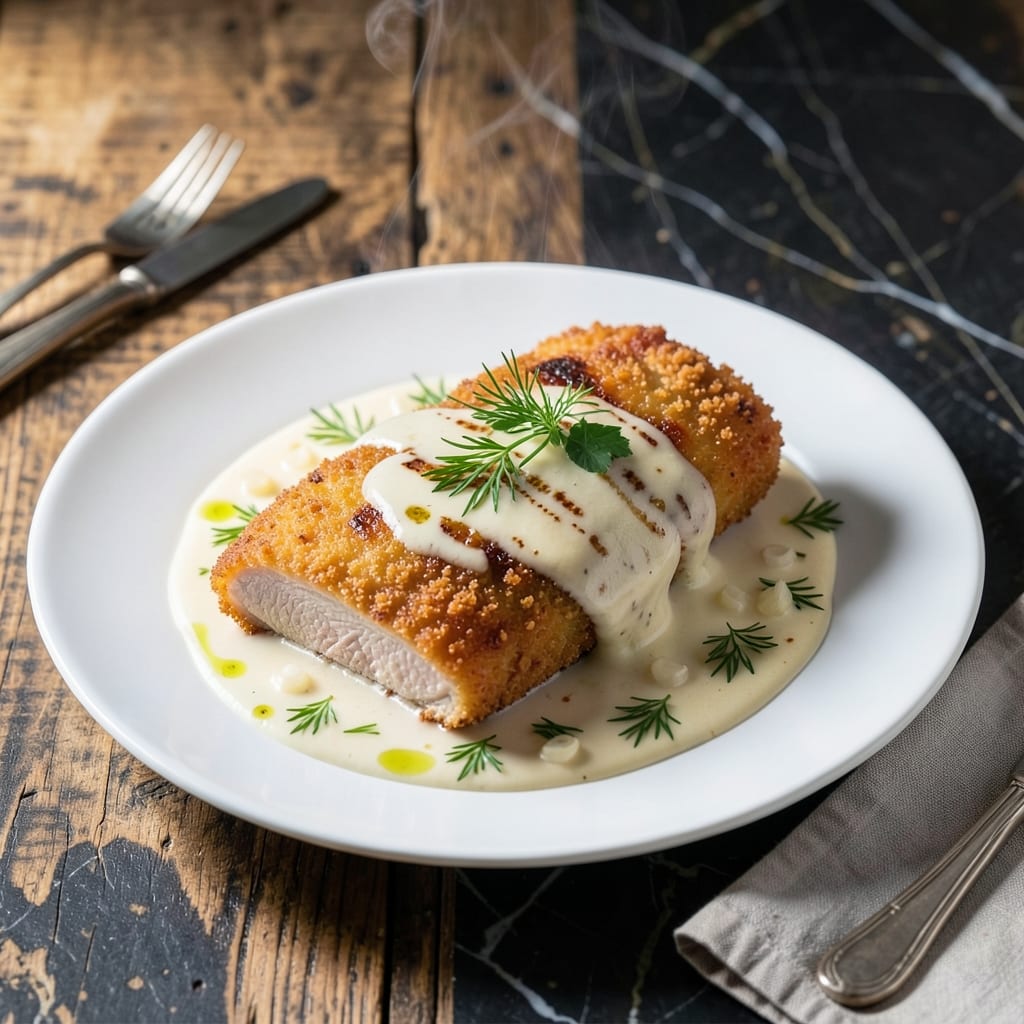
This pork schnitzel sauce recipe transforms crispy cutlets into a restaurant-quality dish with its tangy cream and fresh herb combination.
I developed this after testing multiple versions in my small Boston kitchen, focusing on balancing richness with brightness. The sauce comes together in 10 minutes with simple pantry staples and garden herbs.
What makes it special is the technique: reducing shallots in white wine before adding cream creates depth without heaviness. Fresh dill and parsley add the perfect finish.
The result is a velvety sauce that complements rather than overpowers the schnitzel. It keeps well for 3 days refrigerated, making it ideal for meal prep.
Ingredients for pork schnitzel sauce
Ten ingredients create this velvety tangy cream sauce with fresh herbs for schnitzel.
| Ingredient | Amount | Notes |
|---|---|---|
| Shallots 🧅 | 2 whole | Finely minced for base flavor |
| Dry White Wine 🍷 | ½ cup | Sauvignon Blanc or Pinot Grigio |
| Heavy Cream 🥛 | 1 cup | Full-fat for velvety texture |
| Dijon Mustard 🟡 | 1 tbsp | Adds tangy depth to sauce |
| Fresh Dill 🌿 | 2 tbsp | Chopped, for bright finish |
| Fresh Flat-Leaf Parsley 🍃 | 2 tbsp | Chopped, complements dill |
| Unsalted Butter 🧈 | 2 tbsp | For richness and sheen |
| Lemon Juice 🍋 | 1 tbsp | Freshly squeezed for brightness |
| Chicken Stock 🍲 | ¼ cup | Low-sodium preferred for control |
| Kosher Salt 🧂 | ½ tsp | Diamond Crystal preferred |
The wine reduction is critical here. Dry white wine with good acidity—Sauvignon Blanc or Pinot Grigio—delivers the tangy backbone. Use what you'd drink; cooking wine is too harsh. Shallots, finer than onions, melt into the sauce without texture. Whole Foods or Trader Joe's stock quality shallots year-round. For cream, full-fat is non-negotiable—lower-fat versions curdle.
No wine? Substitute with white wine vinegar (1 tbsp) plus extra chicken stock to deglaze. Dried herbs don't capture the freshness, but dried dill at one-third the amount works in a pinch. For a lighter version, half-and-half replaces cream, though the texture won't be as luxurious. The mustard can be swapped for whole-grain, but Dijon provides the smoothest consistency.
Sauce keeps 3 days refrigerated in an airtight container. Reheat gently to avoid separation—low heat is key. Not suitable for freezing; the cream breaks. Best used fresh, but leftovers work well over roasted vegetables or mashed potatoes.
Why You'll Love This Recipe
- One Pot Wonder: I can make this sauce while the schnitzel fries—shallots soften in the same pan, then wine and cream come together in minutes.
- That Dijon-Dill Magic: The mustard’s tang cuts through the richness, and fresh dill adds this bright, herby pop that makes every bite sing.
- Dinner Party Ready: It feels fancy enough for guests, but honestly, I’ve served it on a random Wednesday just to treat myself.
- Stretches Further: A little goes a long way—I always have extra for leftovers, and it reheats like a dream over mashed potatoes.
Step-by-step instructions for pork schnitzel sauce
Master this velvety sauce with precise timing and professional technique for restaurant-quality results.
Sauté Shallots in Butter Until Translucent
Heat a heavy saucepan over medium heat and add the 2 tbsp Unsalted Butter. Once melted and foaming subsides, add the 2 whole Shallots (finely minced) and cook for 4-5 minutes, stirring frequently.
You want the shallots to soften and turn translucent without browning. If they start to color, reduce heat immediately—this ensures a sweet, aromatic base without bitterness. Season with the 0.5 tsp Kosher Salt during cooking to help draw out moisture.
Deglaze with White Wine and Reduce
Pour in the 0.5 cup Dry White Wine and stir, scraping up any browned bits from the pan bottom. Increase heat to medium-high and simmer for 3-4 minutes until the liquid reduces by half.
The alcohol should cook off completely, leaving behind a concentrated, aromatic reduction. You'll know it's ready when the pan looks nearly dry and the mixture has a syrupy consistency. This step builds the foundation of flavor complexity.
Incorporate Chicken Stock and Mustard
Add the 0.25 cup Chicken Stock and 1 tbsp Dijon Mustard, whisking until the mustard fully dissolves into the liquid. Return to a gentle simmer and cook for 2 minutes to meld the flavors.
The mustard will emulsify slightly with the stock, creating a silky base. Watch for the mixture to thicken just enough to coat the back of a spoon. This stage ensures the sauce has body before adding the cream.
Finish with Heavy Cream and Lemon
Reduce heat to low and gradually whisk in the 1 cup Heavy Cream. Simmer gently for 5-7 minutes until the sauce thickens to a velvety consistency that ribbons off the whisk.
Stir in the 1 tbsp Lemon Juice and taste for seasoning. The acidity cuts through the richness while brightening all the flavors. Avoid boiling vigorously at this stage to prevent the cream from separating.
Fold in Fresh Herbs and Serve
Remove the sauce from heat and stir in the 2 tbsp Fresh Dill and 2 tbsp Fresh Flat-Leaf Parsley (both chopped). The residual heat will wilt the herbs slightly without cooking them completely.
Let the sauce rest for 2 minutes before serving to allow the flavors to harmonize. The herbs should remain vibrant green and fragrant, adding a fresh contrast to the creamy base. Serve immediately over crispy pork schnitzel.
Pro Tips For Making Pork Schnitzel Sauce
- Reduce the Wine First: Simmer the dry white wine for 3-4 minutes before adding cream—this burns off the alcohol and concentrates the flavor so your sauce doesn’t taste raw.
- Mince Shallots Finely: I learned this the hard way—chop the shallots as small as possible so they melt into the sauce instead of leaving awkward chunks in your creamy finish.
- Temper the Cream: Let the heavy cream sit at room temp for 10 minutes before adding to the hot pan, or it can split and turn your sauce grainy.
- Add Dill Last: Stir in the fresh dill right at the end—heat turns it bitter, and you want that bright, herby punch to hit fresh on the schnitzel.
Troubleshooting great pork schnitzel sauce
Sauce Too Thin
If your sauce isn't thickening after 7 minutes, the wine may not have reduced enough initially. Remove from heat and whisk in 1 tsp cornstarch mixed with 1 tbsp cold water. Return to low heat for 2 minutes while stirring constantly. 💡
Cream Separating
This happens if the sauce boils too vigorously. Immediately reduce to low heat and whisk vigorously. If it's already separated, slowly whisk in 1 tbsp ice-cold heavy cream to re-emulsify. Prevention is easier than fixing.
Bitter Taste
Bitter shallots mean they browned too much. Next time, cook them on medium-low heat for 5-6 minutes instead. To fix now, add ½ tsp honey and 1 tsp lemon juice to balance the flavors. I learned this the hard way in my triple-decker kitchen.
Sauce Too Thick
Whisk in 1-2 tbsp warm chicken stock or white wine until you reach the desired consistency. Add gradually to avoid overshooting. The sauce should ribbon off the whisk but still be pourable.
Grainy Texture
This usually means the cream curdled slightly. Strain through a fine-mesh sieve to remove any cooked bits. To prevent, ensure your cream is at room temperature before adding to the hot mixture. 🌟
Herbs Losing Color
If your dill and parsley turn dull green, they were added too early. Stir them in just before serving and remove from heat immediately. Fresh herbs need minimal cooking to maintain their vibrant color and flavor.
Nutrition facts
Frequently asked questions
Can I make this sauce ahead of time?
Yes, it keeps well for 3 days refrigerated in an airtight container. Reheat gently over low heat to prevent separation, stirring frequently.
What can I substitute for white wine?
Use 1 tbsp white wine vinegar plus extra chicken stock to deglaze. The vinegar provides the necessary acidity, though the depth of flavor will differ slightly.
Why did my sauce turn grainy?
Graininess often means the cream curdled. Strain through a fine-mesh sieve to fix it. To prevent, ensure cream is room temperature before adding to hot liquid.
Can I use dried herbs instead of fresh?
Yes, but reduce the amount to 1/3 of fresh. Dried dill works best here, though fresh herbs provide superior flavor and color.