
Recipes/Cooking
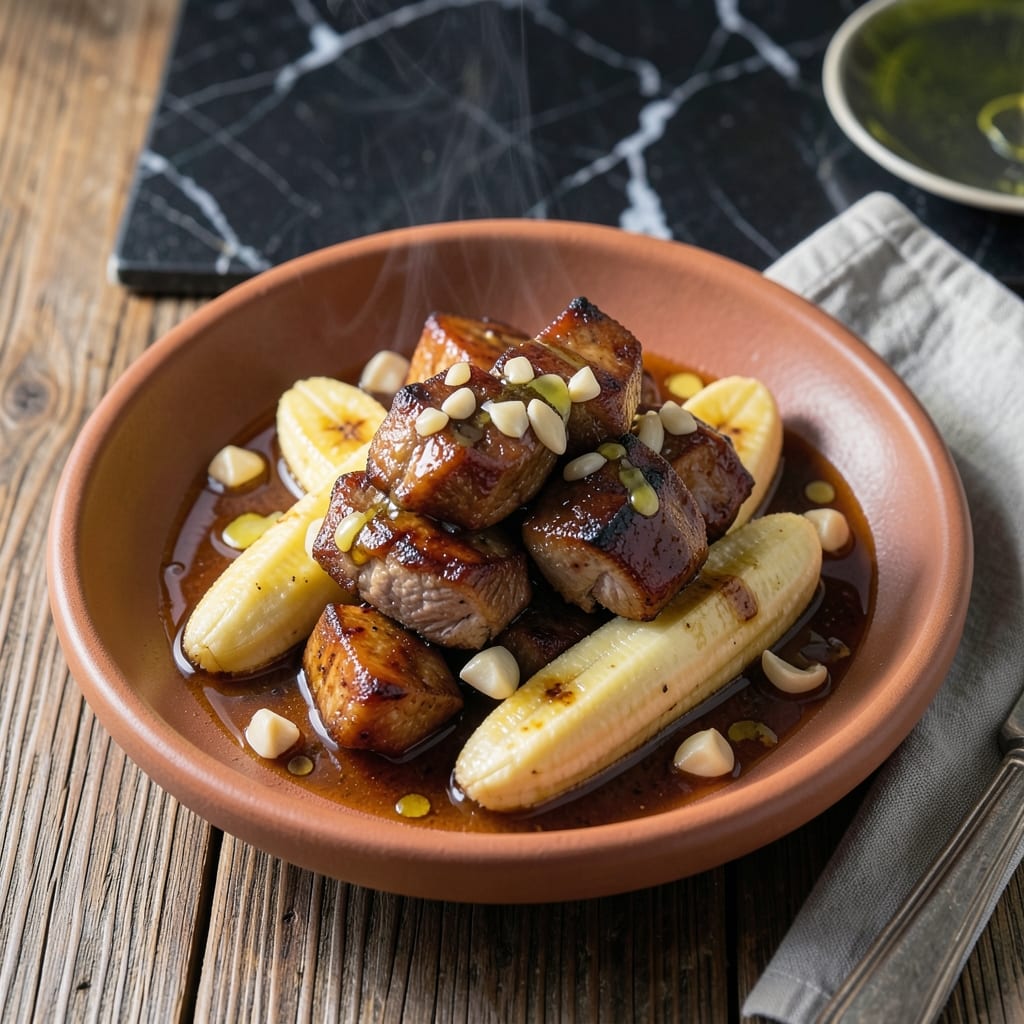
This pork with saba banana recipe brings Filipino fusion to your kitchen table with minimal effort.
I developed this dish after tasting a similar version at a Charleston pop-up, adapting it for home cooks with accessible ingredients. The combination of savory pork and caramelized saba bananas creates a balance of flavors that's both comforting and unexpected.
The key is cooking the pork until tender before adding the bananas, allowing their natural sweetness to develop without turning mushy. A splash of soy sauce and vinegar ties everything together with authentic Filipino notes.
Serve over steamed rice to soak up every bit of the rich, slightly sticky sauce. Here's how to make this crowd-pleaser at home.
Ingredients for pork with saba banana
A short list of simple ingredients for this Filipino fusion classic.
| Ingredient | Amount | Notes |
|---|---|---|
| Pork Shoulder 🥩 | 1 ½ lb | Cut into 1-inch cubes |
| Saba Bananas 🍌 | 4 whole | Firm and slightly green |
| Soy Sauce 🫒 | ¼ cup | Low-sodium preferred |
| White Vinegar 💧 | 2 tbsp | Or apple cider vinegar |
| Brown Sugar 🍚 | 2 tbsp | Light or dark variety |
| Garlic Cloves 🧄 | 4 cloves | Minced for depth |
| Yellow Onion 🧅 | 1 whole | Diced finely for sauce |
| Ground Black Pepper 🌶️ | 1 tsp | Freshly ground preferred |
| Vegetable Oil 🫒 | 2 tbsp | For searing pork |
| Bay Leaves 🍃 | 2 pieces | Dried for aroma |
| Steamed Rice 🍚 | 2 cups | For serving, uncooked |
| Green Onions 🧅 | ¼ cup | Sliced for garnish |
The pork shoulder is key here—look for well-marbled cuts at your local butcher or Whole Foods. Saba bananas (the starchy, cooking kind) are ideal, but plantains work in a pinch if you can't find them at an Asian market. Avoid overripe bananas; they'll turn to mush. The soy sauce should be Filipino brands like Silver Swan or Datu Puti for authentic flavor.
No saba bananas? Underripe regular bananas can substitute, but cook them quickly to avoid mushiness. Coconut aminos replace soy sauce at a 1:1 ratio for gluten-free. Brown sugar can be swapped for coconut sugar—same amount. If you're missing bay leaves, a pinch of dried thyme adds similar depth. The vinegar balances the sweetness, so don't skip it.
Leftovers keep 3-4 days in the fridge and reheat well. The flavors deepen overnight, so it’s even better the next day. Freeze for up to 3 months in airtight containers. Always serve over fresh, hot rice to soak up that rich, caramelized sauce.
Why You'll Love This Recipe
- One Pan Meal: I toss everything in a single pan—pork shoulder, saba bananas, and the sauce—and let the oven do the work.
- Sweet-Savory Magic: The caramelized brown sugar on the pork pairs with the tangy saba bananas in a way that’s ridiculously good.
- Weeknight Hero: Honestly, it’s my go-to when I need something hearty and ready in under an hour. (Yes, even on a Tuesday night)
- Budget Stretcher: Pork shoulder is cheap, saba bananas last forever, and leftovers taste even better the next day.
Step-by-step instructions for pork with saba banana
This method ensures the perfect balance of savory pork and sweet, caramelized bananas in every bite.
Sear the Pork Shoulder
Heat the 2 tbsp vegetable oil in a large skillet or pot over medium-high heat. Add the 1.5 lb pork shoulder (cut into 1-inch cubes) and sear until all sides are golden brown, about 5-7 minutes. This step builds deep flavor and locks in juices.
Season with 1 tsp ground black pepper as it cooks. Don't overcrowd the pan—work in batches if needed. The pork should release easily from the pan when properly seared. Remove the pork and set aside.
Build the Aromatic Base
In the same skillet, reduce heat to medium. Add the diced yellow onion and sauté for 3-4 minutes until translucent. Then add the minced 4 cloves garlic cloves and cook for 30 seconds until fragrant.
Pour in the 0.25 cup soy sauce, 2 tbsp white vinegar, and 2 tbsp brown sugar. Stir well to dissolve the sugar and scrape up any browned bits from the bottom of the pan. Add the 2 pieces bay leaves and return the seared pork to the skillet.
Simmer Until Tender
Reduce heat to low, cover, and let the pork simmer for 30-40 minutes, stirring occasionally. The pork is done when it’s fork-tender and the sauce has thickened slightly. If the mixture looks dry, add a splash of water.
While the pork simmers, peel and slice the 4 whole Saba Bananas into thick rounds. The bananas should be firm enough to hold their shape during cooking. Set them aside until ready to use.
Add Bananas and Finish Cooking
Gently stir the sliced Saba Bananas into the pork mixture. Cook uncovered for an additional 8-10 minutes on medium-low heat, allowing the bananas to soften and absorb the flavors of the sauce. Stir occasionally to prevent sticking.
You’ll know it’s ready when the bananas are tender but still hold their shape, and the sauce has a glossy, slightly reduced consistency. Remove the bay leaves before serving.
Serve Over Steamed Rice
Spoon the pork and banana mixture over the 2 cups steamed rice. Garnish with the 0.25 cup green onions for a fresh, vibrant finish. The contrast of the sweet bananas, savory pork, and fluffy rice makes this dish irresistible.
Serve immediately while hot. The flavors meld beautifully as it sits, so leftovers taste just as good the next day.
Pro Tips For Making Pork With Saba Banana
- Sear the Pork First: Brown the pork shoulder pieces in batches over medium-high heat until deeply caramelized—this builds a flavor base that the sweet-sour sauce can cling to. I learned this the hard way after my first few attempts tasted flat.
- Use Ripe Saba: Pick saba bananas that are just turning black on the skin but still firm; they’re sweeter and hold their shape better in the simmering sauce. Sounds weird, but it works.
- Balance the Sauce: Taste as you go and adjust the soy-vinegar-sugar ratio—too much vinegar can overpower the pork’s richness, and too much sugar makes it cloying. My grandmother swore by this, and she was right.
- Simmer Low and Slow: Once the sauce is added, keep the heat low and let it bubble gently for at least 30 minutes so the pork gets tender and the flavors meld. Yes, even if you're impatient like me.
Essential equipment for this dish
Essential Cookware
For this dish, I always reach for my 12-inch cast iron skillet—the one I inherited from my Georgia grandma. It sears pork beautifully and develops that perfect fond for the sauce. A heavy-bottomed Dutch oven works equally well if you prefer a pot with a lid. 🔥
Wooden Spoon
A good wooden spoon is non-negotiable for stirring without scratching your cookware. I keep a collection of olive wood spoons from Charleston markets—they're gentle on my vintage cast iron and add a touch of Southern charm to my cooking.
Sharp Chef's Knife
You'll need a sharp 8-inch chef's knife for cubing the pork and slicing bananas evenly. I swear by my Wüsthof—it's been with me since culinary school. A dull knife makes prep dangerous and uneven, so keep it honed.
Cutting Board
Use a large, stable cutting board (I prefer end-grain maple) for prep. The pork and bananas need space to be cut safely. My board has seen thousands of pounds of pork at The Smoky Pig—it's my trusted workhorse. 💪
Measuring Tools
Accurate measurements matter, especially for the sauce balance. I use stainless steel measuring cups and spoons from my CIA days. For the vinegar and soy sauce, a liquid measuring cup ensures precision without spills.
Serving Dish
Present this beauty in a wide, shallow bowl to showcase the pork and bananas over rice. I love my hand-thrown ceramic platter from a Savannah potter—it's perfect for family-style serving at gatherings.
Nutrition facts
Frequently asked questions
Can I use regular bananas instead of saba?
Yes, but choose underripe ones to prevent mushiness. Saba hold their shape better when cooked, while regular bananas may break down faster.
How do I know when the pork is tender enough?
The pork should fall apart easily when pierced with a fork after 30-40 minutes of simmering. If it resists, cook covered for another 10 minutes.
Can I make this dish ahead of time?
The flavors deepen overnight. Store in an airtight container for up to 3 days in the fridge or freeze for 3 months.
What if my sauce is too thin?
Simmer uncovered for an extra 5-10 minutes to reduce. For a quicker fix, mix 1 tsp cornstarch with water and stir in.