
Recipes/Cooking
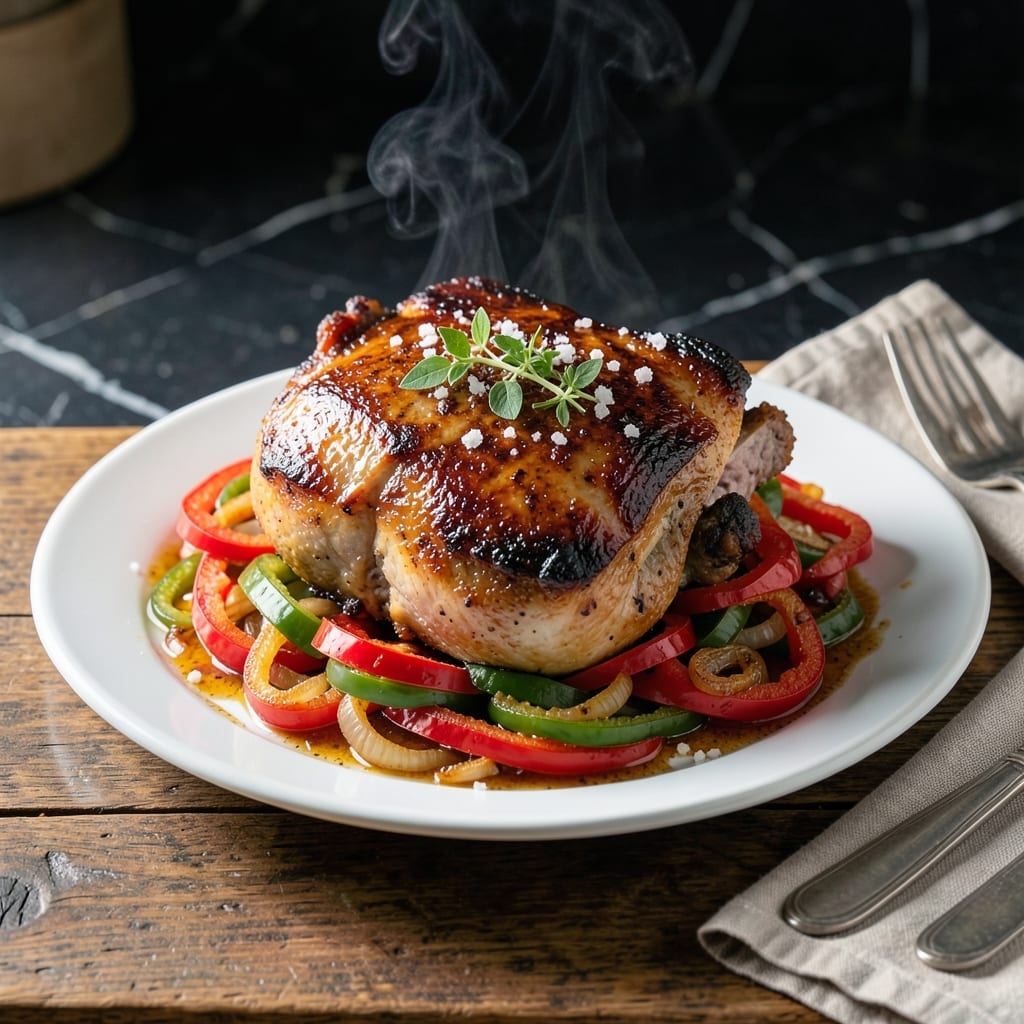
This Puerto Rican roasted pork recipe delivers crispy skin and mojo-marinated flavor that transports you to the island. My years in Charleston taught me the value of slow-roasting pork to perfection, and this method never fails.
The secret lies in the traditional adobo and mojo marinade, which infuses the meat with garlic, citrus, and herbs. I use a combination of sour orange juice and fresh oregano for an authentic taste that’s both tangy and aromatic.
Roasting at high heat ensures the skin crisps beautifully while the inside stays tender and juicy. The result is a centerpiece dish that’s rich in flavor and tradition, perfect for any gathering.
Serve with rice, beans, and plantains for a complete meal. This recipe honors the roots of Puerto Rican cuisine with every bite.
Ingredients for Puerto Rican Roasted Pork
Pantry staples meet island flavors. Nothing exotic, just bold taste.
| Ingredient | Amount | Notes |
|---|---|---|
| Pork Shoulder 🐖 | 4 lb | Skin-on, bone-in for best texture |
| Garlic Cloves 🧄 | 12 cloves | Peeled, minced for marinade |
| Sour Orange Juice 🍊 | 1 cup | Fresh or bottled naranja agria |
| Fresh Oregano 🌿 | ¼ cup | Chopped, stems removed |
| Olive Oil 🫒 | ½ cup | Extra-virgin for marinade |
| Salt 🧂 | 1 tbsp | Kosher or sea salt |
| Black Pepper 🌶️ | 1 tbsp | Freshly ground preferred |
| Ground Cumin 🌿 | 1 tbsp | Toasted for deeper flavor |
| Dried Oregano 🍃 | 1 tbsp | For adobo rub |
| Lime Juice 🍈 | ¼ cup | Freshly squeezed |
| Bay Leaves 🌿 | 2 pieces | Whole, for mojo marinade |
| Onion 🧅 | 1 whole | Roughly chopped for marinade |
| Bell Pepper 🌶️ | 1 whole | Any color, chopped |
The pork is everything here. Pork shoulder with skin on is non-negotiable for that crispy crackling. Latin markets usually carry it pre-cut, but any butcher can prep it for you. Sour orange juice is the soul of mojo—Goya makes a solid bottled version if you can’t find fresh (common in Florida or Puerto Rican grocers). Fresh oregano is worth hunting down—it’s more citrusy than the dried stuff.
No sour orange? Equal parts orange and lime juice gets you 80% there. Missing fresh oregano? Double the dried, but toast it first to wake up the flavor. Pork shoulder too big? Cut it down, but keep the skin intact for maximum crisp. The garlic can be adjusted to taste—12 cloves sounds like a lot, but it mellows beautifully. Frozen works in a pinch (thaw completely first).
Marinate overnight for the best flavor penetration. Leftovers keep 4-5 days in the fridge, freeze for 3 months. Reheat gently to keep the skin crisp—microwave is the enemy here (use the oven or air fryer).
Why You'll Love This Recipe
- One Pan Magic: The pork shoulder, garlic, and oregano go straight onto a sheet pan—minimal cleanup, maximum flavor.
- Citrus Garlic Burst: That sour orange juice and fresh garlic combo hits just right, every single time.
- Feeds a Crowd: I make this for Sunday dinner and it disappears faster than I can serve it.
- Leftovers for Days: Honestly, the flavors taste even better the next day in tacos or sandwiches.
Step-by-Step Instructions for Puerto Rican Roasted Pork
Here's how I get perfectly crispy skin and juicy, flavor-packed meat every time.
Create the Mojo Marinade
In a blender, combine the 12 cloves Garlic Cloves, 1 cup Sour Orange Juice, 0.25 cup Fresh Oregano, 0.5 cup Olive Oil, 1 tbsp Salt, 1 tbsp Black Pepper, 1 tbsp Ground Cumin, 0.25 cup Lime Juice, and 2 pieces Bay Leaves. Blend until smooth and aromatic.
Pour the marinade over the 4 lb Pork Shoulder in a large bowl or resealable bag. Add the 1 whole Onion and 1 whole Bell Pepper, roughly chopped. I make sure the pork is fully coated—every inch should be touching that flavorful liquid. Cover and refrigerate for at least 4 hours, but overnight is even better for deep flavor penetration.
Score the Skin for Maximum Crispiness
Remove the pork from the marinade, reserving the liquid. Pat the skin dry with paper towels—this is crucial for crispiness. Using a sharp knife, I score the skin in a crosshatch pattern, cutting about ¼ inch deep. Don’t cut into the meat itself, just the fat layer.
This scoring allows the fat to render out during roasting while creating more surface area for that irresistible crunch. I also rub a bit of the reserved 1 tbsp Salt and 1 tbsp Dried Oregano into the scored skin for extra flavor. Let the pork sit at room temperature for 30 minutes before roasting.
Roast Low and Slow, Then Finish Hot
Preheat your oven to 300°F. Place the pork skin-side up on a rack in a roasting pan. Pour about 1 cup of the reserved marinade into the bottom of the pan—this will keep the meat moist during the long cook. Roast for 3-4 hours until the internal temperature reaches 185°F.
Now, here’s the trick for that crispy skin: increase the oven temperature to 425°F and roast for an additional 20-30 minutes. Watch it closely—the skin should puff up and turn deep golden brown and crispy. Baste the pork occasionally with the pan juices to keep it flavorful.
Rest and Serve
Remove the pork from the oven and let it rest for 20-30 minutes before carving. This resting period ensures the juices redistribute, so every bite is succulent. I tent it loosely with foil to keep it warm without steaming the skin.
Carve the pork into chunks, making sure each piece has some of that crispy skin. Serve with the strained pan juices for extra moisture and flavor. The skin should crackle when you bite into it, while the meat inside stays tender and juicy. This is the kind of dish that makes everyone at the table go quiet for a moment—pure satisfaction.
Pro Tips For Making Puerto Rican Roasted Pork
- Dry the Pork: Pat the pork shoulder completely dry before marinating—I learned this the hard way after my first batch steamed instead of roasting.
- Mince the Garlic: Crush the garlic cloves to a paste with a little salt; it distributes better in the marinade and actually changes the outcome.
- Don’t Rush the Marinade: Give the pork at least 4 hours in the sour orange, garlic, and oregano mix—overnight if you can swing it.
- Baste Often: Every 30 minutes, brush the pork with its own juices to keep it moist and build that sticky, caramelized crust.
Essential Equipment for This Recipe
Roasting Pan Essentials
I always use a heavy stainless steel roasting pan with a rack for this recipe. The rack elevates the pork, allowing air to circulate for even cooking and crispy skin. My go-to is All-Clad—it distributes heat beautifully and lasts forever. 🔥
Sharp Knife for Scoring
A 8-inch chef's knife is perfect for scoring the skin in a crosshatch pattern. I sharpen mine before each use—dull knives tear the skin instead of cutting cleanly. Wüsthof makes reliable options that hold an edge through years of use.
Meat Thermometer Accuracy
Never guess pork doneness. A instant-read thermometer is non-negotiable. I trust ThermoWorks for precision, especially their Thermapen. It reads in 2-3 seconds and gives perfect 185°F internal temp every time.
Blender for Mojo
The mojo marinade needs a powerful blender to fully emulsify the garlic, citrus, and herbs. My Vitamix handles 12 garlic cloves and fresh oregano without a hitch. A food processor works in a pinch but won’t get it as smooth.
Resting Tools
After roasting, I tent the pork with heavy-duty foil and rest it on a wooden cutting board. This keeps the skin crispy while the juices redistribute. My John Boos board has served me well for over a decade.
Basting Brush
Use a silicone basting brush to coat the pork with pan juices during roasting. It withstands 425°F heat and won’t melt like plastic. I keep one dedicated just for pork to avoid flavor cross-contamination.
Nutrition Facts
Frequently Asked Questions
Can I use pork loin instead of shoulder?
Shoulder is ideal for its fat content and connective tissue. Pork loin will work but tends to dry out during the long roast. If using loin, reduce cooking time to 2-2.5 hours at 300°F and monitor temperature closely.
What if I can't find sour orange juice?
Substitute with equal parts orange and lime juice. This mix mimics naranja agria’s unique tang. For 1 cup sour orange juice, use ½ cup orange juice and ½ cup lime juice. The flavor will be slightly different but still delicious.
Why score the skin before roasting?
Scoring creates more surface area for crispiness and helps render fat. Cut ¼ inch deep in a crosshatch pattern, avoiding the meat. This step ensures the skin puffs up and turns golden brown during the final high-heat phase.
How do I store leftovers?
Cool completely, then store in an airtight container for up to 4-5 days. For longer storage, freeze for 3 months. Reheat in the oven at 350°F to maintain skin crispiness.