
Main Courses
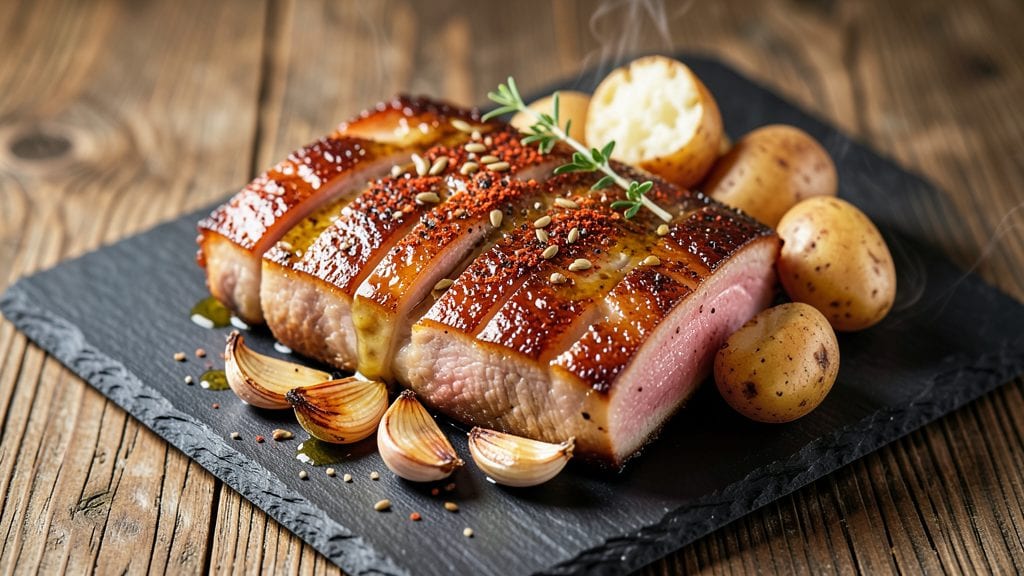
This spiced pork belly recipe delivers melt-in-your-mouth tenderness with a crispy, caramelized exterior that’s impossible to resist. Growing up in small-town Georgia, I learned that slow-roasting pork belly transforms tough cuts into luxurious bites—now I’m sharing the method I’ve perfected over years of cooking for crowds.
The secret lies in patience and precision: scoring the fat cap, layering spices, and roasting until the meat falls apart.
The process begins with a simple yet effective spice rub—just enough to enhance the natural richness without overpowering. Roasting at 325°F for 2 to 3 hours ensures the collagen breaks down, rendering into succulent, fork-tender meat.
The fat cap crisps beautifully when finished, adding texture and depth. This technique works equally well for holiday feasts or weeknight dinners when you crave something indulgent yet straightforward.
By the time you’re done, you’ll have restaurant-quality pork belly that’s tender enough to shred with a fork but holds its shape when sliced. The aroma alone will have everyone gathering at the table, and the first bite delivers a perfect balance of savory, smoky, and slightly sweet flavors.
Serve it with roasted root vegetables or a tangy glaze for an extra layer of richness.
This recipe scales effortlessly—whether you’re feeding a family or hosting a dinner party. The key is timing and temperature control, but the result is always worth the wait. Let’s get cooking!
Ingredients for spiced pork belly
Pantry spices meet Georgia-style slow-roasting for pork belly that falls apart at first bite.
| Ingredient | Amount | Notes |
|---|---|---|
| Pork Belly 🐖 | 4 lb | Skin-on, thick-cut preferred |
| Kosher Salt 🧂 | 1 ½ tbsp | Diamond Crystal preferred |
| Freshly Ground Black Pepper 🌶️ | 1 tbsp | Coarsely cracked |
| Ground Cumin 🌿 | 1 tbsp | Toasted for depth |
| Smoked Paprika 🌶️ | 1 tbsp | Spanish or Hungarian preferred |
| Garlic Powder 🧄 | 1 tbsp | Freshly ground preferred |
| Onion Powder 🧅 | 1 tbsp | Finely ground |
| Brown Sugar 🍯 | ½ cup | Light or dark |
| Honey 🍯 | ¼ cup | Wildflower preferred |
| Apple Cider Vinegar 🍎 | 2 tbsp | Bragg preferred |
| Fresh Rosemary 🌿 | ½ cup | Chopped, stems removed |
| Fresh Thyme 🌿 | ¼ cup | Leaves only |
| Unsalted Butter 🧈 | ½ cup | Cold, cubed |
| Extra-Virgin Olive Oil 🫒 | 2 tbsp | For fat cap scoring |
The pork belly makes all the difference—look for thick cuts with a good fat cap. Costco or Whole Foods usually carry the best quality, but any butcher will cut it for you. The fat should be vibrant white, not yellowed or discolored. For scoring, use a sharp knife to make shallow cuts (about 1/4-inch deep) in a diamond pattern—this helps the fat render evenly. I always buy extra because it freezes beautifully for future meals. The spices? Freshly toasted cumin and smoked paprika from Penzeys elevate this dish, but regular grocery store brands work in a pinch.
No smoked paprika? Substitute half the amount with regular paprika plus a pinch of liquid smoke. Running low on fresh herbs? Dried rosemary and thyme at one-third the amount get you close, though fresh is ideal. The honey should be wildflower or clover—avoid those overly processed kinds. For the glaze, maple syrup works too, but honey gives that subtle floral note. The butter adds richness, so don’t skip it—trust me on the full-fat version. If you’re short on time, you can skip the scoring, but the crispy fat cap is worth the extra minute.
This pork keeps for 5 days in the fridge, but it’s even better the next day. For freezing, wrap tightly in parchment and foil—it’ll last 3 months. I like to portion it into individual servings so reheating is a breeze. The fat cap stays crispy if you reheat it in a 375°F oven for 10-15 minutes. Leftovers make amazing sandwiches or fried rice—just slice it thin and crisp it up in a pan.
Why You'll Love This Recipe
- Lazy Chef’s Dream: Honestly, this is the kind of dish where you can set it and forget it—literally. Score the pork belly, slap on the spices, and let it cure overnight while you sleep. Then, just pop it in the oven for 6 hours total with minimal fuss. The wire rack hack means no flipping mid-cook, and that glaze? You can stir it while you sip coffee. Unfussy perfection for when you’d rather be doing anything else.
- Crispy, Caramelized Magic: That crispy fat cap? Chef’s kiss. The slow-roast renders the pork belly into buttery, crackling layers while the smoked paprika and ground cumin seep into every inch of meat. Then you slather it with that honey-brown sugar glaze—wildflower honey and apple cider vinegar working together to create a sticky, tangy finish that’s addictive. It’s the kind of dish where the first bite makes you forget you were stressed earlier.
- Leftovers That Outshine Takeout: Between us, this pork belly is even better the next day. Slice it up, and you’ve got a protein that works for lunches, wraps, or just straight-up toasted bread with mustard. Freeze half if you’re feeling ambitious—it keeps for three months without losing that melt-in-your-mouth texture. I’ve had it in tacos, over mashed potatoes, and even in a fried rice bowl. Your wallet and your taste buds will thank you.
- Budget-Friendly Luxury: Pork belly might sound fancy, but this recipe turns it into a solid value. A 4-pound cut feeds a crowd, and the spices? A little goes a long way. The kosher salt and freshly ground black pepper make the flavors pop without costing an arm and a leg. Plus, the glaze uses pantry staples like brown sugar and butter—no specialty ingredients required. It’s the kind of dish that makes you feel like you’re dining at a bistro without the bistro price tag.
Step-by-step instructions for slow-roasted spiced pork belly
Here's how to transform tough pork belly into melt-in-your-mouth perfection with a glossy glaze.
Score and Season the Pork Belly
Begin by scoring the pork belly in a diamond pattern—about ¼-inch deep cuts—across the fat cap. This creates channels for the seasoning to penetrate and allows the fat to render beautifully during cooking. Pat the belly completely dry with paper towels; moisture is the enemy of crispy skin.
In a small bowl, combine the 1½ tablespoons kosher salt, 1 tablespoon freshly ground black pepper, 1 tablespoon ground cumin, 1 tablespoon smoked paprika, 1 tablespoon garlic powder, and 1 tablespoon onion powder. Rub this spice blend generously over the pork belly, pressing it into the scored fat and all sides. Let it sit uncovered in the refrigerator for 24 hours—this dry cure ensures maximum flavor penetration and crispy skin.
Slow-Roast Until Fork-Tender
Preheat your oven to 275°F. Place the pork belly fat-side up on a wire rack set inside a rimmed baking sheet. This elevated position allows hot air to circulate underneath, rendering the fat without submerging the meat. Roast uncovered for 4 hours, then flip the pork belly fat-side down and continue roasting for another 2 hours.
Here's the thing—don't peek. Every time you open the oven, you lose heat and steam the skin instead of crisping it. You'll know it's ready when the internal temperature reaches 195-203°F and a knife slides in like butter. The pork should be fork-tender, with the fat rendered into crispy, crackling layers. If the skin starts to darken too quickly, tent it loosely with aluminum foil.
Prepare the Glaze and Finish Cooking
While the pork rests, prepare the glaze by combining the ½ cup brown sugar, ¼ cup honey, 2 tablespoons apple cider vinegar, ½ cup chopped fresh rosemary, ¼ cup fresh thyme leaves, and ½ cup cold cubed unsalted butter in a saucepan. Cook over medium heat until the butter melts and the mixture simmers for 5 minutes, stirring occasionally. The glaze should thicken slightly but remain pourable.
Brush the warm glaze generously over the pork belly, coating it evenly. Return the pork to the oven and roast at 375°F for an additional 15-20 minutes until the glaze caramelizes and the skin is deeply golden. If the glaze sets too quickly, brush on another thin layer to keep it glossy.
Rest and Serve
Remove the pork belly from the oven and transfer it to a cutting board. Let it rest for 15 minutes before slicing. This resting period allows the juices to redistribute, ensuring each slice is succulent and flavorful. Use the 2 tablespoons extra-virgin olive oil to lightly brush any remaining glaze onto the slices if desired.
Slice the pork belly into ½-inch thick slices, cutting through the fat and meat at a slight angle for elegant presentation. The result should be tender, juicy pork with crispy fat layers and a sweet, tangy glaze that clings to every bite. Serve immediately with roasted vegetables or crusty bread to soak up the delicious juices.
Pro Tips For Making Spiced Pork Belly
- Flip the Belly: After the first 4 hours at 275°F, flipping the pork belly fat-side down isn’t just a step—it’s the move that saves your skin. I used to skip this, and my crispy layers turned into greasy sludge. That second 2-hour roast with the fat facing down renders the last of the moisture while keeping the top crackling. Trust the process, even if it feels counterintuitive.
- Toast That Cumin: Skip the pre-toasted cumin, and your pork will taste like it’s missing something—depth. Dry-toast the 1 tablespoon ground cumin in a small pan over low heat for 2-3 minutes until it smells nutty and aromatic. Cool it completely before mixing into the salt blend. The extra effort makes the spice sing, especially when paired with the smoked paprika.
- Don’t Rush the Glaze: The glaze isn’t just sugar and honey—it’s the showstopper. Simmer those ½ cup brown sugar, ¼ cup honey, and 2 tablespoons apple cider vinegar for the full 5 minutes, stirring occasionally. The vinegar needs time to mellow, and the butter must fully melt into a glossy, pourable consistency. Cutting corners here turns your glaze into a sticky mess instead of a sticky delicious mess.
- Score Deep Enough: Those diamond cuts on the fat cap? Make them ¼-inch deep—shallow scoring means the seasoning won’t penetrate, and the fat won’t render as crisply. Use a sharp knife and don’t be gentle. I learned this after my first batch had pockets of unseasoned fat that tasted bland. It’s tedious, but it’s the thing that matters most for that perfect crackle.
Dietary considerations for spiced pork belly
Gluten-Free Adaptation
This recipe is already gluten-free by default since it relies on natural pork belly flavors and spices. The dry rub contains no gluten-containing ingredients like soy sauce or malt vinegar. For extra assurance, I always double-check my kosher salt and smoked paprika labels—some brands add anti-caking agents with gluten.
Stick to certified gluten-free brands like Diamond Crystal for the salt and Penzeys for spices. 💪
Low-Sodium Options
If you're watching sodium, reduce the 1½ tablespoons kosher salt to 1 tablespoon and enhance flavor with extra fresh rosemary and thyme. The honey and brown sugar already provide natural sweetness, so you won't miss the saltiness.
I often add a pinch of black pepper at the table for a fresh kick. This approach keeps the dish delicious without excess sodium.
Dairy-Free Modification
For a dairy-free version, simply omit the ½ cup cold cubed unsalted butter from the glaze. Replace it with ½ cup coconut oil or avocado oil for a similar richness. The honey and vinegar still create a balanced sweet-tangy glaze.
I've found this works especially well when paired with a side of pickled vegetables to cut through the fat. The texture remains tender and flavorful.
Spice Level Control
This recipe already includes mild spices like cumin and smoked paprika, but if you prefer it even milder, reduce the smoked paprika to ½ tablespoon and skip adding extra heat.
For those who love a little kick, add ½ teaspoon cayenne pepper to the dry rub or finish with a sprinkle of chili flakes before serving. I like to keep the heat subtle, letting the natural pork flavors shine. 🌶️
Vegetarian Substitutes
While pork belly is a meat-centric dish, you can create a vegetarian version using mushrooms or jackfruit as a substitute. For mushrooms, slice 2 pounds cremini mushrooms into thick medallions and pan-sear them until crispy.
Toss them in a similar glaze (without pork belly) and roast until caramelized. For jackfruit, use young green jackfruit shredded and marinated in the same spices before roasting. Both methods deliver satisfying texture and flavor.
Nutrition facts
Frequently asked questions
How do I get the pork belly skin extra crispy?
Pat the pork belly completely dry before seasoning—moisture is the enemy of crispy skin. Score the fat in a diamond pattern to create channels for fat rendering, then roast fat-side up on a wire rack for maximum airflow. Finish at 375°F for 15-20 minutes to caramelize the skin perfectly.
Can I cook pork belly at a higher temperature to save time?
Higher temps risk tough meat and uneven cooking. Stick to 275°F for 6 hours for tender results. If short on time, par-cook at 300°F for 4 hours first, then crisp at 400°F for 15 minutes—but expect slightly less juicy meat.
What's the best way to reheat leftover pork belly?
Slice into ½-inch pieces and reheat in a 375°F oven for 10-15 minutes with a splash of water to steam. For crispy results, pan-fry slices in butter until golden. Microwaving makes the fat greasy—avoid it!
Why did my pork belly turn out dry?
Overcooking or cutting too early are the usual culprits. Always check internal temp (195-203°F) and let it rest 15 minutes before slicing. If using a meat thermometer, insert it into the thickest part without touching bone.
Can I use this recipe for pork shoulder instead?
Yes, but adjust cooking time and temp. Pork shoulder needs 300°F for 4-5 hours until 205°F internal temp. The glaze works perfectly—just increase to ½ cup butter for extra richness since shoulder has less fat.