
Recipes/Cooking
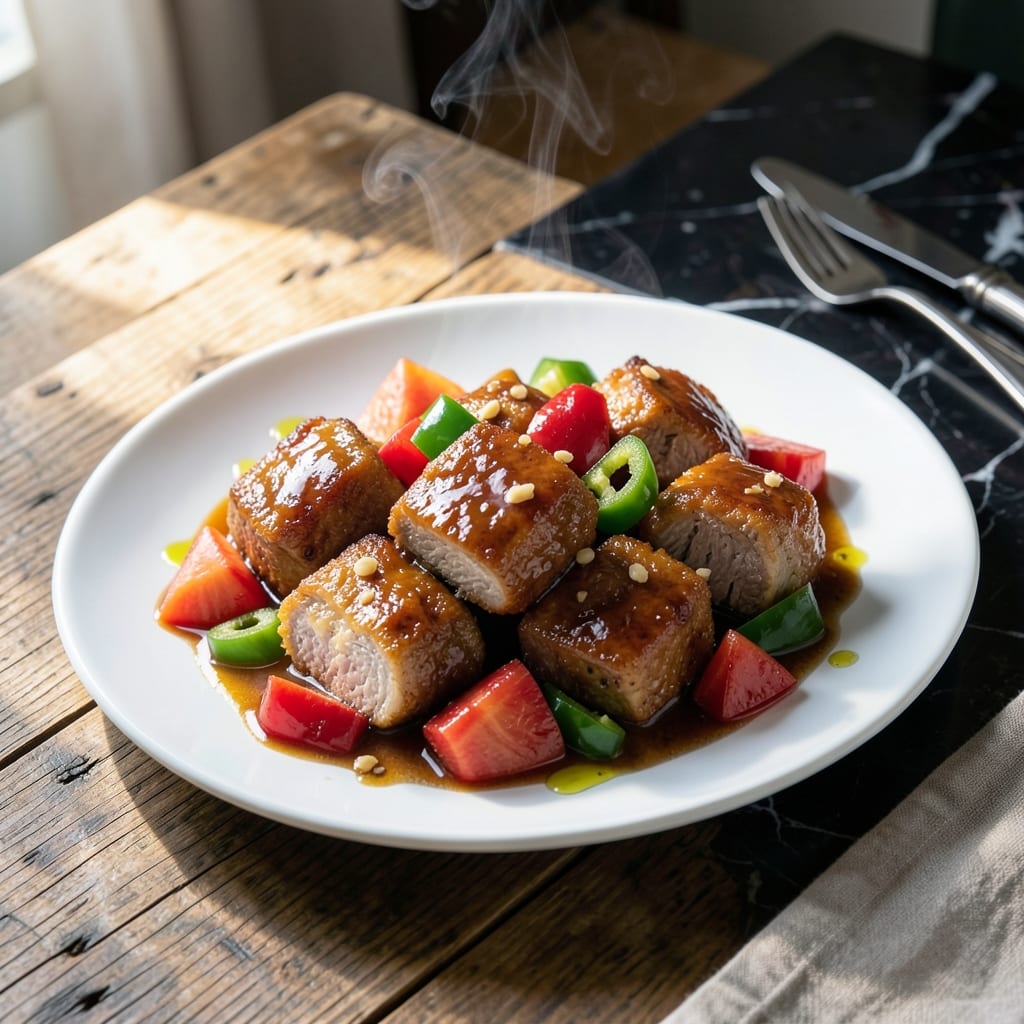
Sweet and sour pork recipe tasty delivers crispy wok-tossed perfection every time. Late nights in my test kitchen proved that timing and temperature are everything for that ideal texture. The secret lies in double-frying the pork to create shatteringly crispy edges that hold up to the tangy glaze.
This method transforms ordinary pork into golden, airy bites that stay crispy even after coating. The sauce balances sweet pineapple with sharp vinegar, creating that signature sticky-sweet finish. Every element comes together quickly in one pan.
You'll achieve restaurant-quality results with simple ingredients and precise technique. The pork remains tender inside while the outside develops that coveted crunch. This is real home cooking that impresses without complication.
Serve immediately for maximum texture contrast. The glaze should cling to each piece while maintaining its crispy coating.
Ingredients for sweet and sour pork recipe tasty
Pork shoulder and fresh produce create that signature crispy sweet and sour texture we all crave.
| Ingredient | Amount | Notes |
|---|---|---|
| Pork Shoulder 🥩 | 1 ½ lb | Cut into 1-inch cubes, boneless |
| Cornstarch 🌾 | ½ cup | For crispy coating |
| Large Egg 🥚 | 1 whole | Lightly beaten for binding |
| Pineapple Chunks 🍍 | 1 cup | Fresh or canned, drained |
| Green Bell Pepper 🌶️ | 1 whole | Diced into 1-inch pieces |
| Red Bell Pepper 🌶️ | 1 whole | Diced into 1-inch pieces |
| Granulated Sugar 🍚 | ½ cup | For sweet balance in sauce |
| White Vinegar 💧 | ¼ cup | Distilled preferred for sharpness |
| Ketchup 🍅 | ½ cup | For tangy base in glaze |
| Soy Sauce 🫒 | 2 tbsp | Low-sodium recommended |
| Garlic Cloves 🧄 | 3 cloves | Minced for sauce depth |
| Vegetable Oil 🫒 | 2 cups | High smoke point for frying |
| Salt 🧂 | 1 tsp | Kosher or sea salt preferred |
| Ground Black Pepper 🌶️ | ½ tsp | Freshly ground for best flavor |
| Green Onions 🧅 | 4 whole | Thinly sliced for garnish |
The pork shoulder is non-negotiable for authentic texture—look for well-marbled cuts at your butcher or Costco. Cut it yourself into even 1-inch cubes (don't skip this, uneven pieces fry unevenly). For the double-fry method, peanut oil is traditional, but any high-smoke-point oil works. The cornstarch must be fresh; old starch loses its crisping power. I test my oil temperature with a pork cube—it should sizzle immediately but not burn.
No pineapple? Mango or peaches add similar sweetness. Short on bell peppers? Zucchini or snap peas work in a pinch. Rice vinegar at half the amount can replace white vinegar for a milder tang. For gluten-free, swap soy sauce for tamari. The ketchup might seem like a shortcut, but it's the easiest way to get that classic sweet-sour balance without a dozen ingredients.
Serve this immediately—the crispiness degrades fast. Leftovers keep 2-3 days in the fridge, but reheat in a dry skillet to revive the crunch. For meal prep, store sauce separately and toss just before eating. The glaze thickens as it cools, so thin with a splash of water if needed.
Why You'll Love This Recipe
- One Pan Magic: I toss everything in a single skillet—pork, pineapple, peppers—and dinner’s ready before the rice finishes cooking.
- That Sauce Though: The sweet-tangy glaze clings to crispy cornstarch-dusted pork like a flavor hug, with pineapple chunks soaking it all up.
- Weeknight MVP: Between us, this feeds my family of four with leftovers for lunch, and the pork shoulder stays tender no matter how long it sits.
- Budget Win: Pork shoulder is cheap, and a little stretches far with the egg and cornstarch keeping it juicy. Honestly, I’ve served this three weeks in a row.
Step-by-step instructions for sweet and sour pork
Master the technique for achieving crispy pork with a glossy, tangy glaze every time.
Coat and Fry the Pork to Golden Perfection
Cut the 1.5 lb pork shoulder into 1-inch cubes. Pat them dry with paper towels—this ensures maximum crispiness. Season the cubes with 1 tsp salt and 0.5 tsp ground black pepper.
Dredge the pork in 0.5 cup cornstarch, pressing gently to adhere, then dip each piece into the 1 whole large egg (lightly beaten). This double coating creates an ultra-crispy exterior. Heat 2 cups vegetable oil in a wok or deep skillet to 350°F.
Fry the pork in batches for 3-4 minutes until golden brown and floating. Avoid overcrowding the pan—this lowers the oil temperature and results in greasy pork. Drain on a wire rack to maintain crispiness.
Sauté the Aromatics for Sauce Depth
Dice the green bell pepper and red bell pepper into 1-inch pieces, and mince the 3 cloves garlic cloves. In a separate pan, heat 1 tablespoon vegetable oil over medium-high heat.
Add the diced peppers and cook for 2-3 minutes until slightly softened but still vibrant in color. Add the minced garlic and stir for 30 seconds until fragrant—be careful not to burn it. The peppers should retain a slight crunch for texture contrast.
This step builds the foundation of flavor for your sauce. The peppers add freshness, while the garlic provides an aromatic base that complements the tangy glaze.
Create the Sweet and Sour Glaze
In a saucepan, combine 0.5 cup granulated sugar, 0.25 cup white vinegar, 0.5 cup ketchup, and 2 tbsp soy sauce. Stir over medium heat until the sugar dissolves, about 2-3 minutes.
Bring the mixture to a gentle simmer and cook for 5 minutes until it thickens slightly and becomes glossy. The glaze should coat the back of a spoon. This balance of sweet, tangy, and umami flavors defines the dish.
For a smoother texture, you can strain the glaze, but I prefer to keep the minced garlic and pepper bits for added texture and flavor.
Toss Everything Together and Finish
Add the crispy pork to the pan with the sautéed peppers and garlic. Pour the glaze over the pork and toss gently to coat evenly. Cook for 1-2 minutes over medium heat to allow the pork to absorb the flavors without losing its crispness.
Stir in 1 cup pineapple chunks and heat through for 30 seconds. The pineapple adds a juicy burst of sweetness that pairs perfectly with the tangy glaze. Taste and adjust seasoning if needed.
Garnish with thinly sliced 4 whole green onions for a fresh, vibrant finish. Serve immediately over steamed rice to soak up the delicious sauce.
Pro Tips For Making Sweet And Sour Pork Recipe Tasty
- Double fry the pork: I learned this the hard way—fry the pork once at 325°F for 3-4 minutes, rest it, then fry again at 375°F for 2 minutes. That second fry is what gives it that shatteringly crisp coating that holds up to the sauce.
- Use fresh pineapple: Canned pineapple works in a pinch, but fresh chunks add a brightness that cuts through the richness of the pork shoulder. Plus, they hold their shape better when tossed in the sauce.
- Skip soggy peppers: Add the green bell pepper strips at the very end, just long enough to warm through. After burning a few batches, I finally figured out they turn mushy if cooked too early.
- Velvety egg wash: Beat the large egg with 1 tablespoon of cornstarch before dredging the pork—it makes the coating stick better and gives that extra crispy texture you want. Sounds weird, but it works.
Pro cooking tips for this dish
Double-Fry Secret
For that restaurant-quality crunch, I always do a double-fry. First fry at 325°F for 2 minutes to cook through, then rest the pork for 5 minutes. The second fry at 375°F for 1-2 minutes creates that shatteringly crisp exterior. 🔥
Oil Temperature Control
Use a deep-fry thermometer to maintain precise oil temperature. If it drops below 325°F, your pork will absorb oil and become greasy. I recommend Taylor Precision thermometers for accuracy. Between batches, let the oil recover to temperature.
Cornstarch Coating
For extra crispiness, I dust my pork with cornstarch twice—once before the egg dip and again after. Use 1 tbsp extra cornstarch for the second coating. This creates a thicker, crunchier shell that holds up to the sauce.
Sauce Thickness Trick
If your glaze is too thin, mix 1 tsp cornstarch with 1 tbsp water and stir into the sauce. Simmer for 1 minute until it reaches the perfect consistency. The sauce should cling to the pork without being gluey.
Wok Technique
Use a carbon steel wok for best heat distribution. I prefer Made In woks for home kitchens. Swirl the oil to coat the sides before adding pork. This prevents sticking and ensures even cooking.
For the final toss, use a wok spatula to gently fold the pork with the sauce. Avoid vigorous stirring which can break the crispy coating.
Nutrition facts
Frequently asked questions
Can I use a different cut of pork?
Pork shoulder works best, but tenderloin is a leaner alternative. Just reduce frying time to 2-3 minutes to prevent dryness. Avoid fatty cuts like ribs as they won't crisp properly.
How do I make the sauce less sweet?
Reduce sugar to 1/3 cup and add an extra 1 tbsp vinegar. For depth, include 1 tsp Worcestershire sauce. Balance is key to that tangy finish.
Why is my pork not crispy?
Oil temperature is likely too low. Maintain 350°F and fry in small batches. Also, ensure pork is completely dry before coating with cornstarch.
Can I bake instead of fry?
Yes! Toss coated pork with 1 tbsp oil and bake at 400°F for 20-25 minutes, flipping halfway. It won't be as crispy but still delicious.