
Recipes/Cooking
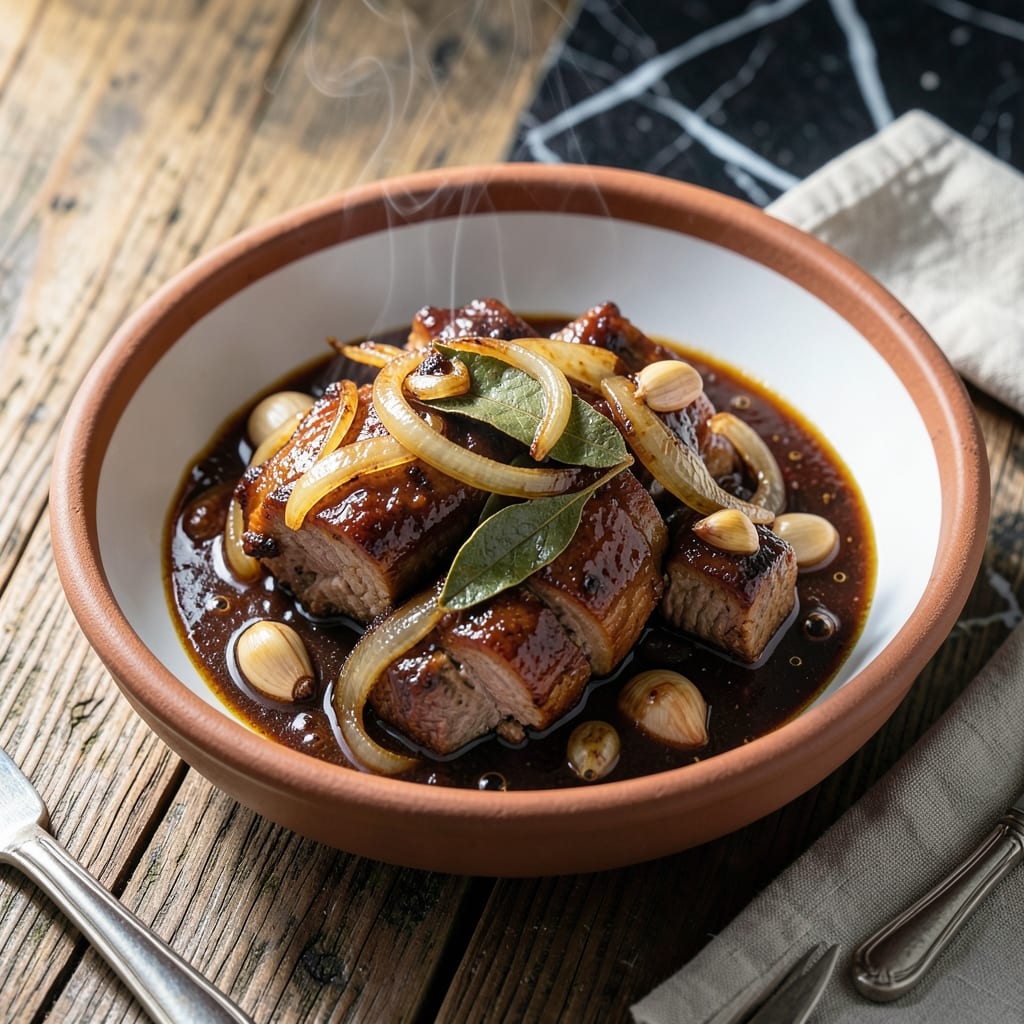
This sweet and spicy pork adobo recipe delivers Filipino flavors with a bold, tangy heat that lingers on the palate. My years in Charleston taught me how to balance sour, sweet, and spicy in every bite.
Pork shoulder simmers in a vinegar-based sauce with garlic, soy, and brown sugar until fork-tender. The key is reducing the sauce to a glossy, clingy finish that coats each piece perfectly.
What emerges is fall-off-the-bone meat with a sticky, caramelized glaze that packs serious heat. The vinegar cuts through the richness while the sugar deepens the flavor.
Serve over steamed rice to soak up every drop of that complex, addictive sauce. The dish only gets better as it sits overnight.
Ingredients for sweet and spicy pork adobo
Pantry staples meet bold Filipino flavors. Everything you need for that perfect balance.
| Ingredient | Amount | Notes |
|---|---|---|
| Pork Shoulder 🥩 | 2 lb | Cut into 2-inch chunks |
| White Vinegar 💧 | 1 ½ cups | Standard distilled type |
| Soy Sauce 🫒 | ¾ cup | Low-sodium preferred |
| Brown Sugar 🍚 | ½ cup | Light or dark works |
| Garlic Cloves 🧄 | 10 cloves | Peeled and smashed |
| Bay Leaves 🍃 | 3 pieces | Dried, whole leaves |
| Black Peppercorns 🌶️ | 1 tbsp | Whole, for sauce |
| Red Chili Flakes 🔥 | 1 tbsp | Adjust for heat level |
| Onion 🧅 | 1 whole | Yellow or white, sliced |
| Olive Oil 🫒 | 2 tbsp | For browning pork |
| Steamed Rice 🍚 | 4 cups | Cooked, for serving |
| Green Onions 🧅 | ¼ cup | Chopped, for garnish |
The pork shoulder is non-negotiable here—bone-in or boneless from Costco or your butcher works, but get pieces with good marbling. I always grab low-sodium soy sauce so I can control the salt. The vinegar should be plain white distilled (nothing fancy). For the chili flakes, look for something fresh and vibrant at an Asian market if you want that authentic kick (or just use what’s in your pantry).
No pork shoulder? Pork butt works too—same cut, just a different name. Out of brown sugar? Coconut sugar or regular white sugar in a pinch. The bay leaves can be fresh if you’ve got a tree, but dried is fine. Want more depth? Add a splash of fish sauce (yes, even with the soy). Skip the pre-minced garlic in jars—it doesn’t have the same punch as fresh.
This tastes even better the next day. Store in the fridge for up to 5 days or freeze for 3 months. The sauce thickens as it cools, so reheat with a splash of water to loosen it up.
Why You'll Love This Recipe
- One Pot Wonder: I toss everything in a single pan—pork, vinegar, soy, brown sugar—and let it simmer while I do dishes.
- Flavor Bomb: The brown sugar caramelizes with the garlic and vinegar for that sweet-tangy kick I crave every time.
- Feeds a Crowd: Between us, it’s my go-to for potlucks—doubles easily and tastes even better the next day.
- Budget Hero: Pork shoulder is cheap, and this recipe stretches it into multiple meals without skimp on taste.
Step-by-step instructions for sweet and spicy pork adobo
Here's how I make this Filipino favorite with the perfect balance of tangy, sweet, and spicy flavors.
Brown the Pork Shoulder
Heat the 2 tbsp olive oil in a large pot over medium-high heat. Add the 2 lb pork shoulder chunks in a single layer, being careful not to overcrowd the pot. You want to give each piece enough space to brown properly.
Cook for 5-6 minutes, turning occasionally, until the pork is golden brown on all sides. This step builds a flavor foundation that makes the final dish deeply savory. Don't skip it, even if you're tempted to rush.
Build the Adobo Sauce Base
Once the pork is browned, add the sliced 1 whole onion and cook for 2-3 minutes until softened. Then add the 10 cloves garlic cloves, 3 pieces bay leaves, 1 tbsp black peppercorns, and 1 tbsp red chili flakes.
Stir for 30 seconds until fragrant—this is when you'll start to smell the aromatics releasing their flavors. The chili flakes will begin to toast slightly, deepening their heat and adding complexity to the dish.
Add Liquids and Simmer
Pour in the 1.5 cups white vinegar, 0.75 cup soy sauce, and 0.5 cup brown sugar. Stir well to combine, making sure to scrape up any browned bits from the bottom of the pot. These bits are packed with flavor and will dissolve into the sauce.
Bring the mixture to a boil, then reduce the heat to medium-low. Cover and let it simmer for 1 to 1.5 hours, stirring occasionally. The pork is done when it's fork-tender and the sauce has thickened slightly.
Reduce the Sauce and Finish
Once the pork is tender, remove the lid and increase the heat to medium. Let the sauce reduce for 10-15 minutes until it clings to the back of a spoon. The vinegar's sharpness will mellow out, leaving a balanced tangy-sweet flavor.
Taste and adjust the seasoning if needed. The sauce should have a rich, glossy appearance and coat the pork beautifully. If it reduces too much, add a splash of water to loosen it slightly.
Serve with Steamed Rice and Garnish
Spoon the pork and sauce over the 4 cups steamed rice in shallow bowls. The rice soaks up the delicious sauce, making every bite flavorful. Garnish with the 0.25 cup green onions for a fresh, bright contrast to the rich adobo.
Serve immediately while hot. The contrast of the tender pork, tangy-sweet sauce, and fluffy rice is what makes this dish so satisfying. Leftovers taste even better the next day as the flavors continue to meld.
Pro Tips For Making Sweet And Spicy Pork Adobo
- Sear the Pork First: Brown the pork shoulder pieces in batches before braising—this builds a deep, caramelized base that makes the adobo sauce richer. I learned this the hard way after skipping it and ending up with a flat-tasting dish.
- Balance the Vinegar: White vinegar can overpower if added all at once. Start with 3/4 of the amount, taste after 20 minutes of simmering, then adjust—sounds weird, but it works.
- Crash the Garlic: Smash the garlic cloves with the side of your knife instead of mincing. They’ll infuse the oil and sauce with flavor without burning, and you can fish them out if you prefer a smoother texture.
- Reduce the Sauce: After the pork is tender, remove it and boil the sauce for 3-5 minutes to thicken slightly. This concentrates the sweet and spicy flavors so they cling to the meat instead of pooling at the bottom.
Common mistakes when making this dish
Skipping the Browning
I see home cooks skip browning the 2 lb pork shoulder to save time, but this step builds the Maillard reaction flavors that make adobo deeply savory. Those browned bits on the pot bottom dissolve into the sauce, adding complexity you can't get any other way. 🔥
Vinegar Overload
Using too much 1.5 cups white vinegar makes the sauce unpleasantly sharp. The vinegar should mellow during cooking to a balanced tang. If your sauce tastes harsh, add 1-2 tbsp brown sugar to counter the acidity.
Rushing the Simmer
Adobo needs that 1 to 1.5 hours simmer time for the pork to become fork-tender. I learned under Chef Chen that low and slow is the only way to get that fall-apart texture. High heat will toughen the meat.
Neglecting the Reduction
The final 10-15 minutes of cooking with the lid off is crucial. This reduces the sauce to that perfect glossy consistency that clings to the pork. Skipping this leaves you with watery, flavorless sauce.
Overcrowding the Pot
Trying to cook all the pork at once in a small pot leads to steaming instead of browning. I use my largest Dutch oven and work in batches if needed. Each 2-inch chunk needs space to develop that golden crust.
Skipping the Rest
Let the adobo rest 10-15 minutes off heat before serving. This allows the flavors to meld and the sauce to thicken slightly. In Charleston, we called this the "marrying time" - it makes a noticeable difference. 💛
Nutrition facts
Frequently asked questions
Can I use chicken instead of pork?
Yes! Chicken thighs work beautifully and cook faster. Simmer them for 35-40 minutes instead of 1 to 1.5 hours. The flavors absorb just as well, giving you the same tangy-sweet balance.
Why does the vinegar taste so strong at first?
Vinegar's sharpness mellows as it cooks down. The 1.5 cups reduces significantly during the simmer, leaving a balanced tang. Trust the process—it transforms completely by the end.
How do I make it less spicy?
Reduce the 1 tbsp red chili flakes to 1 tsp or omit entirely. For mild heat, add a pinch of sugar to balance any remaining spice. The sauce will still have depth without the kick.
Can I make this in a slow cooker?
Brown the pork first, then transfer everything to the slow cooker. Cook on low for 6-7 hours or high for 3-4 hours. Finish by reducing the sauce on the stovetop.