
Recipes/Cooking
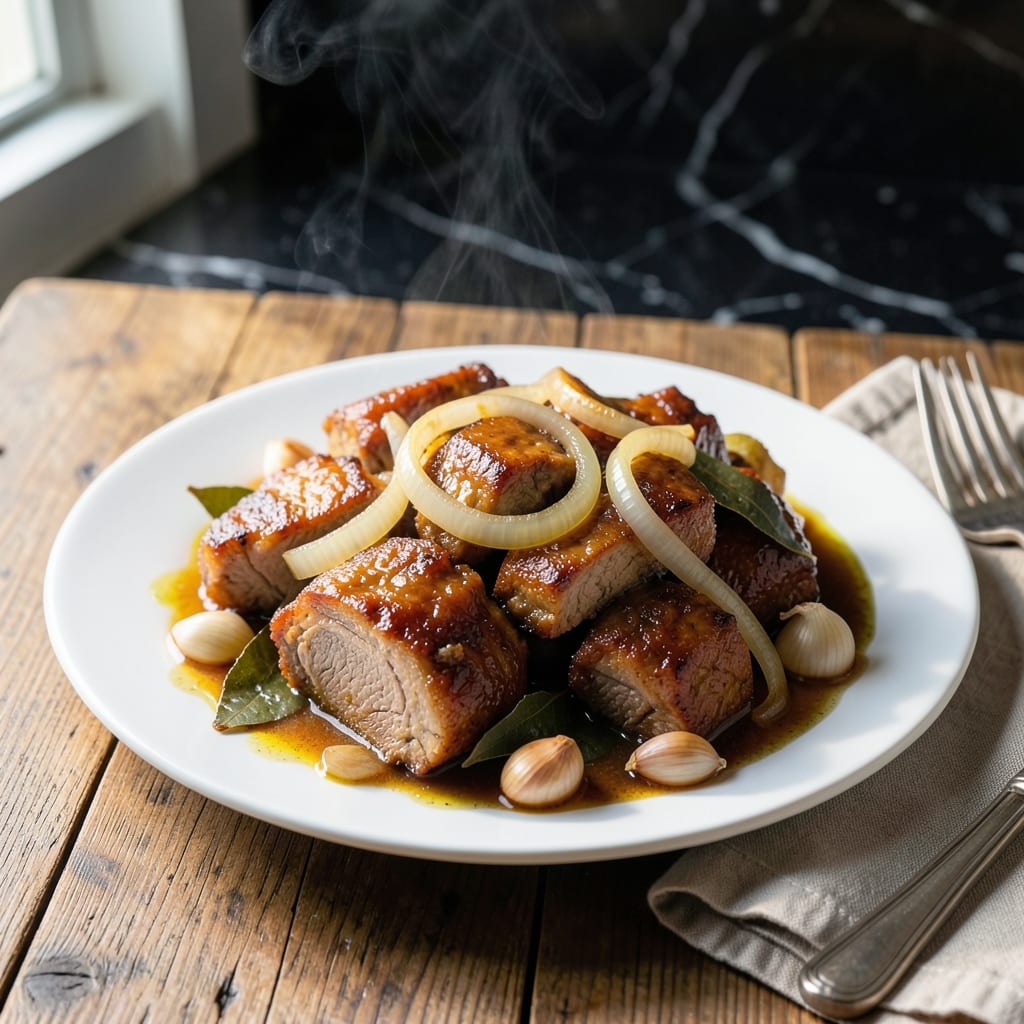
This sweet pork adobo recipe Pinoy brings the heart of Filipino cooking to your kitchen with a perfect balance of tangy and sweet flavors.
I've refined this traditional method over years, focusing on slow braising to achieve tender pork that absorbs the rich sauce deeply. The combination of soy sauce, vinegar, and brown sugar creates a complex, caramelized glaze that coats every piece.
The result is fall-apart pork with a glossy, sticky sauce that's both savory and subtly sweet. It's the kind of dish that fills your home with an irresistible aroma, promising comfort in every bite.
Serve this with steamed rice to soak up every last drop of the flavorful sauce. Here's how to make it authentically.
Ingredients for sweet pork adobo recipe pinoy
Pantry staples and a few key proteins. Nothing exotic, just bold Filipino flavor.
| Ingredient | Amount | Notes |
|---|---|---|
| Pork Belly 🥩 | 2 lb | Cut into 2-inch chunks, skin-on |
| Soy Sauce 🥫 | ¾ cup | Filipino silverwan or regular soy |
| White Vinegar 💧 | ½ cup | Cane vinegar preferred for authenticity |
| Brown Sugar 🍚 | ½ cup | Packed, light or dark |
| Garlic Cloves 🧄 | 10 cloves | Peeled and smashed |
| Bay Leaves 🍃 | 3 pieces | Dried, whole leaves |
| Black Peppercorns 🌶️ | 1 tbsp | Whole, lightly crushed |
| Water 💧 | 1 cup | To adjust sauce consistency |
| Vegetable Oil 🫒 | 2 tbsp | For searing pork |
| Onion 🧅 | 1 whole | Large, sliced into rings |
| Salt 🧂 | 1 tsp | Adjust to taste after cooking |
The pork belly is non-negotiable for authentic flavor. Look for skin-on cuts at an Asian market—it renders down beautifully and adds that signature richness. If you can't find pork belly, pork shoulder works in a pinch but won't be as luxurious. Most Filipino grocers carry Silver Swan soy sauce, which is the gold standard here. The vinegar should be white cane vinegar—Datu Puti is the most common brand.
No cane vinegar? Apple cider vinegar at the same amount is your best backup. Brown sugar can be swapped with coconut sugar for a deeper, caramel-like flavor. Fresh garlic is a must—don't even think about the jarred stuff. The bay leaves should be Turkish if possible (milder than California). If you're missing peppercorns, ground black pepper at half the amount works, but whole gives better depth.
Adobo tastes even better the next day. Keeps in the fridge for 5-6 days or freezes beautifully for 3 months. Store in the sauce—it keeps the pork moist (and trust me, you'll want every last drop).
Why You'll Love This Recipe
- One Pot Wonder: I just dump everything in a pan—pork belly, soy sauce, vinegar, sugar—and let it work its magic.
- Sweet-Savory Balance: The brown sugar caramelizes with the soy and vinegar, while the garlic adds that deep, punchy flavor I crave.
- Feeds a hungriy crowd: Between us, this dish stretches easily for family dinners or potlucks without extra effort.
- Tastes Better Next Day: Honestly, the flavors deepen overnight, so leftovers (if there are any) are even more addictive.
Step-by-step instructions for sweet pork adobo
Here's the method that guarantees tender pork with that perfect sweet-tangy sauce every time.
Sear the Pork Belly for Maximum Flavor
Heat the 2 tbsp vegetable oil in a large pot over medium-high heat. Add the 2 lb pork belly chunks and sear undisturbed for 3-4 minutes until the skin turns deep golden brown.
Flip the pieces and repeat on all sides. This browning step creates a rich foundation for the adobo sauce and locks in the pork's juices. Remove the pork with a slotted spoon and set aside, leaving the rendered fat in the pot.
Build the Aromatic Base
In the same pot, add the 1 whole onion sliced into rings and the 10 cloves garlic cloves. Sauté for 2-3 minutes until the onions soften and the garlic turns light golden—don't let it burn.
Add the 3 pieces bay leaves and 1 tbsp black peppercorns, stirring for 30 seconds to release their fragrance. This creates a flavorful base that will infuse the entire dish with authentic Filipino adobo character.
Create the Sweet-Tangy Adobo Sauce
Pour in the 0.75 cup soy sauce, 0.5 cup white vinegar, and 0.5 cup brown sugar. Stir well to dissolve the sugar, then add the 1 cup water and 1 tsp salt.
Return the seared pork belly to the pot, ensuring it's mostly submerged in the liquid. Bring to a boil, then reduce heat to medium-low and let it simmer gently. You'll notice the sauce starting to develop its characteristic glossy sheen.
Braise Until Fork-Tender
Cover the pot and let the pork adobo simmer for 1 hour to 1 hour 15 minutes, stirring occasionally. The pork is done when it becomes fork-tender and the sauce has reduced slightly.
I like to flip the pork pieces halfway through cooking to ensure even flavor distribution. The sauce should coat the back of a spoon with a syrupy consistency, and the pork belly should be tender enough to pull apart with a fork.
Reduce the Sauce and Serve
Once the pork is tender, remove the lid and increase heat to medium-high. Let the sauce reduce for 5-7 minutes until it thickens to your desired consistency, stirring frequently to prevent burning.
Taste and adjust seasoning if needed—though with the soy sauce and salt, it's usually perfect as is. Serve the sweet pork adobo hot over steamed rice, spooning plenty of that glossy, flavorful sauce over each serving.
Pro Tips For Making Sweet Pork Adobo Recipe Pinoy
- Sear the Belly First: Brown the pork belly pieces in a hot pan for 3-4 minutes per side before simmering—I learned this the hard way, but it locks in the juices and adds that deep, caramelized flavor to the adobo.
- Balance the Vinegar: Use equal parts soy sauce and white vinegar, but add the vinegar last and never let it boil vigorously or it’ll turn bitter. My grandmother swore by this, and she was right.
- Skip the Overcrowding: Cook the pork in batches if needed—cramming too many pieces into the pot steams instead of sears, and you’ll end up with pale, soggy meat. Sounds weird, but it works.
- Add Sugar Late: Stir in the brown sugar only during the last 10 minutes of cooking to prevent burning and guarantee a glossy, sticky glaze. I was skeptical until I tried it, and now I do it every time.
Storing and reheating this recipe
Fridge Storage
Let the adobo cool completely—about 2 hours—before transferring to airtight containers. I use glass jars because the sauce stains plastic. Store in the fridge for up to 5-6 days—the flavors deepen beautifully overnight. ❄️
Freezer Storage
For longer storage, portion into freezer-safe containers (leave 1 inch headspace for expansion). It freezes well for up to 3 months without losing texture. I’ve had great results with quart-size zip-top bags laid flat to save space.
Stovetop Reheating
Warm over medium-low heat in a saucepan, adding 2-3 tbsp water to loosen the sauce. Stir occasionally for 8-10 minutes until heated through. The pork will stay tender, and the sauce will regain its glossy consistency.
Microwave Reheating
Place a single portion in a microwave-safe dish, cover with a damp paper towel, and heat on 70% power for 2-3 minutes. Stir halfway through. This prevents the sauce from drying out while keeping the pork moist. 🔥
Nutrition facts
Frequently asked questions
Can I use pork shoulder instead of belly?
Yes, pork shoulder works but won’t be as rich. Use 2 lb and follow the same steps. The texture will be slightly leaner, but the flavors will still develop beautifully.
Why is my sauce too thin?
Simmer uncovered for 5-7 minutes on medium-high heat to thicken. Stir frequently to prevent burning. If it’s still loose, a cornstarch slurry can help.
Can I make this ahead?
The flavors deepen overnight. Store in an airtight container in the fridge for up to 5-6 days. Reheat gently to preserve the sauce’s glossy finish.