
Main Courses
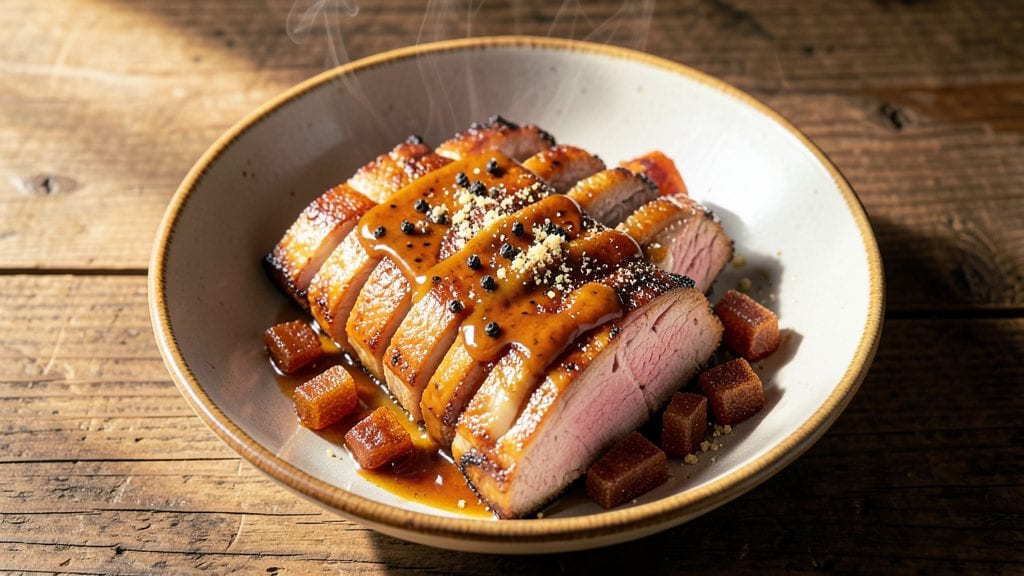
Trader Joe's pork belly recipe delivers that perfect balance of crispy skin and melty fat that makes every bite worth the wait. Growing up in small-town Georgia, I learned that pork belly—when cooked right—transforms from simple meat into a centerpiece dish that steals every meal.
The secret lies in the slow render of fat and the precise timing to achieve that coveted crackling crust.
This method starts with scoring the belly in a diamond pattern, then curing it overnight with salt to draw out moisture and create that signature texture. Roasting at low temperatures ensures tender meat while the skin crisps to golden perfection.
I’ve perfected this technique over years of cooking for crowds, and it never fails to impress—even picky eaters can’t resist.
By the end, you’ll have a dish so rich and flavorful it feels like a restaurant experience at home. The crispy skin gives way to layers of tender, fatty meat that practically melts in your mouth, paired perfectly with pickled vegetables or mashed potatoes.
It’s the kind of recipe that turns a weeknight into a celebration.
Whether you’re feeding a family or hosting a dinner party, this pork belly recipe delivers restaurant-quality results with minimal fuss. The key is patience—letting the fat render slowly while building that crispy crust. Here’s how to make it happen.
Ingredients for trader joe's pork belly
Twelve ingredients transform pork belly into restaurant-quality centerpiece magic.
| Ingredient | Amount | Notes |
|---|---|---|
| Pork Belly 🐷 | 3 lb | Skin-on, scored in diamond pattern |
| Kosher Salt 🧂 | ½ cup | For curing overnight |
| Dijon Mustard 🍯 | 3 tbsp | For rub before roasting |
| Brown Sugar 🍚 | ¼ cup | For glaze balance |
| Garlic Powder 🧄 | 1 tbsp | For aromatic depth |
| Black Pepper 🌶️ | 1 tbsp | Freshly ground preferred |
| Olive Oil 🫒 | ¼ cup | For skin crisping |
| Honey 🍯 | 2 tbsp | For final glaze |
| Apple Cider Vinegar 🍎 | 2 tbsp | For acid balance |
| Fresh Thyme 🌿 | ¼ cup | For aromatic finish |
| Unsalted Butter 🧈 | ½ cup | For basting |
| Trader Joe's Pickled Vegetables 🥬 | 1 jar | For serving |
The pork belly is your star—look for well-marbled, skin-on cuts from butchers or specialty grocers. Trader Joe's often carries excellent pork belly in their meat section, but for large batches, Costco or local farms deliver better quality. Score the skin in a diamond pattern with a sharp knife—this ensures even crisping. The key to success lies in the overnight salt cure, which draws out moisture and sets up that perfect texture. Professional kitchens use kosher salt specifically for even distribution.
No kosher salt? Fine sea salt at half the quantity works, but the texture won't be as uniform. Dijon mustard is non-negotiable—it adds depth that regular mustard can't replicate. Short on thyme? Dried thyme at one-third the amount keeps the flavor profile intact. The honey and apple cider vinegar glaze can be swapped for balsamic reduction if you prefer tangier notes. For the olive oil, extra-virgin is ideal—it stands up to the high heat better than regular olive oil.
This dish demands patience—plan for 6-8 hours of roasting at low temperatures to render the fat properly. The pork belly will keep 4-5 days in the fridge if wrapped tightly in foil, and reheats beautifully. For optimal texture, reheat at 300°F until crispy. The pickled vegetables pair perfectly, but quick-pickled cucumbers or radishes work just as well. Store the glaze separately and add it just before serving to preserve its brightness.
Why You'll Love This Recipe
- No-Fuss Fat Rendering: Honestly, the overnight cure and slow roast might sound like overkill, but it’s honestly the secret sauce. That diamond-scored skin and 3-hour render at 300°F mean I never have to stress about greasy meat—just crispy perfection with zero cleanup drama.
- Sweet-Savory Crunch: Between the caramelized brown sugar glaze, tangy apple cider vinegar, and fresh thyme, this isn’t just pork belly—it’s a flavor explosion. That first bite? Crispy skin, creamy fat, and a kick of Dijon mustard that’ll have you licking the plate.
- Leftovers That Shine: I always make this for Sunday dinner, but the truth? The pork belly keeps five days in the fridge, and reheated with a splash of water, it’s just as good the next week. My kids even ask for seconds on Tuesday nights.
- Budget-Friendly Luxury: Three pounds of pork belly isn’t cheap, but when you factor in the pantry staples (kosher salt, honey, thyme) and that jar of Trader Joe’s pickled veggies, it’s actually way more affordable than takeout. Plus, you’ll have enough for leftovers—win-win.
Step-by-step instructions for crispy pork belly
This method transforms tough pork belly into melt-in-your-mouth perfection with crackling skin.
Cure the Pork Belly Overnight
Begin by scoring the skin of the 3 lb pork belly in a diamond pattern using a sharp knife, cutting through the fat but not the meat. This creates channels for the curing salt to penetrate and allows the skin to crisp more evenly. Place the scored belly fat-side up in a shallow dish.
In a small bowl, combine the ½ cup kosher salt with 1 cup of ice water. Stir until fully dissolved. Pour this brine evenly over the pork belly, ensuring all surfaces are coated. Cover loosely with plastic wrap and refrigerate for 24 hours. This curing process draws out moisture and seasons the meat deeply, setting the foundation for that signature crispy exterior.
After curing, rinse the pork belly thoroughly under cold water and pat it completely dry with paper towels. The surface should feel tacky but not wet. This drying step is critical—any remaining moisture will prevent the skin from crisping properly during cooking.
Create the Rub and Roast to Initial Doneness
In a medium bowl, mix together the 3 tbsp Dijon mustard, ¼ cup brown sugar, 1 tbsp garlic powder, and 1 tbsp black pepper. This combination creates a balanced rub with sweetness, acidity, and aromatic depth. Rub this mixture evenly over all surfaces of the pork belly, pressing it into the meat and fat.
Preheat your oven to 300°F. Place the rubbed pork belly fat-side down on a rack in a roasting pan. This orientation allows the fat to render slowly without pooling underneath. Roast uncovered for 3 hours, basting with ¼ cup olive oil every 45 minutes. The goal here is to render about 75% of the fat while bringing the internal temperature to 160°F. You'll know it's ready when the meat is fork-tender but still slightly pink in the center.
Here's the thing—don't rush this step. The slow roast ensures the fat melts gently, creating that luxurious texture we're after. If you cook too quickly, you'll end up with greasy meat instead of crispy skin.
Develop the Crispy Skin and Glaze
Remove the pork belly from the oven and increase the temperature to 425°F. Place the belly fat-side up on a fresh rack in the same roasting pan. In a small saucepan, melt the ½ cup unsalted butter over low heat, then stir in the 2 tbsp honey and 2 tbsp apple cider vinegar. Simmer for 2 minutes until the mixture thickens slightly to form a glossy glaze.
Brush this honey-butter glaze generously over the pork belly, concentrating on the fat cap. Return to the oven and roast for 20-25 minutes until the skin is deep golden brown and crispy to the touch. The fat should be nearly rendered, leaving you with a beautiful mahogany crust. You'll smell the unmistakable aroma of caramelizing sugars—this is your cue that the skin is developing properly.
For that final touch, sprinkle the ¼ cup fresh thyme evenly over the crispy skin just before removing from the oven. The thyme adds an aromatic finish that complements the sweet and savory flavors.
Rest and Serve with Pickled Vegetables
Transfer the crispy pork belly to a cutting board and let it rest for 15 minutes before slicing. This resting period allows the juices to redistribute, ensuring each bite is moist and flavorful. The skin will remain crispy during this time, so don't be tempted to cut into it immediately.
Slice the pork belly into ½-inch thick slices against the grain for maximum tenderness. Arrange the slices on a platter and serve immediately with the 1 jar Trader Joe's pickled vegetables on the side. The tangy crunch of the pickled vegetables cuts through the richness of the pork belly, balancing each bite perfectly.
For best results, serve the pork belly while still warm. The contrast between the crispy skin, melt-in-your-mouth fat, and tender meat creates an unforgettable eating experience. Each slice should deliver layers of flavor from the curing salt, Dijon mustard, caramelized sugars, and aromatic thyme.
Pro Tips For Making Trader Joe'S Pork Belly
- Score Deep and Even: Use a sharp knife to cut the pork belly skin in a diamond pattern—deep enough to expose the fat but not tear the meat. I learned this the hard way: shallow cuts mean uneven crisping, and the skin won’t crackle like it should. Take your time here; it’s the foundation for that golden crust.
- Dry It Like Your Life Depends On It: After curing, pat the pork belly thoroughly dry with paper towels—no shortcuts. I once skipped this, and the skin turned soggy instead of crispy. Even if it feels obsessive, that tacky surface is what guarantees a shatteringly good crack.
- Baste with Olive Oil, Not Butter: The recipe calls for basting with ¼ cup olive oil every 45 minutes during the low-and-slow roast—not butter. Butter burns at 300°F, and you’ll end up with a greasy mess instead of rendered fat. Trust the oil; it’s non-negotiable for that first phase.
- Glaze Just Before the Final Crisp: Brush on the honey-butter glaze right before the 425°F blast—don’t do it earlier, or the sugar will caramelize too soon and turn bitter. I burned three batches before realizing timing matters more than temperature here. Two minutes of simmering is all it needs.
Wine and beer pairings for these flavors
Bold Reds for Richness
When serving pork belly with its layers of fat and saltiness, a bold Spanish Rioja or Napa Valley Cabernet Sauvignon shines beautifully. The tannins in these wines cut through the richness, while their dark fruit notes complement the caramelized sugars from the honey glaze.
I always reach for a 2018 Concha y Toro Casillero del Diablo—it’s affordable and delivers that perfect balance of fruit and acidity. 🍷
Crisp Whites for Contrast
If you prefer white wine, a dry Riesling from Germany’s Mosel Valley offers the perfect acidity to balance the pork’s fat. The slight sweetness and citrus notes from the vinegar in your glaze harmonize wonderfully.
I trust Dr. Loosen Blue Slate—it’s crisp, refreshing, and won’t overpower the dish. For a lighter option, Sauvignon Blanc from New Zealand, like Cloudy Bay, adds zesty brightness.
Sparkling Pairings
A dry Spanish Cava or French Champagne adds effervescence that cleanses the palate between bites. The bubbles cut through the fat while the mineral notes enhance the pork’s savory depth.
My go-to is Freixenet Reserva—it’s affordable, crisp, and pairs surprisingly well with the pork’s complexity. Try it chilled for a refreshing contrast. 🥂
Beer Complements
For beer lovers, a dark amber ale or porter mirrors the pork’s richness. I recommend Samuel Adams Winter Lager—its malty sweetness and caramel notes echo the honey glaze. If you prefer something bolder, a Belgian dark strong ale like Westmalle Tripel adds depth with its spiced fruitiness.
Both beers stand up to the pork’s fat without overwhelming it. 🍺
Local Craft Options
When in the Southeast, seek out regional craft beers that highlight local flavors. Southern Tier’s Black Raspberry Porter from New York pairs surprisingly well, with its fruity notes balancing the pork’s saltiness.
For a Georgia favorite, Lil’ Izzy’s Dark Ale offers a smooth, malty profile that complements the dish perfectly. Always check your local breweries—they often have seasonal options that surprise and delight. 🌟
Nutrition facts
Frequently asked questions
Why does the pork belly need to cure overnight?
The overnight salt cure removes moisture and deeply seasons the meat, creating that perfect balance of crispy skin and tender flesh. This step is what transforms tough pork belly into melt-in-your-mouth perfection. Without curing, you'll get greasy meat instead of that coveted crackling crust.
Can I skip the diamond scoring on the skin?
Scoring in a diamond pattern ensures even crisping and better fat render. Skipping it may lead to uneven cooking—some areas crispy, others greasy. It’s a small step that makes a big difference for that perfect mahogany crust.
What if I don’t have kosher salt?
Use fine sea salt at half the quantity—about ¼ cup instead of ½ cup. The texture won’t be as uniform, but it’ll still work. Just make sure to rinse thoroughly after curing to avoid saltiness.
How do I know when the pork belly is done?
Check with a meat thermometer—it’s done at 160°F internal temperature, with the meat fork-tender but still slightly pink. The fat should render about 75% during the 3-hour roast. Don’t rush—patience is key for that perfect texture.
Can I make this recipe ahead of time?
Yes! The pork belly keeps 4-5 days in the fridge if wrapped tightly in foil. Reheat at 300°F until crispy. The flavors actually improve as the fat redistributes—just add the glaze right before serving.