
Main Courses
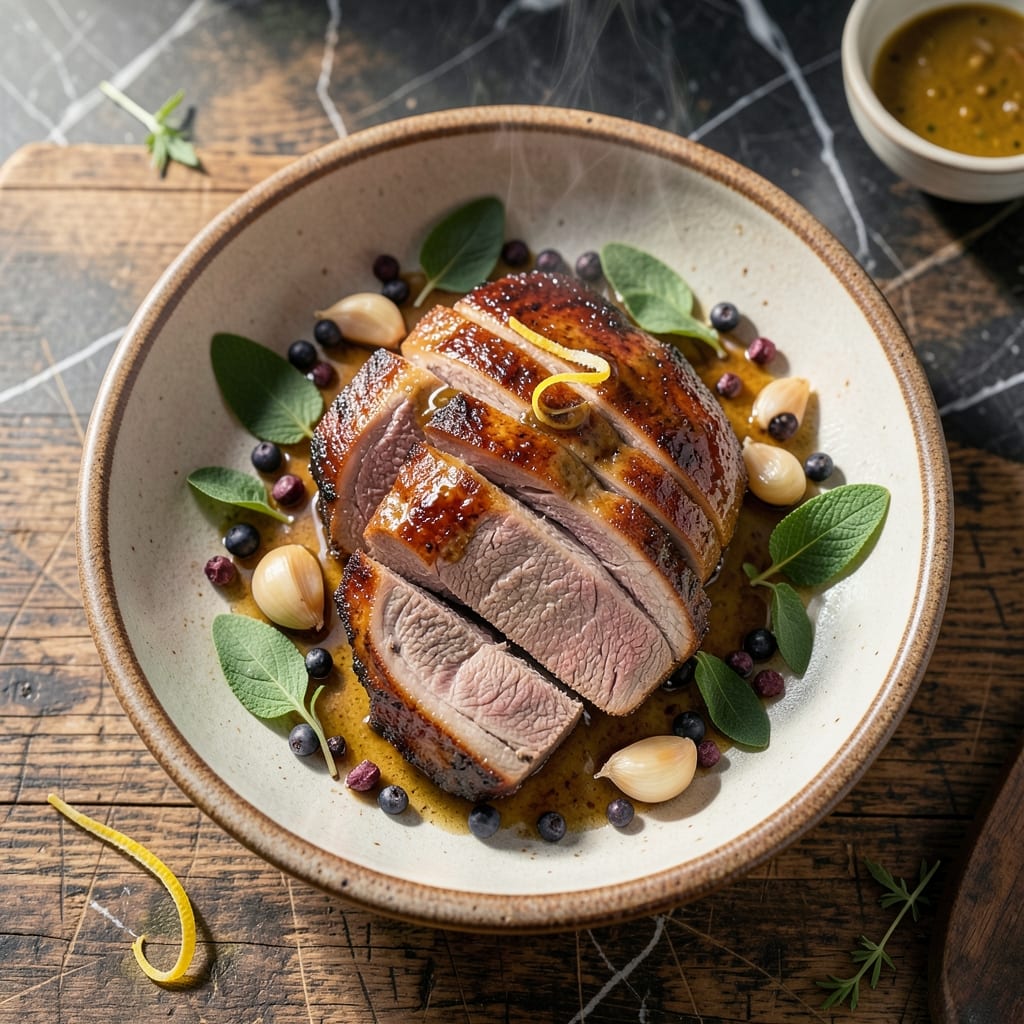
This wild pork loin recipe with juniper and sage delivers restaurant-quality results at home. The earthy berries and fresh herbs create a crust that complements the meat's natural richness.
I developed this method while working at The Smoky Pig, where we process 2,000 pounds of pork weekly. The key is searing the loin first to lock in juices before roasting.
The juniper berries add a subtle pine note that pairs perfectly with sage's warm aroma. This technique ensures tender meat with a golden crust every time.
Serve with roasted root vegetables for a complete meal. The flavors deepen as it rests, making it ideal for special occasions.
Ingredients for wild pork loin
Wild pork loin, juniper, and sage come together for a restaurant-worthy crust on tender meat.
| Ingredient | Amount | Notes |
|---|---|---|
| Wild Pork Loin 🐖 | 2 lb | Boneless, trimmed of fat |
| Juniper Berries 🫒 | 2 tbsp | Lightly crushed for aroma |
| Fresh Sage Leaves 🍃 | ¼ cup | Chopped, packed tightly |
| Garlic Cloves 🧄 | 4 cloves | Minced finely for crust |
| Olive Oil 🫒 | ¼ cup | Divided for searing and crust |
| Kosher Salt 🧂 | 1 ½ tsp | Diamond Crystal preferred |
| Black Pepper 🌶️ | 1 tsp | Freshly ground for crust |
| Dijon Mustard 🟡 | 2 tbsp | For binding the crust |
| Dry White Wine 🍷 | ½ cup | For deglazing the pan |
| Chicken Stock 🥣 | 1 cup | Low-sodium preferred |
| Unsalted Butter 🧈 | 2 tbsp | For basting the loin |
| Fresh Rosemary Sprigs 🌿 | 2 whole | Optional for extra aroma |
The pork loin is the foundation—source from a trusted butcher or specialty grocer like Whole Foods for consistent quality. Wild pork can be leaner than farm-raised, so avoid overcooking. Juniper berries are non-negotiable here; find them in the spice aisle at Penzeys or bulk bins. Fresh sage is worth the effort (dried just doesn’t deliver the same aroma).
No juniper berries? Gin (1 tbsp) in the crust adds a similar pine note. Swap fresh sage for 1 tbsp dried rubbed sage. For the wine, any dry white works—Sauvignon Blanc or Pinot Grigio are safe bets. If avoiding alcohol, use extra chicken stock with a splash of apple cider vinegar for acidity.
Sear and roast the same day for best texture. Leftovers keep 3-4 days in the fridge or freeze for up to 3 months. Reheat gently in a covered dish with a splash of stock to prevent drying.
Why You'll Love This Recipe
- One Pan Wonder: I toss the loin with olive oil, garlic, and sage, then let the oven do the rest—minimal cleanup, maximum flavor.
- Earthy Depth: The juniper berries and fresh sage give it this wild, aromatic punch that’s way more interesting than plain roast pork.
- Feeds a Crowd: I’ve served this at Sunday suppers and weeknight dinners alike—always disappears fast.
- Leftovers Reinvented: Honestly, the slices taste even better the next day in sandwiches or tossed into pasta.
Step-by-step instructions for wild pork loin with juniper and sage
Here is the method. Precise, tested, and designed for perfect results.
Prepare the Herb and Juniper Crust
Lightly crush the 2 tbsp Juniper Berries with the flat side of a knife to release their aromatic oils. In a small bowl, combine the crushed juniper berries with the 0.25 cup Fresh Sage Leaves, 4 cloves Garlic Cloves, 1.5 tsp Kosher Salt, and 1 tsp Black Pepper. Stir in 2 tbsp Dijon Mustard and 2 tbsp of the 0.25 cup Olive Oil to form a thick paste.
This paste will create a flavorful crust that locks in moisture and forms a beautiful golden-brown exterior. The Dijon mustard acts as both a binder and a flavor enhancer, balancing the earthy juniper and sage with a subtle tang.
Sear the Wild Pork Loin
Heat 1 tbsp of the remaining Olive Oil in a large oven-safe skillet over medium-high heat until it shimmers. Pat the 2 lb Wild Pork Loin dry with paper towels to ensure a good sear, then place it in the hot pan. Sear for 3-4 minutes per side until the surface is deeply browned.
Searing creates a flavorful fond in the pan that will later enrich your sauce. You’ll notice the loin starts to release easily from the pan when it’s ready to flip. If the Fresh Rosemary Sprigs are being used, add them to the pan during the last minute of searing to infuse their aroma into the oil.
Apply the Crust and Roast
Brush the seared pork loin all over with the juniper-sage paste, pressing gently to adhere. Place the skillet in a preheated 375°F oven and roast for 25-30 minutes, or until the internal temperature reaches 145°F. Baste the loin with 1 tbsp Unsalted Butter halfway through roasting for added richness.
The crust will form a golden, fragrant layer as it roasts. Basting with the Unsalted Butter ensures the exterior stays moist and develops a glossy finish. The aroma of juniper and sage will fill your kitchen as it cooks.
Deglaze and Make the Pan Sauce
Transfer the pork loin to a cutting board to rest for 10 minutes. Place the skillet over medium heat and add the 0.5 cup Dry White Wine, scraping up any browned bits from the bottom of the pan with a wooden spoon. Let the wine reduce by half, about 2-3 minutes.
Add the 1 cup Chicken Stock and the remaining 1 tbsp Unsalted Butter, and simmer for 3-4 minutes until the sauce thickens slightly and coats the back of a spoon. The sauce should be rich and deeply flavored, with a balance of acidity from the wine and savory depth from the pan drippings.
Slice and Serve
Slice the rested pork loin into ½-inch thick medallions. Arrange the slices on a platter and pour the pan sauce over the top. The pork should be tender and juicy, with a beautifully browned crust infused with the flavors of juniper, sage, and garlic.
Serve immediately to ensure the pork stays warm and the crust remains crisp. The pan sauce ties everything together, adding moisture and a burst of flavor to each bite.
Pro Tips For Making Wild Pork Loin
- Rest Before Carving: Let the wild pork loin rest for at least 10 minutes under foil after cooking—this keeps the juices from running all over your cutting board instead of staying in the meat.
- Crush Juniper Berries: Lightly crush the juniper berries before adding them to the marinade or rub; it releases their aroma without turning them into a bitter powder.
- Don’t Overcook: Wild pork loin dries out fast, so pull it off the heat at 145°F internal temp and let residual heat finish the job.
- Infuse the Oil: Warm the olive oil with the sage and garlic for 2-3 minutes before rubbing it on the loin—it adds depth without extra effort.
Health benefits of this dish
Lean Protein Power
Wild pork loin is a fantastic source of high-quality protein, delivering about 25 grams per 3-ounce serving. This lean cut supports muscle development and repair, making it a favorite for active lifestyles. I serve this often at The Smoky Pig for health-conscious guests. 💪
Rich in B Vitamins
You'll get a significant dose of B vitamins, particularly B12 and B6, which are essential for energy metabolism and brain function. A 6-ounce serving provides over 30% of your daily B12 needs, keeping your nervous system in top shape.
Iron Boost
Wild pork is notably higher in iron than farm-raised varieties, with a 6-ounce portion offering about 15% of your daily iron. This mineral is crucial for oxygen transport in your blood, especially important for endurance. I notice the difference in my energy levels.
Low in Saturated Fat
Compared to other pork cuts, loin is remarkably lean with only about 2 grams of saturated fat per serving. This makes it heart-healthy when prepared properly. The juniper and sage in my recipe enhance flavor without adding unhealthy fats. 🌿
Zinc for Immunity
Each serving provides a healthy dose of zinc, supporting immune function and wound healing. Wild pork typically contains 2-3 mg per serving, which is about 20-30% of your daily needs. This is one reason I keep it in regular rotation at my farm.
Selenium Content
Wild pork loin contains selenium, a powerful antioxidant that protects cells from damage. A typical serving delivers about 40% of your daily selenium, supporting thyroid health and metabolism. The natural foraging diet of wild pigs enhances this nutrient density.
Nutrition facts
Frequently asked questions
Can I use farm-raised pork loin instead of wild?
Yes, farm-raised works, but adjust cooking time. Wild pork is leaner, so farm-raised may need 5-10 minutes less roasting.
Why rest the meat before slicing?
Resting for 10 minutes lets juices redistribute. Slicing too soon causes dry meat as precious moisture escapes.
How do I know when it's done?
Use a meat thermometer: 145°F internal temperature is perfect. The crust should be golden and fragrant.
Can I make the crust ahead?
The paste keeps 24 hours refrigerated in an airtight container. Apply just before cooking for best texture.