
Main Courses
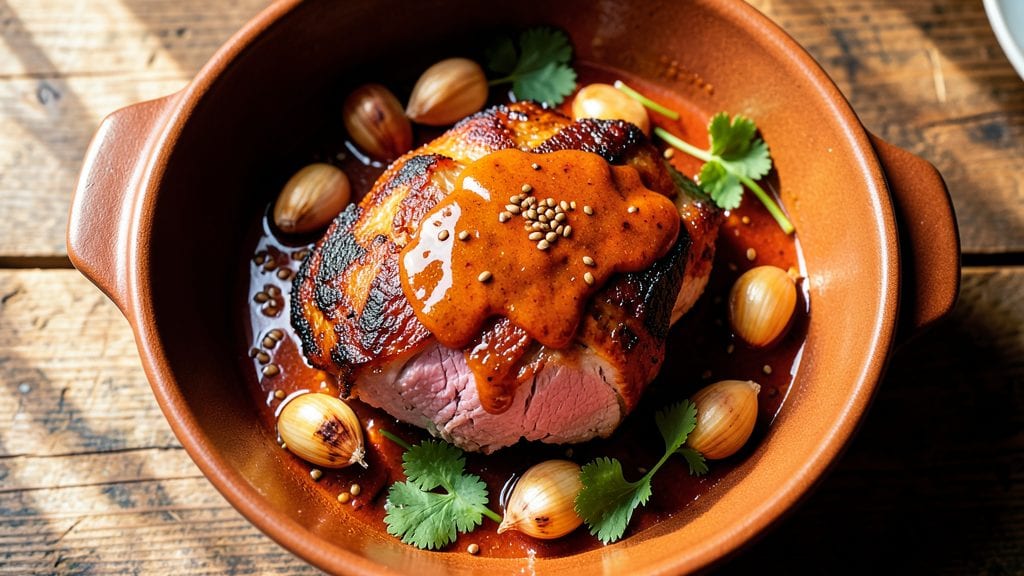
This authentic Puerto Rican pork shoulder recipe brings the bold flavors of lechón asado to your kitchen with slow-braised mojo magic. Growing up in Georgia, I first tasted this dish at a Puerto Rican festival—juicy, tender pork infused with garlic, oregano, and citrus, falling off the bone.
The secret lies in the slow cook, where spices meld into the meat over hours, creating layers of smoky-sweet complexity that define island cuisine.
Traditional Puerto Rican techniques transform tough pork shoulder into melt-in-your-mouth perfection. We start with a dry rub of adobo—a blend of garlic, oregano, and achiote—that forms a flavorful crust.
Then, the pork braises in its own juices with sofrito, a fragrant base of bell peppers, onions, and cilantro, until fork-tender. This method preserves authenticity while delivering restaurant-quality results at home, with minimal effort beyond the initial prep.
The result is pork so tender it shreds easily, bathed in a rich, aromatic sauce that clings to every bite. Serve it with arroz con gandules and tostones for a complete Puerto Rican feast.
The flavors are bold yet balanced—savory, slightly sweet, with a bright citrus finish that cuts through the richness. This dish isn’t just a meal; it’s a celebration of island tradition, brought to your table with professional precision.
Whether you’re hosting a gathering or craving a taste of the Caribbean, this recipe delivers. The slow-cooked method ensures maximum tenderness, while the mojo marinade guarantees deep, authentic flavor.
Every bite transports you to a Puerto Rican parrilla, where the air hums with the scent of sizzling pork and smoldering coals. Let’s bring that magic to your kitchen.
Ingredients for authentic puerto rican pork shoulder
Pantry staples meet island spices for pork shoulder that falls apart with every bite.
| Ingredient | Amount | Notes |
|---|---|---|
| Pork Shoulder (Boston Butt) 🍖 | 5 lb | Bone-in, skin-on preferred |
| Garlic Cloves 🧄 | 12 cloves | Fresh, peeled, smashed |
| Dried Mexican Oregano 🌿 | 2 tbsp | Not regular oregano |
| Achiote Powder 🌶️ | 1 ½ tbsp | Traditional Puerto Rican spice |
| Ground Black Pepper 🌶️ | 1 ½ tbsp | Freshly cracked preferred |
| Kosher Salt 🧂 | 2 tbsp | Diamond Crystal preferred |
| Orange Juice 🍊 | 1 cup | Freshly squeezed, no pulp |
| Orange Zest 🍊 | 1 tbsp | From 1 large orange |
| White Wine Vinegar 💧 | ½ cup | For mojo marinade |
| Olive Oil 🫒 | ½ cup | Extra-virgin for richness |
| Yellow Bell Pepper 🍅 | 1 whole | Large, chopped for sofrito |
| Green Bell Pepper 🍅 | 1 whole | Large, chopped for sofrito |
| Yellow Onion 🧅 | 1 whole | Large, chopped for sofrito |
| Fresh Cilantro 🌿 | ½ cup | Stems removed, chopped |
| Bay Leaves 🌿 | 2 whole | Dried, for braising |
| Cumin Seeds 🌿 | 1 tsp | Toasted for depth |
| Annatto Seeds 🌶️ | ½ tsp | Optional, for color |
The pork shoulder is non-negotiable—bone-in, skin-on gives you the most flavor and juiciness. Look for a well-marbled cut at Whole Foods or your local butcher shop, where they can cut it to your preferred size. Costco often carries large pork shoulders that work perfectly for this recipe. If you can't find achiote powder, annatto seeds (toasted and ground) make a decent substitute, though the flavor won't be identical. The oregano must be Mexican oregano—regular oregano lacks that earthy, slightly bitter depth that's essential for authenticity. Toast your cumin seeds in a dry pan for 30 seconds until fragrant, then grind them fresh for maximum flavor.
No fresh oranges? Grapefruit juice works in a pinch, though the flavor will be slightly more bitter. Substituting white wine vinegar? Apple cider vinegar is fine, but reduce it to 3 tablespoons—it's more acidic. For the sofrito, frozen chopped peppers and onions work if you're short on time, but fresh gives you that vibrant, bright flavor that's worth the extra minute. If you can't find annatto seeds, paprika or turmeric adds color, though neither matches the true annatto hue. The bay leaves can be skipped, but they add a subtle earthiness that rounds out the dish beautifully. For the olive oil, use something fruity and peppery—like California extra-virgin—it should taste good enough to drizzle on toast.
This pork keeps beautifully—3-4 days in the fridge, 3 months frozen. The flavor actually improves after the first day as the spices meld into the meat. I like to portion it into individual servings so it's ready for quick meals. The mojo marinade can be made ahead and stored in the fridge for 1 week, though the fresh orange zest and juice are best used within 2 days. For leftovers, reheat gently in a skillet with a splash of water or broth to keep it moist. The sofrito base can be prepped a day ahead and stored in the fridge for 5 days—it's even better the next day as the flavors meld.
Why You'll Love This Recipe
- Marinade Magic: That mojo marinade—orange juice, achiote powder, and garlic—does all the work. Just toss the pork in it overnight, and you’ve got tender, flavor-packed meat with minimal effort. No fancy prep, just pure flavor infusion.
- Crowd-Pleasing Boldness: The combination of achiote, cumin seeds, and dried Mexican oregano gives this pork a taste that’s unmistakably Puerto Rican. It’s the kind of dish that disappears off the table, even when you’re feeding a room full of skeptics.
- Leftovers? Better.: This recipe makes enough for days, and honestly, it tastes even better the next day. Slice it up for sandwiches, throw it in rice, or just eat it straight from the fridge—your future self will thank you.
- Budget Meets Luxury: A whole 5 lb pork shoulder might sound expensive, but with this recipe, you’re getting so much flavor per dollar. The achiote and spices stretch the taste beyond what you’d expect, making it feel like a special occasion without the price tag.
Step-by-step instructions for authentic Puerto Rican pork shoulder
Here's how to transform a simple pork shoulder into tender, flavorful pernil with authentic island flair.
Prepare the Mojo Marinade and Sofrito Base
In a medium bowl, combine the 1 cup orange juice, 1 tbsp orange zest, ½ cup white wine vinegar, ½ cup olive oil, 1½ tbsp achiote powder, 2 tbsp dried Mexican oregano, 1½ tbsp ground black pepper, 2 tbsp kosher salt, 1 tsp toasted cumin seeds, and ½ tsp annatto seeds. Whisk vigorously until the annatto seeds dissolve completely, creating a vibrant red-orange hue—this is your mojo marinade. The annatto adds that signature Puerto Rican color while the cumin seeds provide earthy depth.
In a separate large skillet, heat ½ cup olive oil over medium heat. Add the 1 yellow onion, 1 yellow bell pepper, 1 green bell pepper, and 12 smashed garlic cloves. Sauté for 8-10 minutes until the vegetables soften and the garlic becomes fragrant. This sofrito forms the aromatic foundation of your dish. Remove from heat and let cool slightly before mixing with the pork.
Marinate and Sear the Pork Shoulder
Place the 5 lb pork shoulder in a large zip-top bag. Pour the mojo marinade over the meat, ensuring it coats all surfaces. Seal the bag and massage the marinade into the pork, working it into any crevices. Refrigerate for at least 4 hours, preferably overnight—this allows the flavors to deeply penetrate the meat and tenderize the tough fibers.
When ready to cook, remove the pork from the refrigerator and let it sit at room temperature for 30 minutes. Preheat your oven to 275°F. In a large Dutch oven, sear the pork on all sides over medium-high heat until deeply browned—about 5 minutes per side. This Maillard reaction creates rich, caramelized flavors that will develop further during braising. Transfer the seared pork to the Dutch oven.
Braise Until Fork-Tender
Pour the cooled sofrito mixture over the pork in the Dutch oven. Add 2 bay leaves to the pot. The bay leaves will infuse subtle herbal notes that complement the vibrant mojo flavors. Place the lid on the Dutch oven and transfer it to the preheated oven. Braise for 3 hours, then carefully flip the pork over and add ½ cup fresh chopped cilantro to the pot. Return to the oven and cook for an additional 2-3 hours until the pork reaches an internal temperature of 195-203°F and is fork-tender.
Here's the key: The pork should pull apart easily with two forks when pierced. If it's not quite there, continue braising in 15-minute increments until tender. The long, slow cook time breaks down the connective tissue, creating melt-in-your-mouth texture. The cilantro added during the second half of cooking brightens the dish with fresh herbal notes.
Pro Tips For Making Authentic Puerto Rican Pork Shoulder
- SMASH THAT GARLIC: Don’t just mince those 12 cloves—slam them with the flat side of your knife first. That releases more oils and aroma into the sofrito, giving your pork shoulder that deep, garlicky punch straight from Puerto Rican kitchens. (Yes, it looks violent, but your taste buds will thank you.)
- TOAST THOSE CUMIN SEEDS: I used to skip toasting the cumin seeds and wondered why my mojo marinade tasted flat. Dry-toast them in a skillet for 30 seconds until fragrant—just until they smell like toasted nuts, not burned. That little step adds earthy depth that cuts through the acidity of the orange and vinegar.
- DON’T SKIP THE 30-MINUTE REST: After pulling the pork from the fridge, resist the urge to rush it into the oven. Let it sit at room temperature for the full 30 minutes—this ensures even cooking and prevents the outside from drying out while the center stays cold. (I learned this the hard way with a slightly rubbery first batch.)
- ADD CILANTRO AT THE END: The recipe says to add the ½ cup chopped cilantro after the first 3 hours of braising, and it’s not just for garnish. That final burst of freshness brightens the dish and balances the rich, slow-cooked flavors. If you add it earlier, it’ll turn bitter—trust the timing.
Best sauces and condiments for this authentic puerto rican pork shoulder
Classic Mojo Sauce
The vibrant mojo marinade from the recipe transforms into a luscious sauce when reduced with the braising juices. After braising, skim off excess fat and strain the pork juices through a fine-mesh sieve.
Mix ½ cup of the strained juices with 1 tbsp orange zest and 1 tsp toasted cumin seeds for a bright, citrusy drizzle. This sauce captures the essence of Puerto Rican parrilla culture—simple yet deeply flavorful. I serve it warm over shredded pork with a sprinkle of fresh cilantro. 🍋
Creole-Style Sofrito Dipping Sauce
For a Caribbean twist, blend the cooled sofrito from the recipe with ¼ cup sour cream and 1 tbsp lime juice. This creamy, tangy dip complements the pork’s richness beautifully.
I like to add a pinch of hot sauce like Tabasco for heat, or 1 tsp smoked paprika for depth. The sofrito’s sweetness balances the creaminess, making it a crowd-pleaser. 🌶️
Puerto Rican Adobo Paste
Transform leftover mojo marinade into a versatile adobo paste by simmering it with 1 tbsp honey and 1 tsp ground cumin until thickened. Spread this paste on toasted puerto rican pan dulce or use it as a marinade for grilled chicken.
The paste’s bright, spiced profile is perfect for quick meals or meal prep. I store it in an airtight jar for up to 2 weeks. 💛
Avocado-Lime Crema
Blend 1 ripe avocado, ¼ cup sour cream, juice of 1 lime, and 1 tbsp chopped cilantro for a silky, cooling crema. This sauce adds a fresh contrast to the pork’s smoky depth.
Drizzle it over shredded pork or use it as a dip for tostones. The avocado’s creaminess cuts through the richness, making every bite balanced. ✨
Sweet Plantain Mash
Roast 2 ripe plantains until caramelized, then mash with 1 tbsp butter and a pinch of salt. This sweet, starchy mash is a beloved Puerto Rican side that soaks up the pork’s juices.
I love serving it alongside the pork shoulder for a complete meal. The plantains add natural sweetness that pairs perfectly with the mojo’s citrus notes. 🍌
Nutrition facts
Frequently asked questions
Why does this recipe use bone-in pork shoulder instead of boneless?
The bone-in cut adds incredible depth of flavor through its natural juices and collagen, which infuse the meat during braising. It also stays juicier and more tender than boneless cuts, delivering that authentic Puerto Rican texture. The skin-on version crisps beautifully during searing, adding another layer of complexity. Trust me—this is the secret to restaurant-quality pernil!
How do I know when the pork shoulder is fully cooked?
Check for doneness using a meat thermometer—aim for 195-203°F internal temperature. The pork should pull apart easily with two forks when pierced. If it's still firm, continue braising in 15-minute increments until tender. The long cook time breaks down tough fibers into melt-in-your-mouth perfection.
Can I substitute any ingredients if I don't have them?
For achiote powder, toast and grind annatto seeds as a close substitute. Replace Mexican oregano with regular oregano (though it won't be as authentic). If you lack white wine vinegar, use apple cider vinegar—just reduce to 3 tablespoons. The sofrito works well with frozen peppers/onions, though fresh adds brighter flavor. Always toast cumin seeds for maximum depth!
What's the best way to serve this pork shoulder?
Pair your tender pork with classic sides like arroz con gandules and tostones for an authentic Puerto Rican feast. Serve with the reduced mojo sauce drizzled over top, or use the sofrito to make a creamy lime crema. The combination of sweet plantains, rice, and crispy pork creates a perfect balance of textures and flavors.