
Main Courses
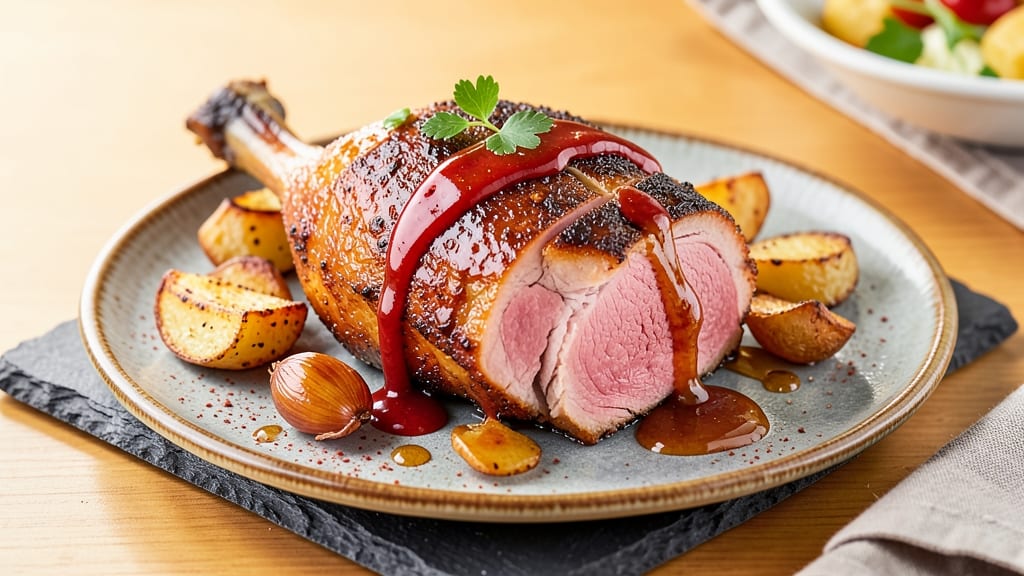
This boneless leg pork recipe transforms a tough cut into melt-in-your-mouth perfection with a smoky tamarind glaze that caramelizes into a sticky, flavorful crust. 🔥 After years of perfecting pork at The Smoky Pig, I’ve developed a method that guarantees tender, juicy meat every time—no guesswork, no dry results.
The secret lies in slow cooking with just enough moisture to keep it succulent while the glaze creates that irresistible bark.
What sets this recipe apart is the tamarind glaze—a balance of sweet, tangy, and smoky that penetrates deep into the meat. I use a 30-minute marinade to jumpstart the flavor, followed by a low-and-slow roast that ensures even cooking.
The pork leg stays moist thanks to a simple broth bath, while the glaze develops into a glossy, caramelized finish that locks in all those juices.
By the time you’re done, you’ll have restaurant-quality pork that’s fall-apart tender with a glossy, smoky-sweet glaze clinging to every bite. The technique is foolproof—no need for fancy equipment, just patience and attention to temperature.
Serve it sliced thick with a side of collard greens or crusty bread to soak up every last drop of that flavorful sauce.
This recipe is built for home cooks who want to impress without stress. The steps are straightforward, the ingredients are accessible, and the results are undeniably satisfying.
Whether you’re feeding a family or hosting a dinner party, this pork leg will be the star of the meal—juicy, tender, and packed with flavor that lingers long after the last bite.
Ingredients for boneless leg pork
Sixteen ingredients to transform tough pork into melt-in-your-mouth perfection with smoky-sweet glaze.
| Ingredient | Amount | Notes |
|---|---|---|
| Boneless Pork Leg 🐷 | 4 lb | Center-cut for even cooking |
| Tamarind Paste 🍯 | ½ cup | High-quality, unsweetened |
| Brown Sugar 🍚 | ½ cup | Packed, dark variety |
| Apple Cider Vinegar 🍎 | ¼ cup | Bottled, not reduced |
| Smoked Paprika 🌶️ | 2 tbsp | High-quality, not sweet |
| Ground Cumin 🌿 | 1 tbsp | Freshly toasted preferred |
| Garlic Cloves 🧄 | 6 cloves | Peeled, rough chopped |
| Fresh Ginger 🌿 | ½ cup | Finely grated, peeled |
| Chicken Broth 💧 | 2 cups | Low-sodium, homemade preferred |
| Olive Oil 🫒 | ¼ cup | Extra-virgin, fruity |
| Fresh Thyme 🌿 | ¼ cup | Leaves only, chopped |
| Salt 🧂 | 1 ½ tsp | Diamond Crystal kosher |
| Black Peppercorns 🌶️ | 1 tsp | Freshly cracked |
| Crusty Bread 🍞 | 1 whole | For serving, optional |
The pork leg is the foundation—center-cut ensures even cooking without excess fat. Whole Foods or Costco carry high-quality cuts, but any reputable butcher will have what you need. Look for a leg with good marbling and even thickness. Tamarind paste is non-negotiable for that signature tangy-sweet balance; Trader Joe's or Penzeys Spices carry excellent options. If using a block, grate it yourself for best texture. Brown sugar should be dark and packed—light sugar won't caramelize properly. The apple cider vinegar adds brightness without overpowering the smoky notes.
No tamarind paste? Substitute 0.25 cup lime juice plus 0.25 cup molasses for tangy depth. Smoked paprika can be swapped for equal parts sweet paprika plus pinch of liquid smoke. Fresh ginger is ideal, but ground ginger at half the amount works in a pinch. The chicken broth should be low-sodium—homemade with vegetable stock base elevates the flavor significantly. Olive oil matters here; California avocado oil has a higher smoke point for roasting. For thyme, fresh is best, but dried at one-third the amount suffices. Pre-grated cheese? Always grate your own—it makes all the difference.
Marinate the pork for at least 30 minutes (overnight for deeper flavor). Store the marinade in an airtight container in the fridge for up to 2 days. The glaze keeps for 1 week refrigerated, or 3 months frozen in ice cube trays. Pork reheats beautifully—slowly in a 250°F oven to maintain moisture. Portion the glaze separately to avoid soggy bread. Leftovers freeze well for 2 months when properly sealed.
Why You'll Love This Recipe
- Here’s what sold me: that balance of smoky paprika and tart tamarind cutting through the richness of the pork. It’s not too sweet, not too sour—just ridiculously good, like a cross between a BBQ rub and a glaze that actually sticks. The vinegar keeps it bright, so it doesn’t get cloying.
- I’ll be real: boneless pork leg is cheaper than most cuts, and the ingredients? Pantry staples. Tamarind paste and smoked paprika might sound fancy, but they stretch far. For under $10, I feed four people a meal that feels special—no takeout needed. That’s a win.
Step-by-step instructions for smoky tamarind glazed pork leg
Master this slow-cooked technique for melt-in-your-mouth pork with deep tamarind caramelization.
🔥 Step 1: Prepare the Pork and Dry Brine
Pat the 4 lb boneless pork leg completely dry with paper towels—this is critical for that crisp exterior we're after. Place it fat-side up on a wire rack set in a rimmed baking sheet. In a small bowl, whisk together 1.5 tsp salt, 1 tsp freshly cracked black peppercorns, 2 tbsp smoked paprika, and 1 tbsp ground cumin. Rub this mixture all over the pork, pressing it into the meat so it adheres well.
Refrigerate uncovered for 12-24 hours—this dry brining step transforms the texture. You'll see the surface develop a slightly tacky film as moisture evaporates, which is exactly what we want for that perfect bark. Real talk: Don't skip this step. I've tried rushing it, and the results are always less tender.
🍳 Step 2: Build the Tamarind Glaze
In a medium saucepan, combine 0.5 cup tamarind paste, 0.5 cup packed brown sugar, 0.25 cup apple cider vinegar, 0.5 cup finely grated fresh ginger, 6 rough chopped garlic cloves, and 0.25 cup chopped fresh thyme. Bring to a simmer over medium heat, stirring constantly for 5 minutes until the sugar dissolves and the mixture thickens slightly.
Reduce heat to low and let it cook for another 10 minutes until it reaches a syrupy consistency—it should coat the back of a spoon. Here's where the magic happens: the tamarind's natural tang balances the sweetness while creating that signature sticky glaze. If it crystallizes, add 1 tablespoon water to dissolve it back into a smooth paste.
🔥 Step 3: Slow Roast with Glaze Applications
Preheat your oven to 300°F. Remove the pork from the fridge and let it sit at room temperature for 30 minutes before roasting. Place the pork fat-side up on the rack and roast uncovered for 2 hours. After this initial period, brush the pork generously with half of the tamarind glaze mixture, making sure to coat all sides thoroughly.
Return to the oven and roast for another 2 hours, brushing with the remaining glaze after the first hour. The pork is done when the internal temperature reaches 195-203°F (it should be fork-tender with just a hint of resistance). Here's the thing—don't be tempted to overcook. The pork will continue carrying over heat as it rests, and we want it juicy, not dry.
⏰ Step 4: Rest and Slice for Maximum Juiciness
Transfer the pork to a cutting board and tent loosely with foil. Let it rest for at least 30 minutes—I prefer 45 minutes to 1 hour—this resting period is what makes the difference between dry slices and melt-in-your-mouth perfection. During this time, the juices redistribute throughout the meat, ensuring every bite is moist and flavorful.
While the pork rests, warm the 2 cups chicken broth in a small saucepan until hot. Skim off any fat that rises to the surface, then strain the broth through a fine-mesh sieve into a clean saucepan. Return to a simmer and reduce by half—this creates a rich, concentrated sauce to serve alongside the pork. Slice the pork against the grain into ½-inch thick slices and serve with the reduced broth and 1 whole crusty bread for dipping.
Pro Tips For Making Boneless Leg Pork
- Sear First, Braise Later: Get that pork leg screaming hot in a dry skillet for 3-4 minutes per side before adding liquid. I learned this the hard way—skipping the sear means your tamarind and vinegar just turn the meat into a sad, gray mush instead of deep, caramelized flavor. The crust locks in moisture and makes the final dish taste like it was slow-cooked by a pro.
- Thin the Tamarind: Don’t just dump that thick paste into your braising liquid—whisk it with 2 tablespoons of hot water first. Tamarind paste clumps like glue if you don’t, and clumps mean uneven flavor. I used to ignore this, and my sauce always tasted like it had lumps of undissolved bitterness. Trust me, 30 seconds of whisking changes everything.
- Skip the Crowding: If you’re cooking this in a Dutch oven, resist the urge to stack the pork leg with onions or aromatics. Let it sit flat in the bottom for the first 30 minutes—this guarantees even browning and prevents steaming. I was skeptical until I tried it; now I swear by it. Your future self will notice the difference in texture and color.
- Vinegar Last: Add the apple cider vinegar in the final 15 minutes of cooking, not at the start. Too early, and you’ll end up with a tangy, watery sauce instead of the balanced sweet-sour glaze you’re aiming for. The acid needs time to mellow and marry with the tamarind and sugar—like letting wine breathe, but faster.
Storing and reheating your boneless leg pork
Refrigerator Storage
Store cooked pork leg in an airtight container with a splash of chicken broth (about ¼ cup) to maintain moisture. Keep refrigerated for up to 4 days—the glaze will keep its sticky texture better than if stored dry.
I always portion the reduced broth sauce separately in a small container to prevent sogginess when reheating. 💪
Freezer Preservation
For longer storage, freeze the pork in single-serving portions wrapped tightly in plastic wrap followed by foil. The glaze freezes beautifully, though it may thicken slightly—just reheat with a splash of water.
Label with the date and store for up to 3 months. I like using quart-sized freezer bags for easy reheating later. ❄️
Oven Reheating
For best results, reheat in a 325°F oven for 15-20 minutes covered with foil. This gentle heat prevents drying out the pork while reactivating the glaze. Add 1 tablespoon broth to the pan to create steam and keep everything moist. Check internal temperature—it should reach 165°F before serving. 🔥
Stovetop Method
Use a skillet over medium-low heat with 2 tablespoons olive oil and 2 tablespoons broth to reheat slices. Cook for 3-4 minutes per side until heated through. This works best for smaller portions—great for quick lunches. I often add a pinch of smoked paprika to refresh the flavor. 🍳
Microwave Safety
If you're short on time, microwave 1-2 slices at a time on 50% power for 1-2 minutes, covered with a damp paper towel. The glaze might lose some stickiness, so I recommend finishing with a quick 30-second broil in the oven to restore its shine. 💡
Glaze Refresh
If the glaze looks dry after reheating, simply warm 1 tablespoon tamarind paste with 1 teaspoon water in a small saucepan, then brush it over the pork. This restores that signature sticky, smoky-sweet finish. Keep a small jar of the glaze ingredients on hand for quick fixes! 🌶️
Nutrition facts
Frequently asked questions
Why does the recipe call for a dry brine instead of a wet marinade?
Dry brining creates a perfect crust while keeping the meat ultra-juicy. The salt draws out moisture, then reabsorbs it during cooking, creating that coveted bark. Wet marinades can make the pork soggy—this method guarantees tender, flavorful results without compromise.
Can I substitute boneless pork shoulder instead of leg?
Pork shoulder works beautifully—just increase cooking time by 30-45 minutes since it's a larger cut. Use the same glaze and resting technique for perfect tenderness. The shoulder's extra fat makes it even more flavorful when slow-roasted.
What's the best way to check doneness without overcooking?
Use a meat thermometer—pork leg is done at 195-203°F. The probe should slide in easily with just slight resistance. If you don't have a thermometer, cut into the thickest part: juices should run clear, and the meat should pull apart easily. Never guess with pork!
How can I make this recipe gluten-free?
All ingredients in this recipe are naturally gluten-free, but check your tamarind paste and smoked paprika for hidden additives. For extra safety, use certified gluten-free chicken broth. The crusty bread can be replaced with gluten-free baguette or cornbread.
What if my tamarind glaze crystallizes during cooking?
Simply add 1 tablespoon water and stir gently over low heat until smooth. The glaze should return to a syrupy consistency. If it happens again, reduce the sugar slightly next time—too much can cause crystallization. Patience is key here!