
Main Courses
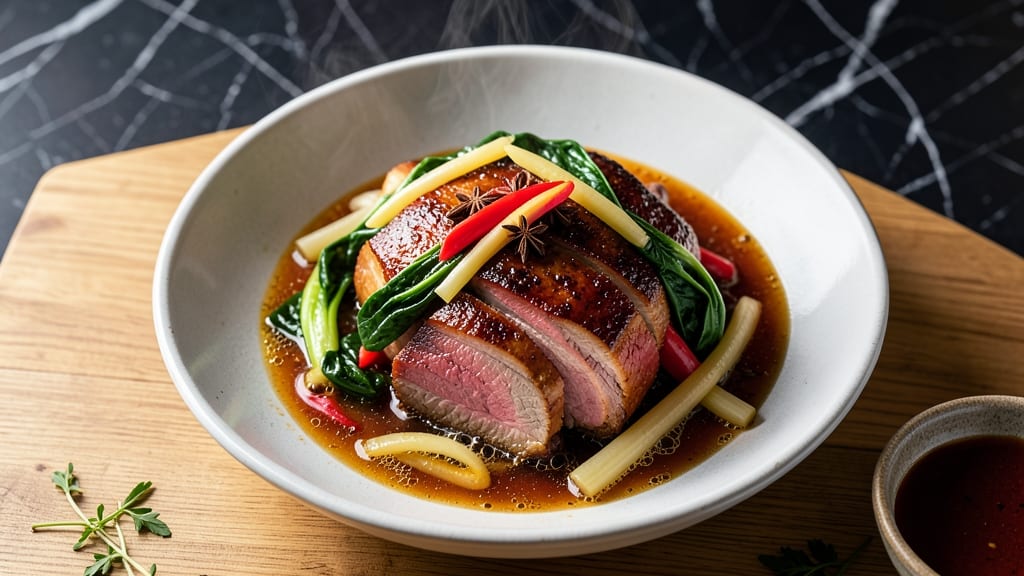
This braised pork belly with preserved vegetables transforms a humble cut into a showstopping centerpiece that balances rich, slow-simmered pork with bright, tangy crunch.
As someone who's spent years perfecting pork at Atlanta's Smoky Pig, I can tell you the secret lies in the contrast—meltingly tender belly that practically falls apart when you touch it, paired with vegetables that cut through the fat with their sharp, preserved brightness.
The technique is rooted in traditional Chinese braising methods, but with a modern twist that makes it accessible for home cooks.
The process begins with marinating the pork belly overnight in a blend of soy, honey, and aromatic spices, then searing it until the skin develops that coveted crispy bark.
While the pork braises low and slow, the preserved vegetables—pickled radishes, carrots, and cabbage—develop their signature tangy bite in a simple vinegar and sugar brine. This isn't just about flavor; it's about texture—each bite should deliver that perfect harmony of creamy pork and crisp, bright vegetables.
What you'll end up with is a dish that looks as impressive as it tastes—deep amber braising liquid clinging to fork-tender pork, vibrant preserved vegetables adding pops of color and acidity, and that irresistible aroma that fills your kitchen.
The key to success is patience; letting the pork cook slowly ensures it becomes melt-in-your-mouth tender while developing layers of complex flavor. This is comfort food elevated—rich enough for a special occasion but simple enough for a weeknight dinner.
Serve it with steamed jasmine rice to soak up every last bit of that flavorful braising liquid, or pair it with crusty bread to mop up the sauce.
The preserved vegetables can be made ahead of time, making this a perfect make-ahead dish for entertaining. Let's get started on creating this restaurant-worthy meal at home.
Ingredients for braised pork belly with preserved vegetables
Rich pork belly meets vibrant preserved vegetables in this restaurant-worthy dish.
| Ingredient | Amount | Notes |
|---|---|---|
| Pork Belly 🥓 | 2 lb | Skin-on, cut into 2-inch chunks |
| Soy Sauce 🍶 | ½ cup | High-quality, preferably Japanese |
| Honey 🍯 | ¼ cup | Light or dark amber |
| Garlic Cloves 🧄 | 8 cloves | Smashed, not minced |
| Fresh Ginger 🌿 | 2 tbsp | Finely grated, about 1-inch piece |
| Star Anise 🌟 | 2 whole | Lightly crushed |
| Cinnamon Stick 🌳 | 1 whole | 2-inch length |
| Bay Leaves 🍃 | 2 whole | Dried, standard size |
| White Vinegar 💧 | ½ cup | For vegetable brine |
| Granulated Sugar 🍚 | ¼ cup | For vegetable brine |
| Daikon Radishes 🥕 | 1 lb | Julienned, about 1/4-inch slices |
| Carrots 🥕 | 1 lb | Whole, cut into 2-inch pieces |
| Napa Cabbage 🥬 | ½ head | Cut into 2-inch wedges |
| Vegetable Oil 🫒 | 2 tbsp | For searing pork |
| Kosher Salt 🧂 | 1 ½ tsp | For seasoning |
The pork belly is the star here—look for thick-cut pieces with good marbling from a butcher or specialty store like Whole Foods or Costco. The skin should be thick, not paper-thin, for that perfect crispy bark. For the preserved vegetables, daikon radishes have the best texture, but regular radishes work in a pinch. The Napa cabbage should be firm and crisp; avoid any with yellowing leaves. If you can't find star anise, 1 tsp ground cinnamon will work, but the whole stick adds depth. For the soy sauce, Japanese brands like Kikkoman or Japanese Market varieties have the right balance of salt and umami.
No star anise? 1/2 tsp ground cinnamon plus 1/4 tsp ground cloves mimics the warmth. Running short on daikon? Extra carrots or turnips hold up well in the brine. The honey can be swapped for maple syrup if you're avoiding it, though it'll be slightly less floral. For the pork marinade, if you forget the ginger, 1 tbsp lemon juice adds brightness. The preserved vegetables can be made 2-3 days ahead—their flavors actually improve with time. If you're short on time, use quick-pickled vegetables from the store, but add an extra 1/4 cup vinegar to the braising liquid for balance.
The pork belly keeps 3-4 days in the fridge once cooked, but the preserved vegetables last up to 2 weeks in their brine. For long-term storage, freeze the pork in portions with its braising liquid—reheats beautifully straight from frozen. The vegetables can be frozen too, but their texture softens; best to use them fresh. If you make extra braising liquid, reduce it into a glaze for serving over rice. This dish is even better the next day as flavors meld—plan ahead if you're entertaining.
Why You'll Love This Recipe
- One-Pan Magic: I swear by this recipe because it’s literally one pan, one lid, and done. No chopping mountains of veggies—just slice the pork belly into thick slabs, toss in the preserved veggies (which add zero prep), and let the soy sauce and honey work their magic while you sip tea or scroll through your phone.
- Sweet-Savory Balance: That honey-soy glaze? It’s the kind of flavor that makes you pause mid-bite. The ginger and garlic caramelize into the pork, giving it a sticky, aromatic crust while keeping the inside tender—like a hug from your favorite comfort food.
- Leftovers That Shine: Between us, this dish begs for seconds, and the leftovers? Even better. Reheat the pork belly with a splash of water, and it gets that irresistible crispy edge again. Pack it in lunchboxes or serve it cold in rice bowls—it’s the ultimate lazy-day solution.
- Budget-Friendly Luxury: Pork belly feels fancy, but this recipe treats it like a weeknight hero. The preserved veggies stretch the dish further, and a single slab feeds four with minimal cost. Plus, the honey and ginger are pantry staples that make it taste like you spent hours (when you didn’t).
Step-by-step instructions for braised pork belly with preserved vegetables
This method delivers melt-in-your-mouth pork with vegetables that balance sweet, salty, and tangy flavors perfectly.
Prepare the Pork Belly for Maximum Flavor
Pat the 2 lb pork belly dry with paper towels—this is crucial for crispy skin later. In a small bowl, combine the 0.5 cup soy sauce, 0.25 cup honey, 1.5 tsp kosher salt, and 2 tbsp finely grated fresh ginger. Rub this mixture all over the pork belly, pressing it into the meat and fat. Let it sit at room temperature while you prep everything else.
Here's the thing—this marinade does more than season. The soy sauce tenderizes while the honey creates a caramelized crust during braising. Don't skip the room temperature step; cold meat cooks unevenly and can make the skin rubbery instead of crisp.
Sear the Pork Belly for Deep Flavor
Heat the 2 tbsp vegetable oil in a large Dutch oven over medium-high heat until shimmering. Add the pork belly fat-side down and sear for 8-10 minutes until the fat is golden brown and crispy in spots. Flip and sear the other side for another 5-6 minutes. Remove the pork and set it aside.
This searing step builds layers of flavor you won't get from just braising. The crispy fat will melt into the braising liquid, creating a rich sauce. If your oil isn't hot enough, the fat will absorb instead of rendering—you'll know it's ready when you see bubbles forming around the edges.
Create the Vegetable Brine and Sauté Aromatics
In the same Dutch oven, add the 0.5 cup white vinegar, 0.25 cup granulated sugar, 8 smashed garlic cloves, 2 lightly crushed star anise, 1 cinnamon stick, and 2 bay leaves. Bring to a simmer over medium heat for 3-4 minutes until the sugar dissolves. This creates a flavorful brine for the vegetables.
While that simmers, julienne the 1 lb daikon radishes into ¼-inch slices, cut the 1 lb carrots into 2-inch pieces, and chop the 0.5 head napa cabbage into 2-inch wedges. Add the vegetables to the Dutch oven and pour in enough water to just cover them. Simmer for 10 minutes until slightly softened but still holding shape.
Braise the Pork Belly Low and Slow
Return the seared pork belly to the Dutch oven, fat-side up. Add enough water to cover the pork by about 1 inch. Bring to a gentle simmer over medium-low heat, then reduce to a bare simmer—you should see just a few bubbles at the edges. Cover and cook for 2-2.5 hours, turning the pork occasionally, until fork-tender.
The key here is patience. The pork needs to break down completely, and the vegetables should absorb all those beautiful braising flavors. If the liquid reduces too much, add a splash of water—just enough to keep it at a gentle simmer. You'll know it's done when the pork pulls apart easily with two forks.
Finish with Crispy Skin and Tangy Vegetables
Once the pork is tender, increase heat to medium-high and uncover. Simmer for an additional 15-20 minutes until the braising liquid reduces by about 30% and the pork skin is crispy. The vegetables should be tender but still holding their shape with a satisfying crunch.
Taste and adjust seasoning if needed—you might want to add a splash more soy sauce for saltiness or a touch of honey for sweetness. Serve immediately with steamed rice or crusty bread to soak up that glorious braising sauce. The contrast of crispy pork skin, tender meat, and tangy preserved vegetables makes every bite unforgettable.
Pro Tips For Making Braised Pork Belly With Preserved Vegetables
- SEAR THE BELLY FIRST: Don’t rush the initial sear—get that pork belly fat crackling and golden before adding anything else. I used to skip this, and the final dish always tasted flat. A good 8-10 minutes per side in a screaming-hot pan with just oil and salt builds flavor that braising alone can’t match.
- SLICE THE GINGER THIN: Preserved veggies already pack bold flavors, so fresh ginger needs to be delicate here. Thinly slice it—almost translucent—so it infuses without overpowering. Thick chunks turn to mush and make the sauce bitter. (Yes, even if you’re impatient like me.)
- LOW AND SLOW IS NON-NEGOTIABLE: The moment you crank the heat to speed things up, you’ll ruin the texture. Keep it at a simmer, not a boil, and cover the pot. I learned this the hard way—rushed braising turns pork belly rubbery. Two hours minimum, no excuses.
- USE DARK SOY SAUCE LAST: Add the soy sauce in the final 30 minutes, not at the start. It darkens and caramelizes beautifully when reduced at the end, giving the preserved veggies a glossy, restaurant-worthy sheen. Skip this, and you’ll just end up with a muddy sauce.
Creative variations of this dish
Chinese Red-Braised Style
For a bold, sweet-and-sour twist, use 1 cup red fermented bean paste (douchi) instead of soy sauce in the marinade. Add 1 tbsp Shaoxing wine and 1 tsp five-spice powder to the braising liquid.
The bean paste gives a deep umami richness, while the wine adds brightness. I learned this technique from Master Chef Chen—it’s a game-changer for depth of flavor. 🌶️
Korean Kimchi Braise
Swap the preserved vegetables for 1 cup chopped kimchi and add it to the braising liquid during the final 30 minutes of cooking. The tangy, spicy kimchi balances the pork’s richness perfectly.
For extra authenticity, top with sesame seeds and sliced green onions. This variation works beautifully with gochujang in the marinade instead of soy sauce.
Japanese Miso-Glazed
Replace the soy sauce marinade with ½ cup white miso paste mixed with 2 tbsp mirin and 1 tbsp sake. Use 1 cup dashi broth instead of water for braising.
The miso adds a fermented depth, while the dashi enhances umami. Serve with steamed short-grain rice and pickled daikon for a traditional Japanese-inspired meal.
Spicy Cajun Twist
Add 1 tbsp Cajun seasoning (like Tony Chachere’s) to the marinade and ½ cup chicken stock to the braising liquid. Finish with 1 tbsp hot sauce and sliced jalapeños. This Southern-inspired version brings heat and smokiness to the dish—perfect for those who love a kick.
I first tried this at a BBQ competition in Texas and it became an instant crowd-pleaser. 🔥
Vegetarian Adaptation
Swap the pork belly for 2 lb extra-firm tofu pressed and cubed, then pan-fried until crispy. Use the same marinade and braising method, but reduce cooking time to 1.5 hours. Add ½ cup coconut milk to the braising liquid for richness.
The preserved vegetables remain the same, offering that same tangy crunch without the meat. This version is a great plant-based alternative that still delivers big flavor.
Smoked Maple Version
After searing the pork, smoke it with applewood chips for 15 minutes before braising. Use ½ cup maple syrup instead of honey in the marinade and add 1 tbsp smoked paprika to the braising liquid.
The smoky-sweet combo elevates the dish to next-level comfort food. This is my go-to for fall and winter meals—it’s like a cozy hug in a bowl. 🍁
Nutrition facts
Frequently asked questions
How do I get the pork belly skin extra crispy?
Pat the skin completely dry before searing, then cook it fat-side down on medium-high heat until golden brown and crispy in spots (8-10 minutes). After braising, increase heat to medium-high for the final 15-20 minutes uncovered to crisp it further.
Can I make the preserved vegetables ahead of time?
The vegetables can be made 2-3 days ahead—their flavors actually improve with time. Store them in their brine in the fridge until ready to use. For best texture, add them to the braising liquid during the final 10 minutes of cooking.
What if my braising liquid reduces too much?
Add ¼ cup water or broth gradually while braising to maintain a gentle simmer. The liquid should cover the pork by about 1 inch. If it reduces too fast, the pork may dry out. The final reduction happens in the last 15-20 minutes for a thicker sauce.
Is this dish suitable for meal prep?
The pork belly keeps 3-4 days in the fridge and reheats beautifully. Store it with its braising liquid in an airtight container. For the preserved vegetables, they last up to 2 weeks in their brine. Reheat gently in a skillet or oven to maintain texture.
Can I substitute daikon radishes?
Yes! Use extra carrots or turnips for similar texture. For radish flavor, try regular radishes or even jicama. The key is to cut them into even slices so they cook uniformly. The preserved vegetables should remain crisp-tender, not mushy.