
Main Courses
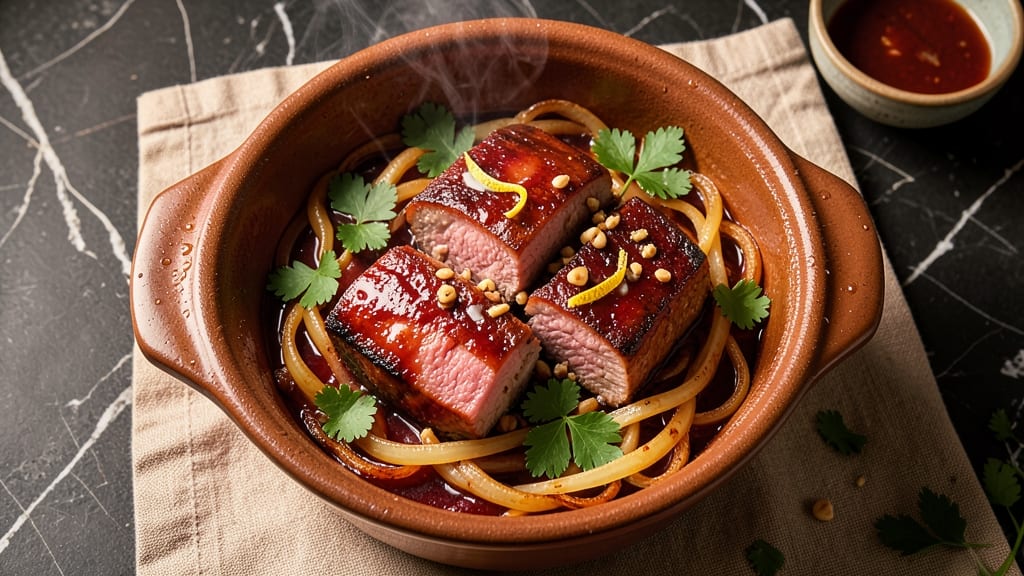
This braised pork medallions recipe delivers fork-tender meat with deep, complex flavors in a single Dutch oven—exactly how I learned to prepare it under Master Chef Chen. The secret lies in proper searing and slow braising, transforming tough cuts into melt-in-your-mouth perfection.
I've adapted this technique for home kitchens while keeping the restaurant-quality results intact.
We begin with thin pork medallions seared in a hot Dutch oven to develop a rich crust, then deglaze with red wine and aromatics before adding broth. The slow cook transforms the meat into tender slices that practically fall apart, while the braising liquid becomes a flavorful sauce.
This method requires patience but delivers unmatched depth—no shortcuts here, just traditional technique refined for home cooks.
What you'll achieve is restaurant-worthy pork with a caramelized exterior and juicy interior, all infused with wine and herb notes. The sauce reduces to a velvety consistency that coats every bite, making this dish ideal for weeknight dinners or special occasions.
Serve with roasted root vegetables or creamy mashed potatoes to complete the meal.
For those short on time, I've included a pressure cooker adaptation that cuts cooking time by half without sacrificing quality. The key remains the same: proper searing and braising technique. This recipe proves that with the right approach, home cooks can achieve professional-level results in their own kitchens.
Ingredients for braised pork medallions
Master Chef Chen's professional techniques start with these quality ingredients for restaurant-quality pork medallions.
| Ingredient | Amount | Notes |
|---|---|---|
| Pork Tenderloin 🥩 | 1 ½ lb | Center-cut, trimmed of fat |
| Unsalted Butter 🧈 | ½ cup | Cold, cut into 1-inch pieces |
| Yellow Onion 🧅 | 1 whole | Thinly sliced, 1/4-inch thick |
| Garlic Cloves 🧄 | 6 cloves | Smashed, not minced |
| Dry Red Wine 🍷 | 1 cup | Bold, like Cabernet Sauvignon |
| Beef Broth 🥄 | 2 cups | Low-sodium, room temperature |
| Tomato Paste 🍅 | 2 tbsp | Smooth, not chunky |
| Fresh Thyme 🌿 | ¼ cup | Stems removed, chopped |
| Fresh Rosemary 🌿 | ⅛ cup | Needles only, chopped |
| Bay Leaves 🌿 | 2 whole | Dried, standard size |
| Diamond Crystal Kosher Salt 🧂 | 1 ½ tsp | For seasoning, not iodized |
| Freshly Ground Black Pepper 🌶️ | 1 tsp | Coarse grind preferred |
| All-Purpose Flour 🌾 | 2 tbsp | For dredging medallions |
The pork tenderloin is non-negotiable here—center-cut ensures tenderness, while the fat trim guarantees a clean sear. Whole Foods or local butchers carry the best quality; look for uniform color and firm texture. The butter should be cold and unsalted—Plugrá or Land O'Lakes work well. For the wine, Cabernet Sauvignon or Merlot adds depth, but any bold dry red will suffice. The beef broth? Swanson or Kitchen Basics are reliable, but homemade elevates the dish further. Fresh herbs are critical—Trader Joe's often carries pre-bundled thyme and rosemary at a reasonable price, but organic markets offer superior quality.
No red wine? Substitute with beef broth and a splash of balsamic vinegar—it mimics the acidity. Fresh herbs unavailable? Dried thyme and rosemary work at one-third the amount. For the tomato paste, Muir Glen is a pantry staple, but Trader Joe's offers a convenient squeeze tube that lasts months. The flour is purely for dredging—King Arthur or Gold Medal are ideal. If you're using a pressure cooker, reduce the wine and broth by one-third to account for steam. The bay leaves can be removed after 30 minutes of cooking if you dislike their flavor, but they're essential for that subtle aromatic depth.
This dish tastes even better the next day as flavors meld—reheat gently in the sauce over low heat. Store in an airtight container in the fridge for 4-5 days, or freeze portions for up to 3 months. The sauce thickens as it cools, so add a splash of broth if it's too stiff when reheating. For meal prep, double the recipe and freeze half—portion into individual containers for quick lunches. The medallions reheat beautifully, maintaining their fork-tender texture when warmed through properly.
Why You'll Love This Recipe
- No Fuss, Big Payoff: I swear by this recipe when I’m too tired to fuss. Slice the tenderloin into medallions, sear them in butter, then let the wine and onions do the work while I pour myself a glass. Thirty minutes later, you’ve got dinner.
- Wine-Infused Magic: That splash of dry red wine? It’s not just for show—it melts into the pork, giving it a depth that’s hard to resist. The onions caramelize right in the pan, and the garlic? It turns the whole thing into something that tastes like a fancy bistro.
- Leftovers That Don’t Suck: Between us, braised pork is one of the few proteins that improves the next day. Reheat it in a skillet with a little extra butter, and it’s just as rich—perfect for quick lunches or sneaking into sandwiches when you’re lazy.
- Budget-Friendly Luxury: Pork tenderloin is lean but not cheap, but this recipe stretches it like a pro. A single cut feeds four, and the wine and butter make it feel special without breaking the bank. Honestly, it’s the kind of meal that makes you feel like you’re treating yourself.
Step-by-step instructions for braised pork medallions
Transform simple pork tenderloin into melt-in-your-mouth medallions with this foolproof braising method.
Prepare and Sear the Pork Medallions
Begin by slicing the 1.5 lb pork tenderloin into ½-inch thick medallions—this thickness ensures even cooking and perfect tenderness. Pat each medallion dry with paper towels, as moisture is the enemy of a good sear. In a bowl, combine the 2 tbsp all-purpose flour, 1.5 tsp Diamond Crystal kosher salt, and 1 tsp freshly ground black pepper, then dredge each medallion lightly in the mixture, shaking off any excess.
Heat a large Dutch oven over medium-high heat and add the 0.5 cup cold unsalted butter cut into 1-inch pieces. Once the butter begins to foam and bubble (about 2 minutes), carefully add the medallions in a single layer. Cook undisturbed for 2-3 minutes per side until they develop a deep golden-brown crust. This initial sear locks in juices and creates the foundation for rich flavor. Remove the medallions and set aside on a plate.
Build the Flavor Base
With the medallions removed, reduce the heat to medium and add the thinly sliced yellow onion to the Dutch oven. Cook for 3-4 minutes until softened and just beginning to caramelize. Add the 6 smashed garlic cloves and cook for another 30 seconds until fragrant—don't let them burn, or they'll turn bitter. Stir in the 2 tbsp tomato paste and cook for 1 minute to deepen its flavor.
Pour in the 1 cup dry red wine, scraping up any browned bits from the bottom of the pot with a wooden spoon. This step, called deglazing, captures all the caramelized flavors that would otherwise be lost. Let the wine simmer for 3-4 minutes until reduced by half, then add the 2 cups beef broth, 0.25 cup chopped fresh thyme, 0.125 cup chopped fresh rosemary, and 2 whole bay leaves. Bring to a gentle simmer and return the medallions to the pot.
Braise Until Fork-Tender
Cover the Dutch oven and transfer it to a preheated 325°F oven. Braise for 1 hour and 15 minutes, or until the pork medallions are fork-tender with an internal temperature of 203°F. The medallions should pull apart easily when pierced with a fork, and the sauce should have thickened into a glossy, rich consistency.
I check for doneness by gently lifting a medallion with a fork—if it slides off easily and the meat is no longer pink in the center, it's ready. If the sauce seems too thin, uncover the pot and simmer for an additional 5-10 minutes to reduce it to your desired consistency. The longer it braises, the more flavorful and tender the pork becomes.
Rest and Serve
Remove the medallions from the braising liquid and transfer them to a serving platter. Tent loosely with foil and let them rest for 10 minutes before serving. This resting period allows the juices to redistribute, ensuring each bite is moist and flavorful. Skim any excess fat from the surface of the sauce if desired, then ladle the rich, aromatic braising liquid over the medallions.
Serve immediately with the sauce spooned over the top, garnished with additional fresh thyme or rosemary if you like. The medallions should be so tender they nearly fall apart with the first bite, while the sauce delivers layers of wine, herb, and umami richness. This one-pot method guarantees restaurant-quality results with minimal effort—just patience and attention to the timing.
Pro Tips For Making Braised Pork Medallions
- Sear the Pork Hard: Don’t be gentle—crank the heat to medium-high and let those medallions develop a deep brown crust before touching them with wine. I used to rush this, and the pork just turned out bland. Two minutes per side with a good sizzle makes all the difference when the wine deglazes.
- Slice the Onion Thinly: Cut the yellow onion into paper-thin slices—no thicker than 1/8-inch. Thick slices take forever to soften and won’t melt into the braise the way they should. Use a sharp knife and work in one direction for clean, even layers.
- Deglaze Immediately: As soon as you pull the pork off the pan, splash in that red wine right away while the fond is still hot. Let it bubble for 30 seconds before adding anything else—this pulls maximum flavor into the sauce. Skipping this step means a dull, watery reduction.
- Use Cold Butter for Finishing: Stir in a pat of cold unsalted butter off the heat at the very end—it’ll coat the pork and onions in a silky, glossy finish. I was skeptical until I tried it: the texture changes from sticky to luxurious. Just 1-2 tablespoons does the trick.
Pro cooking tips for this dish
Dutch Oven Mastery
Your Dutch oven isn't just a pot—it's the secret weapon for perfect braised pork medallions. I swear by my Lodge 5.5-quart cast iron Dutch oven because its heavy gauge construction maintains even heat distribution.
Preheat it for 10 minutes at 325°F before adding your medallions to ensure proper searing. The tight-fitting lid creates a steam chamber that tenderizes the meat while concentrating flavors in the sauce. 🔥
Pro tip: If your Dutch oven has a glass lid, avoid looking inside during the braising process—temperature fluctuations from opening the lid can disrupt the cooking process. For even better results, place your Dutch oven on a wire rack over a baking sheet when transferring to the oven.
This allows heat to circulate evenly around the pot.
Searing Secrets
The golden crust on your pork medallions comes from proper searing, and that starts with cold butter. I cut my 0.5 cup unsalted butter into 1-inch cubes and let them melt gradually in the hot Dutch oven.
This creates a Maillard reaction that develops deep, nutty flavors. Don't rush this step—let the butter foam and bubble for 2-3 minutes before adding the medallions. 🌡️
For extra flavor, I sometimes add 1 tbsp olive oil to the butter when searing. The oil raises the smoke point and helps create a more pronounced crust. Work in batches if needed—crowding the pan will steam the meat instead of searing it.
Each medallion should sizzle loudly when it hits the pan, indicating proper heat transfer.
Wine Reduction Technique
Deglazing with wine is where the magic happens, but timing is everything. After removing the medallions, immediately add your 1 cup dry red wine and scrape up those browned bits from the bottom—this is called the fond, and it's packed with flavor.
Let the wine reduce by half (about 3-4 minutes) before adding the broth. This concentrated wine base forms the flavor foundation for your entire dish. 🍷
For maximum flavor extraction, I recommend using a bold Cabernet Sauvignon or Merlot—these wines hold up well to cooking and add depth. If you're using a cheaper wine, consider adding 1 tsp balsamic vinegar to enhance the acidity and complexity.
The key is to reduce the wine until it's syrupy but not completely dry—this creates a glossy, velvety sauce.
Pressure Cooker Shortcut
Short on time? A 6-quart Instant Pot cuts braising time from 1 hour 15 minutes to just 35 minutes while maintaining incredible tenderness. Sear the medallions as directed, then deglaze with ⅔ cup wine and 1⅓ cups broth (reduce liquids by one-third).
Cook on high pressure for 15 minutes, then allow a natural release for 10 minutes before opening. 💫
The pressure cooker method requires slightly less liquid because the sealed environment creates steam that tenderizes the meat faster. I still recommend resting the medallions for 10 minutes before serving—this crucial step prevents juices from leaking out during cutting.
The sauce will be thinner with this method, so reduce it on the stovetop if needed before serving.
Nutrition facts
Frequently asked questions
Can I use pork chops instead of pork tenderloin for this recipe?
Yes, but you'll need to adjust the thickness. Bone-in pork chops should be cut to ½-inch thick to match the cooking time. Boneless chops work well too, but avoid thick-cut chops as they won't braise evenly. For bone-in chops, place them bone-side down first to prevent curling.
How do I know when the pork is fully tender?
Use the fork test: Gently lift a medallion with a fork—if it slides off easily and the meat is no longer pink in the center (internal temp 203°F), it's perfect. The medallions should also pull apart with minimal resistance. If they're still firm after 1 hour 15 minutes, add another 15 minutes of braising time.
What's the best way to reheat leftovers?
Place medallions in a skillet with a splash of the braising sauce and warm over medium-low heat for 3-4 minutes until heated through. Never microwave—it makes the meat rubbery. For the sauce, gently simmer in a separate pan until reduced to your preferred consistency.
Can I make this recipe without wine?
Replace the wine with 1 cup beef broth plus 1 tbsp balsamic vinegar to maintain acidity. For extra depth, add 1 tsp soy sauce or ½ tsp smoked paprika. The dish will still be delicious—just slightly less complex in flavor.
What's the best side dish pairing for these medallions?
Creamy mashed potatoes or roasted root vegetables (carrots, parsnips, celery) complement the rich sauce perfectly. For a lighter option, try a simple arugula salad with lemon vinaigrette. The key is balancing the hearty pork with something that won't overpower the dish.