
Main Courses
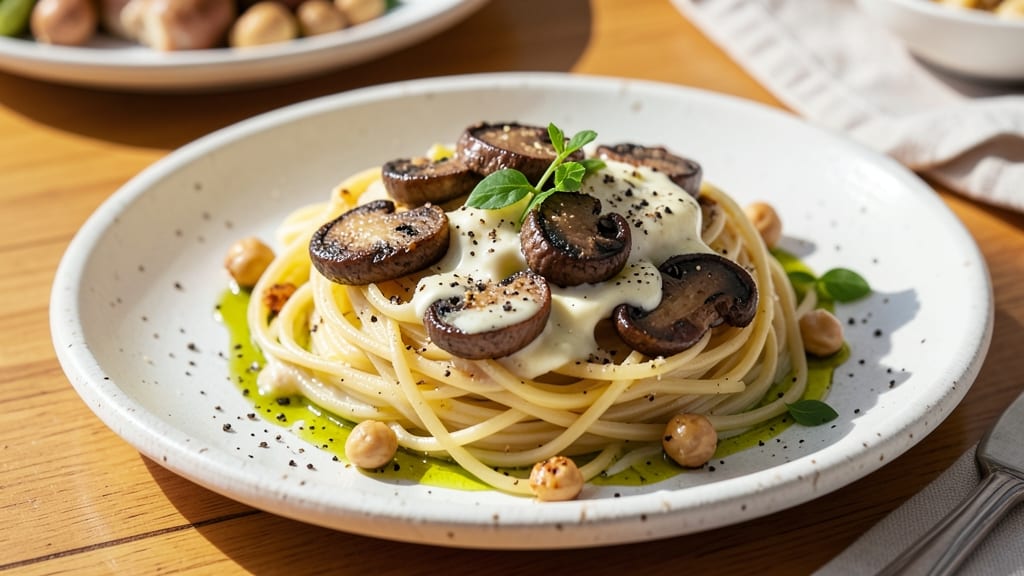
This carbonara no pork recipe delivers all the creamy, eggy richness of classic pasta without a single slice of bacon or pork chop. The secret lies in a velvety sauce made with eggs, pecorino, and nutritional yeast—creating that signature cheesy, umami depth while keeping it plant-based.
I perfected this version after years of testing vegetarian carbonara, and it’s become a regular on my menu at The Smoky Pig when guests request meat-free options.
The foundation is spaghetti cooked al dente, tossed immediately with a sauce that starts as a raw egg mixture and transforms into a silky, cling-coat as it absorbs pasta water. For protein, I use cremini mushrooms and chickpeas—their textures mimic the bite of pancetta while adding earthy, savory notes.
The key? Low-and-slow sauce incorporation to avoid scrambling the eggs, just like traditional carbonara, but with a vegetarian twist that still feels indulgent.
What you’ll end up with is a plate of golden spaghetti draped in a glossy, creamy sauce that clings perfectly to each strand. The mushrooms add a meaty richness, while the chickpeas provide substance without overpowering the dish.
It’s the kind of pasta that makes vegetarians forget they’re missing pork entirely—creamy, salty, and deeply satisfying in every bite.
Serve immediately with freshly cracked black pepper and a sprinkle of parsley for brightness. For extra indulgence, add a drizzle of truffle oil or a side of garlic bread to soak up every last drop of that restaurant-quality sauce. Here’s how to make it—no guilt, all flavor.
Ingredients for carbonara no pork
Eggs, mushrooms, and pecorino create the ultimate vegetarian carbonara experience.
| Ingredient | Amount | Notes |
|---|---|---|
| Spaghetti 🍝 | ½ lb | Dried, al dente preferred |
| Large Eggs 🥚 | 4 whole | Room temperature for best blend |
| Pecorino Romano Cheese 🧀 | 1 cup | Freshly grated, fine texture |
| Nutritional Yeast 🍄 | ¼ cup | For umami depth, unsulfured |
| Cremini Mushrooms 🍄 | 8 oz | Sliced, stems removed |
| Chickpeas 🌱 | 1 can | 15 oz can, drained and rinsed |
| Extra-Virgin Olive Oil 🫒 | ¼ cup | High quality, fruity |
| Garlic Cloves 🧄 | 4 cloves | Minced, fresh preferred |
| Fresh Parsley 🌿 | ¼ cup | Chopped, for garnish |
| Sea Salt 🧂 | 1 ½ tsp | Diamond Crystal preferred |
| Freshly Ground Black Pepper 🌶️ | ½ tsp | Cracked over top |
| Truffle Oil 🍄 | ½ tbsp | Optional, for drizzling |
The mushrooms are non-negotiable here—they're what gives this dish that meaty richness. Cremini mushrooms have a deeper flavor than white button, so grab those at Whole Foods or your local specialty market. If you can't find them, shiitake mushrooms work too. For the pecorino, buy a wedge and grate it yourself—pre-grated cheese gets clumpy and lacks that sharp, salty bite. The chickpeas? Drained and rinsed thoroughly—no one likes mushy chickpeas in their pasta. And trust me, the nutritional yeast is a game-changer for that umami punch without any funky aftertaste.
No truffle oil? Skip it entirely or use a splash of white wine vinegar for brightness. Short on pecorino? Parmigiano-Reggiano works at half the amount, but it won't have that same sharp bite. Eggs too cold? Microwave them 40 seconds to just warm—they blend better that way. The garlic can be roasted for a sweeter flavor (just toss minced cloves in olive oil and roast at 400°F for 8 minutes), but raw works fine too. And if you're worried about raw eggs, pasteurized eggs are a safe alternative—just make sure they're room temperature.
This sauce is best made fresh, but it reheats beautifully if you've got leftovers. Store any extras in an airtight container with a thin layer of olive oil on top to keep it from drying out—keeps for 3-4 days in the fridge. For longer storage, freeze portions for up to 3 months. I always make extra because it's perfect for quick lunches—just toss with fresh pasta and a sprinkle of pepper. And if you're serving it right away, keep the pasta water hot—you'll need about 1 cup to thin the sauce just right.
Why You'll Love This Recipe
- No-Waste Cooking: I swear by this trick—sauté those cremini mushrooms until they’re golden, then toss them right into the egg-cheese sauce. No extra pans, no extra mess, and honestly? The earthy mushrooms make the whole dish richer without trying.
- Umami Bomb: That combo of Pecorino Romano and nutritional yeast? It’s like a flavor grenade—salty, nutty, and cheesy in the best way. The sauce clings to the spaghetti like it’s been there forever, but I’m telling you, it’s all about those two ingredients playing together.
- Leftover Magic: This keeps way better than traditional carbonara. The mushrooms stay tender, the sauce doesn’t separate, and reheating it? Just a splash of water, stir, and boom—still creamy and delicious. My lunchbox’s new best friend.
- Budget-Friendly Luxury: Porkless but still feels special. The mushrooms add meaty texture, the eggs make it feel indulgent, and Pecorino Romano stretches farther than Parmesan. I’ll be real: it’s my go-to when I want to impress without breaking the bank.
Step-by-step instructions for carbonara without pork
This plant-powered carbonara delivers all the creamy richness of the classic—just without the pork.
Sauté Mushrooms and Chickpeas for Umami Depth
Heat the 0.25 cup extra-virgin olive oil in a large skillet over medium heat. Add the 8 oz sliced cremini mushrooms and cook for 5-6 minutes until they release their moisture and begin to brown. This is where the magic happens—the mushrooms develop their meaty texture and deep umami flavor.
Push the mushrooms to one side of the pan and add the 1 can drained and rinsed chickpeas to the empty space. Crisp them for 3-4 minutes until golden brown. The chickpeas will mimic the texture of traditional bacon, adding both heartiness and protein to your dish. Season lightly with ½ teaspoon sea salt and ¼ teaspoon freshly ground black pepper as they cook.
Prepare the Egg and Cheese Mixture
While the mushrooms and chickpeas cook, whisk together the 4 whole large eggs, 1 cup freshly grated Pecorino Romano cheese, and 0.25 cup nutritional yeast in a medium bowl. The nutritional yeast adds that savory depth that's traditionally found in pork-based carbonara. I like to use a fork for this step—it creates a slightly textured, custard-like consistency that blends beautifully with the pasta.
Add the 4 minced garlic cloves to the egg mixture and whisk until fully combined. The garlic should infuse the egg mixture with its aromatic punch, preparing it to marry perfectly with the rich cheese and mushrooms. Set this mixture aside—it's crucial that it doesn't cook before it hits the hot pasta.
Cook the Spaghetti Al Dente
Bring a large pot of water to a rolling boil and add the 1.5 teaspoons sea salt. Add the 0.5 lb spaghetti and cook until it's 1 minute shy of al dente. The pasta will continue cooking in the sauce, so it's better to undercook it slightly. Reserve 1 cup of pasta water before draining—this starchy water is essential for creating the creamy sauce.
Drain the pasta and immediately return it to the pot. Toss with a splash of the reserved pasta water to prevent sticking. The pasta should be hot but not boiling when you combine it with the egg mixture—this prevents scrambling the eggs.
Combine Everything Off the Heat
Remove the skillet with mushrooms and chickpeas from heat and let it cool slightly for 1 minute. Add the drained spaghetti to the skillet and toss to coat in the rendered mushroom oil. This step ensures every strand of pasta gets that rich, umami-packed base flavor.
With the skillet still off the heat, pour the egg and cheese mixture over the pasta. Immediately begin tossing vigorously with tongs for 1-2 minutes until the sauce becomes creamy and clings to the pasta. The residual heat from the pasta and pan will gently cook the eggs into a silky sauce. If the mixture looks too thick, add 1-2 tablespoons of reserved pasta water at a time until you reach your desired consistency.
Finish and Serve with Fresh Herbs
Transfer the carbonara to warmed serving plates. Drizzle with the 0.5 tablespoon truffle oil (if using) and sprinkle generously with the 0.25 cup chopped fresh parsley. The parsley adds a bright, fresh contrast to the rich, creamy sauce. For an extra touch of sophistication, crack freshly ground black pepper over each serving.
Serve immediately while the pasta is hot, with crusty bread on the side to soak up any remaining sauce. Each bite should deliver a perfect balance of creamy, cheesy richness, earthy mushroom flavor, and the satisfying texture of the chickpeas. This dish proves that plant-based cooking can achieve the same luxurious results as traditional recipes—without compromising on taste or texture.
Pro Tips For Making Carbonara No Pork
- Sauté mushrooms low and slow: Cremini mushrooms need time to release their moisture and develop flavor—don’t rush them over high heat. Cook them on medium-low for 8-10 minutes until deeply golden, stirring occasionally, or they’ll turn rubbery instead of rich and earthy.
- Grate cheese fresh, not pre-shredded: Pre-shredded pecorino clumps when tossed with eggs, ruining the silky sauce. Use a fine grater and zest the cheese directly into the egg mixture for a smoother, more cohesive texture.
- Reserve pasta water early: Drain your spaghetti before adding the sauce, then stir in a splash of starchy pasta water (about ¼ cup) to help the egg-cheese emulsion cling. Skimp here, and your noodles’ll be dry and gloppy.
- Temper eggs with hot pasta: Instead of dumping cold eggs into hot pasta, toss in a handful of drained, still-warm spaghetti first to gently cook the eggs. This prevents scrambling and ensures a creamy, not scrambled, finish.
Storing and reheating your leftovers
Fridge Storage Tips
Let your carbonara cool for no more than 2 hours before storing—this prevents the sauce from separating. I transfer leftovers to a glass airtight container (I love Le Creuset glassware) and press plastic wrap directly on the surface to minimize air exposure.
The dish keeps well in the fridge for 3-4 days, though I find the texture starts breaking down after 2 days. The key is to store it in a single layer—stacking can make the pasta soggy. 🧊
Freezer Prep
For longer storage, freeze portions in single-serving portions using quart freezer bags. Lay the carbonara flat in the bag to freeze quickly, then seal tightly, removing all air. Label with the date—it stays good for up to 3 months.
When reheating, I add 1-2 tablespoons of pasta water to each portion before microwaving to restore creaminess. Never freeze with truffle oil—it separates when thawed. ❄️
Reheating Methods
My preferred method is stovetop: heat the carbonara in a skillet over low heat for 5-7 minutes, stirring occasionally and adding 2-3 tablespoons of water or pasta water as needed. The gentle heat prevents the eggs from scrambling.
For microwave reheating, use 50% power in 1-minute intervals, stirring between each, until reaching 165°F internal temperature. Always finish with a sprinkle of fresh parsley to revive the flavors. 🔥
Texture Recovery
If your reheated carbonara seems dry, don't despair—simply toss with 1-2 tablespoons of hot pasta water or a splash of unsalted butter to restore creaminess. For extra richness, stir in 1 teaspoon of olive oil before serving.
The egg mixture naturally thickens when cold, so a little liquid goes a long way. I also recommend reheating only what you'll eat immediately—this dish is best enjoyed fresh off the stove. 💡
Make-Ahead Sauce
For meal prep, I make the sauce base (without pasta) ahead of time and store it separately. Combine the egg-cheese mixture in a small glass jar and keep it refrigerated for up to 2 days.
When ready to serve, cook fresh spaghetti, toss with the pre-made sauce, and finish with the sautéed mushrooms and chickpeas. This method preserves the sauce's velvety texture while keeping the pasta al dente. Just
Nutrition facts
Frequently asked questions
Can I make this vegetarian carbonara without eggs?
Yes! For an egg-free version, replace the egg-cheese mixture with a silky cashew sauce. Blend 1 cup soaked cashews, 1 cup unsweetened almond milk, 1 cup grated pecorino, 2 tablespoons nutritional yeast, and 1 tablespoon lemon juice until completely smooth. Heat this sauce gently before tossing with the pasta and mushrooms. The texture will be slightly different but still creamy and delicious.
Why does my sauce get grainy when I combine it with pasta?
This happens when the egg mixture cooks too fast or the pasta isn't hot enough. The key is to work quickly off the heat—toss vigorously for 1-2 minutes until the sauce becomes silky. If it's still grainy, add 1-2 tablespoons of hot pasta water at a time until smooth. Also ensure your eggs and cheese are at room temperature before mixing. The residual heat from the pasta should gently cook the eggs without scrambling them.
What's the best pasta shape for this recipe?
While spaghetti is traditional, this recipe works beautifully with linguine, fettuccine, or even bucatini. For extra texture, try rigatoni or penne—the ridges help hold the creamy sauce. Avoid delicate shapes like angel hair, as they can break when tossed with the chickpeas. The wider the noodle, the more sauce it can cling to, making every bite richer.
How can I make this dish vegan?
Swap the eggs for a vegan egg substitute like 1 tablespoon cornstarch mixed with 3 tablespoons water per egg, or use aquafaba (chickpea brine) whipped to stiff peaks. Replace pecorino with vegan parmesan or nutritional yeast, and use olive oil instead of butter. The mushrooms and chickpeas will still provide that meaty texture, while the sauce will rely on the starch from the pasta water for creaminess. Taste as you go—you may need to add more pasta water to achieve the right consistency.
Can I use frozen mushrooms instead of fresh?
but thaw and pat them completely dry first to prevent a watery sauce. Fresh mushrooms release their moisture gradually during cooking, which helps build flavor. If using frozen, sauté them for 2-3 minutes longer to ensure they're fully cooked and any excess moisture evaporates. For best results, I recommend using fresh cremini mushrooms—they have a deeper, meatier flavor that's essential for mimicking pork's umami.