
Sauces & Condiments
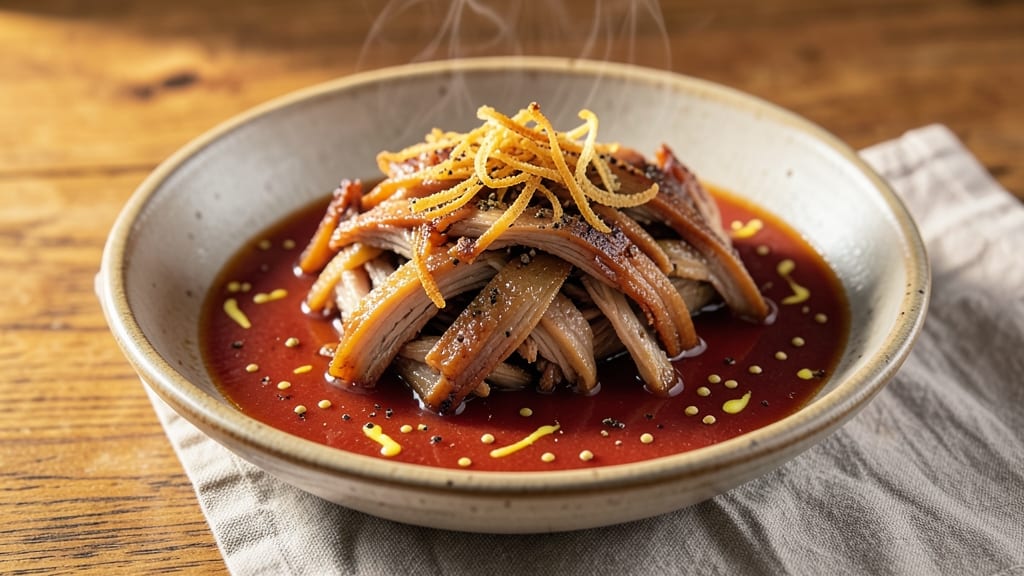
This Carolina-style pulled pork vinegar sauce transforms smoky pork into an unforgettable, tangy masterpiece—just like I learned from Master Chef Chen in Charleston. The secret lies in balancing bold apple cider vinegar with rich brown sugar and ketchup, creating a glossy finish that clings to every shred.
After years of perfecting this sauce at The Smoky Pig, I’m sharing the exact technique that wins BBQ competitions.
The sauce starts with a simple base of vinegar, ketchup, and brown sugar, but the magic happens in the slow simmer.
I add spices like mustard powder and black pepper for depth, then let it reduce until it coats the back of a spoon—this ensures maximum flavor infusion into the pork. The result is a sauce that’s both tangy and sweet, with a subtle heat that lingers.
What makes this sauce truly special is its versatility. Use it to glaze pulled pork sandwiches, drizzle it over brisket, or even toss it with coleslaw for a Carolina-inspired twist.
The flavors deepen as it sits, so making a batch ahead of time is always a good idea. This sauce is the difference between good pulled pork and showstopping barbecue.
With just a few pantry staples and 30 minutes of active time, you’ll have a sauce that rivals any pitmaster’s. Store leftovers in the fridge for up to a week, or freeze for longer—because once you taste this, you’ll want to keep it on hand. Let’s get cooking!
Ingredients for carolina style pulled pork vinegar sauce
Pantry staples that transform into Carolina BBQ magic—just 10 ingredients for bold, tangy sauce.
| Ingredient | Amount | Notes |
|---|---|---|
| Apple Cider Vinegar 🍏 | 1 cup | Bragg brand preferred for tang |
| Ketchup 🍅 | 1 cup | Heinz preferred for consistency |
| Light Brown Sugar 🍚 | ½ cup | Packed firmly for accuracy |
| Yellow Mustard 🟡 | 2 tbsp | French's preferred for tang |
| Ground Black Pepper 🌶️ | 1 tsp | Freshly cracked for best flavor |
| Mustard Powder 🌶️ | 1 tsp | For depth without heat |
| Garlic Powder 🧄 | 1 tsp | Freshly ground preferred |
| Onion Powder 🧅 | 1 tsp | For subtle sweetness |
| Salt 🧂 | 1 ½ tsp | Diamond Crystal preferred |
| Water 💧 | ½ cup | For thinning if needed |
Apple cider vinegar is the heart of this sauce, so Bragg brand is my go-to—it’s got that authentic Carolina tang. The brown sugar? Light variety dissolves better, but don’t stress if you’ve only got white. For the ketchup, Heinz is consistent, but any good-quality brand works. Mustard powder and black pepper are non-negotiable for that signature Carolina heat—trust me, the difference is night and day. I always grab spices from Penzeys or the bulk bins at Whole Foods for maximum freshness. The garlic and onion powders add depth without overpowering the vinegar’s brightness.
No apple cider vinegar? White vinegar or red wine vinegar in a pinch, but add a splash of lemon juice to mimic the complexity. Ketchup too sweet? Tomato paste diluted with a little vinegar works in a bind. Mustard powder missing? Dijon mustard at half the amount gives similar tang. The water is just for thinning—skip it if your sauce is already glossy. For extra smokiness, add a dash of smoked paprika. And if you’re feeling fancy, a pinch of cayenne at the end adds Carolina heat without overpowering.
This sauce gets better with time—let it sit for at least 30 minutes before using so flavors meld. Keeps in the fridge for up to 2 weeks in a sealed jar, or freeze for 6 months in ice cube trays for single-use portions. I always make double batches because it disappears fast—perfect for pulled pork sandwiches, brisket glazes, or even drizzled over mac and cheese for a Carolina twist. The glossy finish? That’s from reducing it until it coats the back of a spoon—don’t rush it!
Why You'll Love This Recipe
- Five-Ingredient Magic: I swear by this combo—apple cider vinegar cuts through the richness, while that light brown sugar caramelizes just enough to make it irresistibly sticky. Honestly, the mustard and ketchup balance it perfectly, so you don’t even need fancy seasonings.
- Tangy-Sweet Fix: The vinegar’s sharp bite wakes up every bite, but the sugar smooths it out into something dangerously addictive. That black pepper? Just a pinch, but it adds this little pop that makes you go back for seconds.
- Tailgate to Tuesday: This sauce works on a sloppy sandwich at a football game or tossed over grilled chicken for a lazy weeknight. I’ve even drizzled it on roasted sweet potatoes—trust me, it’s a vibe.
- Leftovers That Last: Make a big batch—it keeps for days in the fridge, and the flavors only get deeper. Between us, I’ve reheated this sauce for breakfast burritos the next morning, and no one bats an eye.
Step-by-step instructions for Carolina style pulled pork vinegar sauce
This tangy, sweet sauce transforms simple ingredients into a glossy, bold companion for smoky pulled pork.
Combine the Base Ingredients
In a medium saucepan, pour in the 1 cup of apple cider vinegar and 1 cup of ketchup. I like to use a heavy-bottomed pan for even heating—this prevents scorching when we bring it to a boil. Add the 0.5 cup of light brown sugar and stir until it dissolves completely. You'll notice the mixture darken slightly as the sugar caramelizes just a bit from the vinegar's acidity.
Next, add the 2 tablespoons of yellow mustard and all the dry ingredients: 1 teaspoon each of ground black pepper, mustard powder, garlic powder, onion powder, and 1.5 teaspoons of salt. Stir constantly over medium heat for 3-4 minutes until everything is fully incorporated and the sugar has mostly dissolved. The sauce should smell rich and complex—like sweet, tangy, and savory all at once.
Simmer and Thicken
Once the mixture is smooth, reduce the heat to low and let it simmer gently for 10-12 minutes. This slow cooking allows the flavors to meld together while the sauce begins to thicken naturally. You'll see it transform from a loose liquid into a glossy, syrupy consistency—this is when you know it's working.
I like to check the sauce every few minutes by dipping a spoon in and letting it cool slightly. When it coats the back of the spoon smoothly without being too thick, it's ready. If it thickens too much before then, you can add the 0.5 cup of water a tablespoon at a time to reach your desired consistency. The sauce should be thick enough to cling to pulled pork but still flow easily when spooned.
Adjust and Finish
Taste the sauce and adjust the seasoning if needed. I usually add a pinch more salt or a splash of vinegar to balance the sweetness and tang. The goal is a perfect harmony—sweet from the brown sugar, tangy from the vinegar, and depth from the mustards and spices. Let the sauce cool slightly before serving, as it will continue to thicken as it sits.
This sauce is best when served warm over pulled pork sandwiches or as a dipping sauce for sliders. The glossy finish comes from the vinegar and sugar working together, creating a beautiful sheen that makes every bite look and taste incredible. Store leftovers in an airtight container in the fridge for up to 5 days, or freeze for up to 3 months. Reheat gently on the stove with a splash of water to restore its glossy texture.
Pro Tips For Making Carolina Style Pulled Pork Vinegar Sauce
- Simmer the Vinegar Slow: The sauce needs time to mellow—don’t rush it. After combining vinegar, ketchup, and sugar, bring it to a gentle boil first, then drop to a low simmer for at least 15 minutes. I learned this the hard way when I skipped it and ended up with a sharp, underdeveloped flavor that tasted more like a marinade than sauce.
- Use Real Vinegar, Not Substitutes: Apple cider vinegar isn’t just a flavor—it’s the backbone. Cheap white vinegar or balsamic won’t cut it; the tangy depth of ACV is non-negotiable. If you’re using a reduced version, keep the liquid-to-vinegar ratio at 1:1 or the sauce will taste thin and one-dimensional.
- Balance the Sugar Early: Taste as you go—especially when adding brown sugar. The first spoonful can make the sauce cloying if you’re not careful. Start with half the sugar called for, let it cook down, then adjust. My grandmother swore by this, and she was right: patience here keeps the sweetness bright, not heavy.
- Whisk in Mustard Last: Mustard burns faster than you’d think. Add it just before serving or when the sauce is off the heat, stirring until fully combined. I was skeptical until I tried it—now I never add it early, or the sauce turns bitter and fights with the vinegar’s sharpness.
Common mistakes when making this recipe
Over-Simmering the Sauce
One of the biggest mistakes I see is letting the vinegar sauce reduce too long on high heat. When you push it past the 10-12 minute simmer mark, the vinegar's acidity becomes harsh and the sugar burns, leaving you with a bitter, syrupy mess instead of that perfect glossy finish.
I've ruined more batches than I care to admit by walking away and letting it bubble down too far. 🔥
Instead, keep the heat at low and stir frequently. The sauce should coat the back of a spoon smoothly—when it starts to bubble vigorously, it's time to pull it off the heat.
If you catch it getting too thick, thin it with water or even a splash of vinegar to restore balance.
Skipping the Gloss Test
Many home cooks stop simmering when the sauce looks thick enough, but the real test is whether it coats the back of a spoon. If you skip this step, your sauce might look perfect in the pan but turn out stringy or too thin when applied to pork.
I learned this the hard way during my first BBQ competition—my sauce looked great but fell apart when brushed on the meat.
To test: Dip a spoon in, let it cool slightly, then run your finger through the sauce. If it leaves a clean line without dragging, it's ready. If it drips or pools, keep simmering another 2-3 minutes. The gloss comes from the sugar and vinegar working together—don't rush it!
Using Low-Quality Vinegar
Not all vinegars are created equal, and cutting corners here makes a huge difference. I've tried cheap white vinegar substitutes, and while they work in a pinch, they lack the complexity that makes Carolina-style sauce sing.
Bragg apple cider vinegar is my go-to because it has a natural sweetness and depth that cheaper brands miss.
If you're using a substitute like red wine vinegar, add ½ teaspoon of honey or ¼ teaspoon of maple syrup to mimic the caramel notes. The vinegar is the soul of this sauce—don't skimp on quality.
I've even been known to blend two types (like Bragg and a local apple cider vinegar) for extra layers of flavor.
Ignoring the Resting Period
Freshly made sauce tastes great immediately, but it needs time to develop its full potential. Many people serve it right after simmering, missing out on the flavor melding that happens when it rests.
I always let my sauce sit for at least 30 minutes before using it—sometimes I'll even let it chill overnight in the fridge.
During this time, the acidity mellows slightly, the sweetness deepens, and the spices integrate fully. If you're in a hurry, at least let it sit for 15 minutes covered at room temperature.
Pro tip: The sauce will thicken further as it cools, so adjust consistency before serving if you're using it immediately.
Over-Salting Early
Adding all the salt at once can throw off the balance, especially since the sauce will continue to reduce and concentrate flavors. I've seen people add the full 1.5 teaspoons upfront, only to find the sauce too salty by the time it's done.
Instead, add half the salt with the dry ingredients and taste again at the end, adjusting as needed.
Remember, you can always add more salt, but you can't take it out. Start with ¾ teaspoon initially, then add the remaining ¾ teaspoon after simmering. The vinegar's acidity makes salt taste more pronounced, so go light at first. Trust your taste buds—they're more reliable than measurements here.
Not Adjusting for Humidity
If you're cooking in a humid climate (like Charleston in summer), your sauce might thicken faster than expected. The moisture in the air affects evaporation rates, and before you know it, you've got a sticky, glue-like mess.
I've had to thin sauces with extra water more times than I can count during summer competitions.
To combat this, reduce the simmer time slightly (try 8-10 minutes) and have water ready to thin as needed. If you're cooking in dry conditions, you might need to simmer a bit longer. Pay attention to your kitchen's environment—it makes a surprising difference in the final texture.
Nutrition facts
Frequently asked questions
Can I make this sauce without apple cider vinegar?
Yes, but the flavor will be different. Use white vinegar or red wine vinegar instead, but add ½ teaspoon of honey or ¼ teaspoon of maple syrup to mimic the caramel notes. The tang will be sharper, but it still works well for pulled pork. For best results, stick with apple cider vinegar—it's the heart of Carolina BBQ sauce!
How long does this sauce keep in the fridge?
This sauce stays fresh in an airtight container in the fridge for up to 2 weeks. The flavors actually improve as it sits! For longer storage, freeze it in ice cube trays for single-use portions—thaw overnight in the fridge before using. The glossy texture may change slightly after freezing, but reheating with a splash of water restores it.
Is this sauce spicy?
Not traditionally spicy—this is a classic Carolina vinegar sauce with subtle heat from black pepper and mustard powder. For extra kick, add ¼ teaspoon of cayenne pepper at the end. The real heat comes from the vinegar's tang and the mustard's depth, not capsaicin. It's designed to complement smoky pulled pork, not overpower it!
Can I use this sauce on other meats?
This sauce works beautifully on brisket, chicken, or even tofu for a vegetarian version. The glossy finish makes it perfect for glazing ribs or drizzling over baked beans. Just reduce the simmer time slightly (8-10 minutes) for more delicate meats to avoid overpowering their flavors.
Why does my sauce look too thin?
This happens when the sauce hasn't reduced enough. Keep simmering on low heat for another 3-5 minutes, stirring occasionally. If it's still too thin, reduce the heat to medium-low and simmer uncovered until it thickens. For a quick fix, mix 1 teaspoon of cornstarch with 1 tablespoon of water, stir it in, and cook for 1 more minute.