
Main Courses
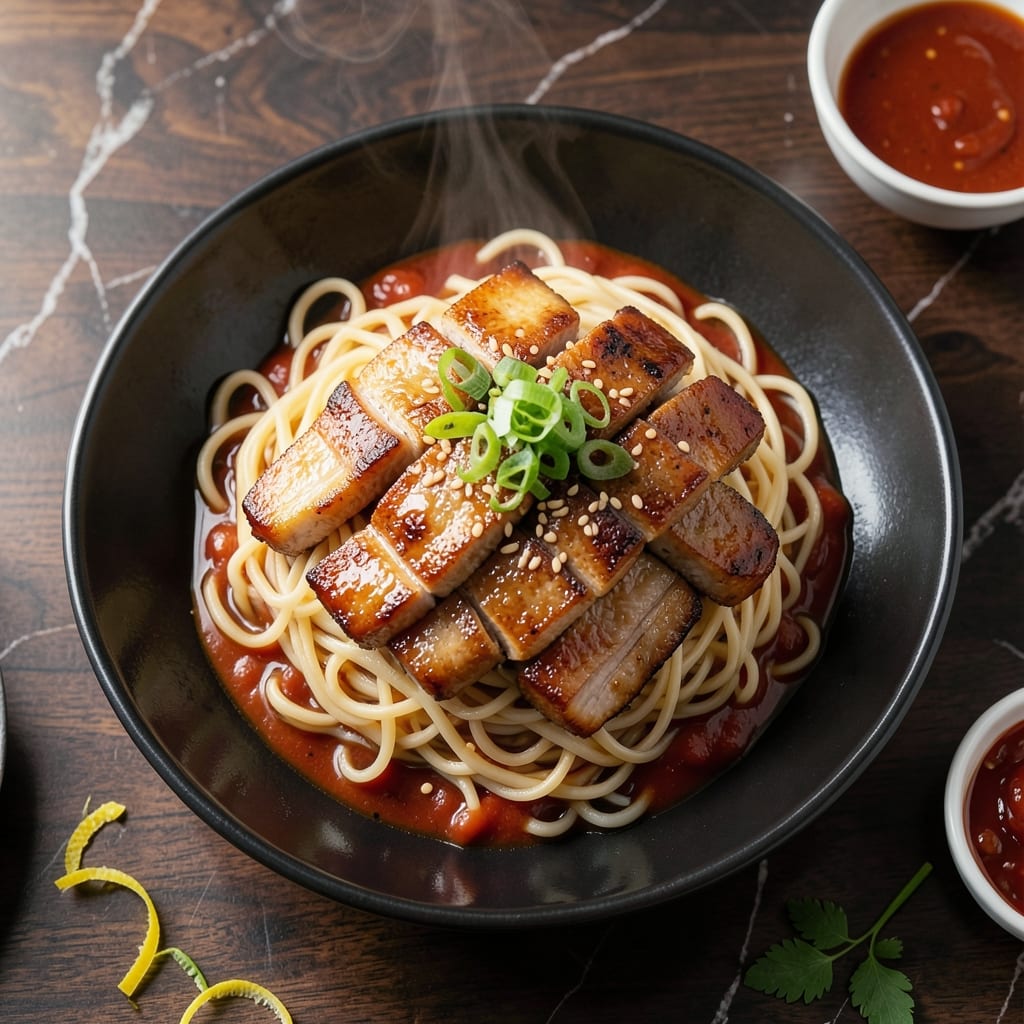
This sweet and sour pork noodles recipe delivers the perfect balance of tangy, savory, and slightly sweet flavors with tender pork and chewy noodles. My years in professional kitchens taught me that timing is everything with this dish.
The secret lies in velveting the pork first, which ensures it stays juicy and tender throughout cooking. The sauce comes together quickly with pantry staples, while the noodles soak up every bit of that glossy, flavorful glaze.
What you get is a restaurant-quality meal with vibrant colors and layers of texture. The pork stays succulent, the noodles maintain their chew, and the sauce clings perfectly to every bite.
This dish comes together in 30 minutes and serves four generously. It’s a foolproof way to bring takeout flavors home with professional results.
Ingredients for sweet and sour pork noodles
Pantry staples meet fresh veggies for this takeout-style favorite at home.
| Ingredient | Amount | Notes |
|---|---|---|
| Pork Tenderloin 🥩 | 1 lb | Cut into thin strips for velveting |
| Egg Whites 🥚 | 2 whole | For velveting pork |
| Cornstarch 🌾 | 2 tbsp | Divided for velveting and sauce |
| Soy Sauce 🫒 | 3 tbsp | Low-sodium preferred |
| Rice Vinegar 💧 | ¼ cup | For tangy sauce base |
| Ketchup 🍅 | ½ cup | For sweetness and color |
| Brown Sugar 🍚 | 3 tbsp | Packed, for caramelized flavor |
| Garlic Cloves 🧄 | 3 cloves | Minced for sauce |
| Fresh Ginger 🌿 | 1 tbsp | Grated for aromatic depth |
| Dry Egg Noodles 🍜 | 8 oz | Or substitute ramen noodles |
| Green Bell Pepper 🌶️ | 1 whole | Thinly sliced for crunch |
| Red Bell Pepper 🌶️ | 1 whole | Thinly sliced for color |
| Carrot 🥕 | 1 whole | Julienned for texture |
| Green Onions 🧅 | 3 whole | Sliced for garnish |
| Vegetable Oil 🫒 | ¼ cup | For high-heat cooking |
The pork choice matters here—tenderloin stays juicy when velveted, but pork shoulder works in a pinch (just trim excess fat). Asian markets often have pre-cut strips, saving you time. For the noodles, dry egg noodles are classic, but I’ve used ramen noodles (discard the seasoning) with great results. Look for low-sodium soy sauce to control the salt level—Kikkoman is my go-to.
Out of rice vinegar? Apple cider vinegar is an easy swap. No ketchup? Tomato paste plus a touch of sugar mimics the sweetness. Brown sugar can be subbed with honey or maple syrup (adjust to taste). The veggies are flexible—swap in snow peas, broccoli, or snap peas if that’s what’s in your crisper. Fresh ginger is ideal, but ground ginger at half the amount works.
The cooked pork and noodles keep beautifully for 3-4 days in the fridge. Store sauce separately if you’re prepping ahead—it thickens as it cools. Reheat gently with a splash of water to loosen. Freezes well for up to 3 months (best without the noodles, which can get mushy).
Why You'll Love This Recipe
- One Pan Wonder: I love how everything comes together in a single skillet—pork tenderloin seared, then the sauce built right in the same pan with soy sauce and rice vinegar.
- Crave-Worthy Contrast: That sweet-sour tang from the rice vinegar hits just right against the tender, cornstarch-coated pork.
- Weeknight Friendly: Honestly, it’s my go-to for busy evenings—prep is fast, and it’s ready before the kids start asking when dinner’s coming.
- Budget Stretcher: A little pork tenderloin goes a long way, especially when you bulk it up with noodles for leftovers that actually taste better the next day.
Step-by-step instructions for sweet and sour pork noodles
Here’s the method I’ve perfected for tender pork and vibrant veggies with that signature tangy sauce.
Velvet the Pork for Maximum Tenderness
Cut the 1 lb Pork Tenderloin into thin strips about ¼-inch thick and place them in a bowl. Add the 2 whole Egg Whites and 1 tablespoon Cornstarch, then mix until the pork is evenly coated. The mixture will look like a thin paste clinging to each piece.
I like to let this sit for 10 minutes while I prep the rest of the ingredients. This velveting technique ensures the pork stays incredibly tender during cooking. You’ll notice the pork becomes slightly opaque as the egg whites and cornstarch work their magic.
Stir-Fry the Pork and Vegetables
Heat 2 tablespoons Vegetable Oil in a large skillet or wok over high heat until shimmering. Add the velveted pork in a single layer—don’t overcrowd the pan. Cook for 2-3 minutes until the pork is no longer pink and develops a light golden crust.
Remove the pork and set aside. In the same pan, add the remaining 1 tablespoon Vegetable Oil, then stir-fry the green bell pepper, red bell pepper, carrot, and green onions for 3-4 minutes until the vegetables are crisp-tender and the peppers begin to blister.
Make the Sweet and Sour Sauce
In a small bowl, whisk together the remaining 1 tablespoon Cornstarch with 3 tablespoons Soy Sauce, 0.25 cup Rice Vinegar, 0.5 cup Ketchup, 3 tablespoons Brown Sugar, 3 cloves minced Garlic Cloves, and 1 tablespoon grated Fresh Ginger. The sauce will be thick and glossy, with a deep reddish-brown color.
Pour the sauce into the skillet with the vegetables and bring to a simmer. Cook for 1-2 minutes until the sauce thickens enough to coat the back of a spoon. You’ll smell the garlic and ginger becoming fragrant as the sauce bubbles.
Combine Everything with the Noodles
Meanwhile, cook the 8 oz Dry Egg Noodles according to package instructions until al dente. Drain and rinse under cold water to stop the cooking process. This keeps the noodles firm and prevents them from turning mushy when mixed with the sauce.
Return the pork to the skillet and add the cooked noodles. Toss everything together for 1-2 minutes until the noodles are fully coated in the sauce and heated through. The pork should be glossy, and the noodles should have absorbed some of the rich, tangy flavor.
Pro Tips For Making Sweet And Sour Pork Noodles
- Velvet the Pork: Toss the pork tenderloin with egg whites and cornstarch for 10 minutes before cooking—this keeps it absurdly tender, even if you overcook it a little.
- Skip the Overcrowding: Fry the pork in batches with space between pieces, or it’ll steam instead of sear and turn into sad, soggy lumps.
- Balance the Vinegar: Rice vinegar can overpower fast, so start with 1 tablespoon, taste, then add more—sounds obvious, but I’ve ruined two batches by dumping it all in at once.
- Use Starch Water: Mix 1 teaspoon cornstarch with 2 tablespoons cold water and stir into the sauce at the end—thickens it in seconds without making it gluey.
Regional styles of sweet and sour pork noodles
Cantonese Classic
In Guangdong, this dish uses char siu pork (Chinese BBQ pork) instead of stir-fried strips. The pork is marinated in hoisin sauce and five-spice powder, then roasted before being sliced thin. The noodles are often egg noodles with a chewier texture, and the sauce includes Shaoxing wine for depth. 🗺️
Sichuan Spicy Twist
The Sichuan version amps up the heat with dried red chilies and Sichuan peppercorns in the sauce. I add 1 tsp chili oil and ½ tsp toasted Sichuan peppercorns to the stir-fry. The numbing spice balances the sweetness beautifully, and I often use wide rice noodles for extra chew.
Hunan Bold Flavors
Hunan’s take leans into bold, smoky flavors. I use doubanjiang (fermented chili bean paste) in the sauce—about 1 tbsp—and add smoked tofu alongside the pork. The veggies often include bok choy or Chinese long beans for texture. The sauce is darker and more umami-rich.
Taiwanese Street Food
In Taipei night markets, you’ll find this dish with thin wheat noodles and a lighter, fruitier sauce. I add ½ cup pineapple chunks to the sauce for brightness and use pork belly instead of tenderloin. The result is sweeter and more refreshing, perfect for hot days. 💛
Fujian Coastal Style
Fujian’s version highlights seafood influences. I use shrimp or scallops alongside the pork and add dried shrimp to the sauce for a briny depth. The noodles are often thin rice vermicelli, and the dish is garnished with cilantro and lime wedges for a bright finish.
Nutrition facts
Frequently asked questions
Can I use chicken instead of pork?
Yes! Swap pork for 1 lb boneless chicken thighs cut into strips. Velvet with the same egg white and cornstarch mix. Cook for 4-5 minutes until no longer pink. Chicken stays tender but has a milder flavor.
Why did my sauce turn out runny?
The cornstarch slurry needs to simmer for 1-2 minutes to thicken. If too thin, mix 1 tsp cornstarch with 1 tbsp cold water, stir into the sauce, and cook for 1 minute more. Avoid overcrowding the pan, which lowers the temperature.
What noodles work best?
Dry egg noodles are classic, but ramen (discard seasoning) or udon work too. For gluten-free, try rice noodles. Cook noodles al dente—they’ll soften further when tossed with the sauce.
Can I make this ahead?
Cook pork and sauce up to 2 days ahead; store separately in the fridge. Reheat gently with a splash of water. Cook noodles fresh the day of serving to prevent mushiness.