
Main Courses
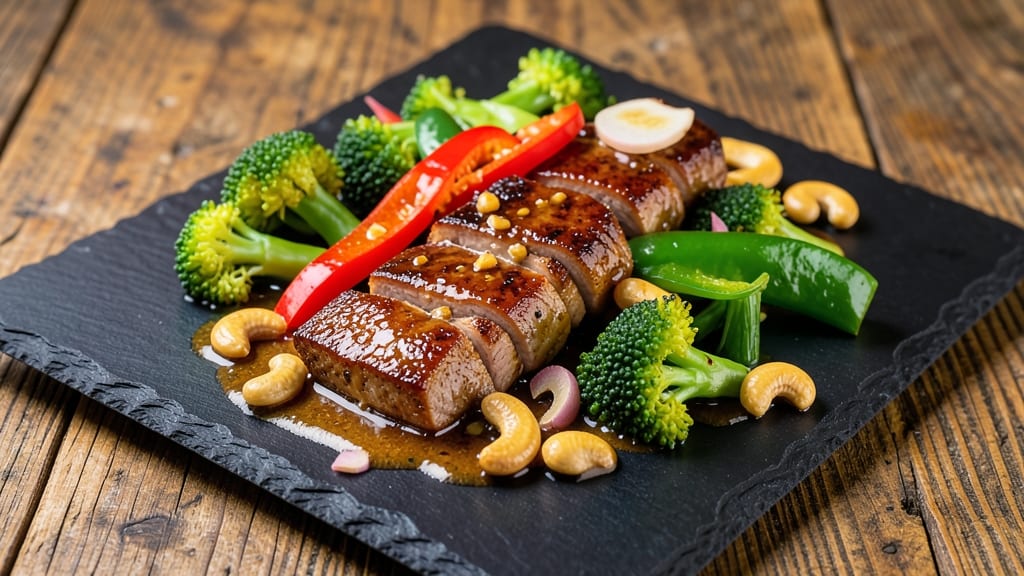
This cashew pork stir fry recipe delivers restaurant-quality results with a perfect balance of sweet, savory, and nutty flavors in under 20 minutes. 🔥 As someone who's spent years perfecting pork dishes at Atlanta's Smoky Pig, I've honed this technique to create tender, caramelized pork that pairs beautifully with crispy cashews and fresh vegetables.
The secret lies in the marinade and high-heat stir-frying that locks in moisture while building depth of flavor.
The beauty of this recipe is its adaptability—it works with any cut of pork, from tenderloin to shoulder, and the sauce can be adjusted to suit your spice preferences. While many stir-fry recipes rely on complicated wok techniques, this method uses standard kitchen tools to achieve professional results.
The cashews add a satisfying crunch that contrasts perfectly with the tender pork and vibrant vegetables.
What you'll end up with is a dish that's rich yet balanced, with caramelized pork pieces glistening from the sauce, crispy cashews adding texture, and vegetables that stay crisp-tender.
The aroma alone will have everyone gathering at the table, and the flavors are complex enough to impress even the most discerning guests. This is the kind of meal that transforms a simple weeknight dinner into something special.
Best of all, it's a recipe that scales beautifully—double the ingredients for a crowd or halve it for a quick weeknight meal. The technique is straightforward, but the results are anything but ordinary. Let's get cooking!
Ingredients for cashew pork stir fry
Restaurant-quality stir-fry starts with these 15 ingredients—where flavor meets precision in every bite.
| Ingredient | Amount | Notes |
|---|---|---|
| Pork Tenderloin 🐖 | 1 ½ lb | Trimmed of fat, cut into 1-inch pieces |
| Raw Cashews 🥜 | 1 cup | Toasted for added crunch |
| Bell Peppers 🌶️ | 2 whole | Red and green, sliced into strips |
| Broccoli Florets 🥦 | 2 cups | Fresh, medium-sized florets |
| Fresh Garlic 🧄 | 4 cloves | Minced for aromatic base |
| Fresh Ginger 🌿 | 1 tbsp | Finely grated, aromatic |
| Soy Sauce 🥢 | ½ cup | Low-sodium preferred |
| Honey 🍯 | 2 tbsp | Pure, for sweet-savory balance |
| Sesame Oil 🫒 | 1 tbsp | Toasted, for nutty aroma |
| Rice Vinegar 🍶 | 1 tbsp | White, for acidity |
| Cornstarch 🌾 | 1 tbsp | For tenderizing pork |
| Vegetable Oil 🫒 | 3 tbsp | High smoke point for stir-frying |
| Salt 🧂 | 1 tsp | Kosher or sea salt |
| Black Pepper 🌶️ | ½ tsp | Freshly ground |
| Sesame Seeds 🌾 | 1 tsp | Toasted for garnish |
The pork cut matters here. Tenderloin delivers consistent tenderness, but shoulder works too if you marinate it longer. Trim excess fat—it burns quickly at high heat. For the cashews, raw and un-salted is ideal; toast them in a dry skillet until golden for maximum crunch. Fresh ginger and garlic are non-negotiable—they build the aromatic base that makes this dish sing. Whole Foods or Trader Joe's carry pre-minced garlic if you're short on time, but fresh is always better. Look for ginger with tight, smooth skin—no wrinkles or soft spots.
No soy sauce? Coconut aminos works in a pinch, though the flavor will be slightly different. Substitute honey with maple syrup or agave nectar if you prefer. The bell peppers can be swapped for snap peas or bok choy if you're feeling adventurous. For extra heat, add a dash of chili flakes or sriracha to the sauce. The cornstarch is key—it tenderizes the pork and helps create that signature stir-fry sauce. If you're using a high-heat wok, skip the cornstarch and rely on quick cooking to keep the meat tender. And if you're toasting the cashews in advance, Costco's bulk section offers the best price per pound.
Prep ahead to save time. Marinate the pork for at least 30 minutes—overnight is even better. Store raw pork in the coldest part of your fridge and use within 2 days. The sauce keeps for 5 days in the fridge, and the cashews stay crisp for 1 week if stored in an airtight container. Double the sauce recipe if you're serving a crowd—it reheats beautifully and tastes even better the next day. For leftovers, store components separately to maintain texture.
Why You'll Love This Recipe
- One-Pan Magic: I swear by this for nights when I’m too tired to wash extra dishes. Slice the pork, toss the veggies—bell peppers and broccoli—right into the same pan, and let the cashews toast up while everything cooks. No pots, no fuss, just done.
- Crunchy-Creamy Contrast: That moment when the cashews turn golden and the pork stays juicy? Chef’s kiss. The garlic hits first—sharp and bright—then the toasted nuts add this unexpected richness that makes every bite feel like a little reward. (Yes, even on a Tuesday night.)
- Lunchbox Hero: Between us, this is my go-to for meal prep. The flavors actually improve the next day—pork stays tender, veggies hold their crunch, and the cashews? Still perfect for sprinkling over rice or noodles. Pack it cold or reheat it; either way, it’s a win.
- Budget-Friendly Feast: Pork tenderloin stretches further than you’d think, and cashews (in moderation) bulk this up without breaking the bank. Honestly, I’ve made this for date nights, family dinners, and solo movie nights—always leaves me with leftovers I don’t dread.
Step-by-step instructions for cashew pork stir fry
Master this wok technique for tender pork, crisp cashews, and vibrant vegetables.
🍳 Step 1: Marinate and Prep the Pork
In a medium bowl, combine the 1.5 lb pork tenderloin (cut into 1-inch pieces), 1 tbsp cornstarch, 1 tsp salt, and 0.5 tsp black pepper. Toss gently with your hands until the pork is evenly coated. The cornstarch creates a light crust that keeps the meat tender during stir-frying.
Transfer the marinated pork to a plate and let it sit at room temperature for 15-20 minutes. This ensures even cooking and prevents cold spots in the center. While waiting, prepare the remaining ingredients—this is where organization saves time. Finely grate the 1 tbsp fresh ginger and mince the 4 cloves fresh garlic using a sharp knife or microplane. The aromatic oils will infuse the stir-fry as it cooks.
🔥 Step 2: Stir-Fry the Pork to Perfect Doneness
Heat a wok or large skillet over high heat until it's smoking hot. Add 3 tbsp vegetable oil and swirl to coat the bottom evenly. Add the pork in a single layer and let it sear undisturbed for 2-3 minutes until the edges turn golden brown. This initial sear locks in juices and builds flavor.
Stir the pork occasionally with tongs, breaking up any large pieces, and cook for an additional 3-4 minutes until the internal temperature reaches 145°F and the pork is no longer pink in the center. Remove the pork from the wok and set it aside on a plate. Don’t overcrowd the pan—this ensures the pork cooks quickly and stays tender. If the wok starts to smoke excessively, reduce the heat slightly but keep it as hot as possible.
🍳 Step 3: Cook the Vegetables and Build the Sauce
In the same wok, add another 1 tbsp vegetable oil if needed and increase the heat back to high. Add the sliced 2 whole bell peppers (strips) and 2 cups broccoli florets, stirring constantly for 2-3 minutes until they begin to soften but still retain a slight crunch. Overcooking will turn them mushy—this is where timing matters most.
Add the minced garlic and grated ginger, stirring for 30 seconds until fragrant. Pour in the 0.5 cup soy sauce, 2 tbsp honey, 1 tbsp rice vinegar, and 1 tbsp sesame oil. Stir well to combine and let the sauce simmer for 1 minute until it thickens slightly. The vegetables should be tender-crisp, and the sauce should coat the back of a spoon.
🥘 Step 4: Combine and Finish with Crunchy Cashews
Return the pork to the wok and toss everything together for 1-2 minutes until the pork is evenly coated in the sauce and heated through. The pork should absorb the flavors without falling apart. If the sauce is too thin, let it simmer for another 30 seconds to reduce.
Reduce the heat to medium-low and stir in the 1 cup raw cashews and 1 tsp toasted sesame seeds. Toss gently to distribute the cashews evenly—you want them to add texture without overpowering the dish. Taste and adjust seasoning with a pinch more salt or black pepper if needed. The cashews should be warm but still retain their crunch.
🍽️ Step 5: Serve Immediately Over Steamed Rice
Transfer the stir-fry to a serving platter and garnish with an extra sprinkle of sesame seeds for added texture and aroma. Serve immediately over steamed jasmine or white rice to soak up the flavorful sauce. The dish should be vibrant, with tender pork, crisp-tender vegetables, and nutty cashews in every bite.
For best results, serve while hot—this stir-fry tastes even better the second day, but the cashews lose their crunch if left sitting. Store leftovers in an airtight container in the refrigerator for up to 3 days, reheating gently in a skillet to maintain texture.
Pro Tips For Making Cashew Pork Stir Fry
- Slice Pork Thin: I learned this the hard way—thin, even slices (about ¼-inch thick) cook faster and soak up the sauce better than thick chunks. Use a sharp knife and cut against the grain for tenderness that’ll make your stir-fry fall apart with every bite.
- Toast Cashews First: Skip the raw cashews in the stir-fry—toss them in a dry pan over medium heat for 2-3 minutes until golden. They’ll add crunch and depth of flavor instead of turning soggy when the pork finishes cooking.
- Start High, Finish Low: Crank the heat to maximum for the pork and peppers until they’re searing, then dial it down to medium-low for the broccoli and garlic. This two-step method keeps everything crisp-tender without turning the broccoli into mush.
- Prep Broccoli Last: I used to add broccoli early, and it’d steam into oblivion by the time the pork was done. Cut florets into even 1-inch pieces and toss them in last—just 1-2 minutes of cooking is all they need to stay bright and slightly crisp.
Common mistakes when making perfect results
Overcrowding the Pan
One of the biggest mistakes is overcrowding your wok or skillet with pork pieces. When you pile too much in at once, the pork steams instead of searing, resulting in soggy, unevenly cooked meat. I've seen home cooks make this mistake when they're eager to get everything cooked quickly.
The solution? Cook the pork in two batches if needed, using a 12-inch cast iron skillet or wok. This ensures each piece gets that perfect golden crust and stays tender inside. 🔥
Skipping the Rest
Many people rush straight to stir-frying after marinating, but letting the pork rest at room temperature is crucial. Cold pork releases moisture unevenly, leading to steaming instead of searing and potentially undercooked centers. I learned this lesson early in my apprenticeship—15-20 minutes at room temp makes all the difference.
While it waits, use that time to prep your vegetables and aromatics so everything's ready when the pork hits the pan.
Undercooking the Pork
Using a meat thermometer is non-negotiable here. Many home cooks pull pork from the pan when it looks done, only to find it still pink in the middle. Pork should reach an internal temperature of 145°F—any lower and you risk foodborne illness.
I recommend cutting into the thickest piece to check doneness. If you're using a shoulder cut, increase your cook time by 2-3 minutes since it's more dense than tenderloin.
Burning the Aromatics
Garlic and ginger should perfume your stir-fry, not burn and turn bitter. When you add them to the wok, the heat should be high but controlled—they only need 30 seconds to release their flavors.
I've seen people walk away from the stove during this step, and suddenly you've got blackened aromatics. Keep the heat at medium-high and stir constantly. If you notice smoke, reduce the heat immediately.
Adding Cashews Too Early
Cashews need to stay crisp for that satisfying crunch, which means they should be added at the very end when everything else is hot. Adding them too soon causes them to soften in the sauce, losing their texture.
I like to toast them separately in a dry skillet for 2-3 minutes until golden before adding them to the stir-fry. This extra step ensures maximum crunch in every bite. 🥜
Ignoring the Sauce Reduction
The sauce should coat the back of a spoon when you're done—if it's too thin, it won't cling to the pork and vegetables properly. Many people pour in all the ingredients and walk away, but the sauce needs to reduce slightly to thicken.
Let it simmer for 1-2 minutes after adding the soy sauce and honey. If it's still too thin, remove from heat and let it thicken naturally. A good test is to dip your spoon in—if sauce drips off cleanly, it needs more reduction time.
Nutrition facts
Frequently asked questions
Can I use ground pork instead of tenderloin for this recipe?
Ground pork works beautifully but requires adjustments! Use 1 lb ground pork (80% lean) and cook it separately until browned before adding to the stir-fry. The texture will be different—more tender than traditional pork pieces—but the flavor remains rich. For extra moisture, add 1 tsp cornstarch to the ground pork before cooking.
How do I make this dish spicier?
Add 1-2 tbsp sriracha or 1 tsp chili flakes to the sauce, or stir in 1 tbsp gochujang (Korean chili paste) for depth. For heat without dryness, include 1 tsp minced jalapeño with the aromatics. Start with 1 tsp and adjust to taste—spice builds as the dish cooks!
What's the best way to reheat leftovers?
Reheat gently in a skillet over medium heat with 1 tsp vegetable oil for 2-3 minutes, stirring constantly. Avoid microwaving—it makes the pork rubbery. For extra crispiness, toast the cashews separately in a dry pan for 1 minute before serving. Leftovers keep 3 days in the fridge.
Can I substitute peanuts for cashews?
Use 1 cup roasted peanuts instead, but toast them first in a dry skillet for 3-4 minutes until fragrant. Peanuts have a stronger flavor, so reduce the soy sauce by 1 tbsp to balance. For a smoother texture, lightly crush half before adding.
Why does my pork turn out dry?
Overcooking or overcrowding the pan are the usual culprits. Pork should reach 145°F internally—use a meat thermometer! Cook in batches if needed, and don't overstir once seared. The cornstarch coating helps retain moisture, but if your pork is still dry, try marinating for 1 hour instead of 30 minutes next time.