
Main Courses
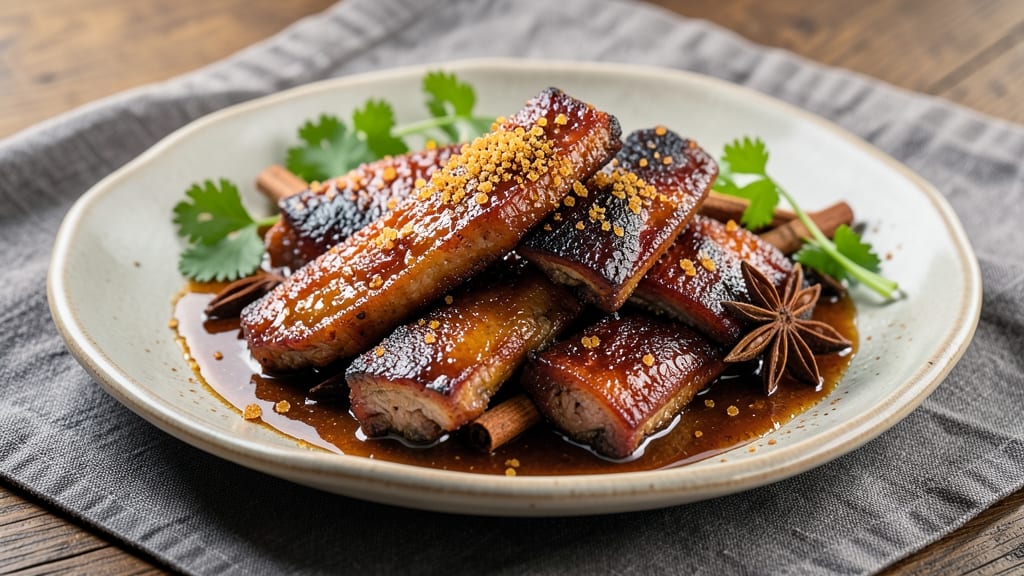
This Chinese braised pork spare ribs recipe delivers restaurant-quality depth with just five key spices and a slow simmer. 🔥 As someone who's spent years perfecting pork techniques, I can tell you the secret lies in balancing sweet, salty, and aromatic notes—where star anise and cinnamon build complexity while soy and sugar create that signature glossy sheen.
The ribs emerge fork-tender with a sauce so rich it clings to every bite.
The process begins with a simple marinade of soy sauce, sugar, and five-spice powder that transforms tough spare ribs into melt-in-your-mouth perfection. Unlike quick-cook methods, this recipe relies on low-and-slow braising—typically 2 to 3 hours—that develops deep flavor without drying out the meat.
The aroma alone will have your whole house smelling like a Cantonese restaurant.
What makes this dish special is how the spices work together: star anise adds earthy warmth, cinnamon brings subtle sweetness, and Sichuan peppercorns introduce a faint tingling heat. The result is ribs that are tender enough to pull apart with a fork yet retain enough structure to hold their shape.
Serve with steamed jasmine rice to soak up every last bit of that fragrant braising liquid.
This method works equally well for weeknight dinners or holiday feasts—just scale the ingredients accordingly. The beauty of braising is its forgiveness; even if your timing isn't perfect, the slow cook will deliver exceptional results. Ready to master this classic technique? Let's get started with the ingredients.
Ingredients for chinese braised pork spare ribs
Five aromatic spices and a slow simmer create restaurant-quality pork spare ribs at home.
| Ingredient | Amount | Notes |
|---|---|---|
| Pork Spare Ribs 🍖 | 3 lb | Bone-in, meaty spare ribs |
| Soy Sauce 🥄 | ½ cup | High-quality light soy sauce |
| Brown Sugar 🍬 | ½ cup | Packed firmly, no substitutes |
| Five-Spice Powder 🌶️ | 1 tbsp | Authentic Chinese blend |
| Star Anise 🌟 | 2 whole | Whole pods for infusion |
| Cinnamon Sticks 🌿 | 2 whole | 1-inch pieces preferred |
| Sichuan Peppercorns 🌶️ | 1 tsp | Lightly crushed for aroma |
| Garlic Cloves 🧄 | 6 cloves | Smashed, not minced |
| Fresh Ginger 🌿 | 1 tbsp | Grated, not powdered |
| Red Wine 🍷 | ½ cup | Dry, bold variety |
| Water 💧 | 1 cup | Filtered preferred |
| Cornstarch 🌾 | 1 tbsp | For sauce thickening |
| Sesame Oil 🫒 | 1 tsp | Toasted, for finishing |
| Green Onions 🧅 | 4 whole | Sliced, for garnish |
| Jasmine Rice 🍚 | 1 ½ cups | Uncooked, for serving |
The ribs are the foundation—look for meaty, bone-in spare ribs with good marbling for tenderness. Costco or Whole Foods carry excellent cuts, but any quality butcher will work. Five-spice powder is non-negotiable here; Penzeys or Asian markets offer authentic blends. Star anise and Sichuan peppercorns should be whole pods or lightly crushed—never powdered. The ginger and garlic add freshness that balances the deep braising flavors. For the wine, any dry red like Cabernet or Merlot works, but avoid sweet varieties like Zinfandel.
No five-spice powder? Mix 2 tsp cinnamon, 1 tsp fennel seeds, 1 tsp cloves, 1 tsp star anise, and 1 tsp black pepper as a substitute. Short on red wine? Dry sherry or even extra soy sauce will work in a pinch. The cornstarch is crucial for thickening the sauce—arrowroot powder works too, but cornstarch gives that classic glossy finish. For extra depth, add a splash of Shaoxing wine if you can find it. The sesame oil should be toasted, not flavored—Kadoya brand is my go-to for authentic flavor.
This dish tastes even better the next day as flavors meld. Store leftovers in an airtight container for up to 5 days in the fridge. For longer storage, freeze portions for 3 months. The braising liquid reduces significantly—save it for rice or stir-fries. The jasmine rice should be steamed separately and served alongside. If making ahead, prepare the ribs up to 2 days early—the sauce improves with time.
Why You'll Love This Recipe
- One-Pot Magic: I swear by this recipe—just ribs, soy sauce, and a handful of spices simmering in one pot. No chopping, no fuss, and the star anise infuses that warm, aromatic depth without me even needing to think about it.
- Sweet-Savory Crunch: That brown sugar caramelizing on the ribs? Absolute perfection. The five-spice powder adds this earthy, slightly floral note that makes every bite feel like a little celebration—crispy edges, sticky glaze, and a depth you won’t find in basic braised pork.
- Leftovers That Don’t Suck: Honestly, this recipe makes too much—and that’s the best kind of problem. The flavors only get richer overnight, so I’m reheating these for lunch for days. (Yes, even on a Tuesday.)
- Budget-Friendly Feast: A whole pack of spare ribs, a bottle of soy sauce, and a few spices? This feeds my family of four for under $15. Between us, that’s a steal for something this satisfying—no takeout or fancy ingredients needed.
Step-by-step instructions for Chinese braised pork spare ribs
Transform tough ribs into melt-in-your-mouth perfection with this slow-braised method.
🔥 Step 1: Parboil and Parchment the Ribs
Fill a large pot with water and bring to a rolling boil. Add the 3 lb pork spare ribs and boil for 5 minutes to remove surface impurities. This also helps tenderize the meat before braising. Drain and rinse the ribs under cold water, then pat them completely dry with paper towels—this ensures the braising liquid clings properly and the ribs develop a better crust.
Place the dried ribs on a sheet of parchment paper and tie them securely with kitchen twine, wrapping them into a compact bundle. This shape promotes even cooking and helps the ribs stay submerged in the braising liquid. I like to make a small slit in the parchment to allow some steam to escape—this prevents the ribs from steaming instead of braising.
🍳 Step 2: Build the Five-Spice Braising Base
Heat a Dutch oven or heavy pot over medium heat. Add 2 tablespoons neutral oil and let it get hot but not smoking. Add the 6 smashed garlic cloves and 1 tbsp grated fresh ginger, cooking for 30 seconds until fragrant. Be careful not to burn them—garlic turns bitter quickly.
Add the 2 whole star anise, 2 whole cinnamon sticks, and 1 tsp lightly crushed Sichuan peppercorns. Stir for 1 minute to toast the spices gently, releasing their aromatic oils. This step is crucial—it infuses the braising liquid with deep, complex flavors that will penetrate the ribs. Remove the spices after toasting unless you want them to remain in the final dish.
🥘 Step 3: Braise with Wine and Soy Sauce
Pour in the 0.5 cup red wine and scrape up any browned bits from the bottom of the pot with a wooden spoon. This deglazing step captures all the flavor you've built so far. Let the wine simmer for 2 minutes until it reduces by half and the alcohol aroma dissipates.
Add the 0.5 cup soy sauce and 0.5 cup brown sugar, stirring until the sugar dissolves completely. Place the parchment-wrapped ribs in the pot, then add 1 cup water. The liquid should come about halfway up the ribs. Bring to a gentle simmer, then reduce heat to maintain a barely bubbling surface. Cover with a lid and braise for 1 hour and 15 minutes, turning the ribs occasionally to ensure even cooking.
🔪 Step 4: Thicken the Sauce and Finish
After braising, carefully remove the ribs and set them aside on a plate. Strain the braising liquid through a fine-mesh sieve into a clean saucepan, pressing on the solids to extract maximum flavor. Return the liquid to medium heat and whisk in the 1 tbsp cornstarch mixed with 2 tablespoons water until the sauce thickens to a glossy consistency, about 2-3 minutes. It should coat the back of a spoon but still be pourable.
Return the ribs to the sauce and simmer for another 5 minutes to let them absorb the thickened sauce. Drizzle with 1 tsp sesame oil and garnish with 4 sliced green onions. The ribs should be fork-tender with a glossy, caramelized surface. If the sauce is too thin, reduce it further over low heat.
🍚 Step 5: Serve with Jasmine Rice
While the ribs rest, prepare the 1.5 cups jasmine rice according to package instructions. The rice should be fluffy and slightly sticky—perfect for soaking up the rich braising sauce. To serve, spoon the rice onto plates, top with braised ribs, and ladle generous amounts of the sauce over the top.
Each bite should deliver tender, fall-apart meat with a complex blend of sweet, salty, and aromatic flavors. The five-spice blend adds warmth, while the wine and soy sauce create depth. Serve immediately while the ribs are still steaming hot and the sauce is at its peak consistency.
Pro Tips For Making Chinese Braised Pork Spare Ribs
- Blister First, Braise Later: After burning three batches, I finally figured out that searing the ribs until they’re deeply browned—almost charred in spots—gives the braise something to cling to. Use a screaming-hot wok or skillet for 3-4 minutes per side, then deglaze with a splash of water before adding the braising liquid. The caramelized crust dissolves into the sauce, making it richer than store-bought versions.
- Trim the Fat, Not the Flavor: I used to leave the thick rib fat on, thinking it’d render into flavor—but it just made the sauce greasy. Instead, scrape off most of the fat with a knife, leaving just a thin layer to baste the meat. The ribs stay tender, and the sauce stays silky. (Yes, even if you’re impatient like me.)
- Star Anise in a Sock: Sounds weird, but it works: Toss a whole star anise into a clean kitchen sock or cheesecloth before dropping it into the pot. This keeps the shards from floating in your sauce like little landmines. Remove it after 20 minutes—no need to strain the whole thing.
- Sugar Early, Not Late: My grandmother swore by this, and she was right: Add the brown sugar with the soy sauce at the start, not as a finishing touch. It caramelizes slowly into the braise, giving the ribs a glossy, sticky-sweet glaze instead of a cloying sugar rush. Stir it in when the liquid first simmers, then forget about it.
Serving suggestions for chinese braised pork spare ribs
Rice Pairing Perfection
Steamed jasmine rice is my go-to pairing—its delicate floral aroma complements the ribs' rich, savory-sweet profile beautifully. Cook 1.5 cups uncooked rice with 2 cups water for perfectly fluffy grains that soak up the braising sauce.
For extra luxury, try black rice or short-grain sushi rice—both add visual contrast and subtle nuttiness. 🍚
Vegetable Sides
Light, fresh vegetables cut through the richness. I love stir-fried bok choy with garlic and ginger—toss 4 cups chopped bok choy in 1 tbsp sesame oil for 2 minutes until crisp-tender. Steamed snap peas with a sprinkle of toasted sesame seeds also work wonderfully.
For heartier meals, egg fried rice with diced ham and peas adds protein and texture.
Broth-Based Accompaniments
Serve the ribs with hot and sour soup or wonton soup to balance the meal. The tangy broth cleanses your palate between rich bites. For a quicker option, simmer 1 cup chicken broth with 1 tbsp soy sauce, 1 tsp ginger, and 1 tsp cornstarch until thickened.
Garnish with scallions and a drizzle of chili oil for heat. 🍜
Dipping Sauces
Offer hoisin sauce for dipping—its sweet-savory profile enhances the ribs' depth. Mix 2 tbsp hoisin with 1 tsp rice vinegar and a pinch of Sichuan peppercorns for a spicy kick. For a tangy option, blend 2 tbsp plum sauce with 1 tbsp lime juice and 1 tsp chili crisp.
Keep sauces on the side to let guests customize their experience.
Presentation Tips
Arrange ribs on a wooden board or slate platter with rice in the center, surrounded by sauce and garnishes. Scatter toasted sesame seeds and sliced green onions for color contrast.
For a restaurant-style touch, use small ceramic bowls for individual portions of rice and sauce. Garnish with edible flowers like nasturtiums for a pop of color. 🌸
Make-Ahead Serving
Braised ribs reheat beautifully—store leftovers in the fridge for up to 5 days or freeze for 3 months. Reheat gently in a pot with 2 tbsp water over low heat for 10 minutes.
Serve with microwaved rice or freshly cooked grains. For parties, assemble components separately and keep warm in chafing dishes to maintain crispness.
Nutrition facts
Frequently asked questions
Why do we parboil the ribs before braising?
Parboiling for 5 minutes removes surface impurities that could cloud the braising liquid and helps tenderize the meat. It also ensures the ribs develop that signature glossy sheen during cooking. This step is especially important for spare ribs, which can be tougher than back ribs.
Can I substitute beef short ribs for pork?
Yes, but adjust the cooking time! Beef short ribs need 3-4 hours of braising instead of 1.5-2 hours for pork. The five-spice blend and sauce ratios remain the same, but beef benefits from longer cooking to break down collagen.
What's the secret to getting that glossy sauce?
The sauce's shine comes from cornstarch slurry and proper reduction. Simmer the sauce until it coats the back of a spoon, then finish with 1 tsp sesame oil. For extra gloss, add 1 tbsp Shaoxing wine at the end. The sugar in the recipe also helps create that caramelized sheen.
How do I know when the ribs are fully cooked?
Ribs are done when they're fork-tender and easily pull apart at the bone. The internal temperature should reach 195°F in the thickest part. If they're not tender enough after 1.5 hours, add 15-30 minutes more. The braising liquid should reduce to a rich, syrupy consistency.
Can I make this in a slow cooker?
Follow the same marinade and parboiling steps, then transfer everything (including ribs and parchment) to your slow cooker. Cook on Low for 6-8 hours or High for 4-5 hours. The ribs will be even more tender, but the sauce may need extra thickening at the end.