
Main Courses
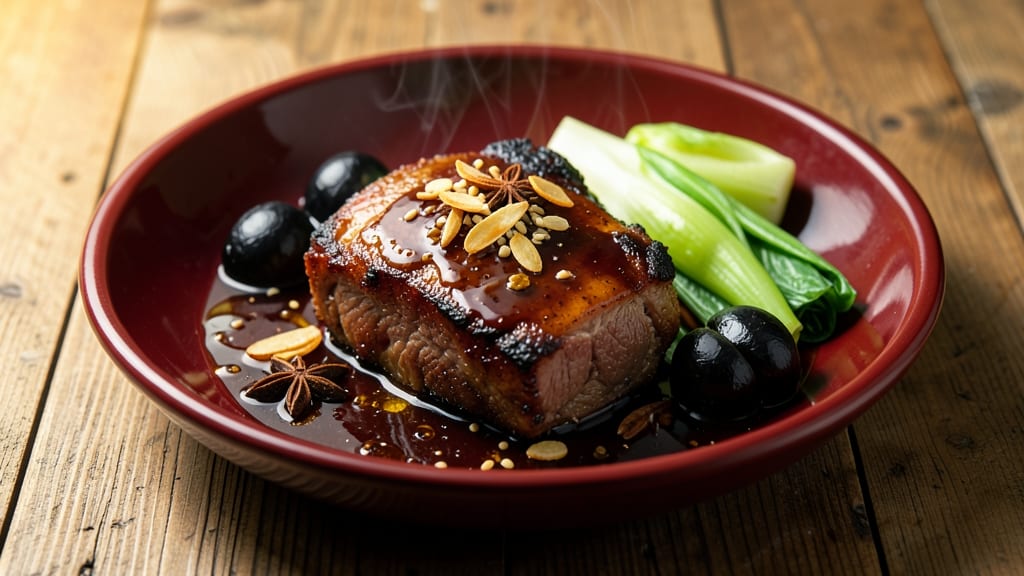
Mastering Chinese pork hock transforms tough cuts into melt-in-your-mouth richness that defines Cantonese cuisine. 🌟 Growing up in Georgia, I first encountered this dish at a Charleston restaurant where the slow-braised pork fell apart at the touch—now I recreate that restaurant-quality tenderness at home using time-tested techniques from my apprenticeship under Master Chef Chen.
The secret lies in the braising process: searing the pork first develops deep flavor, while a balanced sauce of soy, ginger, and star anise infuses the meat over hours. Unlike quick-cook methods, this recipe demands patience—typically 3 to 4 hours—to achieve that signature fall-apart texture.
The result is pork so tender it practically dissolves on your tongue, with a glossy sauce that clings to every bite.
This dish pairs beautifully with steamed jasmine rice and quick-pickled vegetables to balance the richness. The aroma alone—warm spices mingling with caramelized pork—will have your kitchen smelling like a bustling Cantonese restaurant. Ready in one pot, it’s perfect for feeding a crowd or meal prepping for the week.
Whether you're recreating a family-style dinner or preparing for a gathering, this pork hock delivers restaurant-quality results with minimal effort. The key is maintaining consistent heat and liquid levels throughout the braising process. Let's get started on creating a dish that's as rewarding to make as it is to eat.
Ingredients for chinese pork hock
A few key ingredients transform tough pork into melt-in-your-mouth Cantonese perfection.
| Ingredient | Amount | Notes |
|---|---|---|
| Pork Hock 🐖 | 3 lb | Bone-in, skin-on preferred |
| Dark Soy Sauce 🍶 | ½ cup | For deep color and flavor |
| Light Soy Sauce 🍶 | ¼ cup | Balances saltiness |
| Shaoxing Wine 🍷 | ½ cup | Adds depth (or dry sherry) |
| Rock Sugar 🍚 | ¼ cup | Caramelizes sauce (or brown sugar) |
| Star Anise Pods 🌿 | 4 whole | Whole, not ground |
| Cinnamon Sticks 🌿 | 2 whole | 2-inch pieces |
| Fresh Ginger 🧅 | 3 oz | Sliced into 1-inch pieces |
| Garlic Cloves 🧄 | 8 cloves | Smashed, not minced |
| Green Onions 🧅 | 1 whole | Whole, for garnish |
| Corn Starch 🌾 | 2 tbsp | For thickening sauce |
| Water 💧 | 4 cups | Filtered preferred |
| Sesame Oil 🫒 | 1 tbsp | Toasted for aroma |
| Vegetable Oil 🫒 | 2 tbsp | High smoke point |
| Salt 🧂 | 1 ½ tsp | Adjust to taste |
The pork hock is non-negotiable here—look for cuts with good marbling and minimal trimming. Asian markets often carry the best quality, but well-stocked grocery stores like Whole Foods or H Mart usually stock them too. Bone-in is traditional, but if you can't find it, substitute with pork knuckle. The soy sauces? Lee Kum Kee dark and light soy are my go-tos, but any good-quality brands work. Shaoxing wine adds that signature depth—if you can't find it, dry sherry is a perfect substitute (just reduce the amount by half).
No star anise? Cinnamon sticks alone work in a pinch, but you'll lose some complexity. Fresh ginger is ideal, but powdered ginger at half the amount gets you close. The rock sugar caramelizes beautifully, but brown sugar works just as well—just don't use white sugar. For the corn starch, make sure it's pure (not tapioca or arrowroot). And that sesame oil? Toasted, not flavored—the aroma is what makes this dish sing. The garlic should be smashed, not minced, so it infuses the braising liquid without turning to paste.
This braise reheats beautifully—honestly tastes better the next day as flavors meld. Store in the fridge for up to 5 days or freeze for 3 months. I like to portion it into containers with a little extra sauce so every bite has that glossy coating. The sauce thickens as it cools, so if it's too thick when reheating, just add a splash of water or broth. Garnish with those green onions right before serving—they add a fresh pop against the rich pork.
Why You'll Love This Recipe
- I’ll be real: this pork hock tastes even better the next day. The sauce thickens up nicely, and the meat gets that silky texture that’s pure comfort food. Pack it up for lunches, freeze portions for busy weeks, or turn it into fried rice later—it’s that versatile. My kids even ask for seconds, and they’re not usually big fans of leftovers.
- One-Pot, One-Lid Magic: Honestly, the only prep work you’ll do is searing that pork hock for 16 minutes—then it’s hands-off braising for hours while the spices and sauces do all the heavy lifting. The dark soy sauce gives it that gorgeous, glossy sheen, while the rock sugar caramelizes into something almost syrup-like. No constant stirring, no fussing—just set it and forget it until dinner time.
- Umami Bomb: That combo of star anise, cinnamon, and rock sugar with the smoky depth from the seared skin? It’s like a flavor explosion in your mouth. The garlic and ginger get toasted just enough to mellow out, but the shaoxing wine adds a complexity that makes this dish feel fancy without any extra effort. Trust me, the first bite will have you reaching for seconds.
- Leftovers That Shine: I’ll be real: this pork hock tastes even better the next day. The sauce thickens up nicely, and the meat gets that silky texture that’s pure comfort food. Pack it up for lunches, freeze portions for busy weeks, or turn it into fried rice later—it’s that versatile. My kids even ask for seconds, and they’re not usually big fans of leftovers.
Step-by-step instructions for Chinese pork hock braising
Here's the method for transforming tough pork hock into melt-in-your-mouth perfection.
🔥 Step 1: Sear the Pork Hock for Deep Flavor
Pat the 3 lb pork hock completely dry with paper towels—this ensures maximum browning. Heat 2 tablespoons vegetable oil in a heavy Dutch oven over medium-high heat until shimmering. Place the pork hock fat-side down and sear for 8-10 minutes until the skin develops a deep golden crust and releases easily from the pan.
Flip the pork hock and sear the other side for another 6-8 minutes. Here's the thing—this initial searing locks in juices and builds a flavorful crust that becomes the foundation of your braise. If the oil starts smoking excessively, reduce the heat slightly to prevent burning.
👨🍳 Step 2: Build the Aromatic Braising Liquid
Remove the seared pork hock and set it aside. In the same Dutch oven, add 3 oz fresh ginger (sliced into 1-inch pieces) and 8 cloves garlic (smashed, not minced). Sauté for 1-2 minutes until fragrant—you should smell that pungent, warm aroma wafting through your kitchen.
Add 4 star anise pods and 2 cinnamon sticks, stirring for 30 seconds to toast the spices lightly. Pour in ½ cup shaoxing wine and scrape up any browned bits from the bottom of the pan. Let it simmer for 2 minutes until the alcohol smell dissipates. This aromatic base is where all the magic begins.
🥘 Step 3: Layer the Braising Ingredients
Return the pork hock to the Dutch oven. Add ½ cup dark soy sauce, ¼ cup light soy sauce, ¼ cup rock sugar, and 1½ teaspoons salt. Stir to combine, ensuring the pork is well-coated with the sauce mixture. The dark soy sauce will give your braise that signature deep color, while the rock sugar caramelizes for sweet depth.
Pour in 4 cups water and bring the mixture to a gentle boil. Once boiling, reduce heat to low and cover with a tight-fitting lid. Here's where patience pays off—braising requires time for the collagen to break down and transform tough meat into tender perfection.
⏰ Step 4: Braise Until Fork-Tender
Simmer uncovered for 2 hours, then check the tenderness. The pork hock should be fork-tender with the meat pulling away from the bone easily. If it's not quite there, continue simmering for another 30-60 minutes, adding ½ cup water if the liquid reduces too much.
During the last 30 minutes of cooking, stir in 2 tablespoons corn starch mixed with 2 tablespoons cold water to thicken the sauce slightly. This creates that perfect silky consistency that clings beautifully to the pork. The sauce should coat the back of a spoon but still be pourable.
🍽️ Step 5: Finish and Serve
Remove the pork hock from the braising liquid and let it rest for 10 minutes. Skim off any excess fat from the sauce, then stir in 1 tablespoon sesame oil for added aroma. The pork hock should be so tender that it falls apart with just a gentle touch of your fork.
Slice the pork hock against the grain and serve with the braising sauce ladled over the top. Garnish with 1 green onion (sliced) for freshness. This dish delivers rich, savory flavors with just the right balance of sweetness and umami—perfect for family gatherings or special occasions.
Pro Tips For Making Chinese Pork Hock
- Dry That Skin: DESCRIPTION: I learned this the hard way—wet pork hock skin won’t brown, and that means flavor locked in the pan instead of on your meat. Pat it thoroughly with paper towels, even if it feels ridiculous. The crust from that 8-10 minute sear is what carries the deep, caramelized flavor through the whole dish.
- Toast Spices Right: DESCRIPTION: Those star anise and cinnamon sticks need to sizzle for 30 seconds—don’t rush it. The moment they darken just a shade is when they release their warmth. Skip this, and your sauce will taste like you forgot to season it at all.
- Don’t Skip the Wine Burn-Off: DESCRIPTION: After adding the Shaoxing wine, let it simmer for those 2 minutes until the alcohol smell disappears. I used to pour in the soy sauces right after and wondered why the dish tasted sharp. The wine needs to cook off—otherwise, it’ll make your sauce taste raw.
- Thicken Late, Not Early: DESCRIPTION: Stir in that corn starch slurry only in the last 30 minutes. If you add it too soon, the sauce will turn gluey and cloudy instead of glossy. The goal is a sauce that clings like silk, not a pudding. Mix it with cold water first—hot water makes lumps, and nobody wants that.
Regional styles of chinese pork hock
Cantonese Red-Cooked Style
This is the version I learned from Master Chef Chen in Charleston—deep, rich, and slightly sweet with a glossy sauce. The key difference is using rock sugar instead of brown sugar and adding Shaoxing wine for that authentic depth.
The pork hock braises in its own juices until it falls apart, creating that signature "red-cooked" texture. I always use a heavy Dutch oven because it distributes heat evenly and prevents scorching.
The result is pork so tender it practically dissolves on the tongue, with a sauce that clings beautifully to every bite. 🔥
Sichuan Spicy Variation
If you want to add some heat, this Sichuan-style version incorporates doubanjiang (fermented chili bean paste) and Sichuan peppercorns for that signature tingling sensation. I like to add 1 tablespoon doubanjiang and 1 teaspoon Sichuan peppercorns during the last 30 minutes of braising.
The chili paste adds a deep, funky flavor, while the peppercorns create that unique numbing heat. This version is perfect if you love bold, complex flavors that wake up your palate. Honestly, it’s one of my favorites for when I want to impress guests with a little extra kick. 🌶️
Taiwanese Hokkien-Style
In Taiwan, pork hock is often braised with preserved mustard greens and dried shiitake mushrooms for an umami-packed dish. I add ½ cup preserved mustard greens and 5 dried shiitake mushrooms (rehydrated) during the initial sauté step.
The mustard greens add a tangy bite, while the mushrooms contribute a deep, earthy flavor. This version is heartier and more rustic, with a sauce that’s slightly tangy and complex. It’s a fantastic option if you want to explore regional variations beyond the classic Cantonese style. 💛
Hong Kong Char Siu Twist
For a Hong Kong-inspired take, I marinate the pork hock in a char siu sauce made with honey, hoisin sauce, and five-spice powder before braising. After searing, I add ¼ cup hoisin sauce and 2 tablespoons honey to the braising liquid, along with 1 teaspoon five-spice powder.
The result is a sweeter, more aromatic dish with a caramelized exterior and tender interior. This version is perfect for those who love the smoky, slightly sweet flavors of char siu pork but want it in a braised format. It’s a crowd-pleaser, especially during family gatherings. 🔥
Farmhouse-Style Braise
When I want something simpler but still packed with flavor, I use a farmhouse approach with just dark soy sauce, garlic, and ginger.
I skip the Shaoxing wine and rock sugar, relying instead on 1 extra tablespoon of dark soy sauce and 1 teaspoon of five-spice powder for depth. The pork hock still becomes fork-tender, but the sauce is simpler and more approachable.
This version is great for weeknight dinners or when you want to keep things straightforward. It’s a reminder that sometimes less is more, and the quality of the pork and technique can shine even without all the embellishments. ✨
Nutrition facts
Frequently asked questions
Why does my pork hock need to be patted so dry before searing?
Patting the 3 lb pork hock completely dry ensures maximum browning and flavor development. The moisture would cause the oil to steam instead of searing properly, leading to a less flavorful crust. This step is critical for building that rich foundation for your braise!
Can I substitute bone-in pork hock with pork shoulder?
While pork shoulder can work in a pinch, bone-in pork hock is traditional for this dish. The bone adds depth of flavor and helps keep the meat moist during long braising. If using shoulder, expect slightly less intense flavor and less connective tissue for tenderizing.
What should I do if my braising liquid reduces too quickly?
If the liquid reduces too much during simmering, simply add ½ cup water to maintain the proper moisture level. This helps keep the pork hock moist and ensures the sauce remains silky. Just avoid overfilling your pot—you want enough liquid to cover the meat but not so much that it dilutes the flavors.
How do I know when the pork hock is fully cooked?
Your pork hock is done when it's fork-tender and the meat pulls away easily from the bone. After 2 hours of simmering, test by inserting a fork—if it slides through with minimal resistance, it's ready. If not, cook another 30-60 minutes, adding water as needed. Patience is key for perfect texture!
Can I make this dish ahead of time?
This dish actually tastes better the next day as flavors meld. Store in an airtight container in the fridge for up to 5 days or freeze for 3 months. Reheat gently on the stove with a splash of water to restore moisture. The pork will be even more tender after resting overnight!