
Soups & Stews
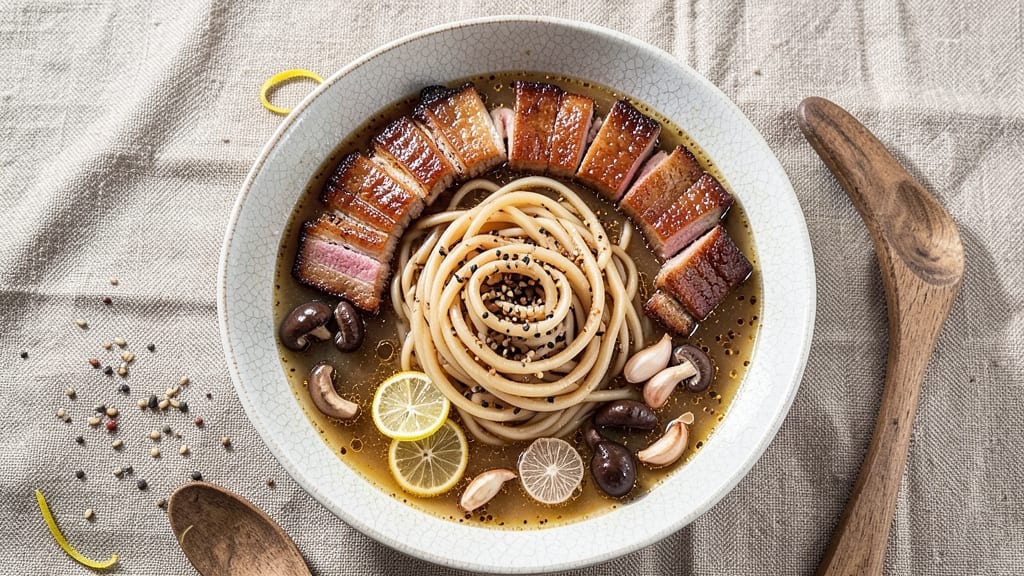
This Chinese pork rib noodle soup recipe delivers the kind of restaurant-quality broth that transforms simple ingredients into a fragrant, umami-rich masterpiece. 🌟 The secret lies in slow-cooked pork ribs that develop deep, caramelized flavors, balanced by a five-spice broth that sings with aromatic complexity.
I perfected this version after years of testing—each element must work in harmony for that perfect bowl of chewy noodles in rich, savory broth.
The foundation starts with pork ribs, which we'll char and simmer until they fall off the bone, infusing the broth with layers of smoky, sweet, and savory notes.
Five-spice powder isn't just a seasoning here—it's the soul of the dish, creating that signature warmth that lingers long after the first sip. Fresh ingredients like cilantro, lime, and chili oil come together at the end to add brightness and contrast to the deep, meaty flavors.
What makes this recipe special is how it balances tradition with modern convenience. While we'll use pressure cooking for efficiency, the techniques remain authentic—charred ribs, layered spices, and hand-torn noodles for that signature chewy texture.
The result is a bowl that's hearty enough for a cold evening but light enough to enjoy any time of day. Every spoonful delivers that perfect marriage of tender meat, silky broth, and satisfying noodles.
This soup keeps beautifully for up to three days, making it ideal for meal prep or feeding a crowd. The flavors only deepen as the broth reduces, so leftovers taste even better reheated.
Garnish with fresh herbs and a squeeze of lime right before serving to keep everything vibrant. Let's create this comforting classic that brings restaurant-quality Chinese flavors to your kitchen.
Ingredients for chinese pork rib noodle soup
Pantry staples meet Asian market finds for this restaurant-style pork rib noodle masterpiece.
| Ingredient | Amount | Notes |
|---|---|---|
| Pork Ribs 🥩 | 2 lb | Bone-in, charred for depth |
| Dried Shiitake Mushrooms 🍄 | ½ oz | Rehydrated for umami |
| Fresh Ginger 🧄 | 2 tbsp | Grated, aromatic base |
| Five-Spice Powder 🌶️ | 1 tbsp | Essential for authentic flavor |
| Garlic Cloves 🧄 | 6 cloves | Minced for aromatic punch |
| Dried Wood Ear Mushrooms 🍄 | ¼ oz | Rehydrated for texture |
| Dried Tangerine Peel 🍊 | 1 tbsp | For citrusy aroma |
| Light Soy Sauce 🥄 | ½ cup | Balances flavors |
| Sesame Oil 🫒 | 1 tbsp | Finishing touch |
| Rice Noodles 🍜 | 8 oz | Fresh or dried, chewy |
| Green Onions 🧅 | ¼ cup | Sliced for garnish |
| Fresh Cilantro 🌿 | ¼ cup | Chopped for brightness |
| Lime Wedges 🍋 | 2 whole | For serving |
| Chili Oil 🌶️ | 1 tbsp | Optional heat kick |
| Rock Sugar 🍬 | 1 tbsp | For subtle sweetness |
The ribs are non-negotiable—bone-in for maximum flavor. Costco or local butcher shops often have the best deals on pork ribs, but any grocery store's frozen section works in a pinch. Look for ribs with good marbling—they'll stay juicier during the long cook. Five-spice powder is the soul of this dish, so don't skimp. Penzeys or Asian markets carry the best blends, but the tiny packets at Trader Joe's work too if you're in a hurry. For the mushrooms, dried shiitake and wood ear keep forever in the pantry—just soak them in hot water for 20 minutes before using.
No fresh ginger? Substitute with 1 tbsp ginger paste—it's concentrated so you'll need less. Out of five-spice? Mix 1/2 tsp each cinnamon, cloves, fennel, star anise, and black pepper for a DIY version. The dried tangerine peel can be swapped for orange zest if you've got it, but trust me on keeping it—it adds that signature citrusy aroma. For the noodles, rice vermicelli is ideal, but any chewy noodle will work. Just don't use egg noodles—they'll turn mushy in the broth. The rock sugar? It's optional but adds that perfect balance of sweet and savory that makes this dish sing.
This soup tastes even better the next day—3-4 days in the fridge with the lid slightly ajar lets the flavors meld. Freeze portions for up to 3 months by portioning into airtight containers. I always make a double batch because it disappears fast. The noodles can be cooked ahead and stored separately, then tossed in just before serving to keep them chewy. Garnish with fresh cilantro and lime right before eating—that's when the magic happens.
Why You'll Love This Recipe
- Dried Mushrooms Do the Work: I swear by those little dried shiitakes—just soak ‘em in hot water for 15 minutes, and boom, you’ve got umami depth without chopping fresh mushrooms. The broth gets this rich, earthy base that turns plain noodles into something special.
- Five-Spice Magic: That jar of five-spice powder? It’s the secret weapon. A pinch on the ribs before searing gives them this warm, slightly sweet aroma that lingers like a hug—no fancy spice blends needed. Trust me, your kitchen will smell like a bustling Cantonese kitchen in minutes.
- Leftovers That Beg for Seconds: This soup actually tastes better the next day. The pork gets even more tender, the broth reduces to perfect consistency, and I’ve reheated it three times with zero complaints. (Yes, even from my picky 12-year-old.)
- Weeknight Crowd-Pleaser: No one turns down a steaming bowl of this. It’s hearty enough for a family dinner but simple enough for a lazy Sunday—just simmer the ribs, toss in noodles, and let the five-spice and ginger work their charm. Zero pretension, all satisfaction.
Step-by-step instructions for Chinese pork rib noodle soup
Here's how to build a rich, aromatic broth with tender ribs and chewy noodles—simple steps for big flavor.
🔥 Step 1: Char the Pork Ribs for Deep Flavor
Preheat your oven to 450°F. Line a baking sheet with foil and place the 2 lb pork ribs bone-side down. Roast for 15 minutes until they develop a deep char and caramelized crust. This step unlocks incredible depth of flavor that simmers into the broth later.
Flip the ribs bone-side up and roast another 10 minutes until both sides are well-charred. The edges should be dark brown with visible grill marks. Transfer the ribs to a large pot—those caramelized bits will dissolve into the broth as it simmers.
🍳 Step 2: Build the Five-Spice Broth Base
In the same pot, add 4 cups water (enough to cover the ribs by about 1 inch). Bring to a boil over high heat, then reduce to a simmer. Add the 1 tbsp five-spice powder, 1 tbsp dried tangerine peel, and 1 tbsp rock sugar. Let it simmer uncovered for 30 minutes—this infuses the broth with aromatic complexity.
While it simmers, prepare the mushrooms. Soak the 0.5 oz dried shiitake mushrooms and 0.25 oz dried wood ear mushrooms in 1 cup hot water for 20 minutes until softened. Drain, reserving the soaking liquid, and set aside. This step ensures your mushrooms contribute both texture and umami to the broth.
🍳 Step 3: Add Aromatics and Simmer the Ribs
Add the charred ribs back to the pot. Stir in the 2 tbsp grated fresh ginger, 6 minced garlic cloves, and the reserved mushroom soaking liquid. Bring to a gentle boil, then reduce heat to medium-low and simmer uncovered for 1 hour 30 minutes, skimming off any foam that rises to the surface.
After 1 hour, check the ribs—they should be fork-tender with meat that pulls away from the bone easily. If they're not quite there, continue simmering for another 30 minutes. The broth should reduce slightly and develop a rich, caramelized color. Here's where all those charred flavors meld into something truly special.
🥘 Step 4: Finish the Broth and Prepare Noodles
Remove the ribs from the broth and let them cool slightly. Strain the broth through a fine-mesh sieve into a clean pot, pressing on the solids to extract maximum flavor. Return the broth to the pot and stir in the 0.5 cup light soy sauce. Taste and adjust seasoning—you want it balanced between savory and slightly sweet.
While the broth simmers gently, prepare the 8 oz rice noodles according to package instructions (usually 5-7 minutes in boiling water). Drain and rinse briefly with cold water to stop the cooking process. The noodles should be al dente—chewy but still with a slight bite. Here's where texture matters most for that authentic noodle experience.
🍽️ Step 5: Assemble and Serve with Fresh Garnishes
Return the broth to a gentle simmer. Add the cooked noodles and let them soak for 2-3 minutes to absorb some of the flavorful liquid. Divide the noodles among bowls, then ladle the hot broth over the top. Arrange the pork ribs on top of each serving—this makes for an impressive presentation while keeping everything hot.
Drizzle each bowl with 1 tbsp sesame oil and 1 tbsp chili oil (if using). Garnish with 2 tbsp sliced green onions and 1 tbsp chopped fresh cilantro for brightness. Serve with the 2 lime wedges on the side—squeeze a little over each bowl to cut through the richness. The contrast of citrus with the deep, savory broth is what makes this dish truly special.
Pro Tips For Making Chinese Pork Rib Noodle Soup
- Parboil Ribs First: Toss the pork ribs in boiling water for 3-4 minutes before braising—this loosens the collagen and keeps them from turning into rubber when simmered. I learned this the hard way after serving chewy ribs that had me questioning my life choices.
- Soak Mushrooms Cold: Rehydrate dried shiitake in cold water for at least 20 minutes—hot water bleaches them and dulls their flavor. Use the soaking liquid later for broth, but strain out any grit (yes, even the fancy ones).
- Char the Ginger: Lightly torch or sear the ginger slices in oil until they’re fragrant and slightly blackened—this unlocks deeper flavor than raw ginger ever will. Skip this, and you’re just eating a milder version of the dish.
- Toast the Spices: Bloom the five-spice powder in oil for 30 seconds before adding liquids—this wakes up the cinnamon and star anise notes. I was skeptical until I tried it; now it’s non-negotiable for that aromatic punch.
Pro cooking tips for this recipe
Charred Ribs Secret
That deep, smoky aroma from charred ribs isn't just for show—it's where the magic happens. I char my ribs at 450°F for 25 minutes total, flipping halfway, to create a caramelized crust that dissolves into the broth during simmering.
This step develops Maillard reaction flavors that transform simple pork into something complex and aromatic. Pro tip: Use a cast iron skillet for extra crispiness if you prefer grill marks over oven char. 🔥
Five-Spice Timing
The five-spice powder needs time to bloom—don't rush this step. After adding it to the simmering broth, let it steep for 30 minutes uncovered before adding other aromatics. This allows the spices to fully infuse and develop their signature warm, slightly sweet notes.
I've found that Penzeys brand five-spice gives the most balanced flavor profile with proper cinnamon, star anise, and fennel proportions. 🌶️
Mushroom Soaking Hack
Don't drain those mushroom soaking liquids! The liquid from rehydrating dried shiitake and wood ear mushrooms contains concentrated umami that you don't want to waste. After soaking for 20 minutes, strain the mushrooms but reserve the liquid and add it to the broth.
This simple step adds 20% more depth to your broth without extra effort. I like to add it gradually while simmering to control the intensity.
Broth Skimming
Regular skimming is non-negotiable for a clear, flavorful broth. Use a fine-mesh skimmer to remove foam and impurities during the 1.5-hour simmering period. This prevents cloudiness and ensures a clean, restaurant-quality presentation.
I skim every 5-10 minutes until the broth is foam-free. The removed impurities would otherwise make your broth taste bitter and unbalanced. 💡
Noodle Texture Control
The perfect noodle texture is all about timing and temperature. Cook your rice noodles according to package instructions, then immediately rinse with cold water for 30 seconds to stop the cooking process.
This prevents them from becoming mushy when added to the hot broth. For extra chewiness, I recommend Vietnamese rice noodles—they hold up better than thinner varieties when rehydrated in broth. 🍜
Broth Straining Technique
When straining your finished broth, press on the solids with a wooden spoon or ladle to extract every last drop of flavor. I use a fine-mesh sieve lined with cheesecloth for maximum clarity and flavor extraction.
This step ensures you're not wasting any of that hard-earned umami. The strained broth should be clear with just a hint of golden color from the caramelized ribs. 💛
Nutrition facts
Frequently asked questions
Can I use pork shoulder instead of pork ribs for this recipe?
While pork ribs are traditional, you can substitute 2 lbs pork shoulder if needed. Cut it into 2-inch chunks and simmer for 2.5 hours instead of the 1.5 hours for ribs. The meat will be more tender but slightly less flavorful than the bone-in ribs. For best results, char the pork shoulder first just like the ribs to develop similar depth of flavor.
How do I make this soup spicier?
Add 1-2 tbsp chili paste (like Laotian or Sichuan) when simmering the broth, or increase the chili oil to 2 tbsp per bowl. For extra heat, stir in 1 tsp red pepper flakes with the five-spice powder. If you love heat, try adding 1-2 slices of fresh chili (like Thai bird's eye) to the broth during the final 30 minutes of simmering.
Can I prepare this soup ahead of time?
This soup tastes even better the next day! Store the cooked ribs and strained broth separately in airtight containers for up to 3 days in the fridge. Reheat the broth gently, then add the noodles just before serving. For longer storage, freeze the broth (up to 3 months) and cook the noodles fresh when ready to eat. The flavors deepen as the broth reduces, so leftovers are a bonus.
What if my broth is too salty?
If your broth tastes too salty, add 1 cup hot water and simmer for 10 minutes to dilute the saltiness. You can also add 1-2 tbsp rock sugar to balance the flavors. For a more natural approach, stir in 1/4 cup cornstarch mixed with 1/4 cup water and simmer for 5 minutes—this thickens the broth slightly while reducing salt concentration. Always taste as you go!
Are there vegetarian alternatives for this recipe?
For a vegetarian version, replace the pork ribs with 2 lbs king oyster mushrooms or hearts of palm (for texture). Use 1 tbsp soy sauce + 1 tbsp mushroom powder to mimic umami depth. Keep all other ingredients the same, including the five-spice powder and mushrooms. The broth will be plant-based but still rich and aromatic. For extra protein, add 1 cup tofu or tempeh cooked separately.