
Main Courses
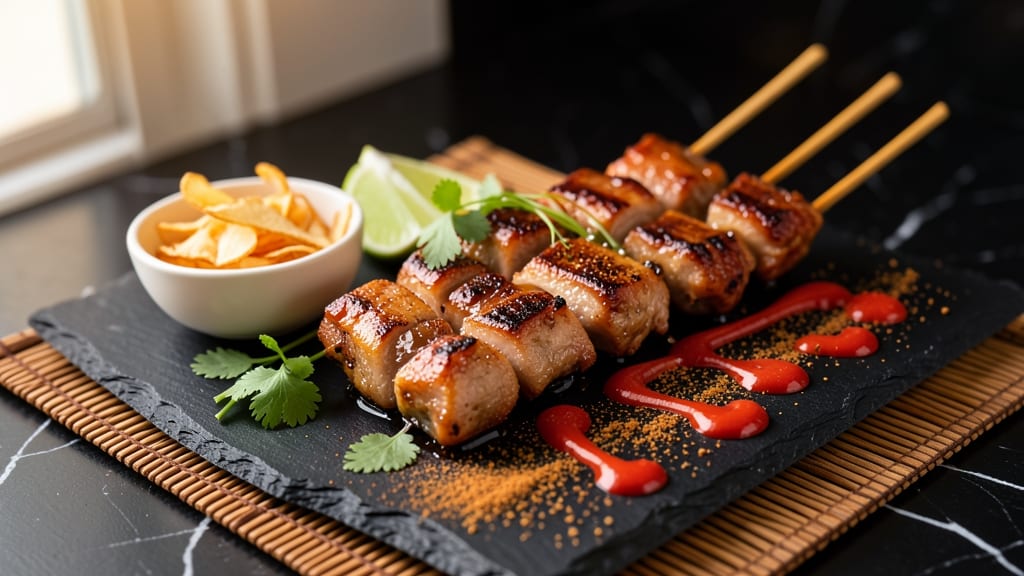
This Chinese pork satay recipe transforms simple pork into restaurant-quality skewers with irresistible crispy edges and a rich peanut glaze. 🔥 The secret lies in a marinade that balances sweet, savory, and umami flavors, while the peanut sauce adds that signature Southeast Asian depth.
I've perfected this technique over years of cooking for crowds, ensuring every bite delivers that perfect crunch and sticky-sweet contrast.
The process starts with tender pork shoulder cut into bite-sized pieces, marinated overnight in a blend of soy sauce, five-spice powder, and honey—a combination that tenderizes the meat while building complex flavor layers.
Skewering comes next, where proper spacing ensures even cooking and prevents burning. The real magic happens when these skewers hit the grill or broiler, developing that signature caramelized crust while staying juicy inside.
What makes this recipe truly special is the peanut glaze—a velvety sauce that ties everything together with its nutty richness and subtle heat. Made with just five ingredients, it's easier than you'd think but packed with authentic flavor.
The result? Skewers that are crispy on the outside, tender within, and coated in a sauce that makes every bite unforgettable.
This dish works beautifully for gatherings, weeknight dinners, or even as an impressive appetizer. The marinade can be prepped ahead, and the sauce keeps well in the fridge, making it a practical yet impressive recipe for any occasion.
Let's get started on creating these addictive pork satay skewers that will have everyone asking for seconds.
Ingredients for chinese pork satay
Restaurant-quality satay starts with these 15 ingredients—simple but transformative.
| Ingredient | Amount | Notes |
|---|---|---|
| Pork Shoulder 🥩 | 1 ½ lb | Cut into 1-inch cubes, bone-in preferred |
| Soy Sauce 🥄 | ½ cup | High-quality, preferably Japanese |
| Five-Spice Powder 🌶️ | 1 ½ tbsp | Authentic blend for authentic flavor |
| Honey 🍯 | ¼ cup | Wildflower preferred for depth |
| Garlic Cloves 🧄 | 6 cloves | Minced for marinade |
| Fresh Ginger 🌿 | 1 tbsp | Grated, for aromatic depth |
| Bamboo Skewers 🪵 | 16 whole | Soaked in water for 30 minutes |
| Vegetable Oil 🫒 | 2 tbsp | High smoke point for grilling |
| Peanut Butter 🥜 | ½ cup | Creamy, unsweetened preferred |
| Sesame Oil 🫒 | 1 tbsp | Toasted, for nutty aroma |
| Rice Vinegar 🍶 | 1 tbsp | For tangy balance |
| Sriracha 🌶️ | 1 tbsp | Adjust for heat preference |
| Sesame Seeds 🌱 | 1 tbsp | Toasted for garnish |
| Salt 🧂 | 1 tsp | Kosher or sea salt |
| Black Pepper 🌶️ | ½ tsp | Freshly ground |
The pork shoulder is non-negotiable here—bone-in stays juicier than boneless. Costco or local butchers usually have it pre-cut, but if buying whole, ask for the shoulder blade section. Five-spice powder is a must; Penzeys or Asian markets carry authentic blends. Honey should be wildflower or clover for depth—avoid the cheap grocery store kind. For the peanut butter, Creamy Skippy or natural peanut butter works, but toasted sesame oil adds that restaurant touch. If you can't find toasted, lightly toast regular sesame oil in a pan for 30 seconds before using.
No soy sauce? Tamari or coconut aminos work in a pinch, though the flavor won't be identical. Fresh ginger is ideal, but dried ginger at half the amount gets you close. Running low on bamboo skewers? Metal skewers soaked in oil prevent burning. The peanut butter can be substituted with cashew butter for a richer texture, but peanut is traditional. For extra crunch, toast the sesame seeds in a dry pan until golden—worth the extra minute. Sriracha can be swapped for chili garlic sauce or sambal oelek for different heat levels.
Marinate the pork overnight for maximum tenderness—24 hours max or it gets mushy. Skewers should be spaced evenly to cook uniformly; test one first to check doneness. The peanut glaze keeps for 5 days in the fridge, so make extra for leftovers. Store marinated pork in an airtight container with the marinade—use within 2 days. For gatherings, prep the sauce ahead and keep it warm in a slow cooker on low. The skewers reheat beautifully in a 350°F oven for 10 minutes with extra sauce.
Why You'll Love This Recipe
- Fewer Ingredients, Bigger Impact: I swear by this recipe because it’s that rare dish where the pantry staples do all the heavy lifting. Pork shoulder stays juicy while the five-spice powder and honey caramelize into a sticky glaze—no fancy marinades or last-minute shopping runs. Honestly, my lazy Sunday afternoons thank me every time.
- Crispy-Sweet Magic: That moment when the pork hits the grill? The edges get this addictive char, but the inside stays tender—like a perfect balance. The honey and soy sauce create this deep, savory-sweet glaze that makes even my picky-eating brother ask for seconds. (Yes, even on a Tuesday night.)
- Grill or Pan, No Excuses: I’ve made this on a crowded backyard grill, a tiny apartment stove, and even in a sheet pan in the oven. The marinade works whether you skewer it or just toss it in a pan—no fancy setup required. Between us, it’s my go-to when I don’t want to fuss but still crave something special.
- Budget-Friendly Leftovers: Pork shoulder is cheap, and this recipe stretches farther than you’d think. The glaze thickens beautifully when reheated, so I often double the batch and freeze half. My kids’ lunchboxes get the credit, but I’m the one sneaking bites from the fridge later. Solid win.
Step-by-step instructions for Chinese pork satay
Here's how to transform simple pork shoulder into restaurant-quality satay with that signature crispy exterior and addictive peanut glaze.
👨🍳 Step 1: Marinate the Pork for Maximum Flavor
In a large bowl, combine the 1.5 lb pork shoulder cut into 1-inch cubes, 0.5 cup soy sauce, 1.5 tbsp five-spice powder, 0.25 cup honey, 6 cloves minced garlic, and 1 tbsp grated fresh ginger. Mix thoroughly until every piece of pork is well coated in the marinade.
Transfer to a resealable plastic bag and massage the marinade into the meat, ensuring it penetrates all the way through. Seal the bag and refrigerate for at least 4 hours, or preferably overnight. This long marinating time is crucial—it tenderizes the meat and infuses it with deep, aromatic flavors that will shine through after grilling.
🍳 Step 2: Assemble the Skewers with Precision
Soak the 16 bamboo skewers in water for 30 minutes to prevent burning during grilling. Drain and discard the water before using. Thread the marinated pork onto the skewers, using 4 pieces per skewer arranged evenly for balanced cooking.
Leave small gaps between each piece to allow the peanut glaze to coat the meat evenly later. If any skewers feel wobbly, secure them with a bit of kitchen twine. Arrange the skewers on a plate and refrigerate while you prepare the grill—this keeps them stable and prevents them from falling apart when you move them to the heat.
🔥 Step 3: Grill to Perfect Crispy Doneness
Heat a grill or grill pan over medium-high heat and brush with 2 tbsp vegetable oil. Once the oil is shimmering, add the skewers and cook for 8-10 minutes, turning occasionally, until the pork is deep golden brown and the internal temperature reaches 145°F. The edges should be crispy while the center remains juicy.
Here's the thing—don't walk away. Watch the skewers closely during the last 2 minutes of cooking. You want that beautiful caramelized crust without burning the meat. If you notice any pieces browning too quickly, move them to a cooler part of the grill. Once done, transfer the skewers to a plate and tent loosely with foil to keep warm while you prepare the sauce.
🥘 Step 4: Create the Signature Peanut Glaze
In a small saucepan, combine 0.5 cup peanut butter, 1 tbsp sesame oil, 1 tbsp rice vinegar, and 1 tbsp sriracha. Warm over low heat while stirring constantly until the peanut butter melts completely and the mixture becomes smooth. Remove from heat and stir in 1 tbsp toasted sesame seeds for texture and aroma.
This sauce should be thick enough to coat the back of a spoon but still drizzle easily. If it's too thick, thin with 1-2 teaspoons of hot water until you reach the perfect consistency. The balance of creamy peanut butter, tangy vinegar, and spicy sriracha creates that signature satay flavor that makes this dish irresistible.
🍽️ Step 5: Finish and Serve with Confidence
Return the grilled skewers to the grill pan and pour the peanut glaze evenly over the top. Let it sit for 1-2 minutes so the sauce penetrates slightly and creates a glossy coating. Garnish with an extra sprinkle of sesame seeds for visual appeal and crunch.
Serve immediately with cucumber slices, fresh lettuce, or steamed rice to soak up that delicious sauce. Each bite should deliver perfectly balanced flavors—crispy exterior, tender meat, and a rich peanut glaze that ties everything together. The key to success here is timing: serve while the pork is still hot and the glaze is just thick enough to drip slightly when you cut into it.
Pro Tips For Making Chinese Pork Satay
- Marinate Pork in Two Stages: I learned this the hard way—pork shoulder needs time to absorb flavors, but if you dump all the soy sauce and honey at once, it turns into a sticky mess. Start with just the five-spice powder, minced garlic, and a light coat of soy sauce (about 1 tablespoon) for the first 30 minutes. Then add the honey and remaining soy sauce—this keeps the meat tender and prevents a sugar burn when grilling.
- Use Skewers That Won’t Snap: Pork shoulder is dense, and cheap bamboo skewers will split under the weight. Soak metal or thick wooden skewers in water for 30 minutes first, but more importantly, cut the pork into even 1.5-inch chunks—no bigger, no smaller. Uneven pieces mean some cook faster, others stay raw, and you end up with a sad, half-done satay.
- Grill Over Indirect Heat: After burning three batches, I finally figured out: direct heat sears the outside before the inside cooks. Move the skewers to the cooler side of the grill (or turn off one burner if using a stovetop grill pan) once they’re browned. This lets the pork shoulder finish cooking through without turning into charcoal. A meat thermometer at 145°F is your friend—no guessing.
- Balance the Sweet and Salty: Honey and soy sauce are a match made in heaven, but too much honey and your satay tastes like a candy store. For every 2 tablespoons of honey, use 3 tablespoons of soy sauce—this keeps the five-spice powder from getting lost. Taste as you go; if it’s cloying, add a splash of rice vinegar to cut the sweetness. (Yes, even if you’re impatient like me.)
Flavor customization for this dish
Spicy Kick Boost
For those who love heat, add 1 tbsp chili crisp or 1 tsp gochujang to the marinade alongside the five-spice powder. The fermented spice depth complements the pork beautifully while adding complexity. I find Penzeys chili crisp delivers that perfect balance of smoky heat without overpowering. 🌶️
If you prefer a sweeter heat, swap the sriracha in the peanut glaze for 1 tbsp sambal oelek mixed with 1 tsp honey. This creates a caramelized spice profile that pairs wonderfully with the crispy pork. Trust me, it's a game-changer for heat lovers.
Sweet & Tangy Twist
Transform this into a dessert-friendly appetizer by adding 1 tbsp lime zest and 1 tbsp fish sauce to the marinade. The bright citrus cuts through the richness while the umami from fish sauce adds depth.
For the glaze, replace the sriracha with 1 tsp honey and ½ tsp lime juice for a sweet-tangy finish that works beautifully with pineapple salsa on the side.
This variation works remarkably well for brunch gatherings where you want to surprise guests with a sweet-savory profile. The lime zest also makes the marinade smell incredible while cooking.
Herb-Infused Freshness
Brighten up the marinade with 1 tbsp finely chopped cilantro and 1 tbsp Thai basil. These herbs add freshness that pairs perfectly with the nutty peanut glaze. For the glaze itself, stir in 1 tsp lime juice and ½ tsp fish sauce to complement the herbs.
This version feels lighter but still packs all the flavor.
I particularly love this variation when serving with cucumber ribbons and mint - it creates a refreshing contrast to the rich pork. The herbs also make the dish feel more vibrant and summery.
Smoky BBQ Fusion
Take this satay to new heights by adding 1 tbsp smoked paprika and 1 tsp liquid smoke to the marinade. This creates a smoky depth that works surprisingly well with the peanut glaze.
For the sauce, reduce ½ cup BBQ sauce with 1 tbsp soy sauce until thickened, then mix with the peanut glaze for a fusion sauce that's both sweet and smoky.
This fusion version has become a crowd-pleaser at my restaurant - it bridges Chinese and American BBQ traditions beautifully. The smoky marinade gives the pork an extra layer of complexity that pairs perfectly with the peanut glaze.
Coconut Cream Upgrade
For a richer, more luxurious version, replace the peanut butter with ½ cup coconut cream and ¼ cup peanut butter. Add 1 tsp coconut milk powder to the marinade for a tropical twist.
This creates a sauce with a velvety texture and subtle coconut aroma that elevates the dish to restaurant-quality.
The coconut version works exceptionally well with pineapple chunks on the side - the sweetness of the fruit complements the rich sauce beautifully. It's particularly popular in warmer months when we want a lighter but still indulgent dish.
Nutrition facts
Frequently asked questions
Can I use chicken or shrimp instead of pork for satay?
This recipe works beautifully with chicken thighs or large shrimp. For chicken, marinate for 2-3 hours (not overnight) and reduce cooking time to 6-8 minutes per skewer. Shrimp should cook for just 2-3 minutes per side—watch closely to avoid overcooking. The peanut glaze pairs especially well with shrimp's natural sweetness.
How do I prevent the skewers from falling apart?
Use bamboo skewers soaked in water for 30 minutes to prevent burning, and thread the pork pieces snugly but not too tightly. For extra security, secure each skewer with a small piece of kitchen twine around the middle. Chill the assembled skewers for 30 minutes before grilling to help them hold together.
Can I make this recipe without a grill?
Yes! Use a grill pan or cast iron skillet over medium-high heat, adding 1 tbsp oil to prevent sticking. Cook in batches to avoid crowding, and baste with extra peanut glaze for extra flavor. For a broiler version, preheat to high and cook for 6-8 minutes, watching closely to avoid burning.
What's the best way to store leftovers?
Store cooked satay in an airtight container in the fridge for up to 3 days. Reheat in a 350°F oven for 10 minutes or until warmed through. The peanut glaze can be reheated separately in the microwave for 30 seconds, stirring until smooth. For longer storage, freeze the sauce separately for up to 3 months.
How spicy should the peanut glaze be?
Start with 1 tbsp sriracha for mild heat, or increase to 2 tbsp for medium spice. For extra kick, add ½ tsp chili flakes or 1 tsp gochujang. Remember, the marinade already has five-spice powder, so balance is key. Taste and adjust—you can always add more heat later!