
Soups & Stews
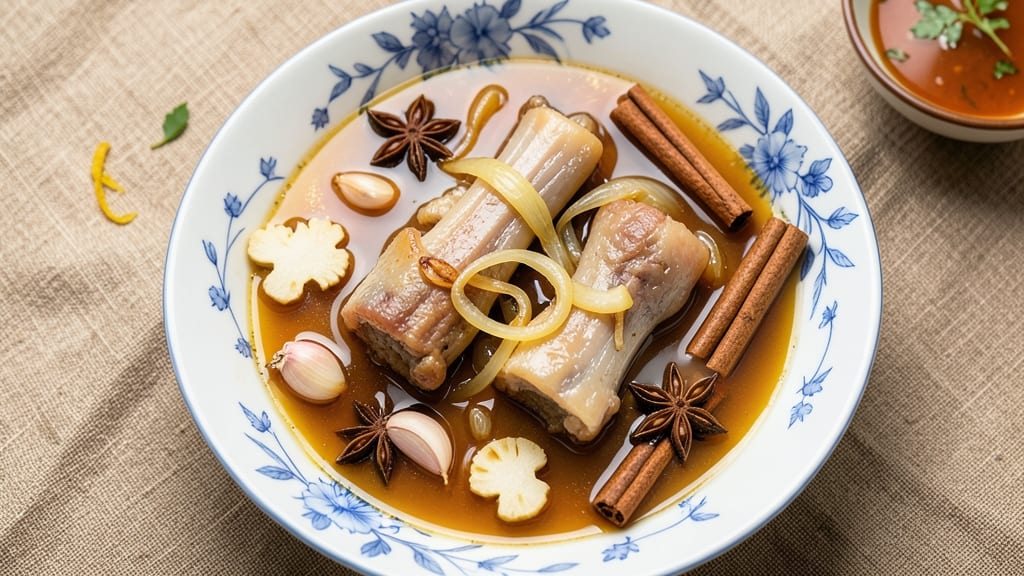
This Chinese pork soup stock recipe transforms simple ingredients into a deep umami base that elevates any broth-based dish. 🔥 Growing up in Georgia, I learned how pork bones simmered for hours create a rich, aromatic foundation—one that carries the essence of traditional Chinese cooking.
The secret lies in balancing pork bones, aromatics, and precise simmering to unlock layers of flavor that store-bought stocks can’t match.
What sets this recipe apart is its authentic yet adaptable approach. We’ll use a combination of pork bones, ginger, star anise, and other spices to build a broth so flavorful it becomes the heart of soups, noodles, or dumplings.
The long simmer—typically 4 to 6 hours—breaks down collagen and fat, creating a velvety texture with intense depth. For those short on time, I’ll share a pressure cooker shortcut that delivers similar results in under an hour.
The result is a golden, fragrant stock that’s rich enough to stand alone or serve as a base for pho, hot pot, or congee. Garnish with green onions and cilantro for freshness, or stir in coconut milk for a modern twist.
This isn’t just a stock—it’s the foundation of a meal that tastes like home, no matter where you are.
Perfect for meal prep or spontaneous cooking, this recipe scales easily for crowds. Once you master it, you’ll never settle for anything less than homemade. Let’s get started—your taste buds will thank you.
Ingredients for chinese pork soup stock
Six pounds of pork bones and a handful of aromatic spices create the perfect umami foundation for soups, noodles, and dumplings.
| Ingredient | Amount | Notes |
|---|---|---|
| Pork Bones 🦴 | 4 lb | Pig trotter or knuckle bones preferred |
| Yellow Onion 🧅 | 1 whole | Cut into quarters, skin on |
| Fresh Ginger 🌿 | 4 cloves | 3-inch pieces, peeled |
| Garlic Cloves 🧄 | 8 cloves | Smashed, not minced |
| Star Anise 🌟 | 4 whole | Lightly crushed |
| Cinnamon Sticks 🌳 | 2 whole | 2-inch pieces |
| Dried Bay Leaves 🍃 | 2 whole | Standard size |
| Black Peppercorns 🌶️ | 1 tbsp | Whole, lightly crushed |
| Salt 🧂 | 1 tsp | Kosher or sea salt |
| Water 💧 | 12 cups | Filtered preferred |
| Soy Sauce 🍶 | 2 tbsp | Dark soy for color |
| Green Onions 🧅 | ¼ cup | Chopped, for garnish |
| Fresh Cilantro 🌿 | ¼ cup | Chopped, for garnish |
Pork bones are the backbone of this stock—look for pig trotter or knuckle bones at your local butcher or Asian grocery store for that extra collagen boost. If you can't find them, regular pork bones work fine, but the texture won't be as velvety. Fresh ginger and star anise are non-negotiable here; Penzeys or bulk bins are great sources for the spices. The dark soy sauce adds color and depth, so grab Kikkoman or Lee Kum Kee if you're near an Asian market. For the ginger, peel it thickly—you want to keep the outer skin off to avoid bitterness.
No star anise? A pinch of anise seeds works in a pinch, but it won't have the same impact. Running short on time? Pressure cook the bones for 45 minutes instead of simmering—still packed with flavor. The soy sauce can be swapped for 1 tbsp of dark miso paste if you're out, but the color will be less vibrant. Fresh herbs like cilantro and green onions are optional but add a bright finish—use whatever you have on hand (basil or parsley work too). If you're making a big batch, double the spices; they'll mellow out beautifully during the long simmer.
This stock tastes even better the next day—plan ahead and make a big batch. Store it in the fridge for up to 5 days or freeze it in ice cube trays for easy portions. Once frozen, transfer to a sealed container and it'll keep for up to 3 months. For meal prep, freeze individual portions in ziplock bags so you can grab exactly what you need. The fat will solidify on top—just skim it off before using, or save it for cooking rice or stir-fries.
Why You'll Love This Recipe
- Here’s what sold me: it’s the kind of recipe that doesn’t steal your evening. Toss in the bones, add water, and let it do its thing while you handle the rest of dinner. The aromatics tie everything together, and by the time you’re ready to use it, the house smells like home. Not the prettiest pot on the stove, but the taste makes up for it every single time.
- Pantry-Friendly Base: I swear by this stock because it’s the kind of recipe that doesn’t demand a grocery run—just dig into what you’ve got. Pork bones, a few onions, and a hunk of ginger? That’s it. No fancy ingredients, no last-minute scrambling. The star anise and garlic cloves add depth without extra effort, and honestly? It’s the kind of thing I make when I’m too tired to overthink dinner.
- Deep Umami Magic: The moment that crispy bone crust forms and melts into the broth, you’ll know you’ve hit flavor gold. That’s the real magic here—the pork bones render into rich, gelatinous goodness while the ginger and garlic infuse warmth that lingers. Between us, this isn’t just stock; it’s the backbone of meals that taste like they simmered all day (even if you only let it go for an hour).
- Stockpile for Days: Between us, I always end up with more than I need—and that’s the best problem to have. This stock freezes like a dream, so I batch it when pork bones are on sale and pull it out for noodle soups, braises, or even rice dishes. My freezer’s full of it, and my wallet’s happy because I’m not buying pre-made broths that taste like cardboard.
Step-by-step instructions for Chinese pork soup stock
Here's how to build a rich, aromatic base that'll elevate any dish.
🔥 Step 1: Char the Aromatics for Depth
Heat a dry skillet over medium-high heat and add the 1 whole Yellow Onion, cut into quarters with skin on. Let it char for 8-10 minutes until deeply browned and caramelized—this is where the sweet, smoky foundation begins. Transfer to a bowl and set aside.
In the same skillet, add the 4 cloves Fresh Ginger (peeled, in 3-inch pieces) and the 8 cloves Garlic Cloves (smashed). Cook for 2-3 minutes until fragrant and just starting to brown. The ginger should develop a warm, citrusy aroma while the garlic turns golden—this is your umami trigger. Remove and add to the onion bowl.
🍳 Step 2: Toast the Spices for Complexity
In a large stockpot, combine the 4 lb Pork Bones, 12 cups Water, and 1 tsp Salt. Bring to a boil over high heat, then reduce to a simmer for 10 minutes to remove impurities. Skim off any foam that rises to the surface—this ensures crystal-clear broth.
While the bones simmer, toast the spices in the same skillet over medium heat for 1-2 minutes: Add the 4 whole Star Anise (lightly crushed), 2 whole Cinnamon Sticks (2-inch pieces), 2 whole Dried Bay Leaves, and 1 tbsp Black Peppercorns (lightly crushed). Stir constantly until fragrant and slightly darkened—this releases their essential oils. Immediately add these toasted spices to the stockpot.
🥘 Step 3: Simmer the Stock for Richness
Return the charred onion-ginger-garlic mixture to the stockpot. Add the 2 tbsp Soy Sauce (dark soy for color) and bring to a gentle boil. Reduce heat to maintain a barely simmering state—you should see small bubbles breaking the surface, but not a rolling boil. This low-and-slow approach extracts maximum collagen and flavor.
Cover partially and simmer for 3-4 hours, skimming any additional foam that rises. The stock should reduce slightly and develop a deep amber color. You'll know it's ready when the pork bones can be easily separated from the meat with a spoon—this indicates the collagen has fully rendered into the broth, creating that signature silky texture.
⏰ Step 4: Strain and Finish
Strain the stock through a fine-mesh sieve into a clean pot, pressing gently on the solids to extract every last drop of flavor. Discard the solids. Return the strained stock to the pot and bring to a simmer over medium heat. Add the 0.25 cup Green Onions (chopped) and 0.25 cup Fresh Cilantro (chopped), stirring gently for 1 minute—this infuses the final fresh notes without overpowering the deep umami base.
Taste and adjust seasoning if needed. The stock should be rich, aromatic, and slightly salty with a hint of sweetness from the caramelized onions. For best results, use immediately or store in the refrigerator for up to 5 days or freeze for up to 3 months. This stock is the secret weapon behind restaurant-quality Chinese soups and stir-fries!
Pro Tips For Making Chinese Pork Soup Stock
- BLANCH BONES FIRST: Skip the direct boil—give those pork bones a 5-minute blanch in simmering water first. This loosens gristle and dirt so your stock stays crystal clear, not cloudy. I learned this the hard way after straining through a sieve full of gunk.
- CHAR THE AROMATICS: Don’t just toss in onion, ginger, and garlic—sear them until they’re deep golden, almost caramelized. That Maillard reaction builds flavor that water alone can’t replicate. Use a wok or heavy pot, and don’t crowd the pan (yes, even if you’re impatient like me).
- CRUSH STAR ANISE: Whole star anise sits like a bitter rock if you’re not careful. Lightly crush it with a rolling pin or knife before adding—this releases its oils and infuses the stock evenly. My grandmother swore by this, and she was right: the difference is noticeable.
- SIMMER LOW AND SLOW: A rolling boil ruins stock by making it murky and bitter. Keep it at a gentle simmer—tiny bubbles, no splashing—so the collagen breaks down properly over 4-6 hours. Sounds weird, but it works: your stock will be rich, not scrappy.
Serving suggestions for this recipe
Noodle Pairings
This rich pork stock transforms simple noodles into a restaurant-worthy meal. I love serving it with chewy wheat noodles like lamian or rice noodles for pho. For extra texture, toss cooked noodles directly into the hot broth and let them soak up the flavor for 2-3 minutes.
Top with a soft-boiled egg and bean sprouts for a classic Chinese takeout vibe. 🍜
Dumpling Serving
Use this stock as the base for steamed or pan-fried dumplings. Simmer 10-12 dumplings in 4 cups of stock until the broth reduces slightly and becomes fragrant.
Garnish with chopped scallions and a drizzle of chili oil for a spicy kick. The pork fat in the stock adds incredible richness to the dumplings' filling.
Hot Pot Setup
Turn your stock into a complete hot pot experience by setting up a small pot on the table. Add 1 cup of stock per person and let guests add their favorite proteins like thinly sliced pork, mushrooms, or tofu.
Serve with a side of raw vegetables and dipping sauce (soy sauce, vinegar, and chili oil). The aroma alone will draw everyone to the table. ❄️
Congee Base
For a comforting breakfast or late-night meal, use this stock to make pork and ginger congee. Combine 1 cup jasmine rice with 6 cups stock and simmer for 45-60 minutes until creamy.
Top with shredded pork (from the leftover bones if you saved them!) and a sprinkle of scallions. The stock's deep flavor makes this congee irresistibly rich.
Garnish Ideas
Fresh garnishes elevate the dish without overpowering the stock's depth. I always keep green onions, cilantro, and Thai basil on hand. For extra umami, add a few drops of fish sauce or a splash of rice vinegar.
A sprinkle of toasted sesame seeds adds nutty texture. Keep it simple—let the stock shine!
Modern Twists
Want to impress? Add ½ cup coconut milk to the finished stock for a creamy, modern take. Or blend in 1 tbsp of miso paste for an extra layer of savory depth.
For heat lovers, stir in 1 tsp of chili crisp just before serving. These small tweaks turn a classic into something exciting while keeping the soul of the dish intact. 🔥
Nutrition facts
Frequently asked questions
Can I use regular pork bones instead of trotter or knuckle bones?
Yes, you can! While trotter and knuckle bones provide extra collagen for a silkier texture, regular pork bones still create a flavorful stock. For best results, use a mix of marrow bones and knuckles. The simmering time may need to extend to 4-5 hours to extract maximum flavor from regular bones.
How do I remove the porky smell from the stock?
Start by skimming foam vigorously during the initial 10-minute boil to remove impurities. Add a splash of apple cider vinegar (1 tbsp) or a bay leaf to help neutralize odors. For extra clarity, strain the stock through a cheesecloth-lined sieve after the initial simmer before returning it to the pot.
Can I make this stock in a slow cooker? Use a 6-quart slow cooker on low for 8-10 hours or high for 5-6 hours. Follow the same steps for charring aromatics and toasting spices, then add everything to the slow cooker. The low-and-slow method works perfectly for extracting collagen and flavor. Just
What's the best way to use leftover pork bones?
Shred any remaining meat from the bones and use it in dishes like congee, dumplings, or stir-fries. For extra flavor, save the bones and make a second batch of stock by simmering them with water, ginger, and a splash of soy sauce for 3-4 hours. The second stock will be lighter but still packed with umami.
Can I make this stock without star anise?
Yes, but the flavor profile will be different. Replace star anise with ½ tsp ground anise seeds or 1 tsp fennel seeds (toasted) for a similar aromatic quality. For a simpler approach, add an extra 1-inch cinnamon stick and ½ tsp ground coriander to compensate for the missing depth.