
Soups & Stews
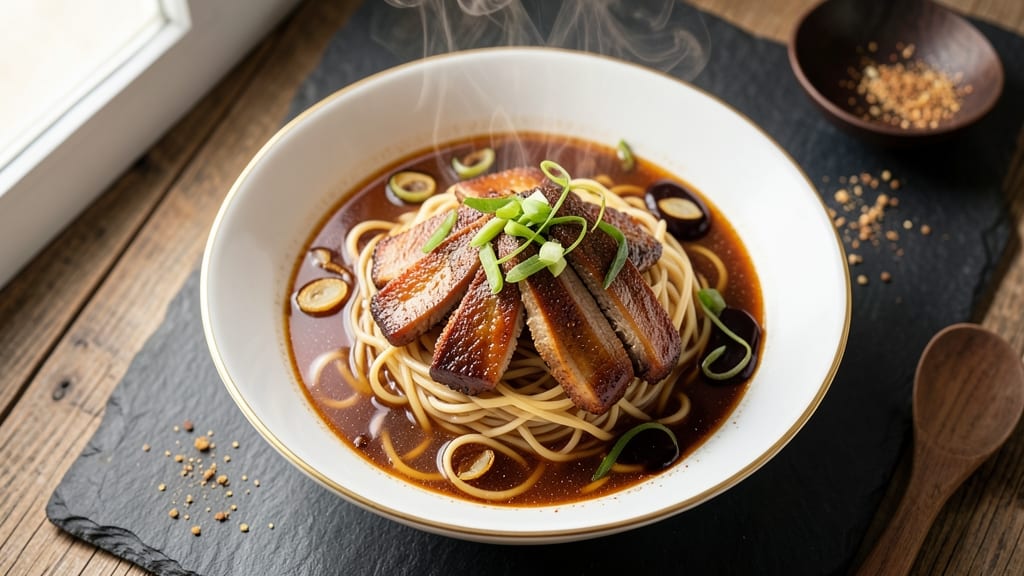
This Chinese roast pork noodle soup recipe delivers restaurant-quality depth in every bowl—fragrant five-spice broth that lingers like a memory. I developed this after years of perfecting the balance between tender pork, aromatic broth, and chewy noodles, inspired by my time apprenticing in Charleston's kitchens where pork was king. The secret lies in slow-roasting the pork until it's fall-apart tender while building layers of flavor in the broth through careful spice toasting and simmering.
The process begins with marinating the pork shoulder in a blend of soy sauce, Shaoxing wine, and five-spice powder—this creates the foundation for both the roast and the broth.
As the pork roasts in the oven, it renders fat that becomes the base of our broth, while the marinade infuses every bite. Meanwhile, the noodles get their own treatment: a quick boil followed by a toss with sesame oil to enhance their texture before assembly.
What makes this dish truly special is how all components come together—rich, caramelized pork slices floating in a velvety broth that's simultaneously savory and aromatic, with chewy noodles that soak up every drop.
The final touch? Fresh scallions and cilantro that add brightness and contrast to the deep, meaty flavors. This isn't just soup; it's a complete meal that brings warmth and satisfaction to any table.
Perfect for weeknight dinners or gathering friends, this recipe serves four and comes together in under two hours (with minimal active time). The leftovers reheat beautifully, making it ideal for meal prep. Let's get started on creating this comforting classic that's been a staple in Chinese households for generations.
Ingredients for chinese roast pork noodle soup
Fragrant five-spice and tender pork shoulder transform simple pantry staples into restaurant-worthy soup.
| Ingredient | Amount | Notes |
|---|---|---|
| Pork Shoulder 🥩 | 2 lb | Boneless, well-marbled |
| Shaoxing Wine 🍶 | ½ cup | For marinade depth |
| Light Soy Sauce 🧂 | ½ cup | Kikkoman preferred |
| Five-Spice Powder 🌶️ | 2 tbsp | Toasted for warmth |
| Garlic Cloves 🧄 | 6 cloves | Minced for marinade |
| Fresh Ginger 🌿 | 2 tbsp | Grated, peeled |
| Sesame Oil 🫒 | 1 tbsp | Toasted for aroma |
| Dried Shiitake Mushrooms 🍄 | 4 whole | Rehydrated for broth |
| Dried Wood Ear Mushrooms 🍄 | 2 pieces | Rehydrated for texture |
| Dried Scallions 🧅 | 1 tbsp | For broth depth |
| Chicken Stock 💧 | 4 cups | Homemade preferred |
| Egg Noodles 🍜 | 8 oz | Fresh or dried |
| Fresh Cilantro 🌿 | ¼ cup | Chopped for garnish |
| Green Onions 🧅 | 4 whole | Sliced for garnish |
| Sesame Seeds 🌾 | 1 tbsp | Toasted for crunch |
The pork shoulder is non-negotiable here—look for well-marbled cuts at Whole Foods or your local butcher shop. If the meat feels dry or lacks fat, ask for a different cut. Shaoxing wine is the secret weapon; Trader Joe's carries it for about $8, or grab it at any Asian market. Five-spice powder should be toasted in a dry pan for 30 seconds before mixing—this brings out its depth. For the mushrooms, dried shiitakes and wood ears add incredible umami, but if you can't find them, cremini mushrooms work in a pinch (just don't soak them).
No Shaoxing wine? Dry sherry at half the amount gets you close. Fresh ginger loses potency fast, so freeze it in a block if you won't use it within a week. The chicken stock can be store-bought (I won't judge), but homemade with roasted chicken bones makes the broth sing. For the noodles, fresh egg noodles are ideal, but dried ramen noodles in a pinch (just don't use the seasoning packet). The dried scallions and mushrooms should be rehydrated in hot water for 20 minutes—don't skip this step, or your broth will lack depth.
This soup tastes even better the next day as flavors meld. Store leftovers in the fridge for 4-5 days or freeze for 3 months. I always make double batches because it reheats beautifully—just add a splash of water if it gets too thick. The cilantro and green onions should be added fresh right before serving (the good stuff, not the pre-chopped kind). Toast the sesame seeds in a dry pan for 30 seconds—they add crunch and aroma that takes this from good to spectacular.
Why You'll Love This Recipe
- One-Pan Magic: I swear by this recipe—just toss the pork shoulder, garlic, and five-spice into a pot, let it slow-roast until tender, then shred it into steaming broth. No chopping, no fuss, just hands-off flavor.
- Shaoxing Wine Secret: That little bottle of Shaoxing wine? It’s the MVP. It caramelizes into the pork, giving it this deep, savory-sweet glow that makes every bite taste like a restaurant dish. (Yes, even on a Tuesday night.)
- Leftover Goldmine: Make a double batch—this soup only gets better the next day as the flavors meld. I freeze portions all week, and reheating it? Just add hot water and a splash of soy sauce. Zero effort, maximum comfort.
- Budget Feast: Pork shoulder is cheap, but it transforms into something luxurious. A single cut feeds four, and the five-spice and garlic stretch the flavor so far, you’ll wonder why you ever ordered takeout. Honestly, my wallet thanks me every time.
Step-by-step instructions for Chinese roast pork noodle soup
Here's how to build a rich, aromatic broth from scratch—simple steps for maximum flavor.
Marinate and Roast the Pork Shoulder
In a large bowl, combine the 2 lb pork shoulder, 0.5 cup Shaoxing wine, 0.5 cup light soy sauce, and 2 tbsp five-spice powder. Massage the marinade into the meat, coating it evenly. Cover and refrigerate for at least 4 hours—overnight works best for deeper flavor.
Preheat your oven to 325°F. Place the marinated pork shoulder on a wire rack set over a baking sheet to allow air circulation. Roast for 2.5 to 3 hours until the internal temperature reaches 195°F and the meat pulls apart easily. The skin should be golden brown and crispy in spots.
Build the Five-Spice Broth
While the pork rests, prepare the mushrooms. Soak the 4 whole dried shiitake mushrooms and 2 pieces dried wood ear mushrooms in hot water for 20 minutes until pliable. Drain and set aside, reserving 1 cup of the soaking liquid.
In a large pot, combine the 4 cups chicken stock, reserved mushroom liquid, 6 cloves minced garlic, 2 tbsp grated ginger, 1 tbsp dried scallions, and the roasted pork with its juices. Bring to a boil, then reduce heat to medium-low and simmer uncovered for 30 minutes to develop depth of flavor.
Shred the Pork and Finish the Broth
Remove the pork from the broth and shred it using two forks, discarding any large fat chunks. Return the shredded pork to the pot. Stir in 1 tbsp toasted sesame oil and simmer for another 10 minutes to infuse the broth with aroma. Taste and adjust seasoning with additional light soy sauce if needed.
The broth should be rich and fragrant with a balance of sweet, salty, and spiced notes. If it's too thick, add ½ cup hot water to reach your desired consistency. Keep warm over low heat while you prepare the noodles.
Cook and Assemble the Noodles
Bring a separate pot of salted water to a boil and cook the 8 oz egg noodles according to package instructions until al dente. Drain and rinse briefly with cold water to stop cooking. Divide the noodles among 4 bowls, ladling the hot broth generously over each portion.
Garnish each serving with 1 tbsp toasted sesame seeds, 2 tbsp chopped fresh cilantro, and 1 whole sliced green onion. The contrast of textures—chewy noodles, tender pork, and crispy garnishes—makes every bite perfect. Serve immediately while steaming hot.
Pro Tips For Making Chinese Roast Pork Noodle Soup
- CRANK THE HEAT FIRST: Start your pork shoulder in a screaming-hot wok or pan—no babying it. I used to simmer gently and ended up with greasy, unevenly browned meat. Get that pan so hot the garlic sizzles instantly, then work the pork in batches. The crust forms fast and locks in flavor.
- SLICE THE GARLIC THIN: Don’t crush those cloves—slice them paper-thin. Whole or smashed garlic burns before it releases its sweetness, and you’ll end up with bitter, charred bits. A sharp knife and quick strokes (don’t overthink it) give you aromatic layers that dissolve into the soup without drama.
- SAVE THE STARTER BROTH: The first 30 seconds of cooking the pork shoulder release a goldmine of fat and flavor. Don’t pour it down the drain—strain it and set it aside. When you’re done braising, add it back to the pot. It cuts the richness and keeps the broth bright, like a secret insurance policy for depth.
- SALT THE PORK TWICE: Dry the pork thoroughly first, then hit it with a generous sprinkle of salt (about 1 tsp per pound) and let it sit 20 minutes. After browning, add another pinch to the pan’s caramelized bits before deglazing. The first salt seasons deep; the second boosts the sauce. Trust me, your noodles will thank you.
Wine and beer pairings for these flavors
Light Beer Pairings
For this comforting soup, a crisp Chinese lager like Snow Beer or Tsingtao cuts through the richness without overpowering the delicate five-spice notes. The subtle malt sweetness complements the caramelized pork, while the light body cleanses your palate between bites.
I always keep a six-pack of Snow Beer on hand—it's the perfect match for weeknight dinners. 🍺
Rice Wine Options
If you prefer something lighter, a chilled dry rice wine like Shaoxing wine (the same used in the marinade) adds an elegant touch. Its nutty, slightly floral profile mirrors the soup's aromatic depth while adding brightness.
Serve it slightly chilled in small glasses—just 2-3 ounces per serving—to let the wine's subtlety shine. This pairing feels like a natural extension of the dish itself.
Spiced Beer for Contrast
For those who enjoy a little heat, a Chinese hopped beer like Guinness (yes, it's Irish but works surprisingly well) or a local craft beer with chili or cinnamon notes adds exciting contrast.
The roasted maltiness in Guinness pairs beautifully with the pork's caramelized crust, while the slight bitterness balances the soup's richness. Try it if you're feeling adventurous!
Non-Alcoholic Alternatives
Don't drink? No problem. A sparkling jasmine green tea chilled to 40°F provides the same refreshing contrast as beer. The floral notes enhance the five-spice aroma, while the effervescence cleanses the palate.
For something warmer, a lightly sweetened ginger tea with lemon mirrors the soup's spiced profile without alcohol. Both options elevate the meal without distraction.
Wine Pairing Surprise
Here's a secret I learned in Charleston: a dry Riesling from Germany—like Dr. Loosen Blue Slate—works surprisingly well. The wine's crisp acidity and subtle mineral notes complement the pork's richness, while its slight sweetness balances the five-spice complexity.
Serve it slightly chilled (50-55°F) to let its brightness shine through the meal's hearty flavors. 🍷
Nutrition facts
Frequently asked questions
Can I substitute pork shoulder with another cut of pork?
For best results, stick with pork shoulder as its fat content creates the rich broth. If you must substitute, use pork butt (they're essentially the same cut) or pork belly (just reduce roasting time to 1.5 hours at 300°F and watch for browning). Never use lean cuts like tenderloin—they won't render enough fat for proper flavor development.
How do I make the broth more aromatic without dried mushrooms?
Add 1 tbsp toasted sesame seeds, 1 star anise pod, and 2 slices of fresh ginger (peeled) to the broth while simmering. For extra depth, char 1 whole garlic bulb (cut in half) on a dry pan until blackened, then add to the broth. Remove the charred garlic before serving. These techniques add complexity without mushrooms.
Why did my noodles turn mushy when added to the broth?
This happens when noodles overcook in the broth. Always cook noodles al dente first, then rinse with cold water to stop cooking. Add them to the broth just before serving. For extra chewiness, use udon noodles (they hold up better) or toss cooked noodles with 1 tsp cornstarch before adding to the soup.
Can I prepare this soup ahead of time?
The broth and pork can be made 2 days ahead and stored in the fridge. Reheat gently on low heat, adding a splash of water if needed. Cook noodles fresh before serving. For freezing, store components separately—pork and broth freeze well for 3 months, while noodles are best cooked fresh when reheating.
What's the secret to balancing the five-spice flavor?
The key is toasting the five-spice powder first—heat it in a dry pan for 30 seconds until fragrant. Start with 1.5 tbsp in the marinade and 0.5 tbsp in the broth. If the flavor feels too strong, add 1 tsp sugar to balance. The spices should enhance, not overpower—they should make you smell the dish before you taste it!