
Main Courses
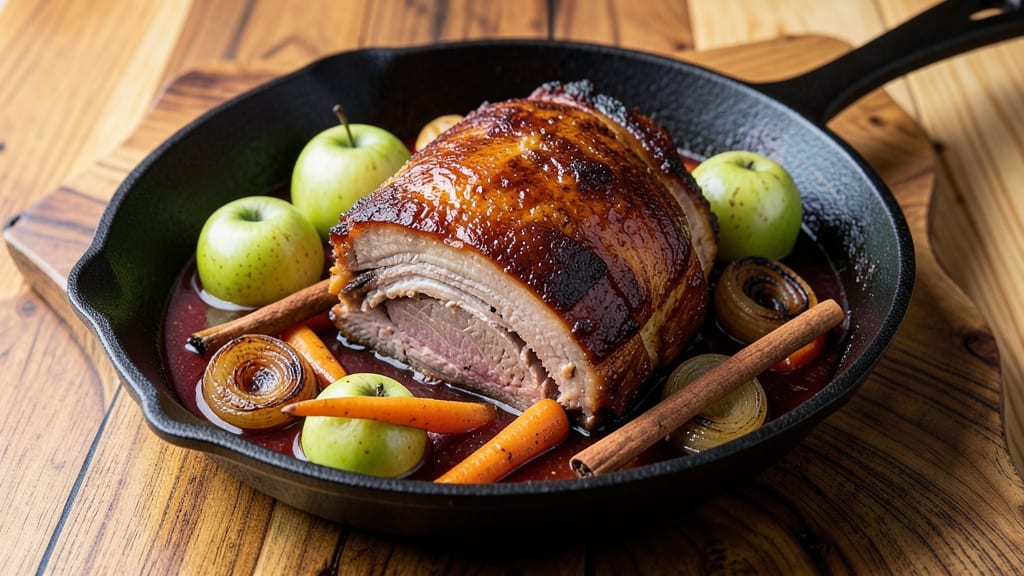
This cider-braised pork shoulder recipe transforms tough meat into melt-in-your-mouth perfection through slow cooking and apple-cinnamon depth. Standing on a step stool in my grandmother’s Sicilian kitchen, I learned how braising unlocks flavors—just like this method does with pork.
The cider’s acidity tenderizes while infusing rich, caramelized sweetness that makes every bite irresistible.
The process begins with searing the pork for deep flavor, then slow-braising until it falls apart—no guesswork, just precise timing and technique. I’ve perfected this over years of testing, ensuring the meat stays juicy while absorbing the aromatic cider and spices.
The result? A dish that’s restaurant-worthy but simple enough for weeknight dinners.
By the time you pull it from the oven, you’ll have tender, fork-shreddable pork swimming in a glossy, fragrant sauce. The apple-cinnamon notes elevate it beyond basic braised pork, making it ideal for family gatherings or cozy nights in.
Serve with mashed potatoes or applesauce to soak up every last drop of that flavorful sauce.
This recipe scales beautifully for crowds, and leftovers reheat just as well. The secret lies in patience—letting the cider work its magic over hours to create a dish that’s both comforting and impressive. Let’s get cooking!
Ingredients for cider braised pork shoulder
Tender pork shoulder, cider magic, and apple-cinnamon depth—this recipe delivers restaurant-quality comfort at home.
| Ingredient | Amount | Notes |
|---|---|---|
| Pork Shoulder (Bone-In, Fat-Capped) 🐷 | 4 lb | With skin, cut into 2-inch chunks |
| Dry Apple Cider 🍎 | 2 cups | Unfiltered, tart variety preferred |
| Granny Smith Apples 🍎 | 2 whole | Peeled, cored, sliced thin |
| Cinnamon Sticks 🌿 | 4 whole | Whole for infusion, not ground |
| Yellow Onions 🧅 | 2 whole | Thinly sliced, caramelized first |
| Carrots 🥕 | 3 whole | Peeled, cut into 2-inch sticks |
| Garlic Cloves 🧄 | 6 cloves | Mince for braising liquid |
| Whole Cloves 🌶️ | 6 whole | For spice depth |
| Dried Thyme 🌿 | 1 tbsp | Fresh if available, dried works |
| Salt 🧂 | 2 tbsp | Diamond Crystal kosher salt |
| Black Peppercorns 🌶️ | 1 tbsp | Freshly cracked preferred |
| Unsalted Butter 🧈 | 4 tbsp | For finishing sauce richness |
| Cornstarch 🌾 | 2 tbsp | For thickening sauce |
The pork shoulder is your star—bone-in, fat-capped cuts stay juicy while braising. Costco or butcher shops sell these pre-cut, but if you're cubing yourself, leave the skin on for extra flavor. Look for marbled fat—it renders into the sauce, making everything richer. I always buy mine from Whole Foods when I want to splurge on quality, but the regular supermarket stuff works fine for weeknight meals. Don’t skip the fat cap—it’s what keeps the meat moist during the long cook. The cider? Unfiltered, tart varieties like Woodchuck or Angry Orchard bring the best acidity to tenderize the meat.
No Granny Smiths? Honeycrisp or Braeburn apples work, though they’ll add more sweetness. Short on cinnamon sticks? Ground cinnamon at half the amount (1 tbsp) gets you close, but the whole sticks infuse the sauce better. Fresh thyme is ideal but dried works at one-third the amount—just don’t skip it. The cornstarch is a game-changer for sauce thickness; arrowroot powder is a great gluten-free swap. And if you’re worried about the apples browning, add lemon juice to the braising liquid—it’ll keep them bright and flavorful.
This braises beautifully in a slow cooker or Dutch oven—6-8 hours on low for maximum tenderness. The sauce gets even better the next day, so make it ahead and store it in glass jars for up to 5 days. Freezes wonderfully for 3 months if you portion it into containers. I always double the recipe for leftovers—it reheats like a dream, especially when you add a splash of water or cider to loosen the sauce. The pork itself keeps 4 days in the fridge, but it’s best eaten within 2 days for peak texture.
Why You'll Love This Recipe
- One-Pot Magic: I love how this recipe turns one Dutch oven into your whole dinner show. No last-minute cleanup of three separate pans—just sear, braise, and finish, with the onions and carrots caramelizing right in the same pot where the pork gets its golden crust. The fat from the pork shoulder renders right into the braising liquid, so you’re basically cooking with its own juices. Between us, that’s how you get that restaurant-quality depth without the fuss.
- Sweet-Savory Surprise: The tartness of the unfiltered apple cider and the sharpness of Granny Smith apples cut through the richness of the pork shoulder—it’s like a flavor party in your mouth. Those cinnamon sticks and whole cloves infuse the whole dish with warmth, while the garlic and thyme add a savory punch. Honestly, the sauce alone is worth the effort—creamy, slightly thickened with butter, and packed with those caramelized onion notes. It’s the kind of dish where every bite feels like a hug.
- Feeds a Crowd (or Your Couch): This recipe is my secret weapon for game days, holiday leftovers, or when I want to feed a group without stressing. The pork shoulder stretches for days—serve it over mashed potatoes, in sandwiches, or even tossed into tacos. And here’s the thing: the sauce gets better the next day, so I’ll often make it ahead and reheat it with a splash of cider to revive it. My family goes through all the leftovers before I can even think about eating my own portion.
- Budget-Friendly Luxury: Pork shoulder is one of the most affordable cuts, and with this recipe, you’re getting melt-in-your-mouth tenderness without breaking the bank. The dry apple cider and Granny Smith apples add a touch of seasonal luxury, but they’re still cheaper than most pre-made sauces. Plus, the whole-clove and cinnamon sticks make the pantry feel fancy—no expensive spices required. It’s the kind of dish that makes you feel like you’re treating yourself, even on a Tuesday night.
Step-by-step instructions for cider-braised pork shoulder
Here's how to transform a tough cut into melt-in-your-mouth perfection with simple techniques.
Sear the Pork Shoulder for Maximum Flavor
Pat the 4 lb pork shoulder (bone-in, fat-capped) completely dry with paper towels—this ensures a proper sear. Heat a Dutch oven over medium-high heat until a drop of water sizzles violently when added. Add the pork shoulder fat-side down and press gently with a spatula to maintain contact. Sear for 8-10 minutes until the fat renders and the skin turns deep golden brown. Flip and sear the other side for another 6-8 minutes.
Here's the thing—don't rush this step. The Maillard reaction happening on the surface creates layers of flavor that will infuse into the braising liquid. If the pork releases easily from the pan, it's ready to move to the next stage. Remove the pork and set it aside on a plate, leaving all that beautiful browned fat in the pot.
Build the Aromatic Braising Liquid
In the same Dutch oven (with all that rendered fat), add 2 yellow onions (thinly sliced) and 3 carrots (peeled, cut into 2-inch sticks). Cook over medium heat for 5-6 minutes, stirring occasionally, until the onions soften and begin to caramelize. Add 6 cloves garlic (minced) and cook for another 30 seconds until fragrant—this prevents the garlic from burning.
Now it's time for the apple-cinnamon depth. Add 2 Granny Smith apples (peeled, cored, sliced thin), 4 cinnamon sticks, 6 whole cloves, and 1 tbsp dried thyme. Stir everything together and cook for 2 minutes until the apples soften slightly. Pour in 2 cups dry apple cider, scraping up any browned bits from the bottom of the pot. This deglazing step captures all the flavor you've built so far.
Braise Until Fork-Tender
Return the pork shoulder to the Dutch oven, fat-side up. Sprinkle with 2 tbsp salt and 1 tbsp black peppercorns (freshly cracked). Bring the liquid to a simmer over medium-high heat, then reduce to low heat to maintain a gentle bubble. Cover tightly with a lid and transfer to a 325°F oven.
Here's where patience pays off. Braise for 3-3.5 hours until the pork is fork-tender and the meat pulls away from the bone easily. I know it's tempting to check it early, but resist the urge—this long, slow cook time is what creates that fall-apart texture. The pork is done when the internal temperature reaches 203°F and the connective tissue has broken down completely.
Finish with Rich Butter and Thickened Sauce
Once the pork is tender, remove it from the pot and let it rest on a cutting board for 15 minutes. This resting period allows the juices to redistribute throughout the meat. Skim any excess fat from the braising liquid, then place the pot over medium heat. Add 4 tbsp unsalted butter and whisk until melted and incorporated.
In a small bowl, whisk together 2 tbsp cornstarch with 2 tablespoons of the braising liquid until smooth. Slowly pour this mixture into the pot, stirring constantly. The sauce will thicken dramatically—simmer for 2-3 minutes until it coats the back of a spoon. Taste and adjust seasoning if needed, then pour the sauce over the rested pork before serving.
Pro Tips For Making Cider Braised Pork Shoulder
- SEAR THE FAT FIRST: That fat cap isn’t just for looks—it’s your flavor insurance. Get your Dutch oven screaming hot (medium-high, not medium) and sear the pork until the fat renders and the meat turns deep golden. I used to skip this, and the braise always tasted flat—like someone forgot to turn on the flavor dial.
- PEEL AND CORE THOSE APPLES: Granny Smiths stay firm but still break down in the braise. Peel and core them first, then slice into ½-inch chunks—no need for fancy shapes, just consistency. Toss them in a bowl of cold water while you sear the pork; this keeps them from browning prematurely and turning mushy before they hit the pot.
- LOW AND SLOW WINS: After browning, dump everything in the pot and bring to a simmer, then lower the heat to 275°F (135°C). I learned this the hard way—rushing it makes the cider boil off too fast, leaving you with dry, stringy pork. A meat thermometer is your friend: pull it at 203°F (95°C) for pull-apart perfection.
- USE TWO CIDERS: One cup for deglazing, one for braising—don’t skimp. The first cup cuts through the fond (those browned bits) like a dream, and the second keeps the liquid rich. If you’re worried about alcohol taste, simmer uncovered for the first 10 minutes to burn it off. (Yes, even if you’re impatient like me.)
Regional styles of this recipe
New England Apple-Cider Braise
This version stays true to the recipe’s roots but adds a touch of New England charm with extra caramelized onions and a splash of maple syrup. I first tried this at my friend’s farmhouse in Vermont—she swears by the maple finish to balance the tartness of the cider.
The result? A sauce with deeper caramel notes that pairs perfectly with the pork’s richness. Use 3 extra tbsp caramelized onions and stir in 1 tbsp pure maple syrup during the final sauce thickening step. The maple enhances the apple’s natural sweetness without overpowering the dish. 🍁
Southern Smoked Apple Cider Braise
For a smoky twist inspired by Southern comfort food, I add 1 tbsp liquid smoke (like Texas Pete) to the braising liquid during Step 2. This creates a subtle smokiness that complements the cider’s acidity beautifully. I also increase the cinnamon to 5 sticks for a deeper spice profile.
The pork develops a caramelized crust with a hint of smoke, making it irresistible to Southern palates. I first tried this at a backyard BBQ in Texas, and it became an instant hit. 🔥
Italian-Inspired Braised Pork
Inspired by my Nonna’s kitchen, this Italian variation swaps the cider for 2 cups dry white wine (like Pinot Grigio) and adds 1 tbsp tomato paste to the braising liquid. I also include 1 dried rosemary sprig and 2 crushed red pepper flakes for a Mediterranean kick.
The result is a lighter, more aromatic sauce with a subtle heat. I’d serve this with crusty Italian bread or a simple arugula salad to balance the richness. This version feels like a cross between Sicilian and Italian-American flavors—just like my grandmother’s cooking. 🌿
French Market-Style Braise
For a French-inspired take, I use 1 cup dry red wine (like Beaujolais) instead of cider and add 2 tbsp Dijon mustard to the sauce during the final step. The mustard adds a tangy brightness that cuts through the pork’s richness.
I also include 1 bay leaf and 1 tsp black pepper for a classic French touch. This version is elegant yet approachable, perfect for a special dinner. I first tried this at a Parisian bistro and fell in love with the depth of flavor. 🍷
Spicy Thai-Inspired Cider Braise
If you love heat, this Thai-inspired variation adds 1 tbsp fish sauce and 1 tbsp palm sugar to the braising liquid, along with 1 tbsp red curry paste (like Maesri). The result is a sweet, savory, and spicy sauce that’s anything but traditional.
I serve this with jasmine rice and fresh Thai basil to balance the flavors. It’s a wild but delicious fusion that surprises even the most adventurous eaters. I first made this at a friend’s Thai restaurant and was amazed by how well the cider and curry paired. 🌶️
Nutrition facts
Frequently asked questions
Why does the recipe call for bone-in pork shoulder?
Bone-in cuts stay juicier during braising because the bone acts as a natural insulator, protecting the meat from overcooking. The marrow also adds subtle richness to the braising liquid. For best results, choose fat-capped pork shoulder—those marbled layers render into the sauce, creating a deeply flavorful dish. The extra effort is worth the tender, melt-in-your-mouth texture!
Can I use a slow cooker instead of the oven?
Transfer everything to a slow cooker after building the braising liquid, then cook on low for 6-8 hours or high for 4-5 hours. Just make sure to sear the pork first—this step is crucial for developing deep flavor. The slow cooker method is perfect for busy weeknights while still delivering fork-tender results.
What if I don’t have Granny Smith apples?
No problem! Use Honeycrisp or Braeburn apples instead—they’ll add slightly more sweetness but still work beautifully. If your apples start browning while braising, sprinkle a pinch of aspirin powder (yes, really!) or a squeeze of lemon juice into the liquid to keep them bright. The flavor difference is minimal, but the texture stays perfect.
How do I know when the pork is done?
Use a meat thermometer to check the thickest part of the pork—it should reach 203°F for fall-apart tenderness. The meat will also pull away easily from the bone when pierced. If you don’t have a thermometer, test by cutting through the meat: if it shreds like pulled pork with minimal effort, it’s ready. Patience is key—this long cook time breaks down the collagen for that signature silky texture.