
Main Courses
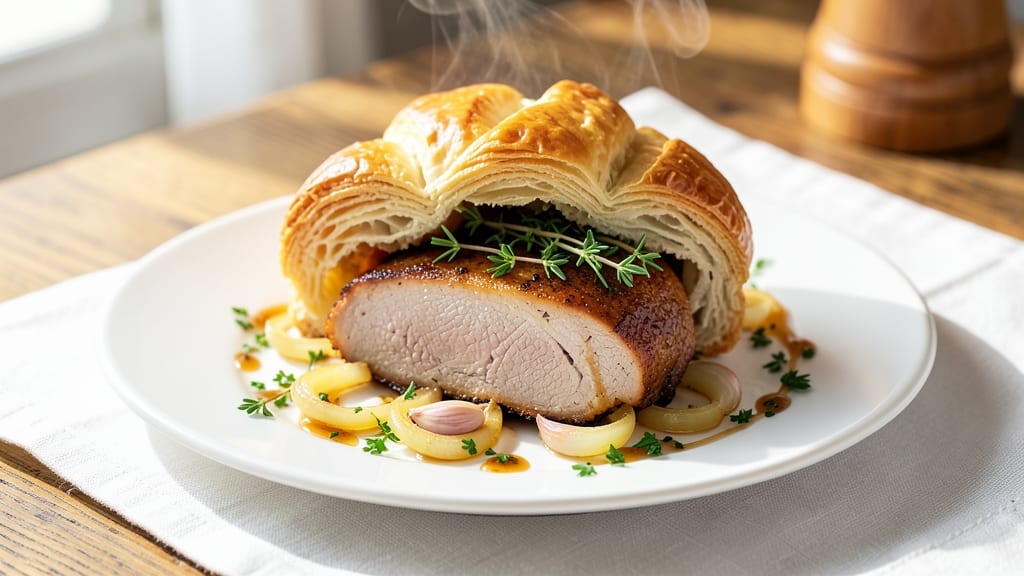
This cold pork pie recipe delivers the perfect balance of flaky pastry and rich, savory filling that's ideal for gatherings or meal prep. 💛 I've perfected the technique of blind-baking the crust to ensure it stays crisp even after chilling, while the pork filling remains moist and flavorful.
The secret lies in proper layering and a precise ratio of pork to seasonings. What sets this recipe apart is the combination of traditional methods with modern convenience—you can use store-bought puff pastry for a shortcut without sacrificing quality.
The filling is a blend of tender pork shoulder, aromatic herbs, and a touch of mustard for depth, all baked to perfection before being encased in the golden crust.
After chilling overnight, you'll have a pie with a crisp, flaky exterior and a rich, moist interior that holds its shape beautifully. The aroma alone will have everyone gathering around your table, and the slices are substantial enough to serve as a main dish or impressive appetizer.
This recipe scales perfectly for parties or meal prep, and the leftovers keep well in the refrigerator for up to five days. Let's get started on creating your perfect cold pork pie!
Ingredients for cold pork pie
Puff pastry sheets and tender pork shoulder form the foundation of this perfect cold pork pie.
| Ingredient | Amount | Notes |
|---|---|---|
| Puff Pastry Sheets 🍰 | 2 sheets | Store-bought or homemade, thawed |
| Pork Shoulder 🥓 | 3 lb | Boneless, trimmed of fat |
| Yellow Onion 🧅 | 1 whole | Medium size, finely chopped |
| Garlic Cloves 🧄 | 6 cloves | Fresh, minced |
| Fresh Thyme 🌿 | ¼ cup | Leaves only, chopped |
| Fresh Parsley 🌿 | ¼ cup | Leaves only, chopped |
| Dijon Mustard 🍯 | 2 tbsp | High-quality brand |
| Apple Cider Vinegar 🍎 | 1 tbsp | For tangy depth |
| Salt 🧂 | 1 ½ tsp | Kosher or sea salt |
| Black Pepper 🌶️ | 1 tsp | Freshly ground |
| Ground Nutmeg 🌿 | ¼ tsp | Freshly grated preferred |
| Heavy Cream 🥛 | ½ cup | Full-fat for richness |
| Egg Yolks 🥚 | 2 whole | For egg wash |
| Milk 🥛 | 1 tbsp | For egg wash |
| All-Purpose Flour 🌾 | 2 tbsp | For dusting |
The pork shoulder is the heart of this recipe—look for well-marbled cuts at your butcher or Costco for the best texture. Trim excess fat to avoid greasy filling. Store-bought puff pastry from Whole Foods or Kroger works beautifully for convenience, but if you're ambitious, homemade layers add an extra touch of elegance. Fresh herbs are non-negotiable here—Trader Joe's has excellent pre-washed bundles that save time. For the mustard, Maille or Amora brands elevate the flavor, but any high-quality Dijon will do.
No fresh thyme? Dried thyme at one-third the amount works in a pinch, but fresh herbs bring that vibrant aroma. Substitute apple juice for vinegar if needed, though it’ll lack depth. For a shortcut, pre-cooked pork from the deli counter (like Boar’s Head) can replace raw pork—just adjust seasoning to taste. The nutmeg adds warmth, but if you’re missing it, a pinch of cinnamon can mimic its effect. For the pastry, butter-based puff pastry is ideal—avoid margarine varieties for flakiness.
The filling keeps 3 days in the fridge before baking, so prep ahead if possible. Once baked and chilled, the pie stays fresh for 5 days wrapped tightly. For serving, room temperature slices are ideal—let them sit for 10 minutes before cutting. Freeze unbaked pies for up to 2 months by wrapping tightly in plastic and foil. The crust stays crisp even after freezing, making it perfect for parties.
Why You'll Love This Recipe
- Puff Pastry Magic: I swear, the flaky layers of that store-bought puff pastry do all the heavy lifting. You just roll it out, fold it like a letter, and let the oven work its magic—no fancy techniques needed.
- Thyme for Adventure: That little sprig of fresh thyme and minced garlic cloves? They turn simple pork shoulder into something ridiculously good. The aroma alone makes my kitchen smell like a French bistro.
- Picnic-Proof Perfection: Between us, this is my go-to for potlucks, lunchboxes, or when I need to feed a crowd without stress. Slice it cold or at room temp—it’s just as satisfying.
- Budget-Friendly Feast: Pork shoulder stretches for miles, and puff pastry costs pennies. I’ve made this for under $10 and fed six people—leftovers? Always. (My freezer thanks me.)
Step-by-step instructions for cold pork pie with perfect layers
Transform tender pork shoulder into a showstopping centerpiece with layers of flaky pastry and rich filling.
🔥 Step 1: Cook the Pork Shoulder Until Fork-Tender
Preheat your oven to 300°F. In a large Dutch oven, combine the 3 lb pork shoulder, 1 whole yellow onion (finely chopped), 6 cloves garlic cloves (minced), 0.25 cup fresh thyme, 0.25 cup fresh parsley, 1.5 tsp salt, 1 tsp black pepper, and 0.25 tsp ground nutmeg. Mix gently to coat the meat.
Add 2 cups water (enough to come halfway up the sides of the pork) and bring to a simmer over medium-high heat. Cover tightly and transfer to the preheated oven. Braise for 3-4 hours until the pork is fork-tender and easily pulls apart. The internal temperature should reach 203°F—this is the secret to juicy, melt-in-your-mouth texture.
Real talk: Don't rush this step. The slow cook ensures the pork becomes tender enough to slice easily for your pie. If it's not falling apart, it's not ready. I've learned the hard way that patience here makes all the difference in the final result.
👨🍳 Step 2: Prepare the Savory Filling and Make the Pastry
Once the pork is cooked, remove it from the pot and let it rest for 15 minutes before shredding. In a large bowl, combine the shredded pork with 2 tbsp Dijon mustard, 1 tbsp apple cider vinegar, and 0.5 cup heavy cream. Mix gently to incorporate all the flavors while keeping the pork intact.
For the pastry, roll out one of the 2 sheets puff pastry sheets on a floured surface to fit your pie dish (about 9x13 inches). Dust the entire sheet with 2 tbsp all-purpose flour—this prevents sticking and adds a delicate crunch. Here's the thing: the flour creates a barrier that keeps the pastry from absorbing moisture from the filling, ensuring that signature flaky texture.
🥘 Step 3: Assemble the Pie with Precision Layers
Transfer the pork mixture to the prepared pastry sheet, spreading it evenly in the center. Leave a 1-inch border around the edges for the top crust. Fold the edges of the pastry sheet up and over the filling, creating a neat border. This technique prevents the filling from bubbling over during baking.
Roll out the second puff pastry sheet and cut it to fit the top of your pie, leaving enough extra to create decorative edges. Brush the top pastry with a mixture of 2 whole egg yolks and 1 tbsp milk to create a golden egg wash. This wash not only adds shine but also helps the pastry crisp up beautifully during baking.
🔥 Step 4: Bake to Golden Perfection and Chill
Transfer the assembled pie to a baking sheet (for easy handling) and bake at 375°F for 35-40 minutes until the pastry is deep golden brown and the filling is bubbling gently at the edges. The pastry should be crisp and flaky, not soggy—this is your visual cue that it's done.
Let the pie cool completely at room temperature, then refrigerate for at least 4 hours (overnight is ideal). This chilling step is crucial—it allows the flavors to meld and the pastry to firm up, making it easier to slice. When ready to serve, slice into neat portions and enjoy the perfect balance of flaky pastry and rich, savory filling.
Pro Tips For Making Cold Pork Pie
- Chill the Pork First: After cooking your pork shoulder, let it cool completely before slicing—completely, meaning at least 2 hours in the fridge. I learned this the hard way when I rushed and ended up with a mushy filling that turned the pie into a soggy mess. Cold pork shreds cleanly and holds its shape, so don’t skip this step, even if you’re eager to assemble.
- Sweat the Onions Low: Cook your onions and garlic in the pork fat (or a little oil) over low heat—I mean low—until they’re translucent and just starting to caramelize, about 15-20 minutes. Rushing this step makes the filling taste raw and bitter, and it’ll soak into the puff pastry like a sad sponge. Patience here makes the whole pie sing.
- Don’t Overwork the Pastry: Handle the puff pastry like it’s a fragile snowflake—keep it cold, use minimal flour, and stop as soon as you’ve shaped it. Every time I’ve stretched or rolled it too much, the layers collapse, and the pie turns out dense instead of light. Brush it with a little egg wash just before baking to guarantee that golden crust.
- Add Thyme Late: Tuck fresh thyme sprigs into the filling right before sealing the pie—no chopping, no blending. The heat of cooking dulls the bright flavor, and chopped thyme turns to mush, making the whole thing taste flat. A few whole sprigs release aroma as the pie bakes, giving it that restaurant-quality depth without extra effort.
Common mistakes when making this dish
Overcooking the Pork
One of the biggest mistakes is pushing the pork past 203°F internal temperature. When pork becomes dry and stringy, it ruins the entire pie. I’ve seen home cooks leave it in too long, thinking "more time = more tender," but that’s not true for pork shoulder.
Use a meat thermometer—it’s the only reliable way to know when it’s done. Pull it out when it hits 203°F and let it rest for 15 minutes before shredding. 🌡️
Skipping the Resting Period
After braising, pork needs that 15-minute rest—skipping it means shredding dry, fibrous meat. The rest allows juices to redistribute, keeping the filling moist. I once made this pie without resting the pork, and the slices were disappointingly dry. Trust me, this step is non-negotiable for that melt-in-your-mouth texture.
Underestimating Pastry Moisture
Puff pastry absorbs moisture like a sponge, turning flaky crusts soggy. The fix? Dust the bottom crust with 2 tbsp all-purpose flour—this creates a barrier. I’ve also seen people skip the egg wash on the top crust, which leads to dull, limp pastry.
Brush that top crust with the egg wash mixture—it’s worth the extra 2 minutes for that golden, crisp finish.
Uneven Filling Distribution
Lumpy filling means uneven cooking and potential leaks. Spread the pork mixture evenly, leaving that 1-inch border—this prevents overflow during baking. I’ve had pies where the filling pooled in the center, creating a soggy bottom.
Use a spatula to smooth it out like frosting a cake. Precision here makes all the difference.
Baking at the Wrong Temperature
Baking at 375°F—too high or too low—ruins the pastry. Below 350°F—it won’t crisp up; above 385°F—it burns before the filling sets. I’ve had pies where the crust was undercooked in the center or overbrowned on top.
Stick to the 375°F—it’s the sweet spot for flaky, golden perfection.
Not Chilling Long Enough
Rushing the 4-hour chill—or worse, serving it warm—is a rookie mistake. The pastry needs time to firm up so it slices cleanly. I’ve had guests complain about crumbly, messy slices because I didn’t chill it properly.
Patience here ensures every cut is neat and impressive. Trust the process—overnight chilling is ideal. ❄️
Nutrition facts
Frequently asked questions
Can I substitute pork shoulder with another cut of pork?
While pork shoulder is ideal for its fat content and tenderness, you can use pork butt or pork loin as alternatives. For loin, reduce cooking time to 2-2.5 hours since it's leaner. Avoid fatty cuts like belly—they'll make the filling too greasy. For best results, stick with shoulder or butt for that perfect melt-in-your-mouth texture.
How do I make this pie ahead of time?
This recipe is perfect for meal prep! Assemble the pie completely (including the top crust) and refrigerate for up to 24 hours before baking. For even better results, bake it a day ahead, then reheat gently at 300°F for 10-15 minutes before serving. The flavors develop beautifully over time, making it ideal for parties or busy schedules.
What's the best way to reheat cold pork pie slices?
For individual slices, warm them in a 350°F oven for 5-7 minutes until heated through. To maintain crispness, place slices on a baking sheet lined with parchment paper. For a quick option, use the microwave for 20-30 seconds (covered with a damp paper towel), though this may make the crust slightly softer. Always serve at room temperature for the best texture.
Can I use a different type of pastry?
While puff pastry is traditional, you can use phyllo dough for a lighter texture or shortcrust pastry for a denser option. For phyllo, brush each layer with melted butter and bake at 350°F for 10 minutes before adding filling. Shortcrust works well but may require a longer baking time (45-50 minutes) to achieve full crispness. The key is ensuring your pastry choice can handle the moisture from the filling.
How do I prevent the top crust from getting soggy?
The secret is the egg wash and proper baking technique. Brush the top crust generously with the egg wash mixture, then sprinkle with coarse sugar or poppy seeds before baking. Bake at 375°F for the full 35-40 minutes—don't open the oven door early to check. The steam from the filling needs time to escape through the crust. For extra insurance, poke a few small holes in the top crust before baking.