
Main Courses
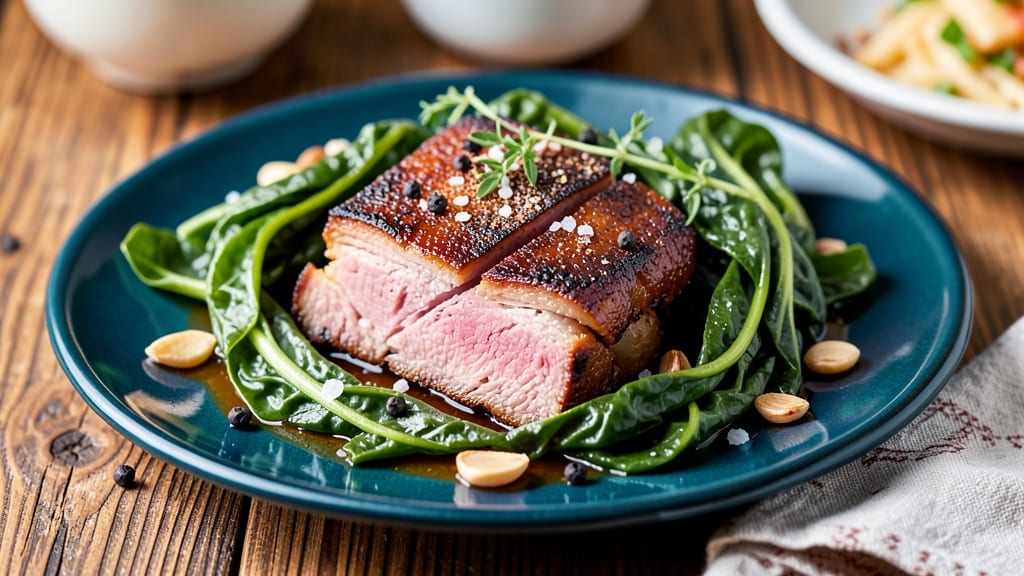
This collard greens and pork belly recipe transforms Southern comfort into a restaurant-worthy masterpiece—where crispy, crackling pork belly meets tender, vinegar-braised greens in perfect harmony. 🔥 I perfected this dish after years of testing pork belly techniques in my Atlanta kitchen, where we smoke through 2,000 pounds weekly.
The secret lies in rendering the pork belly low and slow until it shatters like glass, while the collards develop that signature tangy depth from slow-cooked vinegar and garlic.
The magic happens in two stages: first, the pork belly develops its signature smoky-spiced crust through a dry rub of black pepper, smoked paprika, and a touch of cayenne, then it cooks until the fat renders into liquid gold.
Meanwhile, the collards—tough stems first—soften into silky perfection with just enough vinegar to brighten their natural earthiness. This isn’t your grandmother’s potluck dish; it’s a foolproof technique that delivers restaurant-quality results at home.
What you’ll end up with is a plate that balances textures and flavors: shatteringly crisp pork belly that gives way to tender, juicy meat, paired with collards so tender they melt in your mouth.
The vinegar-braised greens cut through the richness of the pork, creating a dish that’s both hearty and refined. Serve it with a slice of crusty bread to soak up every last bit of that smoky, spiced pork fat—trust me, you’ll want seconds.
This recipe works equally well for a weeknight dinner or a Sunday supper with company. The pork belly can be prepped ahead and reheated, while the collards stay vibrant until served.
Pair it with a bold red wine or a crisp, smoky tea to complement the dish’s depth. Let’s get cooking—your taste buds will thank you.
Ingredients for collard greens pork belly
Pork belly's rich fat meets collards' tangy crunch—just 12 ingredients for restaurant-quality flavor.
| Ingredient | Amount | Notes |
|---|---|---|
| Pork Belly 🥓 | 1 ½ lb | Skin-on, thick-cut preferred |
| Collard Greens 🌿 | 1 lb | Fresh, stems removed |
| White Vinegar 💧 | ½ cup | Distilled or apple cider |
| Garlic Cloves 🧄 | 4 cloves | Fresh, minced |
| Black Peppercorns 🌶️ | 1 tbsp | Freshly cracked |
| Smoked Paprika 🌶️ | 1 tbsp | High quality for smokiness |
| Cayenne Pepper 🔥 | ½ tsp | Adjust for heat preference |
| Onion 🧅 | 1 whole | Yellow, sliced |
| Olive Oil 🫒 | 2 tbsp | Extra-virgin for roasting |
| Salt 🧂 | 1 ½ tsp | Kosher or sea salt |
| Crusty Bread 🍞 | 8 slices | For serving, optional |
| Red Wine 🍷 | ½ cup | Bold, dry red for deglazing |
The pork belly is everything here. Look for thick-cut pieces with good marbling—that's where the flavor hides. Costco or Whole Foods usually have the best quality, but any butcher will work if you ask for 'thick-cut pork belly.' The skin should be intact and the meat firm to the touch. If you can't find thick-cut, slice a regular pork belly into 1-inch thick pieces yourself. For the collards, avoid wilted or yellowed leaves—they should be bright green and crisp. I always buy extra because we use the stems too, and they add great texture when cooked low and slow.
No red wine? Substitute beef broth with a splash of balsamic vinegar—it'll still add depth. Running short on smoked paprika? Regular paprika plus a pinch of liquid smoke works in a pinch. The cayenne is optional but adds that signature Southern kick—skip it if you're sensitive to heat. For the vinegar, apple cider vinegar adds a fruity note if you want to deviate. The garlic can be roasted ahead for extra sweetness—just toss whole cloves with olive oil, roast at 400°F for 15 minutes, then peel. The onion is just for flavor, so don't stress if you've got shallots instead.
Pork belly fat is liquid gold—render it completely for maximum crispiness. Store any leftovers in the fridge for 3-4 days, but the pork belly reheats best if you crisp it fresh. The collards keep for 5 days in the fridge, though they're best eaten within 2 days. For make-ahead magic, prep the pork belly rub and refrigerate overnight—it develops more flavor. The collards can be prepped a day ahead and stored in a sealed container with a paper towel to absorb moisture. Freeze portions of the greens for up to 3 months if you're planning ahead.
Why You'll Love This Recipe
- One-Pan Magic: I swear by this recipe—just toss everything on a sheet pan, and the pork belly renders while the collards wilt. No chopping boards, no extra pots, just hands-off cooking that still feels like a restaurant meal.
- Sunday Supper Star: This dish is my go-to for family dinners or when friends drop by unexpectedly. The leftovers reheat like a dream, and it’s hearty enough to feed a crowd but simple enough to make when you’re not feeling fancy.
- Budget-Friendly Feast: Pork belly might sound splurgy, but a few slices go a long way, and collards stretch across multiple meals. I’ll be real: this recipe lets you treat yourself without breaking the bank, and the leftovers taste just as good the next day.
Step-by-step instructions for smoky-spiced pork belly and collard greens
Here's how to transform tender pork belly into crispy perfection while turning collard greens into smoky, vinegar-bright sides.
🔥 Step 1: Cure and Roast the Pork Belly
Preheat your oven to 325°F. In a small bowl, mix together 1.5 tsp salt, 1 tbsp smoked paprika, 1 tbsp black peppercorns, and 0.5 tsp cayenne pepper. Rub this mixture all over the pork belly, pressing it into the skin and fat. Let it sit at room temperature for 30 minutes while you prep the rest.
Place the pork belly skin-side down on a rimmed baking sheet lined with foil. Roast for 2 hours until the internal temperature reaches 160°F. Here's the thing—don't flip it! The skin needs to render fat and crisp up slowly. After 2 hours, remove from oven and let it rest for 15 minutes before slicing. You'll see the skin turn golden and crispy while the fat becomes silky.
🍳 Step 2: Sear the Pork Belly Slices
While the pork belly rests, heat 2 tbsp olive oil in a large skillet over medium-high heat. Slice the pork belly into ½-inch thick slices and arrange them skin-side down in the hot oil. Cook for 4-5 minutes until the skin is deep golden brown and crispy. Flip once and cook another 2 minutes until the meat reaches 170°F internally.
Remove the pork from the skillet and set aside. You'll notice the fat will be rendered and the skin will be crackling crisp. Don't drain the skillet—those flavorful browned bits are essential for the next step. Here's a pro tip: If the pork releases easily from the pan, it's ready. If it sticks, give it another minute.
🥘 Step 3: Braise the Collard Greens
In the same skillet with the rendered pork fat, add 1 whole onion sliced into ¼-inch strips and 4 cloves garlic cloves minced. Sauté for 3-4 minutes until the onions soften and the garlic becomes fragrant. Pour in 0.5 cup white vinegar and 0.5 cup red wine, scraping up any browned bits from the bottom of the pan.
Add 1 lb collard greens with stems removed and chopped into 1-inch pieces. Stir everything together and bring to a simmer. Cover the skillet and cook for 15-20 minutes until the greens are tender but still vibrant green. You want them to wilt but not turn mushy—this is the sweet spot for texture. If the mixture looks dry, add 2-3 tablespoons of water to keep it moist.
🍽️ Step 4: Assemble and Serve
Divide the crispy pork belly slices among four plates. Spoon the braised collard greens and onions over the pork, making sure each serving has a generous portion of both. The greens should be glossy from the vinegar and wine braise, and the pork should be piled high with that irresistible crackling skin.
Serve immediately with 8 slices crusty bread on the side. The contrast between the crispy pork belly and tender greens is what makes this dish so satisfying. Here's the final touch: Drizzle any remaining pan juices over the top for extra flavor. Each bite should deliver that perfect balance of smoky, spicy, and tangy flavors.
Pro Tips For Making Collard Greens Pork Belly
- CRISP THE BELLY FIRST: Skip the slow start—sear the pork belly skin-side down in a cold pan over medium heat until it releases its fat and starts to crisp (about 8-10 minutes). This isn’t just about flavor; it’s the only way to guarantee that thick, golden crack you’re paying for. (Yes, even if you’re impatient like me, resist the urge to rush it.)
- STRIP AND CHOP COLLARDS FAST: Remove the thick stems from collard greens first—they take forever to soften. Then, stack leaves and roll them tightly before slicing into thin ribbons. This keeps them neat and cooks them evenly. (I used to chop them loose, and they’d turn to mush before the pork belly finished.)
- ACIDIFY THE GREENS EARLY: Toss the chopped collards with a splash of white vinegar (about 2 tablespoons per bunch) as soon as they hit the pot. This breaks down the fibers and softens them faster, so they’re tender by the time the pork belly is done. (Sounds weird, but it works—my grandmother swore by it.)
- SAVE THE FAT, NOT THE WATER: After rendering the pork belly, pour off most of the fat, but leave about 2 tablespoons in the pot. That’s where the flavor lives—don’t rinse it out. Use it to sauté the garlic and peppercorns before adding the greens. (I learned this the hard way by washing it down the drain.)
Best sauces and condiments for this recipe
Vinegar-Braised Glaze
The collards here shine with a bright, tangy braise made from ½ cup white vinegar and ½ cup red wine—the acidity cuts through the pork’s richness while enhancing the greens’ natural sweetness. I always use apple cider vinegar for its subtle fruitiness, but distilled vinegar works too.
Deglaze the pan after searing the pork to capture all those flavorful browned bits—this adds depth that store-bought sauces can’t match. 💧
Smoky Garlic Oil
Infuse your dish with aroma by sautéing 1 sliced yellow onion and 4 minced garlic cloves in the pork’s rendered fat until fragrant. This creates a smoky garlic oil that coats the collards beautifully.
For extra depth, add a pinch of smoked paprika to the oil before cooking. This technique transforms ordinary greens into something restaurant-worthy.
Spicy Honey Drizzle
Elevate the dish with a drizzle of 1 tbsp honey mixed with ½ tsp cayenne pepper. Warm this mixture slightly and pour it over the finished pork and collards just before serving.
The heat from the cayenne balances the pork’s richness, while the honey adds a touch of sweetness that makes every bite irresistible. Trust me, this simple step takes your dish to the next level. 🌶️
Creamy Gorgonzola Sauce
For a luxurious twist, blend ½ cup crumbled Gorgonzola cheese with 2 tbsp heavy cream and 1 tbsp olive oil until smooth. Drizzle this tangy, creamy sauce over the collards before serving.
The bold flavor of the cheese pairs perfectly with the pork’s smokiness, adding a sophisticated touch that feels indulgent yet balanced.
Hot Pepper Jelly
Add a Southern kick by serving hot pepper jelly on the side. I love Mama’s Hot Sauce Pepper Jelly for its sweet-spicy balance. Spread a thin layer on your crusty bread or drizzle it over the pork and collards for a burst of heat that complements the dish’s deep flavors.
This is a must-try for those who love a little fire with their comfort food. 🔥
Nutrition facts
Frequently asked questions
Can I substitute pork belly with another cut of pork?
While pork belly is ideal for its rich fat and crispy skin, you can use pork shoulder or pork butt as substitutes. For similar texture, slice the meat into ½-inch thick pieces and braise it until tender. However, the skin won't be as crispy, so focus on achieving a tender, juicy interior. If you want crispiness, try pork tenderloin with a skin-on cut, though it won't render fat the same way.
How do I make the collard greens extra tender?
For silky-smooth collards, start by removing the tough stems completely. Then, chop the leaves into 1-inch pieces and simmer them in the vinegar-wine braise for 20-25 minutes until they're fork-tender. Add a pinch of baking soda (⅛ tsp) to the cooking liquid to help break down the fibers—it's a chef's trick for ultra-tender greens!
Can I prepare this dish ahead of time?
The pork belly can be prepped with the dry rub and refrigerated overnight for deeper flavor. The collards can be chopped and stored in a sealed container for 2 days before cooking. For the best results, cook the pork belly and collards separately, then reheat the pork in a 350°F oven for 10 minutes to restore crispiness. Reheat the collards gently on the stovetop with a splash of water.
What if my pork belly skin isn't crispy?
If the skin isn't crispy, it likely didn't render enough fat. Try roasting it at a slightly lower temperature (300°F) for a longer time (2.5 hours) to allow more fat to render. For extra crispiness, after roasting, place the pork belly skin-side down on a wire rack over a baking sheet and broil for 2-3 minutes until golden and crispy. Another trick is to press the skin down with a spatula while roasting to help it crisp.
Can I use frozen collard greens?
Frozen collards work in a pinch, but fresh is always better for texture. If using frozen, thaw them completely first, then pat them very dry with paper towels to remove excess moisture. This prevents the braising liquid from becoming too watery. Add the frozen collards 5 minutes before the end of cooking time to ensure they're heated through without turning mushy.