
Main Courses
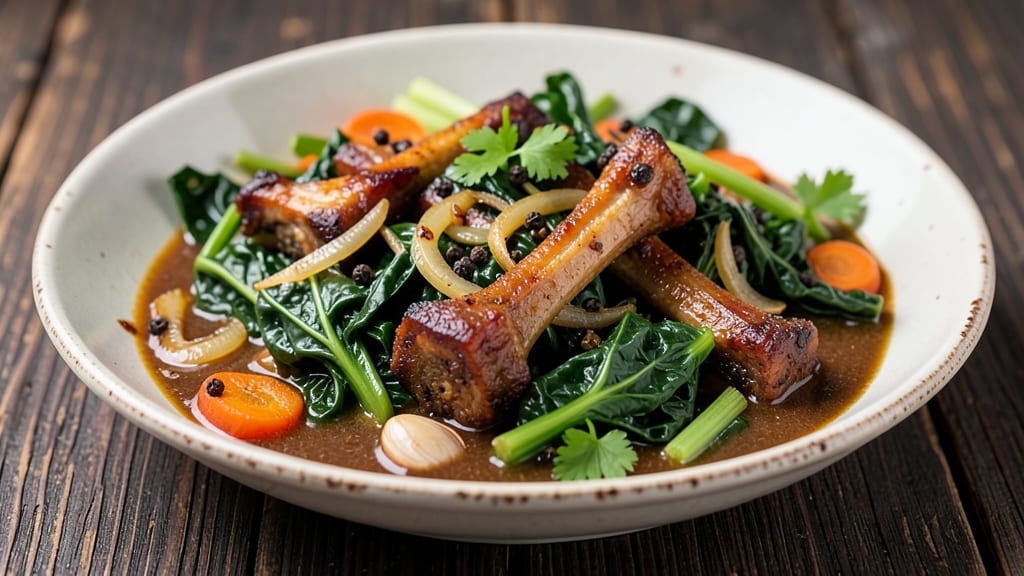
Pork neck bones simmered with collard greens create a dish so rich and flavorful it feels like a hug from Southern tradition. 💛 The secret lies in slow-cooking those bones until they yield a deep, smoky broth that transforms tough greens into tender, melt-in-your-mouth perfection.
I learned this technique from my grandmother's cast iron pot, where generations of flavor built up in every layer.
This recipe honors the slow-cooked tradition while adapting to modern kitchens—whether you have hours or a pressure cooker. The pork neck bones develop a caramelized crust that releases layers of umami into the broth, while the collards soften just enough to absorb all that rich flavor.
I always add a splash of apple cider vinegar at the end, which brightens the dish without overpowering the deep pork notes.
What you'll end up with is a pot of collard greens so tender they practically fall apart, swimming in a velvety broth that's packed with meaty flavor. The aroma alone will have your whole house asking what's for dinner.
This dish pairs perfectly with cornbread or buttered biscuits, making it a complete meal that feels like a celebration.
The beauty of this recipe is its flexibility—make it ahead for game day gatherings or serve it as a comforting weeknight dinner. The bones can be pre-cooked in a pressure cooker for faster results, though purists swear by the slow simmer.
Either way, you're getting restaurant-quality Southern comfort food that tastes even better the next day.
Ingredients for collard greens with pork neck bones
Pantry staples meet smoky Southern magic—just a few ingredients for deep, comforting flavor.
| Ingredient | Amount | Notes |
|---|---|---|
| Pork Neck Bones 🍖 | 3 lb | Raw, with meat attached |
| Collard Greens 🌿 | 1 ½ lb | Trimmed, stems removed |
| Yellow Onion 🧅 | 1 whole | Chopped, medium size |
| Carrot 🥕 | 3 whole | Chopped, medium size |
| Celery Stalks 🌱 | 3 whole | Chopped, medium size |
| Garlic Cloves 🧄 | 6 cloves | Minced, fresh preferred |
| Apple Cider Vinegar 🍏 | ¼ cup | For brightness |
| Smoked Paprika 🌶️ | 1 tbsp | For smoky depth |
| Ground Black Pepper 🌶️ | 1 tbsp | Freshly ground |
| Salt 🧂 | 2 tsp | Kosher or sea salt |
| Bay Leaves 🌿 | 2 whole | Fresh preferred |
| Water 💧 | 8 cups | Enough to cover bones |
| Butter 🧈 | 2 tbsp | For finishing |
The pork neck bones are the heart of this dish. Look for bones with good meat coverage—the more meat, the richer the broth. I always grab mine from H-E-B's meat counter or Whole Foods butcher section, where they're fresh and properly trimmed. If you can't find them pre-cut, ask the butcher to remove the excess meat—it's worth the extra few minutes. The bones should be raw and smell clean, not fishy or overly gamey. For a shortcut, Costco sells pork neck bones in bulk, which is perfect if you're feeding a crowd. These bones develop that caramelized crust during cooking, which is where all the deep, smoky flavor comes from—don't skip the browning step!
No smoked paprika? Regular paprika plus a pinch of liquid smoke works in a pinch, though the flavor won't be quite the same. Fresh bay leaves are ideal, but dried bay leaves at half the amount will do. Running low on apple cider vinegar? White vinegar or lemon juice brightens the dish just as well. The collard greens should be vibrant green—if they're wilted or yellowing, skip them. For the vegetables, Trader Joe's has pre-chopped mirepoix mixes that save time, but chopping your own gives you better control. If you're using a pressure cooker, you can skip the browning step entirely—just add everything raw and pressure cook for 90 minutes. The bones will still render beautifully, though the crust won't form.
This dish tastes even better the next day—honestly, 3-4 days in the fridge is ideal as the flavors meld. Store it in a glass container with the fat layer skimmed off if you're keeping it longer than 2 days. For leftovers, reheat gently on the stove with a splash of water or broth. The bones can be pre-cooked in a slow cooker for 8-10 hours on low, then added to the greens later. Freeze portions in airtight containers for up to 3 months. The broth alone makes an amazing soup base—just strain it and store separately. I always make a double batch because this disappears fast around game day or holiday gatherings.
Why You'll Love This Recipe
- One-Pot Magic: I swear by this—just toss everything in one pot, and the pork neck bones melt into the greens while you chop. No fancy techniques, no last-minute scrambling. The celery and carrot soften into the broth, so you’re not left with a pile of scraps to clean up.
- Rich, Deep Umami: That slow-cooked pork neck bone? It’s the secret weapon—turns the collards into something luxurious, not just a side. The onion and greens caramelize just enough to balance the savory, salty meat. Honestly, it’s the kind of flavor that makes you want to eat it straight from the pot.
- Leftovers That Shine: This dish actually gets better the next day. The flavors meld into something even deeper, and reheating is a breeze—just a splash of water, a quick stir. I’ve fed a crowd with the leftovers, and no one ever complains. (Yes, even on a Tuesday night.)
- Budget Meal, Big Impact: Pork neck bones are cheap, but they punch way above their weight. A single batch feeds four, and the greens stretch across multiple meals. Between us, this is my go-to when I need a filling, nourishing dish without breaking the bank. The carrot and celery add color and crunch—no wasted ingredients here.
Step-by-step instructions for collard greens with pork neck bones
Turn humble bones into rich, smoky collard greens that'll impress everyone at the table.
🔥 Step 1: Prepare the Bones and Aromatics
Preheat your oven to 425°F. Place the 3 lb pork neck bones on a baking sheet and roast for 20-25 minutes until they develop a deep golden brown color. This step caramelizes the bones, creating layers of flavor that'll infuse your broth.
While the bones roast, chop the 1 whole yellow onion, 3 whole carrots, and 3 whole celery stalks into ½-inch pieces. Mince the 6 cloves garlic and set aside. The vegetables will form the aromatic base of your collard greens, so don't rush this step—aim for even, medium-sized pieces that'll cook uniformly.
🍳 Step 2: Build the Flavor Base
In a large Dutch oven, combine the roasted pork neck bones with the chopped vegetables, 2 whole bay leaves, 1 tbsp smoked paprika, 1 tbsp ground black pepper, and 2 tsp salt. Add the 8 cups water and 0.25 cup apple cider vinegar, then bring everything to a rolling boil over high heat.
Once boiling, reduce the heat to low and skim off any foam or impurities that rise to the surface during the first 15 minutes. This creates a cleaner broth. The vinegar adds brightness that cuts through the richness of the pork, balancing the flavors beautifully. Let the mixture simmer uncovered for 2 hours.
🥘 Step 3: Cook the Collard Greens
After 2 hours, remove the pork bones with tongs and set them aside. Add the 1.5 lb trimmed collard greens to the pot, spreading them out evenly. The greens should be partially submerged in the broth—they'll cook down as they soften. Return the broth to a gentle simmer and cook for 45-60 minutes, until the collards are tender but still vibrant green.
Here's where it gets good: Stir in the 2 tbsp butter during the last 10 minutes of cooking. The butter melts into the broth, adding richness and helping create that signature Southern texture. The greens should be fork-tender with just a slight bite—you want them to melt in your mouth, not turn mushy.
⏰ Step 4: Finish and Serve
Remove the pot from heat and let the collard greens sit for 10 minutes to allow the flavors to meld. Discard the bay leaves and any large vegetable pieces. Using a slotted spoon, transfer the collards to a serving bowl, reserving the broth. If you want extra richness, you can blend some of the broth and return it to the pot to create a velvety sauce.
Serve the collard greens hot, with the reserved broth spooned over the top. The finished dish should have a deep, smoky aroma with layers of sweetness from the vegetables, tang from the vinegar, and rich umami from the pork bones. Each bite should deliver tender greens in a flavorful broth that coats your spoon—this is comfort food at its finest.
Pro Tips For Making Collard Greens With Pork Neck Bones
- BLISTER THE BONES FIRST: Don’t skip the charring step—sear the pork neck bones over high heat until they’re deep brown and sticky. I learned this the hard way: skipping it means flavorless broth and bland greens. Let them sizzle for 5-7 minutes per side until the meat pulls away easily.
- STACK GREENS LIKE LASAGNA: Overlapping collard leaves tightly in the pot mimics a lasagna stack—this ensures even cooking and prevents soggy edges. No need to fold them like a taco; just layer them in a spiral, stems down, and let them wilt into each other.
- SALT THE POT LIKE THE SEA: Toss in 2-3 tablespoons of kosher salt with the bones at the start—it extracts collagen and seasons the broth from the ground up. I used to add it later, and the greens always tasted flat. Trust me, the first batch of water should taste salty.
- SAVE THE VEGETABLE WATER: Don’t drain the veggie broth after cooking onions, carrots, and celery—blend it into the greens at the end. It thickens the sauce naturally and adds depth without extra effort. (Yes, even if it looks murky—it’s flavor gold.)
Creative variations of collard greens with pork neck bones
Southern-Style Smoky Twist
Add 1 tbsp hot sauce like Crystal or Tabasco with the apple cider vinegar for a spicy kick that cuts through the richness. I love using Louisiana-style hot sauce for its deep, slightly sweet heat.
For extra smokiness, swap the smoked paprika for ½ tsp liquid smoke—just be careful not to overdo it, as it can be overpowering. This variation is perfect for serving at tailgates or when you want to wake up your taste buds. 🌶️
Creamy Potato Addition
Stir in 1 cup diced potatoes (Yukon Gold work best) with the collard greens during the final 30 minutes of cooking. The potatoes soak up all that smoky broth while adding a comforting creaminess.
For extra decadence, finish with 2 tbsp heavy cream and a sprinkle of chives. This hearty version feels like a complete meal in one pot.
Pressure Cooker Shortcut
For a faster version, use an Instant Pot—add all ingredients raw (no browning needed) and pressure cook on high for 90 minutes. Release the pressure naturally, then add the collard greens and cook for another 15 minutes on high heat.
The pressure cooker locks in all those flavors while saving you hours. I often make this version when I'm short on time but still want that restaurant-quality depth. ⚡
Sweet Potato Swap
Replace half the collard greens with 1 lb peeled and chopped sweet potatoes for a naturally sweet contrast. Add them with the collards and simmer for 30 minutes until tender. The sweetness balances the smoky pork beautifully.
Top with a sprinkle of crushed pecans for crunch and texture. This variation is especially popular in the fall when sweet potatoes are in season.
Herb-Infused Broth
Boost the flavor with fresh herbs by adding 1 sprig fresh thyme and 1 sprig fresh rosemary with the bay leaves. Remove them before serving. The herbs add an earthy depth that pairs perfectly with the smoky pork.
For a brighter finish, stir in 1 tbsp fresh parsley at the end. This herbaceous twist feels elegant but still maintains that homey Southern comfort.
Game Day Crowd-Pleaser
Double the recipe and serve in a slow cooker for easy reheating. Add ½ cup cooked white rice per serving to stretch it further. Garnish with crumbled bacon and extra black pepper for a dish that disappears fast at gatherings.
I always make this version for Super Bowl parties—it's the kind of food that makes people ask for seconds before they even finish their first plate. 🏈
Nutrition facts
Frequently asked questions
Why do the pork neck bones need to be roasted first?
Roasting the bones creates a deep caramelized crust that releases layers of rich, smoky flavor into the broth. This step is crucial for developing the dish's signature depth—without it, the collard greens will taste more like plain broth than the velvety, meaty masterpiece they should be.
Can I use frozen collard greens instead of fresh?
Yes, but thaw them completely first—frozen greens release excess water that can dilute the broth. For best results, use fresh collards, which hold their texture better and absorb the pork flavors more intensely. If using frozen, pat them very dry before adding to the pot.
How do I know when the collard greens are done?
They should be fork-tender with just a slight resistance—like perfectly cooked pasta. Test a leaf by piercing it with a fork; if it slides in easily but doesn't fall apart, they're ready. Overcooking turns them mushy, so keep an eye on them during the last 15 minutes of simmering.
What if I don't have a Dutch oven?
A heavy pot with a tight-fitting lid works just as well—just make sure it's large enough to hold all ingredients without boiling over. For extra insurance, simmer on lower heat. The key is maintaining a gentle, consistent temperature so the pork renders properly and the greens don't overcook.
Can I make this dish in a slow cooker?
Brown the bones first, then combine everything in the slow cooker and cook on low for 8 hours or high for 4 hours. Add the collards during the last 1-2 hours to prevent overcooking. The slow cooker method is perfect for hands-off cooking and makes this dish even more flavorful as the hours pass.