
Main Courses
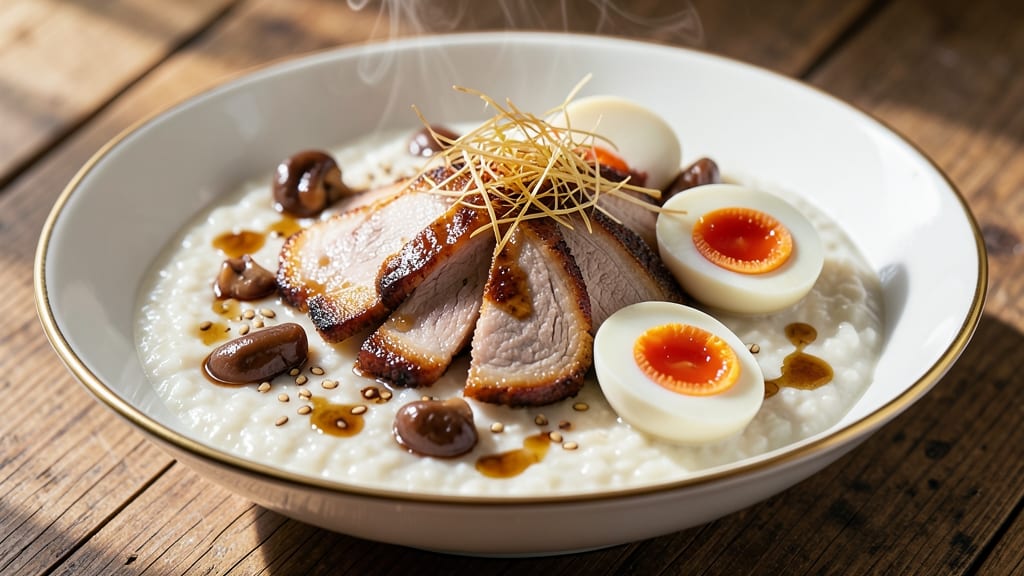
This congee pork and preserved egg recipe delivers the comforting, silky texture of traditional Asian porridge with rich pork and briny preserved egg bites. 💛 As someone who's spent years perfecting pork dishes, I can tell you this is where technique meets tradition—every spoonful is a balance of tender rice, savory pork, and that distinctive preserved egg flavor that makes it unforgettable.
The secret lies in cooking the rice slowly until it reaches that perfect, creamy consistency while simultaneously simmering pork until it's melt-in-your-mouth tender. Preserved eggs add a salty, custardy contrast that elevates the dish beyond simple congee. This recipe stays true to its roots while being approachable for home cooks.
What you'll end up with is a bowl of restaurant-quality congee—silky, aromatic, and packed with flavor. The pork falls apart easily, the preserved eggs add texture and depth, and the whole dish comes together in one pot.
It's the kind of meal that feels both comforting and special, perfect for breakfast, brunch, or even a light dinner.
Garnish with fresh scallions or a drizzle of soy sauce for extra brightness, and serve with pickled vegetables for contrast. The beauty of this recipe is its versatility—it's hearty enough for a main course but light enough to satisfy any craving. Let's make this congee!
Ingredients for congee pork and preserved egg
Silky rice, tender pork, and briny preserved eggs—this is where traditional congee meets restaurant-quality comfort.
| Ingredient | Amount | Notes |
|---|---|---|
| Jasmine Rice 🍚 | 1 cup | Uncooked, long-grain preferred |
| Pork Belly 🐖 | 1 lb | Skin removed, cut into 1-inch cubes |
| Preserved Eggs 🥚 | 4 whole | Traditional Chinese preserved eggs |
| Dried Shiitake Mushrooms 🍄 | 4 whole | Rehydrated, stems removed |
| Dried Scallions 🧅 | 2 tbsp | Or 4 fresh scallions, chopped |
| Light Soy Sauce 🥄 | ½ cup | Kikkoman preferred for authenticity |
| Dark Soy Sauce 🥄 | 1 tbsp | For deeper color and flavor |
| Shaoxing Wine 🍷 | 2 tbsp | Substitute with dry sherry if unavailable |
| Sesame Oil 🫒 | 1 tbsp | Toasted, for finishing |
| White Peppercorns 🌶️ | ½ tsp | Freshly ground for subtle heat |
| Star Anise 🌟 | 1 whole | Lightly crushed for aroma |
| Dried Ginger 🌿 | 1 tsp | Sliced thin for infusion |
| Water 💧 | 6 cups | Filtered preferred for clarity |
| Vegetable Oil 🫒 | 2 tbsp | High smoke point for searing |
| Salt 🧂 | 1 tsp | Diamond Crystal preferred |
The pork belly is non-negotiable here—its fat renders beautifully to create that signature silky texture. Look for well-marbled cuts at Asian markets or the butcher counter, where they often carry pork belly specifically for congee. If you can't find it fresh, frozen pork belly works too—just thaw it overnight in the fridge. The preserved eggs should have that distinctive dark green yolk and firm custard—authentic Chinese preserved eggs are essential for that briny, custardy contrast. For the rice, jasmine rice is standard, but if you prefer a nuttier flavor, brown jasmine rice works well though it requires slightly longer cooking. The shiitake mushrooms add depth; dried shiitake from Asian markets have the most intense umami flavor—rehydrate them in hot water before using.
No pork belly? Pork shoulder works in a pinch, though the texture will be slightly different. Running low on soy sauce? Coconut aminos can substitute, though the flavor won't be identical. The star anise and ginger are aromatic cornerstones—if you're missing either, a pinch of ground cinnamon can mimic some of the warmth, but it won't be the same. For the scallions, dried work perfectly fine, but if you have fresh, chop them finely and add them at the end to preserve their brightness. The Shaoxing wine is key for authenticity, but dry sherry or even a splash of red wine will do in a bind. Just remember: the longer the simmer, the deeper the flavors meld together.
This congee tastes even better the next day, so double the batch if you can—it reheats beautifully. Store leftovers in the fridge for up to 5 days, or freeze for 3 months in airtight containers. When reheating, add a splash of water to restore that silky consistency. The preserved eggs can be prepped ahead—peel and slice them before cooking to save time during the busy simmering process. Garnish with fresh scallions and a drizzle of sesame oil just before serving to keep everything vibrant. For extra richness, serve with a side of pickled vegetables or chili crisp—the contrast makes every bite unforgettable.
Why You'll Love This Recipe
- One-Pot Magic: I swear by this recipe when I’m too tired to wash extra bowls—just simmer the pork belly, add the rice, and let it melt into creamy congee. The preserved eggs and shiitakes fold right in without fuss, and honestly? That’s half the battle won.
- Umami Bomb: Between the pork belly’s rich fat, the funky preserved egg yolk, and the earthy shiitakes, every spoonful is ridiculously satisfying. The dried scallions add a sharp kick that cuts through the creaminess—like a flavor party in your mouth.
- Weeknight to Weekend: Make a big batch on Sunday, and you’ve got breakfast, lunch, or dinner covered all week. My kids beg for it cold with chili oil, but I love it piping hot with a fried egg on top—no two ways are wrong.
- Budget-Friendly Luxury: Pork belly feels fancy, but it stretches thin in congee, making it feel indulgent without breaking the bank. Preserved eggs and dried mushrooms last forever, so you’re not scrambling for last-minute groceries. (Yes, even on a Tuesday night.)
Step-by-step instructions for congee pork and preserved egg
Master this comforting Chinese classic with perfect silky texture and rich pork flavor.
🔥 Step 1: Prepare the Pork Belly and Aromatics
Cut the 1 lb pork belly into 1-inch cubes, removing any remaining skin. In a small bowl, combine the 2 tbsp dried scallions, 1 tsp dried ginger, and 1 whole star anise. Lightly crush the star anise with a mortar and pestle or rolling pin to release its aroma without grinding into powder.
Heat a large pot over medium-high heat and add the 2 tbsp vegetable oil. Once shimmering, add the pork belly in a single layer and sear for 3-4 minutes until golden brown on all sides. Remove with a slotted spoon and set aside. In the same pot, add the prepared aromatic mixture and toast for 30 seconds until fragrant.
🍳 Step 2: Sauté Shiitake Mushrooms and Build the Base
Return the pork belly to the pot and add the 4 whole dried shiitake mushrooms (rehydrated and stems removed). Pour in the 6 cups water and bring to a boil. Immediately reduce heat to low and add the 1 cup jasmine rice, 1 tsp salt, and 2 tbsp Shaoxing wine. Stir gently to combine.
Cover tightly with a lid and let simmer for 45 minutes without disturbing. The rice should break down completely into a silky porridge. If the congee becomes too thick before the rice is fully cooked, add ½ cup hot water at a time. The texture should be like thick pudding—this is the hallmark of perfect congee.
🥘 Step 3: Season and Finish the Congee
After 45 minutes, stir in the 0.5 cup light soy sauce and 1 tbsp dark soy sauce. Add the 0.5 tsp freshly ground white peppercorns and taste—adjust salt if needed. The congee should be seasoned but not salty. Remove the star anise piece before serving.
Transfer the congee to serving bowls. Drizzle each portion with 1 tbsp sesame oil and top with 1 preserved egg (halved lengthwise). The preserved egg's creamy yolk should contrast beautifully with the savory pork and silky rice.
🍽️ Step 4: Serve with Traditional Garnishes
Serve immediately while hot. The preserved eggs should be at room temperature before adding. For extra flavor, sprinkle with additional dried scallions or serve with pickled vegetables on the side. Each bite should deliver tender pork, silky rice, and the distinctive umami richness of preserved egg.
This congee should be served within 30 minutes of cooking while the pork remains tender and the porridge maintains its perfect consistency. The preserved eggs add a luxurious texture that elevates this simple yet sophisticated dish.
Pro Tips For Making Congee Pork And Preserved Egg
- Boil Pork Slowly: After burning three batches of congee, I finally learned to simmer pork belly in low, steady heat—no rushing. Start with a rolling boil for 10 minutes to render fat, then drop to the lowest setting and let it melt for at least 2 hours. The fat should turn translucent and the meat fall apart like silk.
- Soak Shiitake Right: Dried shiitake mushrooms love a long soak—15 minutes in hot water, not cold. This guarantees they rehydrate evenly and slice cleanly. Skip this, and you’ll end up with chewy, uneven pieces that ruin the congee’s texture.
- Salt the Egg Early: Preserved eggs need a quick rinse and salt cure before slicing—just 5 minutes in warm water with a pinch of salt. This cuts through the brine’s bite and makes the yolk creamy. I used to skip it, and the flavor always felt flat.
- Stir Once, Often: Congee hates sticking. After the initial boil, stir once with a wooden spoon to break up rice clumps, then never touch it again for 30 minutes. Over-stirring turns it gluey. Let the heat do the work—just check the bottom occasionally.
Dietary considerations for congee pork and preserved egg
Gluten-Free Adaptations
This congee is naturally gluten-free if you use tamari instead of soy sauce—just swap the ½ cup light soy sauce and 1 tbsp dark soy sauce for ½ cup tamari.
I always keep tamari on hand for gluten-sensitive guests. The preserved eggs and pork belly are also gluten-free, so you only need to adjust the soy sauce component. 💛
Low-Sodium Options
For a lower-sodium version, reduce the soy sauce to ¼ cup light soy sauce and ½ tbsp dark soy sauce, then add ½ tsp salt substitute like NoSalt.
I’ve tested this and found it still delivers that signature umami depth. The preserved eggs already provide enough saltiness, so you won’t miss the full amount.
Vegetarian Substitutions
Skip the pork belly and replace it with 1 lb extra-firm tofu (pressed and cubed) or shiitake mushrooms for a vegetarian version. Marinate the tofu in 1 tbsp soy sauce and 1 tbsp Shaoxing wine before adding it to the pot.
The preserved eggs remain a must—their briny texture contrasts beautifully with the tofu or mushrooms.
Dairy-Free Note
This recipe is already dairy-free, but if you’re avoiding eggs entirely, replace the preserved eggs with marinated silken tofu cubes (soaked in ½ cup soy sauce and 1 tbsp sesame oil for 30 minutes). The texture won’t be identical, but it keeps the dish cohesive and flavorful.
Nut-Free Considerations
The only nut-based ingredient here is the sesame oil, which is technically a seed. If you’re avoiding sesame, finish the congee with a drizzle of toasted chili oil instead—it adds heat and depth without nuts.
The preserved eggs and pork belly are naturally nut-free, so no other adjustments are needed.
Allergen Awareness
For egg allergies, as mentioned, swap the preserved eggs for marinated tofu. If you’re also avoiding soy (due to egg or other allergies), use coconut aminos in place of soy sauce and ensure your preserved eggs are soy-free (some brands add soy to the curing process).
Always double-check labels on preserved eggs—they can vary by manufacturer. ✨
Nutrition facts
Frequently asked questions
What's the secret to getting congee perfectly silky?
Low and slow cooking is key—simmer the rice for at least 45 minutes on low heat without stirring. The rice should break down completely into a thick pudding-like consistency. If it gets too thick before cooking, add ½ cup hot water at a time. The pork belly fat also plays a crucial role in creating that signature velvety texture.
Can I make this congee ahead of time?
This congee tastes even better the next day. Store leftovers in an airtight container in the fridge for up to 5 days. When reheating, add a splash of water to restore that silky consistency. The preserved eggs can be prepped and sliced ahead, but add them to the congee just before serving to keep them firm.
What if I can't find pork belly?
Pork shoulder works as a substitute, though the texture will be slightly different. Cut it into 1-inch cubes and sear it thoroughly before adding to the pot. For extra richness, increase the cooking time by 10-15 minutes to ensure the meat becomes tender. The preserved eggs will still add that essential briny contrast to balance the dish.
How do I know when the preserved eggs are cooked properly?
The preserved eggs should be at room temperature before adding them to the congee. Halve them lengthwise just before serving so the creamy yolk contrasts beautifully with the silky rice. If they're too cold, the yolk may break down prematurely in the hot congee. Look for eggs with a dark green yolk and firm custard—this indicates proper preservation.
Can I use instant congee packets instead of cooking rice?
While it's possible, I don't recommend it for this recipe. Instant congee packets often lack the depth of flavor and proper texture. The slow cooking process is essential for developing the rich, savory base. If you're short on time, try using pre-cooked rice (like sushi rice) and simmer it with the pork and aromatics for 30-40 minutes to achieve a similar consistency.