
Main Courses
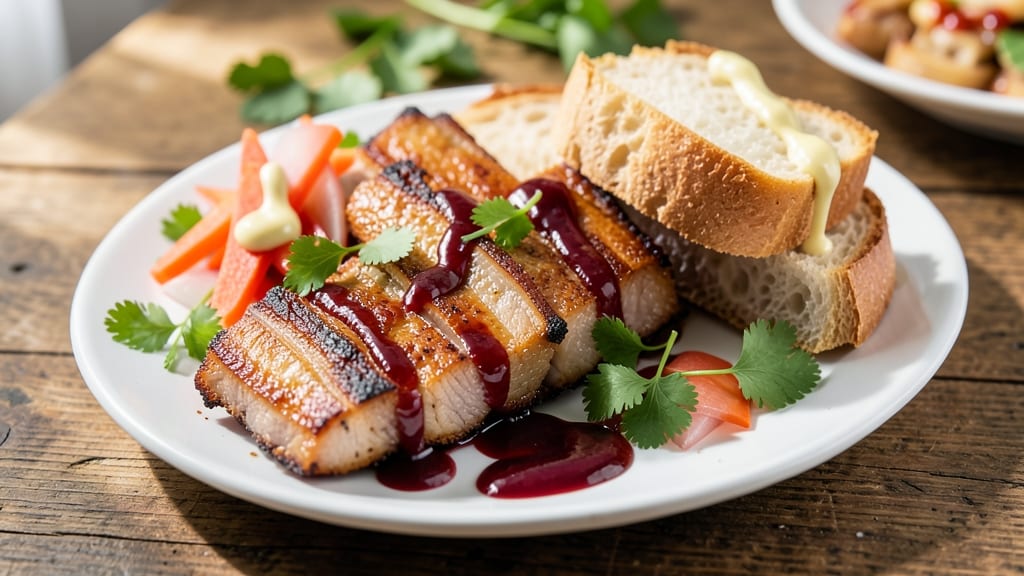
Crispy pork belly banh mi delivers the perfect balance of wok-seared crisp and vibrant Vietnamese flavors in every bite. After years of perfecting this dish in my kitchen—and later on the competition BBQ circuit—I’ve cracked the code for achieving that coveted crispy skin while keeping the meat tender inside. The secret? High-heat searing in a screaming-hot wok, then finishing with a quick broil to lock in that golden crackle.
What makes this recipe stand out is the harmony of textures and flavors: the shatteringly crisp pork belly, the soft, pillowy baguette, and the bright crunch of pickled vegetables.
I use a fat-capped pork belly cut—traditional for banh mi—to render its own fat during cooking, creating a self-basting effect that ensures maximum crispiness without extra oil.
The sandwich comes together in layers, with each element playing its part: pâté for richness, pickled daikon for tang, cilantro for freshness, and a mayo-chili sauce that ties it all together.
By the time you assemble your sandwich, you’ll have a dish that’s equal parts indulgent and refreshing—crispy on the outside, tender on the inside, and bursting with the bright, herby flavors of Vietnam.
The key to success is patience: letting the pork belly render slowly, then searing it just right for that perfect crackle. Trust me, once you taste this, you’ll never go back to store-bought banh mi again.
Serve with quick-pickled onions or carrot-daikon slaw on the side for extra crunch, and don’t forget a cold beer to cut through the richness. This recipe is a game-changer for anyone who loves bold flavors and textures—whether you’re feeding a crowd or treating yourself to a well-deserved meal.
Ingredients for crispy pork belly banh mi
Gather these fresh ingredients for a banh mi that’s crispy on the outside, tender inside, and packed with vibrant flavors.
| Ingredient | Amount | Notes |
|---|---|---|
| Fat-Capped Pork Belly 🐖 | 1 ½ lb | Skin-on, traditional cut for crispiness |
| Baguette 🥖 | 1 whole | Fresh, crusty, day-old preferred |
| Duck Fat 🍳 | ½ cup | For extra crispiness (optional) |
| Mayonnaise 🥄 | ½ cup | High-quality, for mayo-chili sauce |
| Sriracha 🌶️ | 2 tbsp | Adjust for spice preference |
| Fish Sauce 🐟 | 1 tbsp | Red Boat preferred |
| Lime Juice 🍋 | 2 tbsp | Freshly squeezed |
| Fresh Cilantro 🌿 | ½ cup | Chopped, stems removed |
| Pickled Daikon Radish 🥬 | 1 cup | Store-bought or homemade |
| Pâté 🍖 | ½ cup | Vietnamese or chicken liver pâté |
| Carrot 🥕 | 1 whole | Julienned, for garnish |
| Red Onion 🧅 | ¼ cup | Thinly sliced, quick-pickled |
| Salt 🧂 | 1 ½ tsp | Kosher or sea salt |
| Black Pepper 🌶️ | ½ tsp | Freshly ground |
| Garlic Cloves 🧄 | 4 cloves | Minced, for marinade |
The pork belly is non-negotiable here—fat-capped cuts render their own fat for maximum crispiness. Asian markets usually carry it pre-sliced, but if you’re buying whole, ask for the belly with the fat cap intact. I often grab mine from Whole Foods or Costco when they have it fresh. The baguette should be crusty but soft inside—day-old works best because it’s less likely to get soggy. If you can’t find a traditional Vietnamese baguette, a good French baguette from the bakery section will do. For extra crisp, I brush the pork belly with duck fat—it’s worth the splurge, but olive oil works in a pinch.
No duck fat? Olive oil or avocado oil will work, though duck fat gives that signature Vietnamese crisp. For the mayo-chili sauce, Hellmann’s or Duke’s mayo is my go-to, but any good mayo will do. Want to cut the spice? Swap half the Sriracha for sweet chili sauce. The pâté is optional but adds that rich, umami depth—Vietnamese pâté is ideal, but chicken liver pâté works too. Fresh herbs are key: if cilantro is wilted, dried cilantro powder at half the amount won’t ruin it, but it won’t taste the same. For the quick-pickled onions, apple cider vinegar is best, but white vinegar in a pinch.
Pork belly keeps 3-4 days in the fridge before cooking—it’s worth the wait for maximum flavor. Once cooked, store it in an airtight container for up to 5 days, but it’s best eaten fresh. The baguette? Wrap it in a towel to keep it soft, and store it at room temp if possible. The mayo-chili sauce can be made a day ahead—it actually tastes better after the flavors meld. Freeze the pork belly in portions if you’re making a big batch, but thaw it overnight in the fridge for even cooking.
Why You'll Love This Recipe
- One-Pan Magic: I swear by this for lazy nights—just sear the pork belly in duck fat until it’s golden and crackling, then toss it with the sriracha mayo. No extra pans, no mess, and honestly? That first bite of crispy fat with the tangy kick makes it worth every second.
- Flavor Explosion: Between us, the pork belly alone is worth the hype—juicy, fatty, and perfectly crisp—but when you slather it with that homemade mayo (mayo + sriracha + a splash of lime) and stuff it in a toasted baguette? It’s like a party in your mouth, and I’m always the first to RSVP.
- Picnic to Potluck: This recipe travels like a dream. Pack it for a beach day, bring it to a BBQ, or even prep components ahead—roast the pork belly a day early, store the mayo separately, and assemble when you’re ready. My college friends still ask for seconds when I show up with this.
- Budget-Friendly Luxury: Pork belly might sound fancy, but it’s cheaper than you’d think, especially if you buy it in bulk. A few slices go a long way, and the leftovers? Even better cold the next day. I’ll be real: I’ve turned stale baguettes into croutons for salads just to use them up—no waste, all flavor.
Step-by-step instructions for crispy pork belly banh mi
Here's how to achieve that perfect wok-seared crisp with tender meat inside.
Prepare the Pork Belly for Maximum Crisp
First, score the fat cap of the 1.5 lb fat-capped pork belly in a crosshatch pattern using a sharp knife. This helps render the fat more evenly and creates those beautiful crackly layers. Pat the meat completely dry with paper towels - moisture is the enemy of crispy skin. This step is crucial because any remaining moisture will steam the pork instead of letting it develop that golden crust.
In a small bowl, mix together 1.5 tsp salt, 0.5 tsp black pepper, and 4 cloves minced garlic cloves. Rub this mixture all over the pork belly, making sure to get it into the scored fat cap. Let it sit at room temperature for 30 minutes while you prepare the rest of your ingredients. This resting time allows the seasoning to penetrate the meat and the surface to dry out even more, setting you up for perfect crispiness.
Render the Fat and Sear the Pork Belly
Heat a heavy skillet or wok over medium-high heat until it's very hot. Add 0.5 cup duck fat (if using) and let it melt completely. The fat should shimmer but not smoke - you're looking for medium-high heat that's hot enough to render fat but not burn it. Place the pork belly fat-side down in the pan and press down gently with a spatula.
Cook undisturbed for 8-10 minutes until the fat renders out and the skin becomes deep golden brown. You'll know it's ready when the pork releases easily from the pan - this is your signal to flip. Turn the pork over and cook for another 6-8 minutes until the other side is equally crispy. The internal temperature should reach 145°F at its thickest part. This searing step is where all the magic happens - the hot fat creates that irresistible crisp while keeping the meat tender inside.
Rest and Slice the Pork Belly
Transfer the pork belly to a cutting board and let it rest for 10 minutes. This resting period is essential as it allows the juices to redistribute throughout the meat. If you skip this step, you'll end up with dry slices. While it rests, slice the pork belly into ¼-inch thick slices against the grain. The slices should be tender enough to pull apart with a fork but still hold their shape.
Here's a pro tip: If you want extra crispy slices, you can quickly sear them again in the same pan for 30 seconds per side before assembling your banh mi. The residual fat in the pan will give them that restaurant-quality crisp right before serving.
Assemble the Mayo-Chili Sauce
In a small bowl, whisk together 0.5 cup mayonnaise, 2 tbsp sriracha, 1 tbsp fish sauce, and 2 tbsp lime juice. This sauce should be thick but spreadable - if it's too thick, add 1 tsp water to loosen it. Taste and adjust the seasoning - you want a balance of creamy, spicy, and tangy. This sauce is the heart of your banh mi, so don't skimp on the quality of your mayonnaise.
While the sauce rests, quickly pickle the 0.25 cup red onion by tossing it with 1 tsp vinegar (if not already pickled) and let it sit for 5 minutes. Also, julienne the 1 whole carrot into thin matchsticks for garnish. These fresh, bright elements cut through the richness of the pork belly and add that signature banh mi crunch.
Build Your Crispy Pork Belly Sandwich
Toast the 1 whole baguette until it's crispy and golden. Cut it in half lengthwise and then slice each half into 4 pieces for a total of 8 pieces. Spread 1 tablespoon of the mayo-chili sauce on each piece of bread. Here's where it gets fun - layer each piece with 2 slices of pork belly, a spoonful of 0.5 cup pâté, and a generous helping of 1 cup pickled daikon radish. Top with the julienned carrot and quick-pickled red onion.
Finish by sprinkling with 0.5 cup chopped fresh cilantro and serve immediately. The contrast of crispy pork belly, fresh herbs, and tangy pickles makes every bite unforgettable. This sandwich is all about balance - the rich, crispy pork, the creamy-spicy sauce, and the bright, fresh vegetables come together in perfect harmony.
Pro Tips For Making Crispy Pork Belly Banh Mi
- CRACK THE SKIN FIRST: The pork belly’s fat cap needs to render before it crisps, or you’ll end up with greasy, uneven cooking. Score the skin in a crosshatch pattern with a sharp knife—deep enough to see white fat but not so deep you tear the meat. Pat it bone-dry afterward (yes, even if it feels brutal), then let it sit uncovered in the fridge for 30 minutes. I learned this the hard way: skipping the drying step means the skin steams instead of crisps, and no one wants soggy pork belly in a banh mi.
- USE DUCK FAT LIKE BUTTER: Duck fat isn’t just for flavor—it’s the non-negotiable secret to that perfect crackle. Heat a heavy skillet (cast iron, if you have it) over medium-low and add about 2 tablespoons of duck fat per pound of pork belly. Too hot, and it smokes; too cool, and it won’t brown. Test it by flicking a drop into the pan: if it sizzles but doesn’t burn instantly, you’re golden. (Pro move: save the leftover fat—it’s amazing for roasting potatoes or finishing noodles.)
- REST THE BELLY UNDER FOIL: After searing the pork belly skin-side down until deeply browned (10–12 minutes), flip it once and let the fat render. Here’s where most people mess up: they rush to slice it immediately. Instead, tent loosely with foil and let it rest for 10 minutes. The residual heat finishes cooking the meat while keeping it juicy. I was skeptical until I tried it—now I swear by it. Slice against the grain after resting, and your pork will stay tender, not rubbery.
- TOAST BAGUETTE SLICES DIRECTLY: No need to butter the baguette first—just toast the slices directly in a dry skillet over medium heat for 1–2 minutes per side until golden and crisp. The residual starch from the bread’s surface will caramelize into a light crust, which holds up better to the pork and pickles. (Bonus: skip the mayo if you’re worried about sogginess—just slather on sriracha and a smear of duck fat instead. Trust me, it works.)
Regional styles of these flavors
Vietnamese Street Style
In Vietnam, banh mi is a street food staple where pork belly is often slow-roasted in a combi oven at 300°F for 2-3 hours until the fat renders and the skin becomes paper-thin.
The key difference here is the cooking method—I use a wok for that signature wok-seared crisp you can't get from an oven.
Traditional versions also include a maggi seasoning glaze (mix 1 tbsp soy sauce, 1 tbsp sugar, and 1 tsp fish sauce) brushed on the pork belly before roasting. 🌶️
For authenticity, Vietnamese street vendors use baguettes baked in coal ovens for that perfect crust. If you can't replicate that, toast your baguette in a cast iron skillet until it's deep golden and slightly charred.
The pâté in traditional versions is often made with duck liver or a mix of pork and chicken livers, but store-bought Vietnamese pâté works just as well.
Southern U.S. Fusion
In the American South, banh mi has gotten a BBQ-inspired twist—think pork belly smoked at 225°F for 4-5 hours until tender, then sliced thin and crisped in a hot cast iron skillet.
I've seen versions topped with pickled jalapeños and a peanut sauce instead of mayo-chili. The baguette is often replaced with Texas toast or brioche for a Southern comfort twist. 🍖
For a true fusion take, swap the fish sauce in the mayo-chili for 1 tbsp BBQ sauce and add a dash of smoked paprika to the pork belly rub. Serve with quick-pickled watermelon rind (a Southern staple) alongside the traditional pickled daikon.
This version keeps the crispy pork belly but adds that smoky, sweet heat that Southern palates love.
Modern Asian Fusion
Chefs in cities like San Francisco and Los Angeles have reimagined banh mi with fusion elements.
One trendy version uses crispy pork belly confit (cooked in its own fat at 170°F for 6 hours, then seared) and tops it with kimchi and a gochujang mayo (mix mayo with 1 tbsp gochujang and 1 tsp honey).
The baguette is sometimes replaced with sourdough for a tangy kick. 🌟
For a Japanese-inspired twist, add shredded nori and a drizzle of yuzu kosho (citrus chili paste) to the mayo-chili sauce. The crispy pork belly pairs beautifully with the umami depth of nori and the bright, spicy kick of yuzu kosho.
This version is all about balancing bold flavors while keeping that signature crispy texture.
Quick Café Version
For a faster take, many cafés use pre-cooked pork belly slices (available at Asian grocery stores) and crisp them in an air fryer at 400°F for 5-6 minutes. This cuts prep time dramatically while still delivering that crispy texture.
The baguette is often toasted in a toaster oven for convenience. The mayo-chili sauce is pre-made, and pickled veggies are store-bought. 💡
To elevate this version, add a quick-pickled cucumber (slice ½ cup cucumber, toss with 1 tbsp rice vinegar, ½ tsp sugar, and a pinch of salt) for extra freshness.
This café-style banh mi is perfect for busy mornings but still delivers big flavor. It’s a great way to introduce someone to the dish without requiring a full day of prep.
Nutrition facts
Frequently asked questions
Can I substitute regular pork belly for fat-capped pork belly?
The fat cap is what creates that signature crispy texture in banh mi. If you can't find fat-capped pork belly, look for a thick-cut pork belly with at least ¼-inch of fat. Thin cuts won't render enough fat for that perfect crackle. For a leaner option, add an extra ½ cup duck fat when searing to compensate.
How do I prevent the baguette from getting soggy?
Toast your baguette until it's golden and crispy, then assemble the sandwich right before serving. For extra insurance, brush the cut sides with a thin layer of melted butter or oil. If you're making ahead, keep the pork belly and toppings separate until ready to assemble. The key is to toast the bread thoroughly and assemble quickly.
What if I don't have duck fat for the pork belly?
Duck fat gives that authentic Vietnamese crisp, but you can substitute with olive oil, avocado oil, or even lard. For best results, use a high-smoke-point oil. If using lard, clarify it first to remove impurities. The texture won't be identical, but it'll still be delicious with that crispy exterior.
Can I make this recipe ahead of time?
Cook the pork belly up to 2 days ahead and store it in an airtight container in the fridge. Re-crisp the slices in a hot pan for 30 seconds per side before assembling. The baguette should be toasted fresh, and the mayo-chili sauce tastes best when made the day of. The pickled vegetables can be prepped 3 days ahead for maximum flavor.
Why is my pork belly not crispy enough?
This usually happens from one of three things: not drying the meat thoroughly, cooking at too low heat, or not rendering enough fat.