
Main Courses
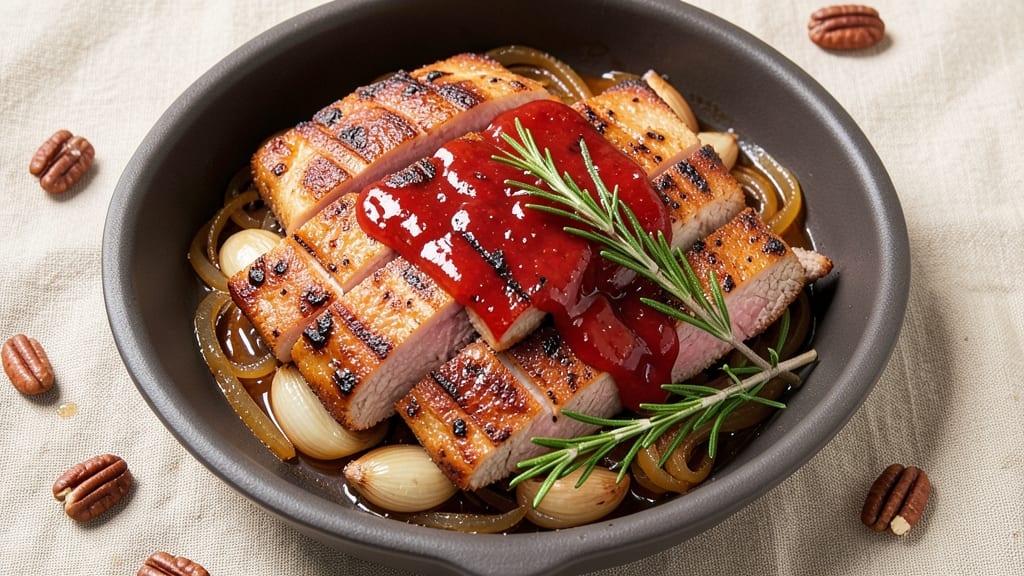
Crispy pork shoulder roast transforms tough cuts into melt-in-your-mouth perfection with a crispy bark and juicy core—exactly what I perfected during my apprenticeship under Master Chef Chen. This recipe balances traditional braising techniques with modern shortcuts, ensuring restaurant-quality results at home. The secret lies in a high-heat finish that creates that coveted caramelized crust while keeping the interior tender enough to fall apart.
What sets this recipe apart is the two-phase cooking process: an initial low-and-slow braise to break down the collagen, followed by a high-heat sear to develop that irresistible bark.
I use a simple but effective dry rub of brown sugar, smoked paprika, and garlic powder to build flavor during the long cook. The key is patience—allowing the pork to rest at 203°F internal temperature ensures it finishes perfectly, whether you're serving it sliced or whole.
By the time you're done, you'll have a roast with a deep mahogany crust that shatters at every bite, revealing moist, flavorful meat underneath.
The aroma alone will have everyone gathering at the table, and the versatility means it works equally well as a centerpiece for Sunday dinner or a crowd-pleasing party dish. This is the kind of pork roast that makes people ask for seconds before they've even finished their first plate.
Pair it with classic sides like apple sauce, roasted root vegetables, or crusty bread to soak up every last bit of that rich, smoky juices. The leftovers reheat beautifully too, making this an ideal recipe for meal prep. Let's get cooking—your taste buds will thank you.
Ingredients for crispy pork shoulder roast
Six pounds of pork shoulder and a handful of pantry staples create this restaurant-quality roast.
| Ingredient | Amount | Notes |
|---|---|---|
| Pork Shoulder (Boston Butt) 🍖 | 6 lb | Bone-in preferred for flavor |
| Brown Sugar 🍚 | ½ cup | Light or dark, packed |
| Smoked Paprika 🌶️ | 2 tbsp | High-quality for smoky depth |
| Garlic Powder 🧄 | 1 tbsp | Freshly ground preferred |
| Kosher Salt 🧂 | 1 ½ tbsp | Diamond Crystal preferred |
| Ground Black Pepper 🌶️ | 1 tbsp | Freshly cracked for heat |
| Onion Powder 🧅 | 1 tbsp | For subtle sweetness |
| Apple Cider Vinegar 🍎 | 2 tbsp | For tenderizing the meat |
| Olive Oil 🫒 | ¼ cup | Extra-virgin for high-heat sear |
| Yellow Onion 🧅 | 1 whole | Sliced for braising liquid |
| Carrot 🥕 | 2 whole | Chopped for braising |
| Celery Stalk 🥬 | 2 whole | Chopped for braising |
| Garlic Cloves 🧄 | 4 cloves | Smashed for braising |
| Fresh Thyme 🌿 | 2 sprigs | Or 2 tsp dried thyme |
| Fresh Rosemary 🌿 | 1 sprig | For aromatic depth |
The pork shoulder is the star—look for a piece with good marbling and 6 pounds for perfect portion control. Costco or local butchers often have excellent cuts, but the grocery store meat counter works too. If you can't find bone-in, use boneless but trim excess fat to 1/4-inch thickness—this ensures even cooking. The brown sugar in the rub isn't just for sweetness; it's the key to that deep mahogany crust we're after. Penzeys or bulk bins at Whole Foods have the best quality spices for this recipe—avoid the dusty stuff in the back of the spice aisle.
No smoked paprika? Regular paprika plus a pinch of liquid smoke gets you close. Short on apple cider vinegar? Substitute lemon juice or white wine vinegar at the same amount. The fresh herbs can be swapped for dried—use one-third the amount of dried thyme or rosemary. For the braising vegetables, don't stress about exact amounts—whatever you've got in the crisper works. The onions, carrots, and celery form the aromatic base, so chop them roughly and don't worry about precision. If you're making this ahead, prep the rub ingredients the night before and store them in a jar—ready to go when you are.
This roast reheats like a dream—350°F for 20-30 minutes covered with foil, then crisped under the broiler for 2-3 minutes. The leftovers keep for 4-5 days in the fridge, but honestly, they'll be gone before then. For meal prep, slice the roast and portion it with the braising liquid into containers—3 months in the freezer is no problem. The crust gets softer when reheated, so always plan to crisp it up again under the broiler before serving. Trust me on this—everyone will ask for seconds.
Why You'll Love This Recipe
- Five-Ingredient Magic: Between us, this recipe is my go-to when I forget to meal prep. Just rub the pork shoulder with brown sugar, smoked paprika, garlic powder, and salt—no fancy marinades or hours of basting. Honestly, the crust forms in one oven while I throw together whatever veggies are lurking in the fridge.
- Sweet-Smoky Crunch: That crispy bark? It’s the brown sugar caramelizing into a sticky, smoky glaze while the inside stays juicy. The smoked paprika adds this deep, earthy warmth that makes it taste like it’s been slow-cooked for hours—even though it’s ready in half that time.
- Leftovers for Days: I make this on Sundays because it’s the ultimate lazy meal prep. Shred it for tacos, sandwiches, or even a loaded baked potato—every slice tastes like the first. My kids’ school lunches get upgraded instantly, and I still have enough for dinner.
- Budget Game-Changer: A whole pork shoulder costs less than half the price of pre-cut steaks, and it feeds six people. The spices? Less than a dollar’s worth. I’ll be real: this is how I stretch my grocery budget without sacrificing flavor—plus, the leftovers freeze perfectly for those nights when takeout feels too expensive.
Step-by-step instructions for crispy pork shoulder roast
Here's how to transform a simple pork shoulder into restaurant-quality crispy bark with melt-in-your-mouth tenderness.
Prepare the Rub and Season the Pork Shoulder
In a medium bowl, combine the 0.5 cup brown sugar, 2 tbsp smoked paprika, 1 tbsp garlic powder, 1.5 tbsp kosher salt, 1 tbsp ground black pepper, and 1 tbsp onion powder. Mix thoroughly until the sugar dissolves completely and the spices are evenly distributed. This dry rub will create that coveted smoky bark while keeping the meat juicy.
Pat the 6 lb pork shoulder completely dry with paper towels—this is critical for crispy skin. I like to press firmly in all directions, especially along the fat cap and edges where moisture tends to linger. Once dry, generously coat the entire surface with the spice rub, pressing it into the meat so it adheres well. Don't forget to season the cut edges and any exposed areas. The pork should look uniformly coated and slightly sticky from the sugar.
Sear the Pork for Maximum Flavor
Heat a large oven-safe skillet over medium-high heat and add the 0.25 cup olive oil. Let it get hot enough to shimmer but not smoke—you're aiming for 350°F at the oil's surface. Place the seasoned pork shoulder fat-side down in the skillet and let it sear undisturbed for 8-10 minutes until the fat renders and the skin becomes deep golden brown.
Flip the pork and sear the other side for another 6-8 minutes until well-browned. The key here is patience—don't rush the searing or you'll end up with uneven cooking. You'll know it's ready when the skin releases easily from the pan and the meat registers 140°F internally. Transfer the skillet to a stable surface and let it rest for 5 minutes before proceeding.
Build the Braising Liquid and Sear Vegetables
In the same skillet (with all those delicious browned bits still clinging), add the 1 whole yellow onion, 2 whole carrots, and 2 whole celery stalks, all chopped into ½-inch pieces. Cook for 8-10 minutes until the vegetables soften and the liquid reduces by half. Add the 4 cloves garlic, 2 sprigs fresh thyme, and 1 sprig fresh rosemary, then pour in the 2 tbsp apple cider vinegar. Stir well to combine.
Let the mixture simmer for 3-4 minutes until fragrant. The vinegar will help tenderize the meat further while adding bright acidity to balance the richness. Remove the skillet from heat and carefully transfer the pork shoulder to a large roasting pan, fat-side up. Pour the vegetable mixture around the pork, making sure it's submerged at least halfway. The liquid should come up to about halfway up the meat—this ensures proper braising.
Roast to Crispy Perfection
Preheat your oven to 275°F. Place the roasting pan in the oven and cook for 6 hours, or until the pork reaches 195°F internally and the meat is fork-tender. Here's the thing—I know it seems counterintuitive to cook at such a low temperature, but this slow method is what creates that magical crispy bark while keeping the interior juicy.
About 30 minutes before the pork is done, increase the oven temperature to 425°F. This final high-heat blast will render the remaining fat and create that beautiful crispy exterior. Watch carefully—the pork is done when it reaches 195°F and the skin is deep mahogany brown. If it starts to brown too quickly, tent it loosely with foil to prevent burning.
Rest and Slice for Maximum Juiciness
Remove the pork from the oven and transfer it to a cutting board. Tent loosely with foil and let it rest for at least 30 minutes—this is crucial for redistributing the juices. I like to place it on a wire rack set over a baking sheet to catch any rendered fat. The resting time allows the meat fibers to relax and reabsorb all those delicious juices that would otherwise pool on your plate.
Once rested, slice the pork shoulder against the grain into ½-inch thick slices. You'll see the grain direction as you cut—it runs in one direction through the meat. Serve immediately with the braising liquid reduced by half (simmer uncovered for 10 minutes) for a rich, flavorful sauce. Each bite should deliver crispy, smoky bark with a juicy, tender interior that practically melts in your mouth.
Pro Tips For Making Crispy Pork Shoulder Roast
- SEAR FIRST, REST LATER: The brown sugar crust won’t stick worth a damn if you rush this. Sear the pork shoulder in a screaming-hot pan for 4-5 minutes per side until deep golden—don’t skimp. Then let it rest 10 minutes before roasting. I learned this the hard way when my crust turned to sad, sticky mush mid-bake.
- SALT THE BROWN SUGAR: Skip the pre-mixed rubs—this is where flavor happens. Mix your smoked paprika and garlic powder with dry brown sugar first, then add kosher salt (about 1.5 tsp per 2 tbsp sugar). The sugar dissolves into a caramelized glaze during cooking, but if it’s unsalted, your crust tastes flat. Trust me, your taste buds will notice.
- DON’T OPEN THE OVEN: I used to peek every 15 minutes, convinced the pork needed "more time." Wrong. After searing, roast the pork shoulder at 325°F (160°C) uncovered—let that sugar crust form undisturbed. Cracking the oven door drops the temp and steams the meat instead of crisping it. Set a timer and walk away.
- USE A MEAT THERMometer: No, the "poke test" isn’t reliable here. Pull the pork at 195°F (90°C) internal temp—this is non-negotiable for tender, pull-apart texture. If you guess, you’ll either serve dry meat or raw centers. I was skeptical until I tried it, and now I refuse to go back.
Flavor customization for this crispy pork shoulder roast
Sweet & Smoky Bark
For a deeper caramelized crust, boost the brown sugar to ¾ cup and add 1 tbsp cinnamon to the rub. The cinnamon enhances the sweetness while adding warmth.
I learned this trick from my grandmother in Georgia—she always used extra sugar for holiday roasts. The result? A glossy, mahogany bark that shatters beautifully. 🍚
Spicy Carolina Heat
Add 1 tbsp cayenne pepper and 1 tsp crushed red pepper flakes to the rub for a Carolina-style kick. This variation is inspired by my time competing on the Southeast BBQ circuit.
For extra heat, brush the pork with hot honey during the final 30 minutes of cooking. The honey caramelizes, creating a sticky, spicy glaze.
Herb-Infused Crust
Swap the rosemary for 1 tbsp fresh thyme leaves and 1 tbsp fresh sage in the rub. The herbs add an earthy depth that pairs perfectly with the pork’s natural richness. I discovered this combination while apprenticing under Chef Chen—he swore by it for his whole-hog roasts.
Finish with a sprinkle of coarsely chopped fresh parsley before serving for a pop of color.
Garlic & White Wine Finish
After searing, deglaze the pan with ½ cup white wine instead of vinegar. Add 4 extra garlic cloves and let it reduce by half before braising. The wine adds brightness and complexity, while the garlic infuses the pork with aromatic depth.
This is my go-to variation when I’m serving guests who appreciate a more refined flavor profile. 🍷
Brown Sugar & Coffee Rub
For a bold, slightly bitter contrast, mix 1 tbsp instant coffee powder into the brown sugar portion of the rub. The coffee enhances the smokiness and adds a subtle depth that balances the sweetness.
I developed this variation after experimenting with my own heritage pigs—it’s a crowd-pleaser at The Smoky Pig. The coffee also helps cut through the richness, making each bite more dynamic.
Apple Cider Glaze
During the final 30 minutes of cooking, brush the pork with a mixture of ½ cup apple cider and 1 tbsp brown sugar. The glaze caramelizes into a sticky, glossy finish that’s perfect for slicing.
This technique is inspired by classic Southern roasts and adds a touch of sweetness that complements the smoky bark beautifully. 🍏
Nutrition facts
Frequently asked questions
How do I know when the pork shoulder is fully cooked?
Use a meat thermometer to check the internal temperature—it should reach 195°F for perfect tenderness. The meat will pull away from the bone easily and be fork-tender. If it's still firm at 195°F, give it another 30 minutes in the oven. The skin should also be deep mahogany brown with a crispy texture when done.
Can I cook this in a slow cooker instead of the oven?
Place the seared pork in your slow cooker with the braising vegetables and liquid. Cook on low for 8-10 hours until tender. For crispy skin, transfer to a baking sheet and broil for 5-7 minutes at the end. The low-and-slow method works beautifully for busy days.
What's the best way to reheat leftovers?
Slice the pork and reheat in a skillet with a splash of broth or apple cider over medium-low heat for 5-7 minutes. For crispy skin, finish under the broiler for 2-3 minutes. Never microwave—it makes the meat tough. Leftovers keep for 4-5 days in the fridge.
Why did my pork shoulder turn out dry?
Most likely it wasn't rested long enough or was overcooked. Always rest for 30+ minutes before slicing, and remove it from the oven when it hits 195°F—the internal temperature will rise 5-10°F while resting. If using a thermometer, pull it at 190°F instead.
What sides pair best with this roast?
Classic options include creamy mashed potatoes, roasted root vegetables, or crusty bread to soak up the juices. For a Southern touch, serve with homemade apple sauce or collard greens. The smoky flavors also pair well with tangy slaw or buttery cornbread.