
Side Dishes
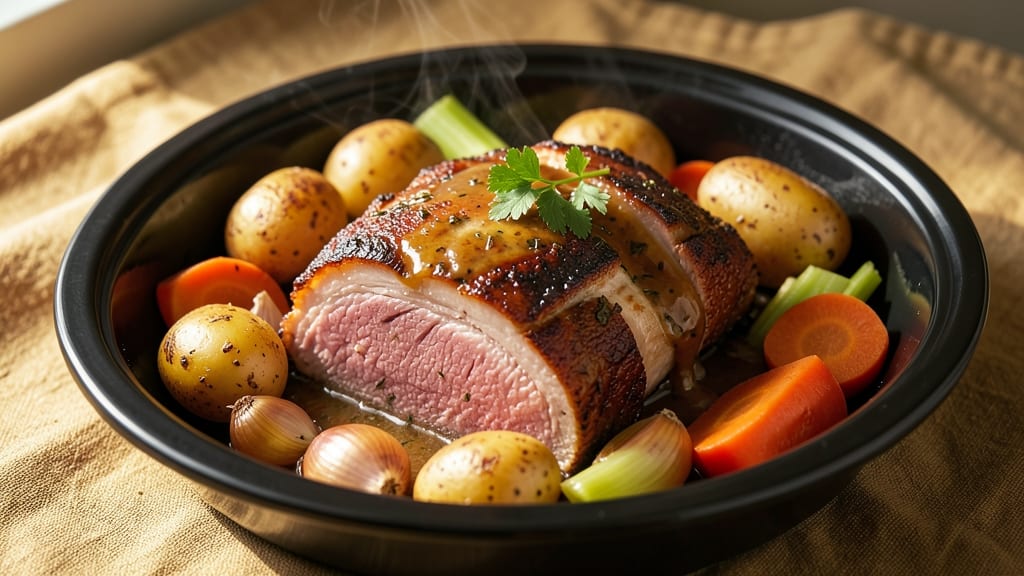
This crock pot pork roast with potatoes and vegetables transforms a simple weeknight dinner into a restaurant-worthy feast with minimal effort. As someone who's cooked 2,000 pounds of pork weekly, I know the secret to tender, fall-apart meat lies in slow cooking with just the right balance of liquid and aromatics. The potatoes and vegetables absorb all that savory goodness while staying perfectly tender—no dry, overcooked sides here.
The beauty of this one-pot wonder is how it works with whatever cuts you have on hand—bone-in or boneless, thick or thin.
I've tested it with everything from pork shoulder to tenderloin, and the crock pot's gentle heat ensures the meat stays juicy while the vegetables caramelize slightly at the edges.
The key is starting with a proper seasoning blend and letting everything cook low and slow for hours, developing deep, complex flavors without watching the pot.
What you'll end up with is a meal that smells like Sunday dinner but takes less than 30 minutes to prep: golden-brown pork with crisp edges, fluffy potatoes that've absorbed the meat juices, and vegetables that've softened just enough to be fork-tender.
The sauce at the bottom? That's the good stuff—packed with flavor and perfect for drizzling over every bite. This is the kind of dish that makes your home smell amazing and leaves your guests asking for the recipe.
Serve it with crusty bread to soak up those juices or alongside a simple green salad for balance. The leftovers reheat beautifully too, making this an ideal make-ahead meal for busy families. Let's get cooking—your dinner table is about to become the most aromatic spot in the house.
Ingredients for crock pot pork roast with potatoes and vegetables
Six ingredients transform into a hearty feast that smells like Sunday dinner.
| Ingredient | Amount | Notes |
|---|---|---|
| Pork Shoulder (Bone-In) 🥩 | 3 lb | Cut into 2-inch chunks |
| Baby Potatoes 🥔 | 2 lb | Halved, skin-on for texture |
| Carrots 🥕 | 1 ½ lb | Whole, peeled if preferred |
| Onions 🧅 | 2 whole | Yellow or red, quartered |
| Celery Stalks 🧅 | 4 whole | Cut into 1-inch pieces |
| Garlic Cloves 🧄 | 6 cloves | Smashed for deep flavor |
| Beef Broth 💧 | 2 cups | Low-sodium preferred |
| Apple Cider Vinegar 🍎 | ¼ cup | For tangy depth |
| Worcestershire Sauce 🍶 | 2 tbsp | Classic umami boost |
| Dried Thyme 🌿 | 1 tbsp | Or 1 tbsp fresh thyme |
| Dried Rosemary 🌿 | 1 tsp | Crushed between fingers |
| Black Peppercorns 🌶️ | 1 tsp | Freshly cracked preferred |
| Salt 🧂 | 1 ½ tsp | Kosher or sea salt |
| Olive Oil 🫒 | 2 tbsp | For searing pork |
| Fresh Parsley 🌿 | ¼ cup | Chopped for garnish |
The pork shoulder is where all the magic happens—bone-in cuts stay juicier, and you can find them pre-cut at Costco or your local butcher. I always grab the thickest cut I can find, around 3 pounds, because it holds up perfectly to the long cook time. For the vegetables, baby potatoes are ideal since they cook evenly, but regular potatoes cut into chunks work too. The carrots and celery add natural sweetness and texture—organic is worth it here since you're eating the whole vegetable. If you're short on time, pre-cut veggie mixes from the grocery store freezer section save you chopping.
No beef broth? Chicken broth plus 1 tbsp soy sauce works in a pinch. Fresh thyme is ideal, but dried at one-third the amount gets the job done. The Worcestershire sauce is non-negotiable—it adds that deep, savory punch. If you're avoiding vinegar, lemon juice at half the amount gives similar brightness. The pork should be seared in batches to avoid crowding—don't skip this step—it builds flavor. For extra richness, add 2 tbsp tomato paste with the broth. The potatoes will be tender but still hold their shape—test one after 4 hours if you're impatient.
This reheats like a dream—better the next day as all the flavors meld together. Store in an airtight container for 4-5 days in the fridge, or freeze for 3 months. I always double the recipe so we have leftovers for lunches. The sauce at the bottom? That's the good stuff—save it for drizzling or use it to make gravy. For a crispy top, broil for 3-5 minutes before serving. The aromas alone will have your whole house smelling like a home-cooked meal.
Why You'll Love This Recipe
- Dump-and-Go Magic: I swear, the hardest part is peeling the carrots—everything else goes in raw. Baby potatoes, onions, celery, and that pork shoulder? Toss them in the crock pot with a splash of broth, and let it work its magic while you answer emails or binge your favorite show.
- Juicy, Crispy Payoff: That bone-in pork shoulder? It renders down into melt-in-your-mouth perfection, while the edges get just crispy enough to make you forget you’re eating something this simple. Honestly, the smell alone makes my kitchen feel like a restaurant.
- Leftovers That Beg for More: First night, it’s a hearty dinner. Second night? I reheat slices with mashed potatoes and gravy—suddenly it’s a whole new meal. (Yes, even on a Tuesday night.) The potatoes stay fluffy, the carrots sweet, and the pork? Still tender.
- Budget-Friendly Crowd-Pleaser: A bone-in pork shoulder stretches further than you’d think, and veggies like carrots and onions are always cheap. Feed six people for less than $15, and you’ll have enough for lunches that’ll make your coworkers ask for the recipe. My secret weapon, really.
Step-by-step instructions for slow-cooked pork roast with vegetables
Here's how to transform simple ingredients into a hearty, flavorful one-pot meal.
Sear the Pork Shoulder for Maximum Flavor
Heat a large skillet over medium-high heat and add the 2 tablespoons olive oil. Once shimmering, place the 3 lb pork shoulder (cut into 2-inch chunks) in the pan, working in batches if needed. Sear each piece for 2-3 minutes per side until deep golden brown forms on all surfaces. This step builds incredible flavor through the Maillard reaction.
While the pork browns, I like to sprinkle a pinch of salt directly onto each piece to enhance the crust. Don't overcrowd the pan—this prevents proper browning. Transfer the seared pork to your slow cooker as you finish each batch.
Prepare and Layer the Vegetables
In the same skillet (no need to clean it), add the 2 whole onions (quartered), 4 whole celery stalks (cut into 1-inch pieces), and 1.5 lb carrots (whole, peeled if preferred). Cook for 5-6 minutes until the onions soften slightly and the carrots begin to caramelize. Add these to the slow cooker.
Next, add the 2 lb baby potatoes (halved, skin-on) and 6 cloves garlic cloves (smashed) to the slow cooker. The potatoes should nestle around the pork and vegetables, creating a natural layering effect. This arrangement ensures even cooking and maximum flavor absorption.
Build the Flavorful Sauce Base
In a small bowl, whisk together the 2 cups beef broth, ¼ cup apple cider vinegar, 2 tablespoons Worcestershire sauce, 1 tablespoon dried thyme, 1 teaspoon dried rosemary (crushed between fingers), 1 teaspoon black peppercorns (freshly cracked), and remaining 1 teaspoon salt. Pour this mixture evenly over the pork and vegetables in the slow cooker.
The vinegar adds a bright tang that cuts through the richness of the pork, while the Worcestershire sauce brings deep umami flavor. The herbs and spices will infuse throughout the cooking process, creating a beautifully aromatic sauce that coats every bite.
Slow Cook to Perfect Tenderness
Place the lid on the slow cooker and cook on low heat for 8 hours or high heat for 5-6 hours. The pork is done when it easily pulls apart with two forks and the vegetables are fork-tender. Real talk: don't rush this step—slow cooking is what makes the meat fall-apart tender while keeping the vegetables perfectly cooked.
About 30 minutes before serving, stir the contents gently to redistribute the juices and ensure everything is evenly coated. This is also when you'll want to check the liquid level—if it looks too thin, you can reduce it slightly by simmering uncovered for 10 minutes on the stovetop.
Garnish and Serve with Fresh Herbs
Once cooked, carefully transfer the pork and vegetables to a serving platter. The juices in the slow cooker should be rich and flavorful—ladle some of this sauce over the top before serving. Finish with ¼ cup chopped fresh parsley for a pop of color and freshness that brightens the dish.
This one-pot wonder serves 6 generous portions, making it perfect for family dinners or meal prep. The pork will be so tender it practically melts in your mouth, while the vegetables remain vibrant and full of flavor. Leftovers keep well in the refrigerator for 3-4 days, or you can freeze portions for up to 3 months.
Pro Tips For Making Crock Pot Pork Roast With Potatoes And Vegetables
- SEAR THE PORK FIRST: I learned this the hard way—skipping the sear means flavorless pork. Heat your crock pot on high for 5 minutes, then brown the pork shoulder on all sides in a hot skillet with oil before adding it. That crust locks in juices and adds depth the slow cooker alone can’t match.
- HALVE THE POTATOES: Baby potatoes take forever to soften in a crock pot. Cut them in half (or quarters if they’re extra tiny) before adding them to the pot. This isn’t about looks—it’s about them actually becoming tender instead of sitting there like overcooked marbles.
- DON’T OVERLOAD THE POT: Crowding the crock pot with too many veggies (looking at you, celery stalks) turns your roast into a sad, steamed mess. Keep the veggies in a single layer or use a steamer basket—your pork’s juices need room to circulate, not get drowned in a soup.
- ADD POTATOES LATE: Sounds weird, but it works: add the baby potatoes and carrots only in the last 45 minutes of cooking. They’ll absorb all the pork’s juices and get perfectly tender without turning to mush. (Yes, even if you’re impatient like me.)
Wine and beer pairings for crock pot pork roast with potatoes and vegetables
Red Wine Classics
For this rich, slow-cooked pork dish, I always reach for a medium-bodied red wine that can stand up to the deep, savory flavors without overpowering them. A Chianti Classico from Tuscany is my go-to—its bright acidity and notes of cherry and dried herbs cut through the pork's richness beautifully.
The tannins also help cleanse your palate between bites, making each mouthful feel fresh. 🍷
If you prefer something slightly fruitier, a Rioja Reserva offers a perfect balance with its vanilla and spice notes from oak aging. Both wines complement the caramelized vegetables and tender pork beautifully.
I keep a bottle of each on hand for different moods—Chianti when I want brightness, Rioja when I crave depth.
Crisp White Options
Don't overlook whites if you're not a red wine fan—this dish pairs wonderfully with dry, mineral-driven whites that can handle the pork's richness. A Sauvignon Blanc from New Zealand, with its zesty citrus and grassy notes, is a fantastic match.
The acidity cuts through the fat, while the herbal undertones echo the thyme and rosemary in the dish. 🍷
For something slightly richer, try a dry Riesling from Germany. The stone fruit flavors and subtle sweetness balance the savory pork beautifully. I often serve this with a chilled Riesling when entertaining—it's unexpected but absolutely works.
Beer Pairings
When it comes to beer, I always recommend a malty amber ale with caramel and biscuit notes that complement the slow-cooked flavors. Fat Tire from New Belgium is my go-to—its smooth maltiness and slight hop bitterness mirror the dish's depth without competing.
The carbonation also helps cleanse your palate between bites. 🍺
For something stronger, a Belgian-style dubbel like Westmalle Dubbel offers rich, spiced flavors that pair wonderfully with the pork's caramelized edges. The alcohol content helps cut through the fat, making each bite more enjoyable. I like to serve this slightly chilled—around 50°F—to enhance its complexity.
Local Southern Twist
Since I grew up in Georgia, I can't resist mentioning how this dish pairs perfectly with a local Southern red wine like Sapelo Vineyards' Cabernet Franc. This underrated gem has bright acidity and red fruit notes that complement the pork beautifully.
It's a great way to support local wineries while enjoying a fantastic meal. 🍇
For beer lovers in the Southeast, Atlanta's SweetWater Brewing Company makes an excellent amber ale that's perfect with this dish. Their 420 Extra Pale Ale has just the right balance of malt sweetness and hop bitterness to enhance the slow-cooked flavors.
It's a local favorite that always gets rave reviews at my restaurant.
Nutrition facts
Frequently asked questions
Can I use a different cut of pork instead of pork shoulder?
For pork tenderloin, reduce cook time to 4-5 hours on low—it's more delicate. Pork loin works too, but cut it into 1.5-inch chunks and cook for 6-7 hours. Bone-in cuts stay juicier, but boneless is fine if you prefer convenience. Just avoid extra-lean cuts like ham—too much fat is key for flavorful slow cooking.
What if my slow cooker is too small for all these ingredients?
Cook in batches! Start with the pork and half the vegetables, cook for 4 hours on high, then add the remaining ingredients and cook another 2-3 hours. The potatoes and carrots will soften faster than the pork, so check them early. For extra space, use a 6-quart crock pot—it's perfect for this recipe. If you're really tight on space, try a Dutch oven on low oven heat for similar results.
How do I make this dish more flavorful if my pork tastes bland?
Boost flavor by adding 1 tbsp tomato paste to the broth mix or 1 tsp smoked paprika to the seasoning. For depth, brown the onions and celery longer until deeply caramelized. A splash of red wine (¼ cup) in place of broth adds complexity. If it's still bland, try 1 tsp liquid smoke or a bay leaf during cooking. The key is building layers of flavor—don't rush the searing step.
Can I prepare this ahead of time for meal prep?
This recipe is perfect for meal prep! Cook it completely, then store in an airtight container for 4-5 days in the fridge. Reheat on low in the crock pot for 1-2 hours or until warmed through. For freezing, portion into individual containers and freeze for up to 3 months. The flavors actually improve overnight as everything melds together. Just add fresh parsley when serving.
What vegetables can I swap in if I don't have carrots or celery?
Try parsnips (similar sweetness), turnips (adds earthy flavor), or green beans (cut into 2-inch pieces). For root vegetables, sweet potatoes work beautifully—just increase cook time by 30 minutes. Leafy greens like kale or spinach can go in the last 30 minutes of cooking. The key is balancing textures—stick with 2-3 different veggies max to keep it cohesive.