
Main Courses
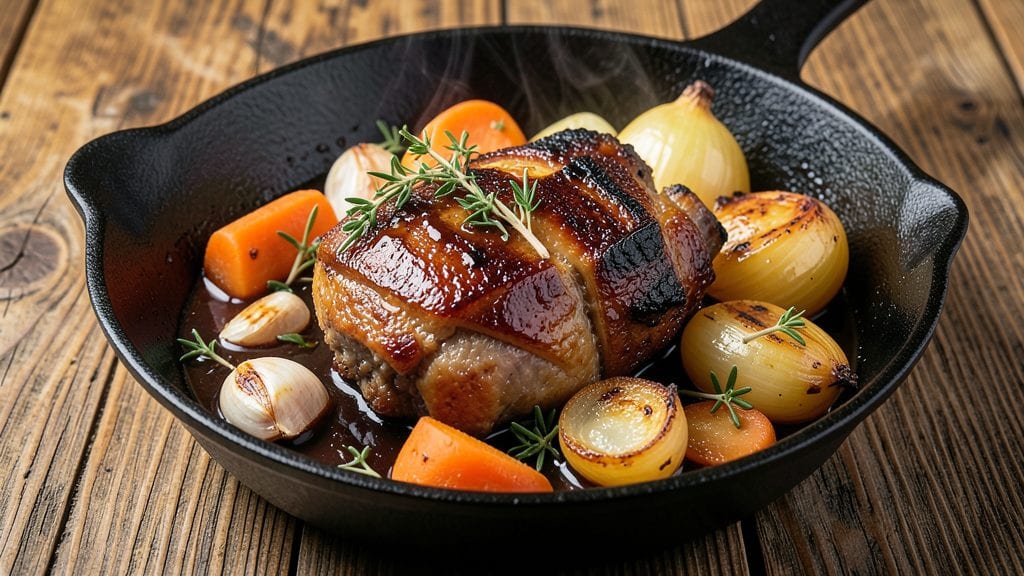
This German-style pork hock recipe delivers the kind of fall-apart richness that makes every bite worth the wait. Growing up in small-town Georgia, I learned how slow-cooked pork transforms tough cuts into melt-in-your-mouth perfection—just like my grandmother’s Schweinehaxe.
The secret lies in a dark beer braise that tenderizes the meat while infusing it with malty depth, balanced by aromatic bay leaves and peppercorns. My heritage Gloucestershire Old Spots pigs add a natural richness that store-bought cuts can’t match.
The process is straightforward but requires patience: sear the hock to lock in flavors, then slow-braise until the meat practically disintegrates. A mustard-mustard sauce ties everything together, cutting through the richness while adding a tangy contrast.
This isn’t just a dish—it’s a restaurant-quality centerpiece that pairs beautifully with kartoffelpüree or crisp salzkartoffeln. The aroma alone will have your kitchen smelling like a Bavarian beer hall.
By the time you’re done, you’ll have juicy, caramelized pork that falls apart at the touch, swimming in a glossy sauce with layers of flavor. The key is low-and-slow cooking—no rushing, just deep, satisfying results.
Whether you’re hosting a family dinner or treating yourself to a Sunday feast, this recipe delivers the kind of comfort that feels like home. Let’s get started on creating something truly special.
For those looking to modernize the classic, try a honey-glaze variation or smoked paprika for extra depth. The sides are just as important—think rotkohl for acidity or buttery mashed potatoes to soak up every last bit of sauce.
This dish is worth the time, and the leftovers? Even better the next day. Trust me, once you try it, you’ll never go back to store-bought cuts.
Ingredients for german style pork hock
Pantry staples meet heritage flavors in this slow-braised pork hock masterpiece.
| Ingredient | Amount | Notes |
|---|---|---|
| Pork Hock 🥩 | 2 lb | Heritage Gloucestershire Old Spots preferred |
| Dark Beer 🍺 | 2 cups | Dortmunder or Munich Dunkel preferred |
| Yellow Onions 🧅 | 1 whole | Medium, sliced into half-moons |
| Garlic Cloves 🧄 | 6 cloves | Smash lightly before adding |
| Carrots 🥕 | 4 medium | Peeled, cut into 1-inch chunks |
| Fresh Thyme 🌿 | 2 sprigs | Or 1 tsp dried thyme |
| Fresh Bay Leaves 🍃 | 2 whole | High-quality, not dried |
| Black Peppercorns 🌶️ | 1 tbsp | Crushed, not ground |
| Dijon Mustard 🍯 | 2 tbsp | High-quality, no additives |
| Whole Grain Mustard 🌾 | 1 tbsp | For texture contrast |
| Unsalted Butter 🧈 | 2 tbsp | Cold, cubed for sauce |
| Apple Cider Vinegar 🍏 | 1 tbsp | For sauce brightness |
| Kosher Salt 🧂 | 1 ½ tsp | Diamond Crystal preferred |
| Olive Oil 🫒 | 2 tbsp | For searing pork |
| All-Purpose Flour 🌾 | 1 tbsp | For sauce thickening |
The pork hock is the star—heritage Gloucestershire Old Spots adds unmatched richness, but any bone-in cut works. Look for hocks with good marbling at Whole Foods or your butcher. If you can't find heritage pork, local farm-raised is the next best thing. The beer matters too—Dortmunder or Munich Dunkel gives that malty depth, but any dark lager in a bottle works. Avoid light beers or those with artificial flavors. For the mustards, Maille Dijon and French's whole grain are my go-tos, but any quality brands will do. Fresh bay leaves make all the difference here—dried just won't cut it.
No dark beer? Substitute beef broth with 1 tbsp molasses for depth. Running low on Dijon? Whole grain mustard plus 1 tsp sugar mimics the balance. The carrots can be baby carrots if that's what you've got—just adjust the amount to keep it roughly 4 medium. Fresh thyme is ideal, but dried works at one-third the amount. For the peppercorns, crushing them lightly (not grinding) releases flavor without bitterness. If you're short on time, pre-cut the onions and carrots while the pork sears—they'll soften beautifully in the braise.
This dish tastes even better the next day—plan ahead. The braised pork keeps 4-5 days in the fridge, and the sauce freezes beautifully for 3 months. I always make a double batch and freeze portions for lazy weeknights. For serving, let the pork rest 15 minutes before slicing—this keeps it juicy. The sauce will thicken as it cools, so add a splash of beer or broth if it's too stiff when reheating. Trust me, the leftovers are worth every minute of waiting.
Why You'll Love This Recipe
- No-Fuss Dutch Oven Magic: That sear-and-braise method? It’s basically hands-off after the first 15 minutes. You’re searing the pork hock for crispy perfection, then just simmering while your kitchen fills with that incredible beer-and-thyme aroma. No constant stirring, no stress—just the occasional check to top off the water. I’ll admit, I’ve left it unattended for entire movie marathons while it cooks.
- Dark Beer Depth Bomb: The dark beer isn’t just for show—it’s the secret weapon. That Dortmunder or Munich Dunkel caramelizes into a rich, slightly malty sauce that clings to the pork like a hug. Pair it with the smoky garlic, the peppery mustard, and the crispy edges? Honestly, this isn’t just pork—it’s a flavor experience that’ll make you question why you ever ate bland braises.
- Leftover Powerhouse: This dish gets better the next day. The pork becomes fall-apart tender, the sauce thickens into something velvety, and honestly, I’ve eaten it cold in sandwiches for lunch three days in a row. Freeze the sauce for months, reheat it, and boom—you’ve got a 20-minute meal ready when you’re craving that German comfort. My kids even ask for seconds, and they’re not big on leftovers.
- Budget’s Best Kept Secret: Pork hocks are cheaper than steak, and that dark beer? A six-pack costs less than a fancy cut of meat. You’re using every ingredient—even the carrots and onions—to build layers of flavor without breaking the bank. Plus, the mustard and vinegar finish? A few dollars’ worth of pantry staples that make the whole dish feel special. It’s the kind of meal that stretches your grocery budget while making your taste buds sing.
Step-by-step instructions for German style pork hock
Here's how to transform a simple pork hock into a rich, fall-apart masterpiece with deep beer flavors and tender vegetables.
Sear the Pork Hock for Maximum Flavor
Heat a large Dutch oven over medium-high heat until hot. Add the 2 tbsp olive oil and swirl to coat the bottom evenly. Place the 2 lb pork hock fat-side down in the pot and sear undisturbed for 8-10 minutes until the fat renders and the skin develops a deep golden-brown crust. This step creates the flavor foundation through the Maillard reaction.
Flip the pork hock and continue searing for another 5-7 minutes on the second side until equally browned. Real talk: If you see excess fat pooling, remove some with a paper towel—too much fat can dilute the beer's flavor later. The goal is crispy, caramelized skin that locks in moisture during the long braise.
Build the Braising Liquid with Aromatics
Remove the seared pork hock and set it aside. In the same pot, add 1 yellow onion sliced into half-moons and 4 medium carrots cut into 1-inch chunks. Cook for 5 minutes until the onions soften slightly and the carrots begin to color. Add the 6 garlic cloves (lightly smashed) and cook for 30 seconds until fragrant—don't let them brown or they'll turn bitter.
Deglaze the pot immediately with the 2 cups dark beer, scraping up all the browned bits from the bottom. This step captures all the flavor you worked so hard to create. Add 2 sprigs fresh thyme, 2 fresh bay leaves, and 1 tbsp black peppercorns (crushed between your fingers). Stir in the 2 tbsp Dijon mustard and 1 tbsp whole grain mustard—these will add depth and texture to the final sauce.
Braise Until Fork-Tender
Return the pork hock to the pot, fat-side up. Add 1½ tsp kosher salt and 2 cups water to come about halfway up the side of the pork hock. Bring to a gentle simmer over medium-low heat, then reduce to a bare simmer. Here's the thing—you want bubbles breaking the surface occasionally, but not a rolling boil that would toughen the meat.
Cover the pot and braise for 2½ to 3 hours until the pork hock is fork-tender and the meat pulls away from the bone easily. Check periodically and add ½ cup hot water if the liquid reduces too much. The pork is done when a knife slides in like butter and the meat separates at the touch of your fork. Your kitchen will smell like a German beer hall—worth every minute.
Finish with Butter and Vinegar
Once the pork is tender, remove it from the pot and set it aside to rest. Skim any excess fat from the braising liquid, then increase heat to medium. Whisk in the 1 tbsp all-purpose flour to thicken the sauce slightly. Add the 2 tbsp unsalted butter (cold and cubed) and 1 tbsp apple cider vinegar—this brightens the rich flavors and adds a touch of tang that cuts through the meat's richness.
Simmer for 3-5 minutes until the sauce thickens enough to coat the back of a spoon. Taste and adjust seasoning with additional salt if needed. The sauce should be velvety with just enough body to cling to the pork. Here's where it gets fun—toss the pork hock in the sauce to coat it thoroughly before serving.
Pro Tips For Making German Style Pork Hock
- Don’t Rush the Sear: Let that pork hock sit undisturbed for the full 8-10 minutes on the first side—yes, even if it looks like nothing’s happening. I used to flip it too soon, and the crust never got that deep, caramelized crunch that actually locks in flavor. The Maillard reaction needs time, and cutting corners here means a weaker foundation for the whole dish.
- Smash That Garlic Right: Crush those 6 garlic cloves with the flat of your knife or a heavy spoon—just enough to bruise the skins, not mash them into paste. Whole cloves that stay intact will infuse the beer without turning bitter, but if you go full purée, you’ll end up with a harsh, overpowering flavor that fights the mustard and beer instead of playing nice.
- Skim Fat Before Thickening: After braising, skim all the excess fat from the liquid before adding the flour and butter—this isn’t optional. Too much fat will make your sauce greasy instead of velvety, and the cold butter cubes won’t emulsify properly. I learned this after serving a sauce that looked like it was swimming in oil, and trust me, you don’t want that.
- Use Cold Butter Cubes: Toss those 2 tablespoons of unsalted butter into the sauce cold and in chunks—not melted, not softened, just straight from the fridge. This creates little pockets of richness that melt into the sauce as it simmers, giving it that glossy, luxurious finish. If you melt it first, you’ll just end up with a thin, buttery glaze instead of a proper sauce.
Essential equipment for this recipe
Vintage Dutch Oven
This recipe lives or dies in a heavy-bottomed Dutch oven, and I swear by my Lodge 7.5-quart cast iron—it’s been in my family for generations.
The thick enamel coating ensures even heat distribution, and the cast iron retains heat like a dream during the 2½ to 3 hours braise. If you don’t have one, a Le Creuset works beautifully too, though it’s pricier. Avoid thin, lightweight pots—they’ll burn the bottom and ruin your sauce. 🔥
Digital Meat Thermometer
You need a reliable thermometer for this dish. I use my Thermoworks Smoke probe thermometer because it’s accurate down to 1°F increments. Insert it into the thickest part of the pork hock—when it hits 165°F internal temperature, it’s done.
No guesswork, no dry meat. Pro tip: Clean the probe with a damp paper towel before each use to prevent flavor transfer. ⚡
Crushing Mortar
For the black peppercorns and bay leaves, a simple mortar and pestle is your best friend. I keep a vintage granite mortar from Charleston markets on my counter—it crushes the peppercorns just enough to release their oils without turning them bitter.
If you don’t have one, use the side of a knife or a clean wine bottle. Fresh bay leaves? Crush them lightly to break their cell walls and let the aroma shine. 🌿
Fine-Mesh Strainer
After braising, you’ll skim excess fat from the sauce. A fine-mesh stainless steel strainer is essential—it catches all the solids while letting the liquid through. I use a OXO Good Grips one because the ergonomic handle makes it easy to maneuver over the pot.
Skim the fat before thickening the sauce—it’ll make your gravy look silky and professional. 🥄
Cast Iron Searing Pan
For the initial sear, I switch to my Lodge 12-inch cast iron skillet because it holds more heat than a Dutch oven. The fat renders faster, and the pork develops that Maillard reaction crust in 8-10 minutes.
If you don’t have a cast iron, a heavy stainless steel pan works, but preheat it longer to avoid hot spots. Just don’t use nonstick—it’ll melt and ruin your dish. 💛
Nutrition facts
Frequently asked questions
Why does this recipe use dark beer instead of regular beer?
Dark beer like Dortmunder or Munich Dunkel adds depth and malty sweetness that light beers can't match. The robust flavors enhance the pork's richness while balancing the tangy mustard sauce. If you can't find dark beer, substitute beef broth with a teaspoon of molasses for similar depth.
How do I know when the pork hock is fully cooked?
Use a meat thermometer to check the thickest part—it should reach 165°F. The pork is done when it pulls apart easily with a fork and the meat separates from the bone. Your kitchen will smell irresistible, like a German beer hall!
Can I skip the searing step if I'm short on time?
Searing is crucial for flavor development through the Maillard reaction. While you could skip it, your pork won't have that delicious caramelized crust. If pressed, just sear for 3-4 minutes per side to capture some flavor—it's still better than no sear at all.
What should I serve with this German-style pork hock?
Classic pairings include creamy mashed potatoes, buttery salzkartoffeln (boiled potatoes), or tangy rotkohl (sauerkraut). A simple green salad with a light vinaigrette also balances the rich flavors beautifully.