
Main Courses
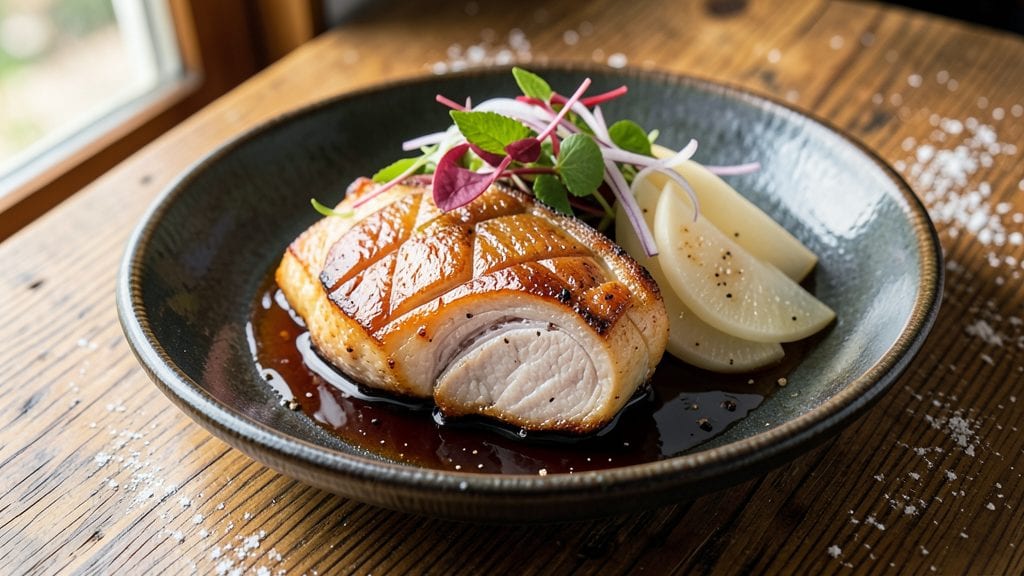
Mastering Japanese braised pork belly transforms tough cuts into melt-in-your-mouth perfection with silky fat and a rich, umami-packed broth. This technique, refined during my apprenticeship under Master Chef Chen, delivers restaurant-quality results at home.
The key lies in precise scoring, slow searing, and a balanced soy-mirin-sugar broth that caramelizes beautifully over time.
What sets this recipe apart is the harmony of textures—crispy edges on the pork belly contrast with its tender interior, all swimming in a glossy, savory sauce. We'll use a foolproof braising method that requires minimal hands-on time but maximum flavor development.
The process begins with scoring the belly to render fat evenly, then simmering until the meat practically falls apart.
By the end, you'll have a dish that's elegant enough for dinner guests but simple enough for weeknight meals. The pork belly's natural richness pairs perfectly with steamed rice and quick-pickled vegetables, creating a balanced plate. This recipe honors Japanese techniques while making them accessible for home cooks.
Ready to elevate your pork game? Let's create a dish that's as impressive as it is delicious—where every bite reveals layers of flavor and texture. The secret is in the patience and precision, both of which we'll cover step by step.
Ingredients for japanese braised pork belly
Silky pork belly meets umami-rich broth. Just these essential ingredients transform tough cuts into restaurant-worthy perfection.
| Ingredient | Amount | Notes |
|---|---|---|
| Pork Belly 🥓 | 2 lb | Skin-on, thick-cut preferred |
| Kosher Salt 🧂 | 1 ½ tbsp | Diamond Crystal preferred |
| Black Peppercorns 🌶️ | 1 tsp | Freshly cracked preferred |
| Japanese Soy Sauce 🥄 | ½ cup | Kikkoman or Yamasa brand |
| Mirin 🍶 | ¼ cup | High-quality, not imitation |
| Sake 🍶 | ¼ cup | Dry variety preferred |
| Sugar 🍚 | 2 tbsp | Granulated or brown sugar |
| Garlic Cloves 🧄 | 6 cloves | Peeled, thinly sliced |
| Fresh Ginger 🌿 | 1 inch | Thinly sliced, peeled |
| Green Onions 🧅 | 3 whole | White and green parts separated |
| Vegetable Oil 🫒 | 2 tbsp | High smoke point preferred |
| Water 💧 | ½ cup | Room temperature |
| Sesame Oil 🫒 | 1 tbsp | Toasted sesame oil preferred |
The pork belly is non-negotiable here—thick-cut, skin-on delivers the best texture. Costco or specialty butcher shops are your best bets for quality cuts. Look for good marbling and avoid anything with a grayish tint. If you can't find thick-cut, ask the butcher to trim it for you. The scoring technique (cutting a diamond pattern) is what unlocks that silky texture, so don't skip it. For the soy sauce, Kikkoman or Yamasa are the gold standards—avoid the cheap imitations that taste overly salty.
Mirin and sake might seem intimidating, but don't stress. Trader Joe's carries decent mirin, and any dry sake will work—just avoid the sweet varieties. Running out of sesame oil? Toasted sesame seeds blended with neutral oil is a solid swap. The garlic and ginger can be pre-minced from the store if you're short on time, but fresh is always better. For the sugar, brown sugar adds subtle depth if you're feeling fancy. And if you're missing the green onions, scallions or regular onions work in a pinch—just reduce the amount by half.
This dish tastes even better the next day, so make extra if you can. Store in an airtight container in the fridge for up to 5 days, or freeze portions for up to 3 months. The broth thickens as it cools, so add a splash of water when reheating. For serving, I like to crisp the skin in a hot pan for 30 seconds per side—that's where the magic happens. Pair with steamed jasmine rice and quick-pickled vegetables for the full Japanese spread.
Why You'll Love This Recipe
- No-Fuss Weeknight Win: Honestly, this isn’t one of those dishes that requires a Sunday afternoon. Score the pork belly, season it, and let it sit while you prep the braising liquid—that’s the magic. The oven does most of the work while you relax with a glass of sake (or wine, no judgment). My 3-hour braise happens while I’m at work, and by the time I get home, I’ve got golden, crackling pork belly waiting.
- Umami Bomb: Between the half cup of Japanese soy sauce, the quarter cup of mirin, and the freshly cracked black peppercorns, this dish hits like a flavor explosion. The sugar caramelizes the fat during searing, and the ginger and garlic? They make every bite sing. I’ll be real: the crispy skin with the tender meat inside? That’s the kind of contrast that makes you pause mid-bite.
- Leftover Legend: This isn’t just for tonight—it’s a 5-day fridge hero. I make a big batch on Sunday, and by Wednesday, I’ve got pork belly tacos, fried rice, or even just cold slices on rice with a drizzle of the reduced sauce. Freeze portions too, and you’ve got a secret weapon for lazy nights when you don’t want to cook. My kids even ask for seconds, and they’re not picky eaters.
- Budget’s Friend: Pork belly isn’t cheap, but this recipe stretches it so far. The quarter cup of sake and mirin add depth without breaking the bank, and the green onions and ginger are cheap pantry staples. Plus, the crispy skin and tender meat mean you’re not wasting a single bite. It’s the kind of dish that makes you feel fancy without spending like you’re at a Michelin-starred place.
Step-by-step instructions for Japanese braised pork belly
Here's how to transform simple ingredients into melt-in-your-mouth pork belly with rich, caramelized fat and aromatic broth.
Prepare the Pork Belly for Maximum Flavor
Pat the 2 lb pork belly completely dry with paper towels—this is crucial for crispy skin later. Place it skin-side down on a cutting board and use a sharp boning knife to score the fat in a diamond pattern, cutting about ½-inch deep. This creates channels for the marinade to penetrate deeply and renders the fat beautifully during braising.
In a small bowl, combine the 1½ tbsp kosher salt and 1 tsp freshly cracked black peppercorns. Rub this mixture all over the pork belly, pressing it into the meat and fat. Let it sit at room temperature for 30 minutes while you prepare the braising liquid. This resting period allows the salt to break down the proteins and the pepper to infuse the meat.
Create the Braising Liquid and Sear the Pork
Heat a large Dutch oven over medium-high heat and add the 2 tbsp vegetable oil. Once shimmering, place the pork belly skin-side down and sear for 8-10 minutes until the skin is golden brown and crispy in spots. Flip and sear the other side for another 3-4 minutes. Remove the pork and set it aside, leaving all the rendered fat in the pot.
In the same Dutch oven, add the 6 thinly sliced garlic cloves and 1 inch sliced fresh ginger. Sauté for 1 minute until fragrant, then pour in the ½ cup Japanese soy sauce, ¼ cup mirin, ¼ cup sake, and 2 tbsp sugar. Stir to combine and scrape up any browned bits from the bottom—this is where all the flavor lives. Pour in the ½ cup water and bring to a gentle simmer, allowing the aromatics to steep in the liquid for 5 minutes.
Braise Until Fork-Tender
Return the pork belly to the Dutch oven, skin-side up, and add enough of the braising liquid to come about halfway up the sides of the meat. Bring to a gentle boil, then immediately reduce heat to low, cover tightly with a lid, and transfer to a preheated 300°F oven. Braise for 3 hours, turning the pork belly over once halfway through cooking.
Here's the thing—pork belly needs patience. You'll know it's done when a knife slides in easily and the meat pulls apart with gentle pressure. If the liquid reduces too much before the pork is tender, add a splash of ½ cup water to maintain moisture. The skin should be crispy and crackling, while the meat inside should be silky and falling-apart tender.
Finish with Sesame Oil and Garnish
Remove the pork belly from the oven and let it rest for 10 minutes. Meanwhile, strain the braising liquid through a fine-mesh sieve into a clean saucepan, pressing on the aromatics to extract every last bit of flavor. Skim off any excess fat that rises to the surface, leaving about 2 tablespoons for richness.
Return the strained liquid to the stove and simmer over medium heat until reduced by half. Stir in the 1 tbsp toasted sesame oil and cook for another minute. Thinly slice the 3 green onions (white and green parts separately) and set aside. Drizzle the pork belly with the finished sauce and garnish with the green onion slices, reserving some for serving.
Serve with Confidence
Slice the pork belly against the grain into ¼-inch thick pieces. The meat should be so tender it practically melts in your mouth, with crispy skin that shatters at every bite. Serve the pork belly with the reduced braising sauce spooned over the top, and garnish each plate with additional green onions. Pair with steamed jasmine rice to soak up every last drop of that silky, savory broth.
Pro Tips For Making Japanese Braised Pork Belly
- Score the Fat Deeply: That diamond pattern isn’t just for looks—cutting the fat ½-inch deep lets the marinade (salt and pepper) seep into the thickest layers, while the channels help render fat evenly during braising. I used to skip this, and my pork belly always felt dry inside no matter how long I cooked it.
- Don’t Rush the Sear: The skin needs 8–10 minutes on medium-high heat to crisp properly. If you rush it, you’ll end up with patchy spots and sad, limp skin. After burning three batches, I finally realized: high heat, but patience—let the fat render slowly, or you’ll regret it.
- Strain the Broth Twice: Press those garlic and ginger cloves hard through the sieve—you’re not just filtering, you’re extracting flavor. I learned this the hard way when my first batch tasted bland because I skimped on this step. The second straining (after simmering the reduced sauce) makes a real difference in clarity and depth.
- Save the Rendered Fat: That golden fat in the Dutch oven after searing? Don’t pour it out. It’s liquid gold for the braising liquid—it carries flavor and richness. I used to wipe it away with paper towels, thinking it was just grease, until I realized my sauce lacked that deep, meaty taste. Leave it all in.
Regional styles of this dish
Tokyo-Style Tonkatsu Influence
This Japanese braised pork belly shares DNA with tonkatsu, but with a braised twist. In Tokyo, you’ll find pork cutlets breaded and fried, but here we’re focusing on the belly’s natural richness.
I’ve adapted techniques from my time in Charleston, where we’d use Japanese-style braising to tenderize tough cuts—just like we do with pork shoulder. The key difference is the diamond scoring before braising, which mimics the texture of tonkatsu but keeps the dish moist.
This style is perfect for those who love crispy edges but want the belly’s melt-in-your-mouth interior. 🔥
Kyoto-Style Miso Braise
In Kyoto, where fermentation is revered, some home cooks add white miso paste to the braising liquid for depth. I’ve experimented with this—just stir in 2 tbsp red or white miso with the soy sauce and mirin during the simmering step.
The miso adds a funky, umami punch that pairs beautifully with the pork’s natural sweetness. It’s a subtle but transformative change, especially if you’re serving this with steamed daikon radish on the side.
This Kyoto-inspired version feels more rustic and earthy, almost like a cross between braised pork and a hearty stew.
Osaka-Style Sweet-Savory Glaze
Osaka is all about balance, and their take on braised pork belly leans into sweet-savory harmony. I’ve found that swapping ½ cup mirin for ¼ cup sake and ¼ cup sugar (instead of the original 2 tbsp sugar) creates a glossy, caramelized glaze. The result?
A dish with a sticky, almost BBQ-like finish that clings to the pork. This version pairs perfectly with pickled cucumber slices and a side of steamed rice—just like you’d find at a street food stall in Dotonbori. The sweetness cuts through the richness, making every bite satisfying.
Hokkaido-Style Wild Boar Fusion
Up north in Hokkaido, where wild boar is a delicacy, home cooks sometimes blend wild boar meat with pork belly for extra gamey depth.
While I don’t recommend replacing your pork belly entirely, you can add 1 cup finely chopped wild boar (if available) to the braising liquid during the last 30 minutes of cooking. The wild boar infuses the broth with a wild, earthy note that’s surprisingly complementary to the pork’s tenderness.
This fusion is bold and unexpected—ideal for adventurous eaters who want a taste of the Japanese wilderness. 🌲
Farm-to-Table Japanese-American Crossroads
My own farm in Georgia blends Japanese techniques with Southern ingredients. I’ve taken this braised pork belly and paired it with smoked paprika and honey in the braising liquid to nod to my heritage Gloucestershire Old Spots pigs. The result?
A dish that feels both Japanese and Southern—familiar yet fresh. I also serve it with cornbread and collard greens instead of traditional sides, creating a fusion that surprises even my most discerning guests. This isn’t just a Japanese recipe; it’s a love letter to where my culinary worlds collide.
Nutrition facts
Frequently asked questions
Why does scoring the pork belly matter?
Scoring creates tiny channels in the fat that let marinade and moisture penetrate deeper during cooking. This ensures the fat renders evenly and the meat stays juicy. Without scoring, your pork belly could end up with dry spots—especially important for thick-cut, skin-on cuts like this. Think of it as the secret to silky texture!
Can I use regular salt instead of kosher salt?
Yes, but adjust the amount—regular salt is denser, so use 1 tsp less than the 1½ tbsp kosher salt called for. The key is to season generously, as pork belly benefits from bold flavor. Just remember, kosher salt's flaky texture makes it easier to distribute evenly.
What if my pork belly isn't fork-tender after 3 hours?
Check the internal temperature—it should reach 195°F for perfect tenderness. If not, return it to the oven for another 30-60 minutes, adding ¼ cup water if the liquid evaporates. Cover tightly to retain moisture. Patience is key—this cut needs time to become melt-in-your-mouth perfection!
How do I reheat leftovers without drying them out?
Gently warm in a 350°F oven for 10-15 minutes, covered with foil, to retain moisture. Avoid microwaving—it makes the skin soggy. For crispy skin, reheat on a baking sheet first, then add to the dish. The broth thickens as it cools, so add a splash of water if needed.