
Recipes/Cooking
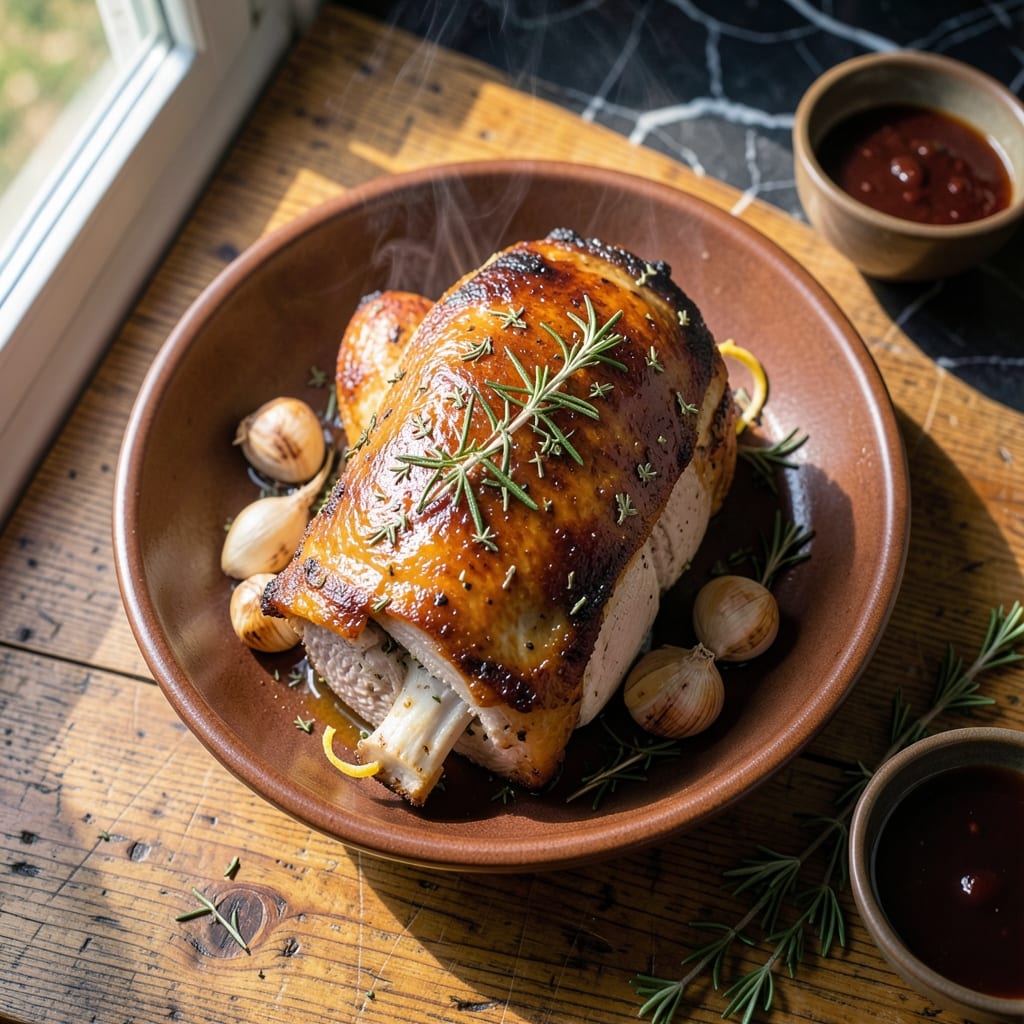
This New Year's Day pork roast recipe celebrates tradition with a modern twist. Growing up in Georgia, I learned early that pork belongs at the center of every holiday table. This herb-crusted version honors that heritage while delivering restaurant-quality results.
The secret lies in a simple but effective dry brine and herb crust. I developed this method during my years at The Smoky Pig, perfecting the balance between crispy exterior and tender interior. The aromatics create a crust that locks in juices while adding complex flavor.
What emerges from the oven is a golden-brown roast with fragrant herbs and juices that beg to be soaked up with bread. The meat stays moist and flavorful, with a crust that provides satisfying texture in every bite.
Perfect for feeding a crowd or creating leftovers that taste even better the next day. This is the kind of dish that starts new traditions while honoring the old.
Ingredients for new year's day pork roast
Big flavor from simple ingredients. Perfect for a holiday centerpiece everyone remembers.
| Ingredient | Amount | Notes |
|---|---|---|
| Bone-In Pork Shoulder Roast 🥩 | 4 lb | Skin-on for crispy crackling |
| Kosher Salt 🧂 | 2 tbsp | Diamond Crystal preferred |
| Black Pepper 🌶️ | 1 tbsp | Freshly cracked for best flavor |
| Fresh Rosemary 🌿 | ¼ cup | Chopped, stems removed |
| Fresh Thyme 🍃 | ¼ cup | Chopped, stems removed |
| Fresh Sage 🌿 | ¼ cup | Chopped, stems removed |
| Garlic Cloves 🧄 | 8 cloves | Minced for herb crust |
| Dijon Mustard 🟡 | ½ cup | For herb crust binding |
| Olive Oil 🫒 | ¼ cup | Extra-virgin for richness |
| Yellow Onion 🧅 | 2 whole | Quartered for aromatics |
| Carrots 🥕 | 4 whole | Peeled, cut into chunks |
| Celery Stalks 🌿 | 4 whole | Cut into large pieces |
| Chicken Stock 🥣 | 2 cups | Low-sodium preferred |
| Dry White Wine 🍷 | ½ cup | For deglazing pan |
The pork matters most here. Bone-in shoulder gives you that tender, pull-apart texture we all grew up with. I get mine from Whole Foods or Costco—ask for the skin-on cut if they don’t have it pre-packaged. Don’t skimp on the herbs; fresh rosemary and thyme make a difference you’ll taste. If you’re not using Diamond Crystal kosher salt, cut the amount by about 25% since it’s less dense than other brands.
Short on fresh herbs? Dried at one-third the amount works in a pinch, but fresh really shines in this crust. No Dijon? Whole-grain mustard adds a nice texture. For the stock, homemade or low-sodium store-bought keeps the seasoning balanced. The wine can be any dry white you’d drink—no need for cooking wine. If you’re avoiding alcohol, extra stock plus a splash of apple cider vinegar gets you close.
Leftovers keep 4-5 days in the fridge and taste even better reheated. Freezes beautifully for 3 months too. I always make extra—the crust softens a bit but the flavor deepens. Perfect for sandwiches later in the week.
Why You'll Love This Recipe
- One Pan Wonder: Honestly, I just rub the pork with salt, pepper, and fresh herbs, then let the oven do the work.
- Herb-Infused Perfection: Rosemary and thyme make every bite taste like a special occasion without the fuss.
- Feeds a Crowd: I love making this for New Year’s Day because it stretches for sandwiches and leftovers all week.
- Budget-Friendly Roast: Bone-in pork shoulder is affordable, and the flavors taste anything but cheap.
Step-by-step instructions for herb-crusted New Year's day pork roast
Here's my tested method for a showstopping centerpiece with crispy skin and tender meat.
Create the Herb Crust
In a bowl, combine the 0.25 cup Fresh Rosemary, 0.25 cup Fresh Thyme, 0.25 cup Fresh Sage, 8 cloves Garlic Cloves, 2 tbsp Kosher Salt, and 1 tbsp Black Pepper. I like to chop the herbs finely so they stick better to the roast.
Add the 0.5 cup Dijon Mustard and 0.25 cup Olive Oil, then stir until it forms a thick paste. This mixture will create a flavorful crust that locks in juices while the pork roasts. The mustard adds tang and helps the herbs adhere to the meat.
Prep and Coat the Pork
Pat the 4 lb Bone-In Pork Shoulder Roast dry with paper towels—this ensures the herb crust sticks properly. I always leave the skin on for that perfect crackling texture. Place the roast on a rack in a roasting pan.
Rub the herb paste all over the pork, pressing it into every crevice. Don't be shy—this is where all the flavor comes from. Let it sit at room temperature for 30 minutes while you preheat the oven to 425°F. This rest allows the flavors to penetrate the meat.
Roast with Aromatics
Scatter the 2 whole Yellow Onion, 4 whole Carrots, and 4 whole Celery Stalks around the pork in the pan. These vegetables will infuse the meat with additional flavor and create a natural rack for even cooking.
Roast the pork for 30 minutes at 425°F until the skin starts to crisp and turn golden brown. Then reduce the heat to 325°F and continue roasting.
Baste and Finish Cooking
After 1 hour at the lower temperature, add the 2 cups Chicken Stock and 0.5 cup Dry White Wine to the pan. This creates a moist environment and prevents the pork from drying out. Baste the roast with the pan juices every 30 minutes.
Continue roasting for another 2-2.5 hours, or until the internal temperature reaches 195°F and the meat pulls apart easily with a fork. The skin should be deep golden and crackling.
Rest and Serve
Transfer the pork to a cutting board and tent loosely with foil. Let it rest for 20 minutes—this allows the juices to redistribute. The roast should be fall-apart tender with a crispy, herb-crusted exterior.
Serve the pork with the pan vegetables and some of the cooking liquid spooned over the top. The meat should be moist, flavorful, and surrounded by a rich, herby aroma that fills the room.
Pro Tips For Making New Year'S Day Pork Roast
- Dry the Roast: Pat the pork shoulder completely dry before seasoning—I learned this the hard way after my first few roasts came out steamed instead of browned. The rosemary and thyme stick better too.
- Start Hot, Finish Low: Sear the roast at 450°F for 20 minutes, then drop to 325°F. This gives you that crackling crust while keeping the inside tender.
- Salt Overnight: Rub the kosher salt into the meat the night before. Sounds weird, but it works—seasoning penetrates deep, and the flavor is noticeably better.
- Use Fresh Herbs: Skip the dried stuff for this one. Fresh rosemary and thyme bruised lightly with your fingers release way more aroma than the jarred version ever could.
Troubleshooting perfect results
Dry Crust Issues
If your herb crust isn't sticking, the pork likely wasn't dry enough before applying it. Pat it thoroughly with paper towels and let it sit uncovered in the fridge for 1 hour to dry the surface. The mustard in the crust helps, but moisture is the enemy of adhesion. 💡
Skin Not Crisping
For crackling skin, start at 425°F for the full 30 minutes. If it's still soft, try broiling for 2-3 minutes at the end, watching closely. I learned this trick at The Smoky Pig—it works every time. A dry surface before roasting is also crucial.
Meat Too Dry
Pork shoulder needs time to break down. If yours is dry, it probably didn't reach 195°F internal temperature. Use a meat thermometer and pull it only when it's fork-tender. Basting every 30 minutes with pan juices also prevents dryness.
Uneven Cooking
If one side browns faster, rotate the pan 180 degrees halfway through cooking. Also, ensure your oven rack is centered. I've found that placing a baking sheet on the lower rack catches drippings and promotes even heat distribution.
Herbs Burning
If your herb crust darkens too quickly, tent the roast loosely with foil after the first 30 minutes. This protects the herbs while allowing the skin to crisp. Lower the oven to 300°F if needed—it'll take longer but prevent bitterness.
Weak Flavor
For bolder taste, increase the dry brine time to 12-24 hours in the fridge. Also, don't skip the fresh herbs—they make a noticeable difference. I grow my own rosemary and thyme for this reason. 🌿
Nutrition facts
Frequently asked questions
Can I use boneless pork shoulder instead?
Yes, but bone-in adds more flavor and helps keep the meat moist. If using boneless, reduce cooking time by about 30 minutes and watch the internal temperature closely. It may not hold together as well for slicing.
Why rest the pork before serving?
Resting for 20 minutes lets juices redistribute throughout the meat. Cutting too soon causes all the moisture to spill out, leaving the roast dry. The temperature will also rise 5-10°F during this time.
Can I make this in a slow cooker?
You can, but the skin won't crisp. For best results, sear the herb-crusted roast first, then cook on low for 6-8 hours. Finish under the broiler for 3-5 minutes to crisp the exterior.
How do I know when it's done?
The most reliable method is using a meat thermometer. It's ready at 195°F internal temperature, when the meat pulls apart easily with a fork. The skin should be deep golden and crackling.