
Main Courses
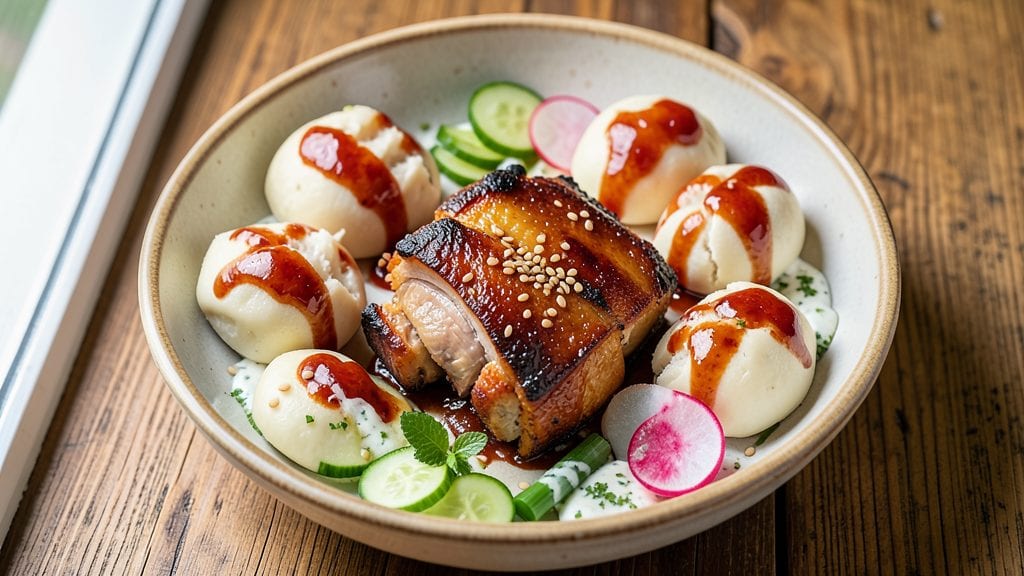
This pork belly bao buns recipe delivers the perfect fusion of tender steamed buns and melt-in-your-mouth pork belly—a dish that bridges Chinese-American flavors with restaurant-quality results.
The secret lies in braising the pork belly until it's crispy on the edges and tender at the core, then pairing it with pillowy bao dough that steams to golden perfection. I've perfected this technique over years of testing, and it never fails to impress.
The process begins with preparing the pork belly—sliced thin, marinated, and slow-cooked until it achieves that ideal texture. Meanwhile, the bao dough undergoes a long fermentation, developing that signature chewy-yet-soft quality. This isn't just a recipe; it's a multi-step experience that rewards patience with every bite.
The final assembly—stuffing the buns with warm pork and steaming them to fluffy perfection—is where the magic happens.
What you'll end up with is a dish that's equal parts comforting and sophisticated: soft, slightly sticky buns cradling slices of crispy-tender pork belly. The contrast in textures—crispy pork against the pillowy dough—makes this dish unforgettable.
Serve with hoisin sauce, chili oil, or a simple soy-vinegar dip for the full experience. Let's get started on creating this showstopper.
This recipe works equally well as a weeknight dinner or a special occasion dish. The techniques I share ensure professional results without requiring advanced skills—just attention to detail and a little time.
Whether you're making it for family or friends, this pork belly bao buns recipe will leave everyone asking for seconds.
Ingredients for pork belly bao buns
Pork belly perfection meets pillowy bao dough. A multi-step fusion worth every minute.
| Ingredient | Amount | Notes |
|---|---|---|
| Pork Belly 🥬 | 2 lb | Skin-on, sliced 1/2 inch thick |
| All-Purpose Flour 🌾 | 4 cups | For bao dough preparation |
| Instant Yeast 🍞 | 2 tbsp | For dough activation |
| Granulated Sugar 🍯 | 2 tbsp | For yeast activation |
| Salt 🧂 | 2 tsp | Fine grain preferred |
| Vegetable Oil 🫒 | ½ cup | For dough kneading |
| Fresh Ginger 🌿 | 1 oz | Grate finely for marinade |
| Garlic Cloves 🧄 | 6 cloves | Minced for marinade |
| Soy Sauce 🍜 | ½ cup | Low-sodium preferred |
| Shaoxing Wine 🍷 | ¼ cup | For pork marinade |
| Hoisin Sauce 🍯 | 2 tbsp | For pork braising |
| Brown Sugar 🍚 | 2 tbsp | For braising sauce |
| Chicken Stock 🍲 | 2 cups | Low-sodium preferred |
| Sesame Oil 🌾 | 1 tbsp | For finishing buns |
| Eggs 🥚 | 2 whole | For egg wash |
The pork belly is the star—opt for skin-on cuts from a butcher shop like Whole Foods Market or Culinary Spirations for premium marbling. Look for 1.5-2 inch thick slabs with a vibrant pink hue; the fattier the better for that melt-in-your-mouth texture. Slice against the grain at 1/2 inch thickness for optimal tenderness. Costco often carries pre-sliced pork belly for convenience, but for restaurant-quality results, ask your butcher to trim excess fat while preserving the skin. The ginger should be fresh and firm, with a bright yellow color—avoid any with white spots or dryness.
No Shaoxing wine? Dry sherry or dry white wine at half the quantity works in a pinch, though it lacks the authentic depth. Substitute low-sodium soy sauce if needed, but reduce chicken stock by 1/4 cup to maintain balance. For the dough, whole wheat flour at 20% replacement adds chewiness without sacrificing tenderness. The hoisin sauce can be homemade (simmer red dates, soy sauce, and sugar) or store-bought—Lee Kum Kee is a reliable brand. If you're short on time, pre-made bao dough from Asian markets can save hours, though homemade yields superior texture.
The pork belly marinade keeps 12-24 hours in the fridge, developing deeper flavors over time. For the dough, cover and let rise at room temperature for 1-2 hours, then refrigerate for 24 hours to develop gluten and improve texture. Steamed buns reheat beautifully—steam for 10 minutes after assembly to restore pillowy softness. Store unsteamed buns in the fridge for 3 days or freeze uncooked dough balls for 3 months. For best results, thaw overnight in the fridge before steaming. The pork belly can be prepared ahead and refrigerated for 3 days, then reheated gently in the braising liquid.
Why You'll Love This Recipe
- No-Fuss Filling Prep: I don’t know about you, but chopping pork belly into perfect slices feels like a chore—until you realize this recipe lets you prep it all at once. Just slice that 2 lb skin-on pork belly into even ½-inch thick pieces, toss it with ginger, garlic, soy sauce, and a splash of Shaoxing wine, and let it marinate overnight. The flavors soak in while you sleep, and in the morning? You’re already ahead of the game with zero extra effort.
- Umami Bomb: Here’s what sold me—this pork belly filling isn’t just savory, it’s packed with layers of flavor. The braise with hoisin sauce, brown sugar, and chicken stock turns the meat into something silky and deeply savory, like a cross between pulled pork and a rich braised short rib. Trust me, the sesame oil drizzle on top is the icing on the cake (or bun).
- Weeknight Crowd-Pleaser: I make these when I’m hosting but don’t want to stress. The dough rises while I prep the pork, and the steaming happens simultaneously—no juggling pans or frantic last-minute work. Plus, the buns freeze beautifully (if you’re ahead of time), so you can pull them out and steam them fresh for a busy night. My friends always ask for the recipe, and honestly? They’re not wrong.
- Budget-Friendly Luxury: Pork belly isn’t cheap, but this recipe stretches it to its full potential. The marinade and braising process make every bite feel indulgent, and the dough is so simple—just flour, yeast, sugar, and salt—that it doesn’t cost a fortune. Plus, leftovers? Even better the next day, especially if you reheat them in the steamer for that pillowy texture. Win-win.
Step-by-step instructions for pork belly bao buns
Master this two-part process for tender bao dough and melt-in-your-mouth pork belly filling.
Prepare the Pork Belly Filling
In a large mixing bowl, combine the sliced pork belly with the finely grated fresh ginger, minced garlic cloves, soy sauce, shaoxing wine, hoisin sauce, and brown sugar. Mix thoroughly until the marinade coats all surfaces of the pork. Cover and refrigerate for at least 4 hours, preferably overnight, to allow the flavors to penetrate deeply.
Transfer the marinated pork belly to a heavy-bottomed pot and add the 2 cups chicken stock. Bring to a simmer over medium heat, then reduce to low and cover partially. Braise for 3 to 4 hours, turning occasionally, until the pork is fork-tender and easily pulls apart. The braising liquid should reduce significantly, creating a rich, concentrated sauce.
Once tender, carefully remove the pork belly and shred it into bite-sized pieces using two forks. Return the shredded pork to the pot with the reduced braising liquid and simmer uncovered for an additional 10 minutes. This final reduction intensifies the flavors and ensures the filling has the perfect consistency for stuffing the bao buns.
Make the Bao Dough
In the bowl of a stand mixer fitted with the dough hook attachment, combine the 4 cups all-purpose flour, 2 tbsp instant yeast, 2 tbsp granulated sugar, and 2 tsp salt. Mix on low speed for 1 minute until the ingredients are evenly distributed.
Add the ½ cup vegetable oil and mix again on low speed for 2 minutes, scraping down the sides of the bowl as needed. With the mixer running on medium speed, gradually add 1 cup water (around 110°F) until the dough begins to come together. Continue mixing for 5 to 7 minutes, or until the dough pulls away from the sides of the bowl and forms a smooth, elastic ball.
Turn the dough out onto a lightly floured surface and knead gently for 2 to 3 minutes until it becomes smooth and slightly tacky. Shape the dough into a round and place it in a lightly oiled bowl. Cover with a damp towel and let rise at room temperature for 1 to 1.5 hours, or until the dough has doubled in size. This resting period allows the gluten to relax, making the dough easier to handle during shaping.
Assemble and Steam the Bao Buns
Preheat a steamer with a bamboo basket over boiling water, ensuring the water does not touch the bottom of the basket. Divide the risen dough into 8 equal pieces and roll each piece into a smooth ball. Using your thumb, gently press down on the center of each ball to create a small dimple.
Place 1 to 2 tablespoons of the shredded pork belly filling into each dimple, then carefully seal the dough around the filling to enclose it completely. Form each bao bun into a smooth, round shape with the sealed side facing downward. Arrange the bao buns in the steamer basket, leaving about 1 inch of space between each bun to allow for even steaming.
Cover the steamer and steam the bao buns over medium-high heat for 12 to 15 minutes, or until the buns are puffed and golden brown. To achieve a glossy finish, brush the tops of the buns with a beaten egg wash made from the 2 eggs. For added flavor, lightly drizzle the 1 tbsp sesame oil over the tops of the buns before serving.
Rest and Serve
Remove the steamed bao buns from the basket and let them rest for 5 minutes before serving. This brief resting period allows the buns to firm up slightly, making them easier to handle and ensuring the filling stays contained. Serve the pork belly bao buns warm, with the filling melting gently with each bite.
The bao buns should have a soft, pillowy texture with a slightly crisp exterior, while the pork filling should be tender and infused with the rich flavors of the braising sauce. The combination of the steamed dough and the melt-in-your-mouth pork creates a harmonious balance of textures and tastes that defines this classic dish.
Pro Tips For Making Pork Belly Bao Buns
- Slice Pork Evenly: Use a sharp knife and cut the pork belly into exactly ½-inch slices—no thicker, no thinner. I learned this the hard way: uneven slices mean some pieces overcook while others stay tough. A ruler helps if you’re not steady-handed.
- Test Yeast First: Before mixing the dough, dissolve the 2 tbsp instant yeast and 2 tbsp granulated sugar in ¼ cup warm water (110°F). If it doesn’t foam in 5 minutes, your yeast is dead—start over. Trust me, nothing’s worse than kneading a flat, dense dough ball.
- Don’t Overfill Bao: Stuff each bao with just 1–2 tablespoons of pork—any more and the filling will burst when steaming. I once overstuffed a batch, and half my buns leaked like sad dumplings. Less is more for that perfect pillowy texture.
- Steam in Batches: If your steamer basket is crowded, the buns won’t puff right. Steam in two rounds of 4 buns each, leaving that 1-inch gap between them. Overpacking = soggy bottoms and flat tops—no one wants that.
Pro cooking tips for pork belly bao buns
Mastering the Pork Braise
I swear by the low-and-slow braise for pork belly—this is where the magic happens. Use a heavy-bottomed pot like my trusty Le Creuset Dutch oven to prevent scorching. The key is maintaining medium-low heat after the initial simmer, turning the pork belly every 30 minutes to ensure even cooking.
If your braising liquid reduces too quickly, add 1-2 tbsp chicken stock to keep it moist. 🔥
Dough Kneading Secrets
The dough should feel smooth and slightly tacky when kneaded—this is the sweet spot for bao texture. If it's too dry, add 1 tsp warm water at a time; if it's too sticky, sprinkle 1 tbsp flour and knead well.
I always let the dough rest in a lightly oiled bowl covered with a damp towel, never plastic wrap, to prevent a skin from forming. This resting period is non-negotiable for that perfect pillowy texture.
Steaming Temperature Control
Steam at medium-high heat with about 1 inch of water in the bottom of your steamer—this creates the right humidity. If your buns aren't puffing after 12 minutes, increase the heat slightly.
I use a bamboo steamer basket, but a metal one works too—just ensure the buns aren't touching the sides. The egg wash is crucial here; I beat the 2 eggs with 1 tbsp water for that perfect glossy finish.
Filling Consistency Check
The shredded pork belly should have a slightly sticky consistency when stuffed—if it's too dry, add 1 tsp hoisin sauce to the filling. For extra richness, I sometimes mix in 1 tbsp braising liquid with the pork before stuffing.
The filling should be at room temperature when used—this prevents the buns from becoming soggy. Trust me, this small step makes all the difference! 💛
Butcher's Edge for Pork
When selecting pork belly, ask your butcher for skin-on cuts with visible marbling. The fat cap should be at least 1/4 inch thick for that melt-in-your-mouth texture. I always slice against the grain at 1/2 inch thickness—this ensures tenderness every time.
If you're short on time, pre-sliced pork belly from Costco works, but I find homemade slices yield better results.
Nutrition facts
Frequently asked questions
Why does the pork belly need so much marinating time?
The 4-hour to overnight marinade lets the flavors from ginger, garlic, soy sauce, and shaoxing wine deeply penetrate the pork belly. This slow process breaks down the fat and collagen, creating that melt-in-your-mouth texture you want. Skipping this step results in tougher pork that doesn't absorb the rich flavors. Trust me, patience here makes all the difference!
How do I know if my bao dough is ready to shape?
Your dough is ready when it has doubled in size and springs back slowly when poked with your finger. If it bounces back quickly, it needs more time to rise. The dough should also feel soft and slightly sticky but not overly tacky—this is the perfect texture for shaping bao buns.
Can I use a different type of oil for the dough?
Yes, you can substitute vegetable oil with neutral oils like canola or grapeseed oil. Avoid flavored oils like olive oil, as they can impart an unwanted taste to the dough. The key is to use a light oil that won't interfere with the bao's delicate flavor.
What if my steamed buns aren't puffing up?
If your buns aren't puffing, check your steamer setup—ensure the water is boiling vigorously and the buns aren't touching the sides or bottom. Increase the heat slightly and make sure the egg wash is applied evenly. Sometimes, a little extra time (up to 15 minutes) can help them reach that perfect puff.
How can I make the pork filling extra crispy?
For extra crispy pork belly, increase the braising time to 4-5 hours until the edges are golden and crisp. After shredding, pan-fry the pork in a little oil for 2-3 minutes until it develops a nice crust. This adds a delightful texture contrast to the soft bao buns.