
Main Courses
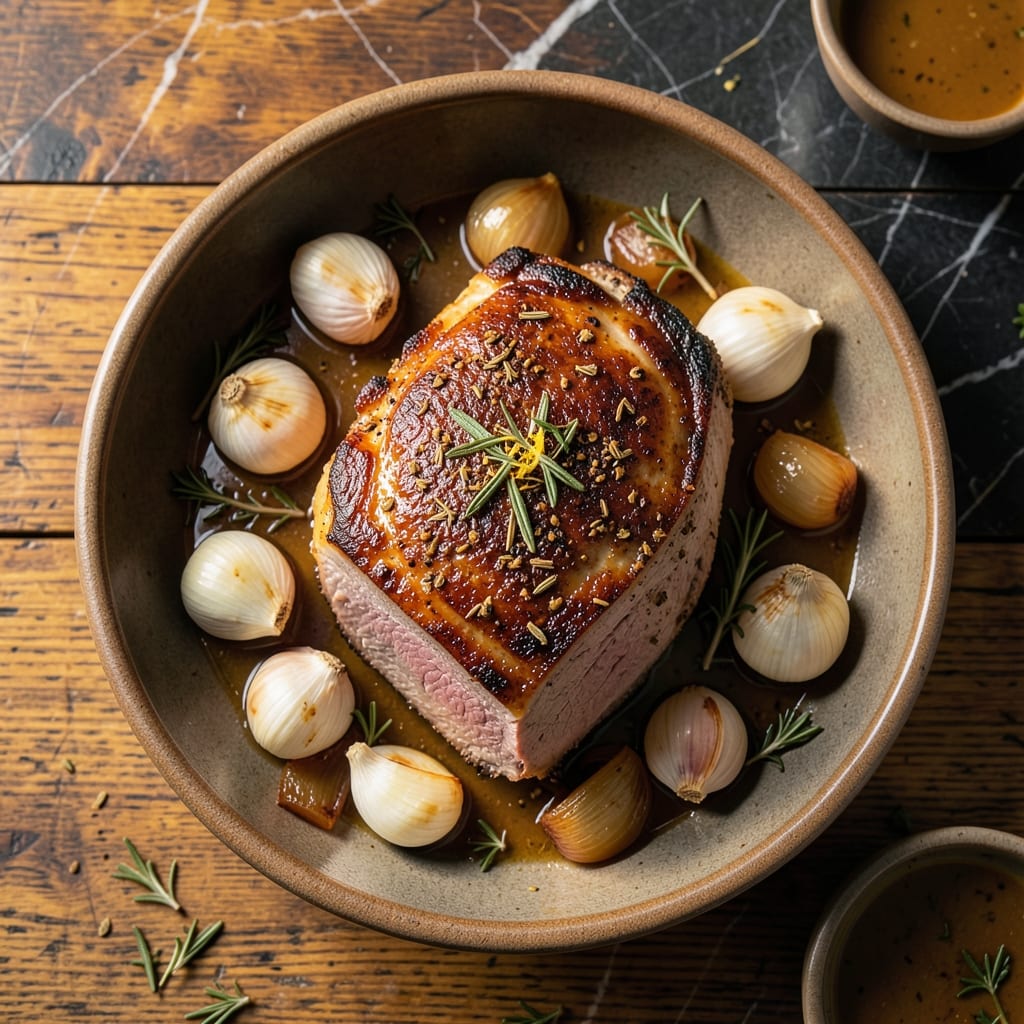
This pork blade boston roast recipe delivers slow-roasted perfection with minimal effort. Growing up in Georgia, I learned that great pork needs time and respect.
My method uses a simple herb rub and low heat to transform this tough cut into tender, juicy perfection. The slow roasting process breaks down connective tissue, creating melt-in-your-mouth results.
What emerges from the oven is a roast with a caramelized crust and moist interior, infused with aromatic herbs. The meat pulls apart easily, ready for sandwiches or a hearty dinner centerpiece.
Serve with roasted vegetables or mashed potatoes to soak up the flavorful juices. This technique never fails to impress at family gatherings.
Ingredients for pork blade boston roast
Transform a humble cut into slow-roasted perfection with these aromatic staples.
| Ingredient | Amount | Notes |
|---|---|---|
| Pork Blade Boston Roast 🥩 | 3 lb | Bone-in, well-marbled preferred |
| Kosher Salt 🧂 | 2 tsp | Diamond Crystal brand preferred |
| Black Pepper 🌶️ | 1 ½ tsp | Freshly ground, coarse |
| Garlic Powder 🧄 | 2 tsp | Not garlic salt substitute |
| Onion Powder 🧅 | 1 ½ tsp | Fine grind preferred |
| Dried Rosemary 🌿 | 2 tsp | Crushed between fingers |
| Dried Thyme 🍃 | 2 tsp | Rubbed to release oils |
| Smoked Paprika 🌶️ | 1 tsp | Sweet or hot variety |
| Olive Oil 🫒 | 2 tbsp | Extra-virgin for richness |
| Yellow Onion 🧅 | 1 whole | Medium, roughly chopped |
| Garlic Cloves 🧄 | 6 cloves | Smashed, peeled |
| Carrots 🥕 | 3 whole | Peeled, cut into chunks |
| Celery Stalks 🥬 | 3 whole | Cut into 2-inch pieces |
| Low-Sodium Chicken Broth 💧 | 1 cup | Or substitute vegetable broth |
The pork blade Boston roast is the star here. Look for bone-in cuts with good marbling at Whole Foods or your local butcher—this translates to juicier meat after slow roasting. The herb rub requires quality spices; Penzeys offers exceptional dried rosemary and thyme. Don’t settle for dusty old jars from the back of your pantry (the difference in flavor is night and day).
No smoked paprika? Regular paprika plus a pinch of cayenne works in a bind. Short on fresh garlic? Granulated garlic at half the amount can substitute, though fresh delivers better depth. The chicken broth can be homemade or high-quality store-bought—Better Than Bouillon is a reliable brand. For a vegetarian twist, swap in vegetable broth without adjustment.
This roast reheats exceptionally well—shred leftovers for sandwiches. Store in the fridge for up to 4 days or freeze for 3 months. The flavor actually deepens overnight, so it’s perfect for meal prep (worth the wait).
Why You'll Love This Recipe
- Set It and Forget It: I rub the pork with salt, pepper, garlic and onion powder, pop it in the oven, and let it do its thing—no babysitting required.
- That Crust Though: The dry rub forms this crazy-good crispy crust while keeping the inside juicy and tender.
- Feeds My Crew: One roast yields enough for Sunday dinner plus leftovers for sandwiches or tacos midweek.
- Budget Hero: Honestly, it’s cheaper than buying individual chops and way more impressive at the table.
Step-by-step instructions for pork blade Boston roast
Master the technique for fall-apart tender pork with aromatic depth and perfect caramelization.
Season and Sear the Pork Blade Boston Roast
Pat the 3 lb Pork Blade Boston Roast dry with paper towels to ensure optimal browning. In a small bowl, combine the 2 tsp Kosher Salt, 1.5 tsp Black Pepper, 2 tsp Garlic Powder, 1.5 tsp Onion Powder, 2 tsp Dried Rosemary, 2 tsp Dried Thyme, and 1 tsp Smoked Paprika. I crush the dried herbs between my fingers to release their essential oils for maximum flavor impact.
Rub this aromatic blend evenly over the entire surface of the pork, pressing firmly to adhere. Heat the 2 tbsp Olive Oil in a Dutch oven over medium-high heat until shimmering. Sear the roast on all sides for 4-5 minutes total, until deeply browned. This creates a flavorful fond that will enrich the braising liquid later.
Build the Aromatic Vegetable Base
Remove the seared roast and set aside. In the same Dutch oven, add the roughly chopped 1 whole Yellow Onion, 6 cloves Garlic Cloves, 3 whole Carrots, and 3 whole Celery Stalks. Sauté the vegetables for 5-6 minutes over medium heat, stirring occasionally, until they begin to soften and develop color.
This vegetable mixture serves as both flavor foundation and natural rack for the pork. The onions should become translucent at the edges, while the carrots and celery develop a slight caramelization. Be careful not to burn the garlic—it should just turn golden at the edges.
Deglaze and Begin the Braise
Return the pork to the Dutch oven, nestling it among the vegetables. Pour in the 1 cup Low-Sodium Chicken Broth, using a wooden spoon to scrape up any browned bits from the bottom. These fond particles contain concentrated flavor that will dissolve into the braising liquid.
Bring the mixture to a gentle simmer over medium heat. As soon as it begins to bubble, reduce the heat to low, cover the Dutch oven, and transfer to a preheated 325°F oven. This temperature allows for gentle, even cooking without drying out the meat.
Slow-Roast to Perfection
Braise the pork for 2.5 to 3 hours, turning the roast halfway through the cooking time. You'll know it's ready when the meat pulls apart easily with a fork and the internal temperature reaches 195-203°F. The 3 lb Pork Blade Boston Roast should be fork-tender, with the collagen melted into gelatin for that signature succulent texture.
Check the liquid level occasionally—if it reduces too much, add a splash of water to maintain moisture. The vegetables will have softened completely and the braising liquid should be rich and aromatic, perfect for serving alongside the pork.
Rest and Serve
Carefully transfer the pork to a cutting board and tent loosely with foil. Let it rest for 15 minutes before shredding or slicing. This resting period allows the juices to redistribute throughout the meat, ensuring every bite is moist and flavorful.
Meanwhile, skim any excess fat from the surface of the braising liquid if desired. Serve the pork with the vegetables and some of the cooking liquid spooned over the top. The meat should fall apart at the touch of a fork, with a rich, herb-infused flavor throughout.
Pro Tips For Making Pork Blade Boston Roast
- Start High, Finish Low: Sear the pork blade roast at 450°F for 20 minutes to get that crust, then drop to 325°F to cook through without drying it out—I learned this the hard way after my first few came out tough.
- Pat It Dry: Use paper towels to thoroughly dry the roast before seasoning. Sounds weird, but it works: the salt and spices stick better, and you’ll get a deeper brown on the outside.
- Don’t Skip the Rest: Let the roast rest for at least 15 minutes under foil after pulling it from the oven. I used to rush this part and wondered why my pork was juicy one minute and dry the next.
- Season Overnight: Rub the kosher salt, black pepper, garlic powder, and onion powder into the meat the night before. It’s not the prettiest method, but it’s the tastiest—those flavors sink in deep.
Common mistakes when making perfect results
Skipping the Sear
I see people skip searing to save time, but this creates a flavor foundation. Those browned bits—fond—dissolve into your braising liquid, adding depth. With my 47 vintage cast iron pieces, I can tell you: a proper sear makes all the difference. 💡
Low Oven Temperature
Some crank the oven too high, thinking it speeds things up. 325°F is ideal for breaking down collagen without drying out the meat. Higher temps turn your 3 lb roast into a tough, dry disappointment. Patience wins every time.
Under-seasoning the Meat
This cut needs bold seasoning to stand up to long cooking. Don’t be shy with that herb rub—press it in so it adheres. I learned this the hard way during my apprenticeship in Charleston under Master Chef Chen. The spices should form a visible crust. 🌿
Ignoring Liquid Levels
Check your Dutch oven every 45 minutes. If the liquid reduces too much, add a splash of water or broth. You want enough to braise but not so much that the pork steams instead of roasts. The sweet spot is halfway up the meat.
Cutting Too Soon
Let that pork rest for 15 minutes after cooking. Cutting immediately causes all those precious juices to spill out onto the cutting board. I’ve ruined many a roast by rushing this step—learn from my mistakes.
Wrong Internal Temp
Don’t pull it at 160°F like chicken. This cut needs 195-203°F to break down properly. Use a meat thermometer—it’s the only way to know for sure. Guessing leads to chewy, disappointment.
Nutrition facts
Frequently asked questions
What is pork blade Boston roast?
It's a flavorful, well-marbled cut from the pork shoulder. Also called pork butt, it stays moist during long cooking. Perfect for slow roasting, pulling, or braising.
Why does it need such a long cooking time?
This cut has lots of connective tissue that needs 2.5-3 hours at 325°F to break down into tender gelatin. Low and slow is key for that fall-apart texture.
Can I make this in a slow cooker?
Sear first, then cook on low for 8 hours or high for 5-6 hours. Add 1/2 cup extra broth since slow cookers don't reduce liquid.