
Main Courses
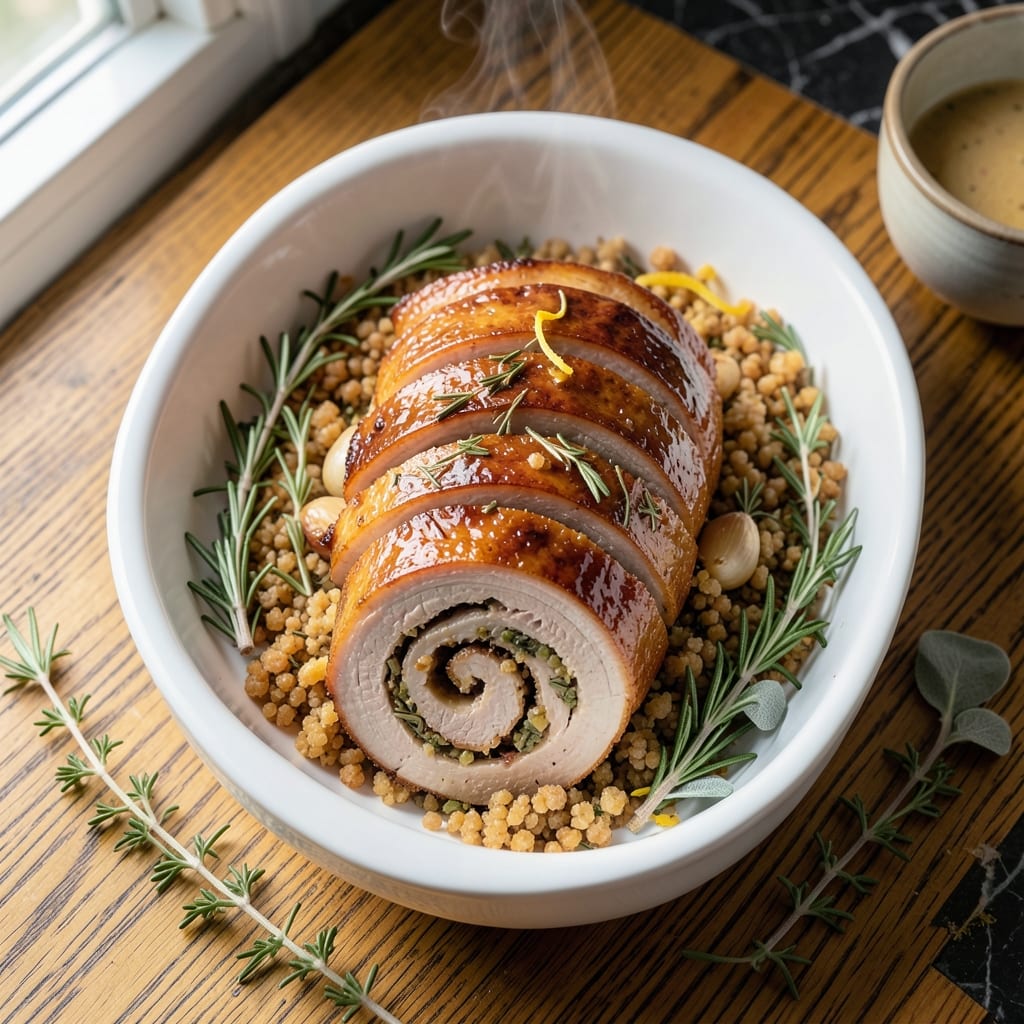
This pork loin roll roast recipe creates an impressive herb-stuffed centerpiece perfect for holidays. Growing up in Georgia, I learned that pork belongs at the heart of every celebration. The technique transforms a simple cut into an elegant roast.
I stuff the loin with fresh herbs, garlic, and breadcrumbs before rolling and tying. This creates a flavorful spiral in every slice. The exterior develops a golden crust while the inside stays juicy and tender.
The roast cooks evenly at 375°F, filling your kitchen with an irresistible aroma. It's the kind of dish that makes guests feel special. My heritage pigs provide the best meat for this.
Serve with roasted vegetables and gravy for a complete meal. This becomes the star of any holiday table.
Ingredients for pork loin roll roast
Nothing exotic here—just good stuff for a holiday-worthy roast.
| Ingredient | Amount | Notes |
|---|---|---|
| Pork Loin 🥩 | 3 lb | Boneless, center-cut preferred |
| Fresh Rosemary 🌿 | 2 tbsp | Finely chopped, stems removed |
| Fresh Thyme 🌿 | 2 tbsp | Finely chopped, stems removed |
| Fresh Sage 🍃 | 1 tbsp | Finely chopped, stems removed |
| Garlic Cloves 🧄 | 6 cloves | Minced for stuffing |
| Breadcrumbs 🍞 | 1 cup | Plain or panko variety |
| Olive Oil 🫒 | ¼ cup | Divided for stuffing and searing |
| Dijon Mustard 🟡 | 2 tbsp | For crust and flavor |
| Salt 🧂 | 1 ½ tsp | Kosher or sea salt preferred |
| Black Pepper 🌶️ | 1 tsp | Freshly ground preferred |
| Kitchen Twine 🧵 | 1 piece | For tying the roast |
| Chicken Stock 🥣 | 1 cup | For gravy or basting |
| Butter 🧈 | 2 tbsp | Unsalted, for richness |
The pork loin is the star here. Heritage pork from a local farm or Whole Foods gives you the best marbling and flavor. Look for a center-cut piece (about 3 lbs) that’s even in thickness—makes rolling easier. If you can’t find heritage, Costco has solid options. The herbs need to be fresh (dried won’t give you that vibrant punch), and don’t skip the garlic—it’s doing heavy lifting in the stuffing.
No fresh rosemary? Dried at one-third the amount works, but fresh is worth the effort. Out of breadcrumbs? Crushed crackers or panko are great swaps. For the Dijon, any whole-grain mustard will do in a pinch. If you’re avoiding chicken stock, vegetable stock is a fine substitute. The twine can be any kitchen string—just make sure it’s food-safe.
The roast can be prepped a day ahead—just keep it wrapped in the fridge. Cooked leftovers stay good for 4-5 days, and the flavor deepens overnight. Freezes beautifully for 3 months (slice first for easy portions).
Why You'll Love This Recipe
- One Pan Wonder: I just roll, tie, and roast—no complicated prep, and the herbs do all the work.
- Aromatic Magic: The rosemary, thyme, and sage with garlic make every bite taste like a Sunday dinner.
- Feeds a Crowd: Perfect for holiday tables or weeknight meals with leftovers for sandwiches tomorrow.
- Budget-Friendly Centerpiece: A pork loin is affordable, but the herb crust makes it taste like a fancy restaurant dish.
Step-by-step instructions for herb-stuffed pork loin roll roast
Here’s how to create a stunning, flavor-packed roast that wows every time.
Butterfly and Season the Pork Loin
Place the 3 lb pork loin on a cutting board and slice it horizontally almost all the way through, stopping about ½ inch from the edge. Open it like a book—this creates a flat surface for the stuffing.
Lay the pork flat and cover it with plastic wrap. Using a meat mallet, gently pound it to an even 1-inch thickness. This ensures even cooking and helps the roast roll up tightly. Season the inside generously with 1.5 tsp salt and 1 tsp black pepper.
Prepare and Spread the Herb Stuffing
In a bowl, mix 1 cup breadcrumbs, 2 tbsp fresh rosemary, 2 tbsp fresh thyme, 1 tbsp fresh sage, 6 cloves minced garlic cloves, and 2 tbsp Dijon mustard. Stir in 2 tbsp of the 0.25 cup olive oil to bind the mixture.
Spread this herb mixture evenly over the flattened pork, leaving a ½-inch border around the edges. Press it down gently so it adheres well. The aromatics will infuse every bite with holiday-worthy flavor.
Roll, Tie, and Sear the Roast
Starting from one long side, tightly roll up the pork loin with the stuffing inside. Secure the roast at 2-inch intervals with the kitchen twine, pulling it snug so the roll holds its shape during cooking.
Heat the remaining 2 tbsp olive oil in a large oven-safe skillet over medium-high heat. Sear the roast on all sides until deep golden brown, about 3-4 minutes per side. This creates a flavorful crust and locks in juices.
Roast to Perfection
Preheat your oven to 375°F. Transfer the seared roast to the oven and cook for 45-55 minutes, or until an instant-read thermometer inserted into the thickest part reads 145°F.
Baste the roast with 1 cup chicken stock halfway through cooking to keep it moist. The outside should be beautifully browned, and the stuffing will be fragrant and golden.
Rest and Serve with Pan Juices
Remove the roast from the oven and transfer it to a cutting board. Tent loosely with foil and let it rest for 15 minutes—this allows the juices to redistribute for tender, flavorful slices.
While it rests, pour the pan juices into a small saucepan and whisk in 2 tbsp butter for a quick, rich sauce. Slice the roast into 1-inch thick pieces, drizzle with the pan sauce, and serve immediately.
Pro Tips For Making Pork Loin Roll Roast
- Rest Before Slicing: Let the roast rest for at least 15 minutes after cooking—it keeps all those juices inside where they belong. I learned this the hard way after carving into a hot roast and watching the cutting board flood.
- Score the Fat: Cut shallow slits in the fat cap before roasting so the herbs and garlic penetrate deeper. Sounds fussy, but it actually changes the outcome, especially with pork loin.
- Use Room-Temp Pork: Take the loin out of the fridge 30-45 minutes before cooking. It cooks more evenly, and you won’t end up with dry edges while waiting for the center to catch up.
- Crush the Garlic: Smash the garlic cloves slightly before stuffing them into the roll—this releases more flavor into the meat. My grandmother swore by this, and she was right.
Wine and beer pairings for this pork loin roll roast
White Wine Pairings
A crisp Chardonnay from California pairs beautifully with the herb-stuffed loin. The buttery notes complement the Dijon mustard while the acidity cuts through the richness. I love Kendall-Jackson Vintner's Reserve for its balance.
Red Wine Options
For red lovers, a medium-bodied Pinot Noir from Oregon works wonders. Its earthy undertones mirror the rosemary and thyme in the stuffing. Eyrie Vineyards makes a stellar version that won't overpower the dish.
Beer Selections
A malty Amber Ale like SweetWater Georgia Brown enhances the pork's natural sweetness. The caramel notes in the beer echo the seared crust. Serve slightly chilled for best results. 🍺
Sparkling Choices
Surprise guests with a dry Prosecco—the bubbles cleanse the palate between rich bites. La Marca offers excellent value and consistent quality. Its light fruit notes complement the garlic in the stuffing.
Cocktail Alternative
For non-wine drinkers, a Bourbon Old Fashioned with orange peel adds a smoky depth. The sweetness balances the herbs perfectly. I use Buffalo Trace for its smooth finish. 💛
Nutrition facts
Frequently asked questions
Can I use pork tenderloin instead of loin?
No, tenderloin is too small and lean for rolling. The 3 lb loin provides the right size and fat content for a juicy, stuffable roast. Tenderloin would dry out before the stuffing cooks through.
Why rest the roast before slicing?
Resting for 15 minutes lets juices redistribute throughout the meat. Cutting too soon causes all those flavorful juices to spill out onto the cutting board, leaving your slices dry.
Can I make this ahead of time?
Yes! Prepare and tie the roast up to a day ahead, then refrigerate. Add 10 minutes to cooking time if roasting straight from the fridge. Leftovers keep 4-5 days refrigerated.
How do I prevent the stuffing from falling out?
Roll tightly and tie every 2 inches with twine. Leave a ½-inch border when spreading the stuffing to create a seal. Searing first helps set the shape before roasting.