
Main Courses
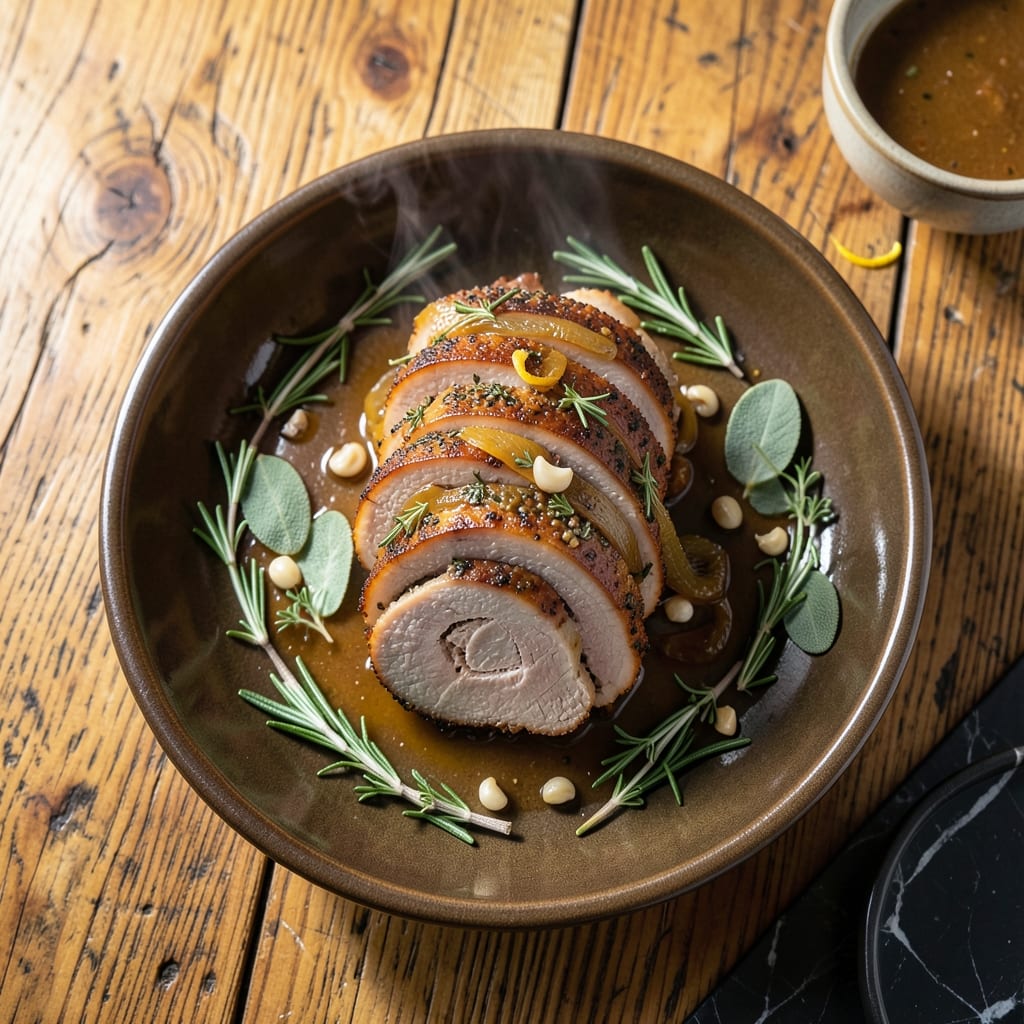
This pork roast roll recipe delivers herb-stuffed tenderness in every perfect slice. Growing up in Georgia, I learned that great pork starts with quality cuts and careful seasoning.
My years at The Smoky Pig taught me the value of rolling and tying pork for even cooking. The herb stuffing infuses flavor throughout while keeping the meat juicy and tender.
The result is a centerpiece worthy of any dinner table, with golden-brown crust and aromatic herbs in every bite. This technique transforms simple ingredients into something extraordinary.
Serve with roasted vegetables or mashed potatoes. Here's how to make this impressive yet approachable dish.
Ingredients for pork roast roll
Quality pork plus aromatic herbs create this showstopping herb-stuffed roast roll with Georgia roots.
| Ingredient | Amount | Notes |
|---|---|---|
| Pork Shoulder Roast 🥩 | 2 ½ lb | Boneless, rolled and tied |
| Fresh Rosemary 🌿 | 2 tbsp | Finely chopped, stems discarded |
| Fresh Thyme 🍃 | 2 tbsp | Leaves only, stems removed |
| Fresh Sage 🌿 | 1 tbsp | Finely chopped, stems discarded |
| Garlic Cloves 🧄 | 4 cloves | Minced for stuffing |
| Yellow Onion 🧅 | 1 whole | Finely diced for stuffing |
| Dijon Mustard 🟡 | 2 tbsp | For interior spread |
| Olive Oil 🫒 | 2 tbsp | Divided for searing and stuffing |
| Kosher Salt 🧂 | 1 ½ tsp | Diamond Crystal preferred |
| Black Pepper 🌶️ | 1 tsp | Freshly ground, coarse |
| Red Wine 🍷 | ½ cup | Dry variety for deglazing |
| Chicken Stock 🥣 | 1 cup | Low-sodium preferred |
| Butter 🧈 | 2 tbsp | Unsalted, for finishing |
| Kitchen Twine 🧶 | 1 piece | For securing roll |
The pork shoulder is non-negotiable here—boneless, well-marbled cuts from a reputable butcher like Whole Foods or a local shop ensure tenderness. Avoid lean cuts like tenderloin; they dry out. My years at The Smoky Pig proved that 2.5 lb roasts yield perfect slices for four. Look for even thickness to simplify rolling. The herbs must be fresh; dried won’t infuse the same depth.
No fresh herbs? Dried at one-third the amount works, but rehydrate them in warm water first. Swap rosemary for marjoram if needed. Short on Dijon? Whole-grain mustard adds texture. For the wine, any dry red like Cabernet Sauvignon works—skip cooking wine. Vegetable stock can replace chicken stock, but adjust salt accordingly. The twine? Unbleached cotton from Sur La Table won’t burn.
Prep the stuffing just before rolling to retain herb potency. The roast can marinate overnight (wrapped tightly) for deeper flavor. Cooked pork keeps 4-5 days refrigerated or 3 months frozen. Slice only when ready to serve—this preserves moisture and presentation.
Why You'll Love This Recipe
- One Pan Wonder: I toss the pork shoulder with rosemary, thyme, sage, and garlic, roll it up, and let the oven do the rest.
- Herb Heaven: The combo of fresh rosemary, thyme, and sage with garlic makes every bite ridiculously flavorful.
- Feeds a Crowd: I made this for Sunday dinner and had enough leftovers for sandwiches the next day.
- Budget Hero: Pork shoulder is affordable, and a little goes a long way with these bold herbs.
Step-by-step instructions for pork roast roll
Follow this methodical approach to create a perfectly tender, herb-infused roast with minimal effort.
Prepare the Herb and Aromatic Stuffing
Finely chop the 2 tbsp Fresh Rosemary, 2 tbsp Fresh Thyme, and 1 tbsp Fresh Sage. In a bowl, combine these herbs with the 4 cloves Garlic Cloves (minced) and 1 whole Yellow Onion (finely diced). Drizzle with 1 tbsp Olive Oil from the 2 tbsp Olive Oil and mix thoroughly. This aromatic base will infuse the pork with layers of flavor.
The stuffing should be moist but not soggy. If the mixture seems dry, add another ½ tbsp Olive Oil. This ensures the herbs and aromatics adhere to the pork and don’t fall out during rolling. Set the mixture aside while you prepare the pork shoulder.
Butterfly, Season, and Stuff the Pork Shoulder
Lay the 2.5 lb Pork Shoulder Roast flat on a cutting board. If it’s not already butterflied, carefully slice it horizontally, stopping about ½ inch from the edge, then open it like a book. Cover the surface evenly with the 2 tbsp Dijon Mustard, spreading it all the way to the edges. This adds tang and helps the stuffing stick.
Sprinkle the interior with 1 tsp Kosher Salt and ½ tsp Black Pepper from the total 1.5 tsp Kosher Salt and 1 tsp Black Pepper. Spread the herb mixture evenly over the mustard, leaving a ½-inch border around the edges. Roll the pork tightly, starting from the long side, and secure it with the 1 piece Kitchen Twine at 1-inch intervals.
Sear and Roast the Pork
Preheat your oven to 375°F. Heat the remaining 1 tbsp Olive Oil in a large, oven-safe skillet or Dutch oven over medium-high heat. Sear the pork roll on all sides until deeply golden brown, about 2-3 minutes per side. This step builds a flavorful crust and locks in juices.
Transfer the skillet to the preheated oven and roast for 1 hour to 1 hour 15 minutes, or until the internal temperature reaches 145°F. Baste the pork with the pan juices halfway through cooking to keep the exterior moist and flavorful.
Deglaze, Reduce, and Finish
Remove the pork from the skillet and set it aside to rest on a cutting board. Place the skillet on the stovetop over medium heat. Pour in the 0.5 cup Red Wine, scraping up any browned bits from the bottom. Let it simmer for 2-3 minutes until reduced by half.
Add the 1 cup Chicken Stock and simmer for another 5 minutes until slightly thickened. Remove from heat, stir in the 2 tbsp Butter, and swirl until melted and emulsified into the sauce. Slice the pork against the grain and serve with the pan sauce spooned over the top. The result is a juicy, herb-stuffed roast with a rich, velvety finish.
Pro Tips For Making Pork Roast Roll
- Sear the Roll: Get your pan screaming hot before searing the pork roll—this locks in juices and creates a deep, caramelized crust. I learned this the hard way after my first few attempts came out pale and soggy.
- Score the Fat: Cut shallow slits into the fat cap before rolling, about 1/4-inch deep. This helps the fat render out evenly and lets the herbs penetrate deeper.
- Tie It Tight: Use kitchen twine to secure the roll every inch or so—any looser and it’ll unravel while cooking, making for uneven slices. Skip the twine and you’ll regret it when serving.
- Rest Before Slicing: Give the roast a solid 15 minutes under foil after cooking. This lets the juices redistribute, so your slices stay moist instead of bleeding out on the cutting board.
Wine and beer pairings for this pork roast roll
Bold Red Wines
A full-bodied Cabernet Sauvignon from Napa Valley stands up to the rich pork and herb stuffing. The tannins cut through the fat while complementing the rosemary and thyme. I always reach for Chateau Montelena when I'm cooking this dish for special occasions. 🍷
Earthy Alternatives
For something with more complexity, try a Syrah from the Rhône Valley. Its peppery notes echo the black pepper in the rub while the dark fruit harmonizes with the pork's natural sweetness. A Côte-Rôtie is my personal favorite for this pairing.
Craft Beer Options
A malty amber ale like SweetWater Georgia Brown from Atlanta offers caramel notes that mirror the pork's crust. The moderate hop bitterness cleanses the palate between bites. I've served this countless times at The Smoky Pig with great success.
Crisp Beer Pairings
For contrast, a pilsner with its clean, crisp finish works beautifully. The carbonation cuts through the richness while the subtle grain notes complement the herb stuffing. SweetWater 420 is a local Georgia favorite that never disappoints.
White Wine Surprise
Don't overlook a full-bodied Chardonnay with oak aging. The buttery notes and vanilla from the barrel echo the butter finish in the pan sauce. A Sonoma County Chardonnay has enough weight to stand up to this hearty dish. 💡
Rosè Option
A dry Provence rosé offers a lighter alternative that still holds its own. The strawberry and citrus notes provide a refreshing contrast to the rich pork. I particularly enjoy Château d'Esclans Whispering Angel with this recipe.
Nutrition facts
Frequently asked questions
What cut of pork works best for this roll?
Use boneless pork shoulder for its marbling and tenderness. Avoid lean cuts like tenderloin as they dry out. A 2-3 lb piece from a good butcher ensures even rolling and juicy results.
How do I keep the stuffing from falling out?
Spread the mustard and herbs evenly, leaving a ½-inch border. Roll tightly and tie with twine every 1 inch. This keeps everything secure during cooking and slicing.
Can I make this ahead of time?
Yes! Prepare and roll the pork, then refrigerate overnight. Let it sit at room temperature for 30 minutes before searing. This enhances flavor and saves time.
How do I know when it's done?
Use a meat thermometer—145°F internal temperature is perfect. Let it rest for 10 minutes before slicing to retain juices and ensure even cooking.