
Main Courses
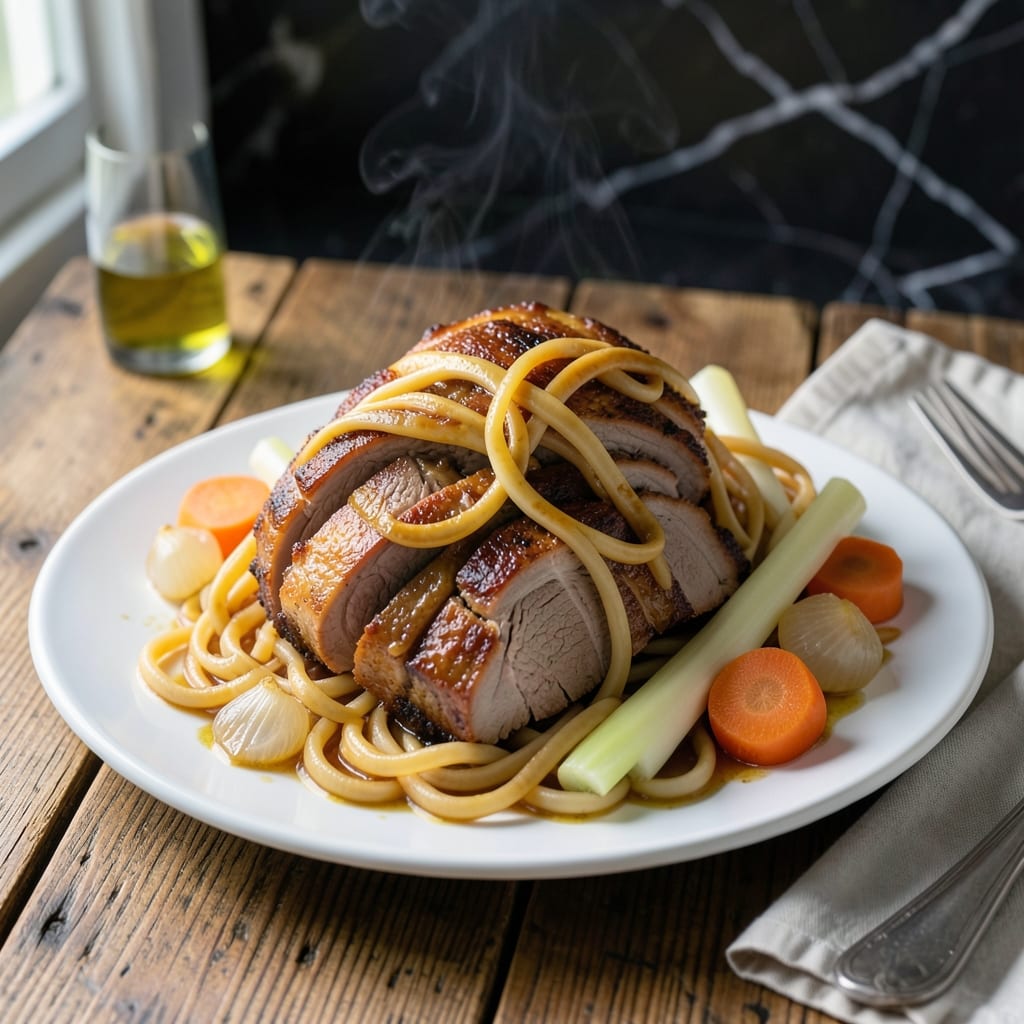
This pork roast and noodles recipe delivers slow-cooked savory layers that never fail to impress. The secret lies in the marriage of tender pork with rich, flavorful broth that the noodles soak up beautifully.
Growing up in Georgia, I learned early that great pork dishes start with patience. This method transforms tough cuts into fall-apart tender meat while building deep, complex flavors in every bite.
The noodles cook directly in the pork's juices, absorbing all that savory goodness. It's a one-pot meal that looks fancy but requires minimal active time in the kitchen.
Perfect for Sunday suppers or special occasions, this dish brings restaurant-quality results to your home table. The layers of flavor make every forkful satisfying.
Ingredients for pork roast and noodles
Slow-cooked pork, hearty noodles, and a broth packed with deep, savory flavor.
| Ingredient | Amount | Notes |
|---|---|---|
| Pork Shoulder Roast 🥩 | 2 lb | Boneless, well-marbled |
| Egg Noodles 🍜 | 8 oz | Wide or medium width |
| Onion 🧅 | 1 whole | Yellow or white, diced |
| Garlic Cloves 🧄 | 4 cloves | Minced for depth |
| Carrots 🥕 | 2 whole | Peeled, chopped |
| Celery Stalks 🌿 | 2 whole | Chopped for aroma |
| Chicken Broth 🥣 | 3 cups | Low-sodium preferred |
| Beef Broth 🥣 | 1 cup | For richer flavor |
| Dried Thyme 🌿 | 1 tsp | For earthy warmth |
| Dried Rosemary 🌿 | 1 tsp | Crushed between fingers |
| Bay Leaves 🍃 | 2 pieces | Whole, for infusion |
| Kosher Salt 🧂 | 1 ½ tsp | Adjust to taste |
| Black Pepper 🌶️ | 1 tsp | Freshly ground preferred |
| Olive Oil 🫒 | 2 tbsp | For searing pork |
| All-Purpose Flour 🌾 | 2 tbsp | For thickening broth |
The pork shoulder is key here—look for well-marbled cuts at your butcher or Costco. Georgia-style means low and slow, so don’t rush it. The bone-in version adds even more richness, but boneless works fine for easier slicing. Freshly ground black pepper makes a surprising difference in the crust, so skip the pre-ground stuff if possible.
No pork shoulder? Pork butt is essentially the same thing—just ask for it at the counter. Swap beef broth for all chicken broth if needed, but the combo gives the best depth. Dried herbs at half the amount work if fresh aren’t available. For the noodles, any egg noodle width is fine, but wider ones soak up more of that rich broth.
This reheats like a dream—actually tastes better the next day. Store leftovers in airtight containers for up to 4 days in the fridge or 3 months in the freezer. The broth thickens as it cools, so stir in a splash of water when reheating.
Why You'll Love This Recipe
- One Pot Meal: I just brown the pork, toss everything in, and let it simmer—no extra pans, no mess.
- Rich and Savory: The garlic and pork juices soak into the noodles, making every bite ridiculously flavorful.
- Feeds a Crowd: I serve this at family gatherings and always come home with empty dishes.
- Leftovers for Days: Honestly, it tastes even better the next day, and it reheats like a dream.
Step-by-step instructions for pork roast and noodles
This method ensures tender pork and rich, velvety broth every time you make it.
Sear the Pork Shoulder Roast
Heat 2 tbsp olive oil in a large Dutch oven over medium-high heat until shimmering. Pat the 2 lb pork shoulder roast dry with paper towels, then season all over with 1.5 tsp kosher salt and 1 tsp black pepper.
Place the pork in the hot oil and sear for 4-5 minutes per side until deeply browned on all sides. This creates a flavorful crust and locks in juices. Remove the pork and set aside—you’ll use those browned bits to build flavor in the next step.
Sauté the Vegetables and Build the Broth
In the same pot, add the 1 whole onion (diced), 2 whole carrots (peeled and chopped), and 2 whole celery stalks (chopped). Cook for 5 minutes until the vegetables begin to soften.
Add 4 cloves garlic cloves (minced) and cook for 1 minute until fragrant. Stir in 2 tbsp all-purpose flour and cook for 1 minute to remove the raw taste. Pour in 3 cups chicken broth and 1 cup beef broth, then add 1 tsp dried thyme, 1 tsp dried rosemary, and 2 pieces bay leaves. Stir to combine, scraping up any browned bits from the bottom.
Braise the Pork Until Tender
Return the pork to the pot, ensuring it’s mostly submerged in the liquid. Bring to a simmer, then reduce heat to low. Cover and let it braise for 2 to 2.5 hours, turning the pork halfway through.
You’ll know it’s done when the pork shreds easily with a fork. The broth should be rich and aromatic, infused with the flavors of the herbs and vegetables. Remove the pork and set it aside to rest while you prepare the noodles.
Cook the Noodles and Finish the Dish
Bring a separate pot of salted water to a boil and cook the 8 oz egg noodles according to package directions until al dente. Drain and set aside.
Shred or slice the pork and return it to the broth. Add the cooked noodles to the pot and stir to coat them in the rich, savory liquid. Let everything simmer together for 5 minutes so the noodles absorb the flavors. Discard the bay leaves before serving.
Pro Tips For Making Pork Roast And Noodles
- Sear the Pork First: I learned this the hard way—browning the pork shoulder in a hot pan for 3-4 minutes per side locks in juices and adds a depth of flavor that simmering alone can’t.
- Salt the Noodles: Toss the egg noodles with a teaspoon of salt right after boiling—it’s the thing that matters most for seasoning them evenly, since the pork and veggies bring their own richness.
- Skip Raw Garlic: After burning three batches, I finally figured out that mincing the garlic and letting it sit for 5 minutes before cooking mellows the harshness and prevents bitterness in the final dish.
- Use the Broth: Sounds weird, but it works: cook the noodles in the same broth you used for the pork roast—it saves time and infuses them with extra meaty flavor.
Common mistakes when making great pork roast and noodles
Skipping the Sear
I see home cooks rush this step all the time, but those 4-5 minutes per side of searing build the Maillard reaction flavors that make this dish sing. Skipping it leaves your pork bland and the broth thin. Use medium-high heat and don't move the meat until it releases naturally. 💡
Under-seasoning the Pork
That 2 lb pork shoulder needs more than a light sprinkle. Be generous with the 1.5 tsp kosher salt and 1 tsp black pepper—it's your only chance to season the meat directly. Remember, some salt will dissolve into the cooking liquid.
Rushing the Braise
Low and slow is non-negotiable for pork shoulder. The 2 to 2.5 hours at a gentle simmer breaks down the collagen into gelatin. If you crank the heat, you'll end up with tough, dry meat. Trust the process—this is where Georgia barbecue wisdom pays off.
Overcooking the Noodles
Cook your 8 oz egg noodles just to al dente before adding to the broth. They'll continue cooking in the hot liquid. Mushy noodles ruin the texture contrast. I pull mine from the boiling water when they're still slightly firm.
Not Deglazing Properly
After searing, those browned bits stuck to the pot are pure flavor. When you add the 3 cups chicken broth and 1 cup beef broth, scrape aggressively with a wooden spoon. This is where your sauce develops its depth. 🔥
Ignoring the Rest
Let the pork rest in the warm broth for 5 minutes after shredding. This lets the juices redistribute. Skipping this makes the meat dry and the broth greasy. Patience here makes the difference between good and exceptional.
Nutrition facts
Frequently asked questions
Can I use a different cut of pork?
Pork butt works perfectly as it's nearly identical to shoulder. For leaner options, try pork loin but reduce cooking time to 1.5 hours to prevent dryness. Avoid tenderloin as it lacks the fat for rich broth.
How do I know when the pork is done?
The meat should shred easily with a fork. For safety, use a meat thermometer—internal temp should reach 195°F for fall-apart tenderness. At 160°F it's safe but may not be as tender.
Can I make this in a slow cooker?
Sear the pork first, then transfer to a slow cooker with all ingredients. Cook on low for 8 hours or high for 5-6 hours. Add noodles during the last 30 minutes.
How do I store leftovers?
Keep in an airtight container in the fridge for up to 4 days. For longer storage, freeze for up to 3 months. Reheat gently on the stove with a splash of water to thin the sauce.