
Main Courses
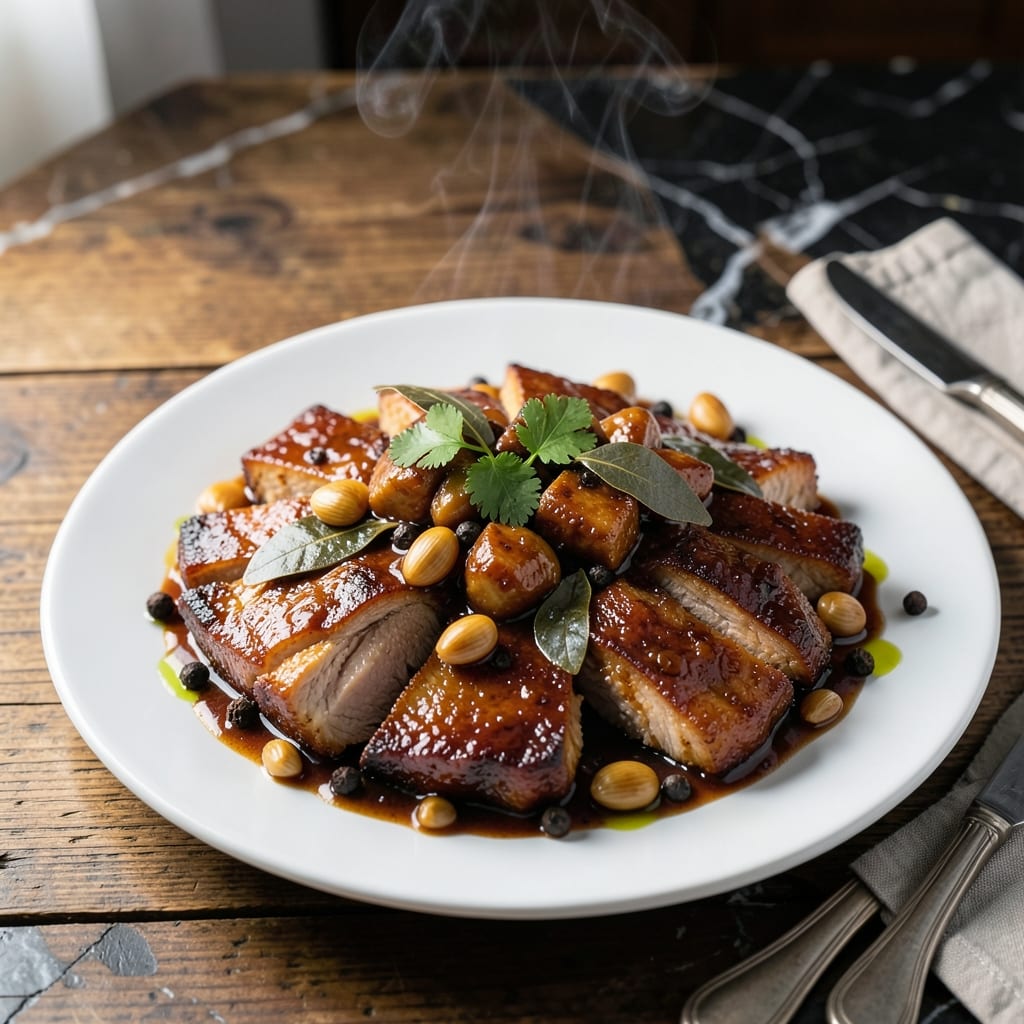
This twice cooked pork adobo recipe delivers authentic Filipino flavor with a double-crisp texture that's impossible to resist.
I developed this method after years of perfecting adobo techniques, combining traditional braising with a second crisping phase. The pork first absorbs the tangy vinegar-soy marinade, then transforms into golden-brown perfection.
The vinegar cuts through the richness while garlic and bay leaves create depth. Each bite offers tender meat inside with a shatteringly crisp exterior.
Serve with steamed rice to soak up every drop of the flavorful sauce. This is Filipino comfort food at its finest.
Ingredients for twice cooked pork adobo
Authentic Filipino flavors start with pork belly, vinegar, soy, and aromatic spices. Nothing short of perfect.
| Ingredient | Amount | Notes |
|---|---|---|
| Pork Belly 🥩 | 2 lb | Cut into 1-inch cubes, skin-on |
| Soy Sauce 🫒 | ¾ cup | Use Filipino brands like Silver Swan |
| White Vinegar 💧 | ½ cup | Cane vinegar preferred for authenticity |
| Garlic Cloves 🧄 | 12 cloves | Peeled and crushed |
| Bay Leaves 🍃 | 5 pieces | Dried, whole leaves |
| Black Peppercorns 🌶️ | 1 tbsp | Lightly crushed |
| Brown Sugar 🧂 | 2 tbsp | Balances acidity in sauce |
| Water 💧 | 1 cup | For braising liquid |
| Vegetable Oil 🫒 | ½ cup | For crisping, neutral flavor |
| Cornstarch 🌾 | 2 tbsp | Optional for extra crispiness |
| Green Onions 🧅 | 4 whole | Sliced thin for garnish |
| Steamed Rice 🍚 | 4 cups | Cooked, to serve |
The pork belly is non-negotiable for authentic texture—skin-on pieces from an Asian market yield the best results. Look for even marbling and avoid pre-cut packages if possible. Silver Swan soy sauce and Datu Puti vinegar are Filipino staples found at most international grocers. Bay leaves should be dried but still fragrant; if they crumble to dust, replace them.
No pork belly? Pork shoulder works but won’t crisp as dramatically. Substitute apple cider vinegar if cane vinegar isn’t available—just reduce by one-fourth to avoid overpowering. Skip the cornstarch for gluten-free, or use rice flour instead. The brown sugar can be omitted for a tangier profile, but it helps balance the vinegar’s sharpness.
Store raw pork belly in the fridge for up to 3 days or freeze for 3 months. Leftover adobo keeps 5 days refrigerated and reheats beautifully—the flavors deepen over time. Always crisp just before serving to maintain that shatteringly crisp texture.
Why You'll Love This Recipe
- One Pot Magic: I just dump pork belly, soy sauce, vinegar, garlic, and bay leaves in a pot—no fancy steps.
- Sticky Savory Bites: That first crispy sear then slow braise in the adobo sauce? Ridiculously good.
- Feeds the Crew: I make a big batch for Sunday lunch and the leftovers disappear by Tuesday.
- Budget Stretcher: Pork belly turns affordable when it soaks up all that garlicky, tangy sauce.
Step-by-step instructions for twice cooked pork adobo
Master the technique of double-cooking for an authentic Filipino crispy adobo experience.
Braise the Pork Belly in Adobo Sauce
In a large pot, combine the 2 lb Pork Belly, 0.75 cup Soy Sauce, 0.5 cup White Vinegar, 12 cloves Garlic Cloves, 5 pieces Bay Leaves, 1 tbsp Black Peppercorns, and 1 cup Water. Stir in the 2 tbsp Brown Sugar to balance the acidity.
Bring to a boil over medium-high heat, then reduce to a simmer. Cover and cook for 45-50 minutes until the pork is fork-tender and the liquid has reduced slightly. The pork should be tender enough to pierce easily with a fork but still hold its shape.
Reduce the Adobo Liquid to a Glaze
Once the pork is tender, remove the lid and increase the heat to medium-high. Simmer uncovered for 10-15 minutes until the liquid reduces to a thick, glossy glaze that coats the back of a spoon. This concentration intensifies the flavors.
Stir occasionally to prevent sticking, and press the pork pieces gently to absorb more of the sauce. The bay leaves and black peppercorns should be fully infused into the liquid by now. Remove from heat and let the pork cool in the sauce for 15 minutes.
Coat and Crisp the Pork Belly
Drain the pork from the sauce, reserving the liquid for serving. Pat the pork dry with paper towels to remove excess moisture. In a bowl, toss the pork with 2 tbsp Cornstarch until evenly coated. This step ensures extra crispiness during frying.
The cornstarch creates a light, starchy layer that will crisp up beautifully in the next step. Shake off any excess cornstarch to avoid clumping.
Deep-Fry for Ultimate Crispiness
Heat the 0.5 cup Vegetable Oil in a large skillet over medium-high heat until shimmering but not smoking. Working in batches to avoid crowding, fry the pork for 3-4 minutes per side until deep golden brown and crispy.
Use a slotted spoon to transfer the fried pork to a paper towel-lined plate to drain excess oil. The pork should have a crisp exterior while remaining juicy inside.
Serve with Sauce and Garnish
Reheat the reserved adobo sauce gently if needed. Arrange the crispy pork on a platter, drizzle with some of the reduced sauce, and garnish with 4 whole Green Onions, thinly sliced. Serve immediately with 4 cups Steamed Rice to soak up the rich, tangy sauce.
The contrast of crispy pork with the savory-sweet adobo sauce and fluffy rice creates the perfect bite. Any leftover sauce can be served on the side for dipping.
Pro Tips For Making Twice Cooked Pork Adobo
- Boil First, Fry Later: Parboil the pork belly for 10 minutes before braising to render excess fat and guarantee tender meat—I learned this the hard way after chewing through tough chunks in my first few attempts.
- Balance the Vinegar: Use equal parts soy sauce and white vinegar, but add the vinegar last and never let it boil vigorously or it’ll turn bitter—my grandmother swore by this, and she was right.
- Skip the Overcrowding: Brown the pork belly in batches so each piece gets a proper sear; crowding the pan just steams the meat and you’ll end up with pale, soggy chunks.
- Reduce the Sauce: After braising, simmer the sauce uncovered for 5-7 minutes to thicken it slightly—sounds weird, but it clings to the pork better and intensifies the flavor.
Regional styles of this dish
Manila-Style Classic
The capital's version uses equal parts soy sauce and vinegar, creating a perfect balance of salty and tangy. I learned this ratio from my mentor in Charleston, where Filipino chefs honor tradition. The pork is braised until falling apart, then fried to a deep mahogany crisp. 💛
Pampanga Variation
Known as the culinary capital of the Philippines, Pampanga adds coconut milk to the braise for a richer, creamier sauce. The second fry creates a caramelized crust that's almost candy-like. I use full-fat coconut milk from Thai Kitchen for authenticity.
Negros Island
This western version incorporates pineapple juice in the marinade for a subtle sweetness that complements the vinegar. The pork is often cut into larger chunks to showcase the beautiful color contrast between the crisp exterior and tender interior.
Bicol Region
The Bicolano version is spicier, adding 2-3 siling labuyo (bird's eye chilies) to the braising liquid. I grow these peppers in my Georgia garden—they pack serious heat. The second fry mellows the spice slightly while intensifying the overall flavor.
Ilocos Adaptation
Northern Ilocos uses more vinegar than soy, creating a sharper, more acidic profile. The pork is typically cut into smaller pieces and fried at a slightly lower temperature for a more delicate crisp. This version pairs exceptionally well with bitter melon dishes. ✨
Modern Fusion
In Atlanta, I've seen versions that incorporate gochujang or miso paste into the adobo sauce for a Korean-Japanese twist. The second fry remains traditional, but the sauce takes on an umami depth that's truly special.
Nutrition facts
Frequently asked questions
Can I use pork shoulder instead of belly?
Yes, but the texture will differ. Shoulder stays tender but won't crisp as dramatically as the fatty skin-on belly. For best results, leave the fat cap intact and extend frying time by 1-2 minutes per side.
Why do we fry the pork twice?
The first braise infuses deep flavor while the second fry creates that signature shatteringly crisp exterior. This technique ensures tender meat inside with a golden-brown crust that locks in all the adobo goodness.
How do I prevent the sauce from burning during reduction?
Stir frequently and keep heat at medium. If it reduces too quickly, add 2-3 tablespoons of water. The sugar in the sauce can caramelize fast—watch for darkening around the edges.