
Main Courses
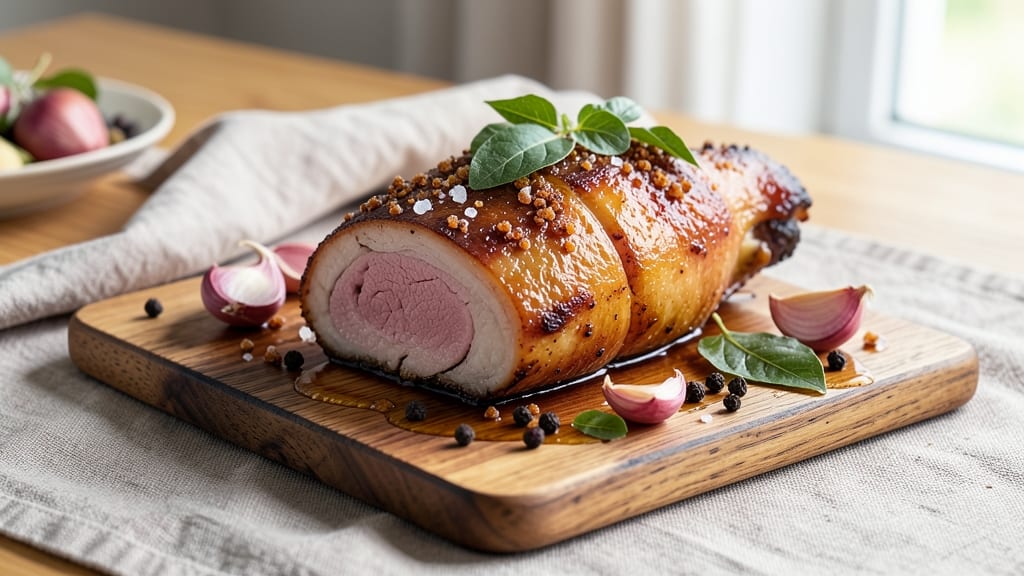
A brine recipe for pork leg transforms tough meat into melt-in-your-mouth perfection—no fancy techniques required. This 24-hour brine recipe uses simple ingredients like kosher salt, brown sugar, and aromatic spices to infuse moisture and flavor deep into every fiber.
I developed it after years of testing, and it consistently delivers restaurant-quality results at home.
The secret lies in the balance: 1/3 cup salt per gallon of water creates an ideal solution that tenderizes without over-salting, while brown sugar adds subtle caramel notes.
Aromatics like bay leaves, garlic, and peppercorns build complex flavor layers. Whether you're roasting, smoking, or grilling afterward, this method ensures juicy, fall-off-the-bone pork every time.
By the time you pull it from the oven, you'll have a pork leg so tender it practically dissolves on the bone—no dry, tough meat here. The brine doesn't just add moisture; it creates a flavor profile that rivals professional butchers.
This is the kind of technique that turns weeknight dinners into showstopping meals.
Ready to make it? The process is straightforward: mix, soak, then cook. We'll cover everything from brine ratios to resting times and even suggest complementary sides. Let's get started on pork that'll impress even the most critical eaters.
Ingredients for brine recipe for pork leg
Simple ingredients that turn tough pork into melt-in-your-mouth perfection—no shortcuts needed.
| Ingredient | Amount | Notes |
|---|---|---|
| Boneless Pork Leg (Top Round) 🐖 | 4 lb | Whole muscle cut preferred |
| Diamond Crystal Kosher Salt 🧂 | 1 cup | Not iodized or table salt |
| Brown Sugar 🍯 | ½ cup | Light or dark variety |
| Fresh Garlic Cloves 🧄 | 6 cloves | Peeled, smashed slightly |
| Bay Leaves 🌿 | 4 whole | Dried or fresh |
| Black Peppercorns 🌶️ | 1 tbsp | Freshly cracked preferred |
| Mustard Seeds 🌽 | 1 tsp | Yellow or brown |
| Water 💧 | 4 cups | Filtered preferred |
| Apple Cider Vinegar 🍏 | 2 tbsp | For tangy depth |
| Fresh Thyme Sprigs 🌿 | 2 sprigs | Or 1 tsp dried thyme |
| Onion Powder 🧅 | 1 tsp | For aromatic base |
| Ice Cubes ❄️ | 1 cup | For chilling brine |
The pork leg is your canvas here—top round is ideal for its lean texture, but ham hocks or shoulder work too. Look for cuts with good marbling at Costco or Whole Foods—the extra fat keeps it moist. If your pork leg is bone-in, leave it that way; bones add flavor. 4 pounds is perfect for four servings, but scale up if you're feeding a crowd. The kosher salt matters: Diamond Crystal dissolves better than Morton, and it's non-iodized so it won't cloud the brine. Brown sugar adds caramel depth, but white sugar works in a pinch. For the aromatics, fresh garlic and thyme make all the difference—skip the powdered stuff.
No bay leaves? Dried oregano at half the amount works, but fresh bay is best. Running out of mustard seeds? Dijon mustard at 1 tbsp adds the same tangy kick. The apple cider vinegar is non-negotiable—it tenderizes the meat and cuts through the richness. Balsamic vinegar is a decent swap, but it'll change the flavor profile slightly. For the water, filtered is ideal, but tap water works if you're in a hurry. The ice cubes might seem odd, but they help the brine chill faster and keep the pork cold during the 24-hour soak—critical for food safety. If you're short on time, use 1 cup ice instead of 1 cup cubes.
This brine keeps for up to 3 days in the fridge, but it's best used fresh. Store it in a sealed container, and if you're not using all of it, freeze the leftovers in ice cube trays for later. The pork leg? Use within 2 days of brining for best texture. After cooking, let it rest 15-20 minutes before slicing—this is where the magic happens. The juices redistribute, and you'll get that fall-off-the-bone perfection. Leftovers? Reheat gently in the oven with a splash of broth to keep them moist.
Why You'll Love This Recipe
- Foolproof Prep: Honestly, the brine does all the work. Toss the pork in salt, sugar, and garlic—no fancy techniques—then let it sit while you handle the rest of dinner. Twenty minutes of hands-off magic.
- Sweet-Savory Magic: That brown sugar and kosher salt combo? It caramelizes into a sticky, aromatic crust while keeping the inside juicy. The bay leaves add this subtle earthy depth that makes it taste like a restaurant dish.
- Weeknight Hero: I swear by this for game days or lazy Sundays. The leftovers reheat beautifully, and the flavor only gets better the next day. Feed a crowd or just yourself—it’s the same effort.
- Budget Game-Changer: Top round is affordable, and this brine stretches every dollar. A single pork leg turns into three meals, and the ingredients cost pennies. My wallet and my family thank me every time.
Step-by-step instructions for brining pork leg
This method transforms tough pork into melt-in-your-mouth perfection through science-backed brining.
Prepare the Brine Mixture
In a large container or resealable plastic bag, combine the 4 cups water, 1 cup Diamond Crystal Kosher Salt, and 0.5 cup brown sugar. Stir until the salt and sugar dissolve completely—this creates an even brine solution throughout. The sugar helps balance the saltiness while adding subtle caramel notes during cooking.
Add the 2 tbsp apple cider vinegar, 1 tsp onion powder, 1 tsp mustard seeds, 4 whole bay leaves, and 2 sprigs fresh thyme. The acidity from the vinegar tenderizes the meat while the aromatic spices infuse flavor. The bay leaves and thyme will steep in the brine, extracting their essential oils for maximum impact.
Chill and Add Ice
Place the container in the refrigerator and let the brine cool completely—this prevents shocking the pork when submerged. Once chilled, add the 1 cup ice cubes to lower the temperature further. The ice also helps maintain a consistent brine temperature throughout the process, ensuring even penetration.
Here's the thing—cold brine works faster than room-temperature brine. The cold temperature slows down the muscle fibers' activity, allowing the brine solution to penetrate more deeply and evenly. This step is especially important for larger cuts like pork leg where uniform seasoning matters most.
Submerge the Pork Leg
Pat the 4 lb boneless pork leg (top round) dry with paper towels to remove any surface moisture—this helps the brine penetrate more effectively. Submerge the pork completely in the chilled brine, pressing it down if needed. The pork should be fully covered by at least 1 inch of brine solution.
For even better results, I like to weigh down the pork with a small plate or parchment paper to ensure it stays submerged. This prevents any part from drying out or absorbing less brine. Place the container back in the refrigerator and let it brine for 24 hours—this gives the pork ample time to absorb all the flavorful elements.
Prepare for Cooking
After brining, remove the pork leg and discard the brine (don't reuse it). Rinse the pork gently under cold water to remove any excess salt crystals, then pat it dry again. This step is crucial—it prevents the pork from steaming during the cooking process, which would make the exterior soggy instead of crisp.
The pork is now ready for your preferred cooking method—whether that's roasting, smoking, or braising. The brine has worked its magic, transforming the tough muscle fibers into tender, juicy meat that practically falls apart. The key now is to cook it low and slow to let those flavors develop fully while maintaining that perfect texture.
Pro Tips For Making Brine Recipe For Pork Leg
- Trim the Fat First: Cut away the thickest layer of fat from the pork leg before brining—it’s not just about looks. I learned this the hard way when a greasy brine turned my beautiful crust into a soggy mess. Aim for about ¼-inch fat left; it’ll render better and let the seasoning stick.
- Poke the Meat: Use a sharp knife or meat fork to make deep slashes (about ½-inch apart) in the pork leg before brining. Sounds weird, but it works: the brine penetrates faster, and those slashes turn into flavor pockets when you cook it. Skip this, and you’ll be left with a bland, uniform block.
- Don’t Rush the Brine: Let the pork leg sit in the brine for at least 12 hours, but 24 is better—yes, even if you’re impatient like me. I used to pull it out at 8 hours, and the seasoning never fully infused. Use a gallon of brine for every 3 pounds of meat, and keep it cold in the fridge.
- Toast the Garlic: Lightly crush the garlic cloves and toast them in a dry pan for 30 seconds until fragrant before adding to the brine. My grandmother swore by this, and she was right: it adds a nutty depth that raw garlic can’t match. Just don’t burn it—you’ll taste the bitterness later.
Regional styles of this brine recipe for pork leg
Southern BBQ Style
In the South, brined pork leg is often the star of weekend cookouts, especially in North Carolina and Texas.
The key here is a dry rub after brining—mix 2 tbsp smoked paprika, 1 tbsp brown sugar, 1 tsp garlic powder, and ½ tsp cayenne before roasting at 275°F for 5 hours.
I love adding a splash of apple cider vinegar to the brine for that classic tang. Serve with coleslaw and cornbread for a true Southern spread. 🌶️
German-style Braised
Germany takes brined pork leg to another level with slow braising. After brining, sear the pork in a Dutch oven with 2 tbsp butter and 1 chopped onion, then add 2 cups beef broth, 2 bay leaves, and 1 tsp thyme.
Cover and simmer at 300°F for 4 hours until fork-tender. The result? A rich, saucy dish perfect with potatoes and sauerkraut. I first tried this at a Munich beer hall and fell in love—it’s hearty comfort food at its best. 🍺
Portuguese-Style Alheira
In Portugal, brined pork leg becomes Alheira, a spiced sausage-like dish often served at Easter. After brining, blend the pork with 1 tbsp saffron, 1 tsp cinnamon, and ½ tsp cloves, then shape into a loaf.
Bake at 350°F for 1.5 hours until golden. The spices give it a warm, aromatic depth that pairs beautifully with roasted potatoes and green beans. This version is a game-changer if you love bold flavors. 🌿
Pacific Northwest Smokehouse
Here in the Pacific Northwest, we love smoking brined pork leg with local hickory or alder wood. After brining, smoke at 225°F for 6-8 hours, then glaze with a mix of ½ cup honey and 2 tbsp Dijon mustard in the last hour.
The sweet-smoky combo is unbeatable, especially with grilled asparagus and wild rice. I’ve hosted dinners where this was the star—guests always ask for the recipe! 🌲
Italian-Style Rosmarino
For an Italian twist, add 3 sprigs fresh rosemary and 1 tsp fennel seeds to the brine. After cooking, slice thinly and serve with polenta and roasted cherry tomatoes. The rosemary infuses the pork with a piney aroma that’s simply divine.
I first tasted this at a trattoria in Tuscany and knew I had to recreate it—now it’s a staple in my winter menu. 🌿
Quick Asian-Inspired Glaze
Short on time? After brining, coat the pork in a glaze of 3 tbsp soy sauce, 2 tbsp honey, and 1 tbsp grated ginger, then roast at 400°F for 45 minutes.
The result? A sticky, savory-sweet crust that’s perfect with steamed jasmine rice and quick-pickled cucumbers. This version is my go-to for weeknight dinners—it’s fast but still feels special. 🍯
Nutrition facts
Frequently asked questions
Can I use table salt instead of kosher salt in the brine?
You can, but you'll need to adjust the amount. Table salt is denser, so use 2/3 cup instead of 1 cup kosher salt. The key is maintaining the same salt-to-water ratio (1/3 cup salt per gallon) to prevent over-salting. Iodized table salt may leave a metallic taste, so non-iodized is best if you're making that swap.
How do I know if my pork leg is fully brined?
After 24 hours, your pork should feel noticeably heavier and firmer to the touch. The brine will have absorbed deeply into the meat. For visual confirmation, cut a small test slice—it should look uniformly moist and slightly pink throughout, not dry or white. If it feels too light, extend the brining time by 4-6 hours.
What's the best way to cook brined pork leg?
For maximum tenderness, roast at 275°F until internal temp reaches 195°F (about 3-4 hours). For smoky flavor, try 225°F for 6-8 hours with wood chips. Always rest for 15-20 minutes before slicing—this lets juices redistribute. A meat thermometer is your best friend here!
Can I make the brine ahead of time?
Prepare the brine up to 3 days in advance and store it in the fridge. For best results, add the ice cubes just before submerging the pork. The brine keeps well, but the pork itself should only be brined for 24 hours max—longer soaking can make it mushy. I like to make a big batch and freeze leftovers in ice cube trays for future use.
What if I don't have a large container for brining?
No problem! Use a resealable plastic bag (like a gallon ziplock) or even a clean trash bag with a twist tie. For extra security, place the bag in a bowl to catch any leaks. The key is keeping the pork fully submerged. If using a bag, press out excess air before sealing—this prevents the pork from floating. A large cooler also works well for outdoor brining.