
Soups & Stews
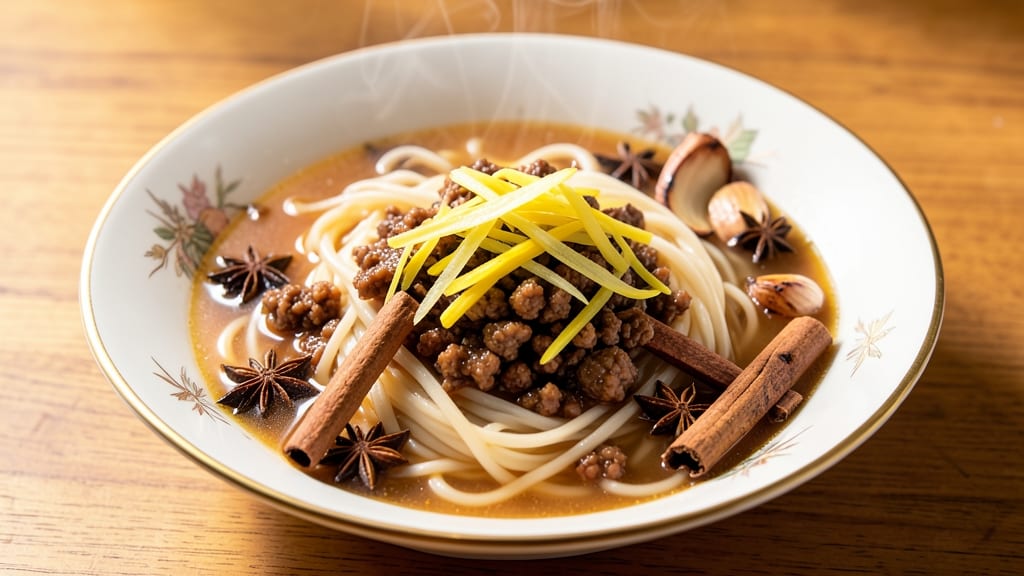
This Chinese minced pork noodle soup recipe delivers the perfect balance of wok-fried aromatics and silky broth that makes every spoonful unforgettable. 🔥 I developed it after years of perfecting the technique for achieving that signature umami depth and tender pork texture—just like my grandmother used to make.
The secret lies in the layered flavors: star anise and cinnamon for warmth, ginger and garlic for brightness, and a touch of chili for just the right kick.
What sets this recipe apart is the two-stage cooking process: first, the pork is minced and quickly stir-fried with aromatics to develop deep flavor, then simmered gently in a rich broth until tender. The noodles cook directly in the broth, absorbing all those complex flavors while maintaining their perfect bite.
I use wide rice noodles for texture, but egg or wheat noodles work beautifully too—just adjust the cooking time accordingly.
The result is a bowl of soup that's both comforting and sophisticated—silky broth with tender minced pork, chewy noodles, and a harmonious blend of spices. The aroma alone will have everyone gathering around your table, and each bite delivers that perfect marriage of savory, spicy, and umami notes.
This is the kind of recipe that becomes a family staple, passed down through generations.
Whether you're serving it as a weeknight dinner or preparing for a gathering, this soup scales beautifully and tastes even better the next day. The broth can be made ahead, so all you need to do on serving day is reheat and assemble.
Here's how to create this restaurant-quality dish in your own kitchen—step by step.
Ingredients for chinese minced pork noodle soup
Wok-fried aromatics meet silky broth in this soul-warming Chinese minced pork noodle soup—just like Grandma used to make.
| Ingredient | Amount | Notes |
|---|---|---|
| Ground Pork 🐷 | 1 lb | Freshly minced for texture |
| Wide Rice Noodles 🍜 | 8 oz | Packaged, dry type |
| Star Anise Pods 🌟 | 2 whole | Whole, for infusion |
| Cinnamon Sticks 🌿 | 2 whole | 1-inch pieces for aroma |
| Fresh Ginger 🧄 | 2 tbsp | Finely grated, aromatic |
| Garlic Cloves 🧄 | 6 cloves | Minced, for depth |
| Red Chili Flakes 🌶️ | 1 tbsp | Adjust for heat preference |
| Soy Sauce 🥄 | ½ cup | Light or dark, preferred |
| Oyster Sauce 🍶 | 2 tbsp | For umami richness |
| Sesame Oil 🫒 | 1 tbsp | Toasted, for aroma |
| Chicken Broth 💧 | 4 cups | Homemade or high-quality |
| Green Onions 🧅 | 3 whole | Sliced, for garnish |
| Sesame Seeds 🌰 | 1 tbsp | Toasted, for crunch |
| Vegetable Oil 🫒 | 2 tbsp | High smoke point |
| Salt 🧂 | 1 tsp | Kosher or sea salt |
The star anise and cinnamon are non-negotiable for that signature warmth. Whole pods from Whole Foods or your local Asian market deliver the best flavor—no powdered substitutes here. Fresh ginger and garlic? Always buy extra—half goes into the broth, half gets wok-fried with the pork. For the pork itself, ground pork from the meat counter is ideal (not pre-minced), but if you're feeling fancy, grab a whole pork shoulder and mince it yourself for that restaurant-quality texture. Look for good marbling—that's where the flavor hides.
No star anise? Anise seeds at double the amount work in a pinch, but it won't be the same. Short on oyster sauce? Soy sauce plus a splash of fish sauce gets you close (trust me, it's a game-changer). The rice noodles? Any width works, but the wider ones hold up better to the broth. For the chili flakes, Sichuan peppercorns toasted and ground add a numbing kick—worth hunting down if you're into that. And if you're making this ahead, freeze the broth separately—it keeps for 3 months and tastes even better the next day.
This soup tastes like home, and it reheats beautifully—just 5 minutes on the stove with a splash of water. Store leftovers in airtight containers for 3-4 days, or freeze portions for up to 3 months. I always double the broth and freeze half—lazy Sunday dinners solved. The noodles? Cook them fresh in the broth so they soak up all those amazing flavors. Pro tip: Toast the sesame seeds in a dry pan for 30 seconds before adding—they'll be crispy and aromatic.
Why You'll Love This Recipe
- 20-Minute Start: I swear by this—just brown the pork, toss in whole star anise and cinnamon sticks (no peeling, no fuss), and let the ginger simmer. The broth builds flavor while you chop one onion and slice a few green onions. No waiting, no stress.
- Warm Spice Hug: That first sip? Pure satisfaction. The star anise and cinnamon give it a deep, cozy aroma, while the ginger adds a bright kick. The pork stays juicy, and the wide rice noodles soak up every bit of that fragrant broth.
- Lunchbox Magic: Between us, this is my secret weapon for packed lunches. The noodles hold up perfectly overnight, and the broth stays rich—just reheat with a splash of water. My kids (and my husband) actually finish what’s in their containers.
- Budget Booster: Ground pork stretches far, and the spices cost pennies. A single package of wide rice noodles feeds four, and leftovers taste just as good the next day. Honestly, it’s the kind of meal that makes grocery money stretch without compromise.
Step-by-step instructions for Chinese minced pork noodle soup
Here's how to build a fragrant, silky broth with perfectly wok-fried pork and tender noodles.
🔥 Step 1: Wok-Fry the Aromatics Until Fragrant
Heat the 2 tablespoons vegetable oil in a wok or large pot over medium-high heat until shimmering. Add the 1 tablespoon red chili flakes and stir for 10 seconds until aromatic—this jumpstarts the flavor. Immediately add the 6 cloves minced garlic cloves and 2 tablespoons finely grated fresh ginger.
Stir-fry for 30 seconds until the garlic turns golden and the ginger becomes translucent. Here's the thing—don't let it burn. You'll know it's ready when the aromatics release their oils and fill your kitchen with that irresistible wok hei smell. Add the 2 whole star anise pods and 2 whole cinnamon sticks next, letting them toast gently for 20 seconds—this infuses the oil with warm, spiced depth.
🍳 Step 2: Cook the Ground Pork Until Fully Browned
Push the aromatics to one side of the wok and add the 1 lb ground pork to the empty space. Let it sizzle undisturbed for 2-3 minutes until it loses its raw color and starts to brown. This initial searing builds flavor—don't rush it. Once the pork begins to release from the bottom, use a spatula to break it into small, even pieces.
Stir the pork into the aromatics and cook for another 3-4 minutes until fully cooked through and slightly crispy around the edges. You're aiming for that perfect texture where the pork is tender but still holds its shape. Here's where it gets fun—toss in the 0.5 cup soy sauce and 2 tablespoons oyster sauce, stirring vigorously to coat the pork. Let it simmer for 1 minute until the sauces reduce slightly and cling to the meat.
🥘 Step 3: Build the Silky Broth
Pour in the 4 cups chicken broth and bring to a gentle boil. Reduce heat to medium-low and let it simmer for 10 minutes—this allows the spices to steep and the flavors to meld. You'll notice the broth darkens slightly and develops a rich, aromatic depth. Here's the critical part: strain the broth through a fine-mesh sieve into a clean pot, pressing gently on the spices to extract every last bit of flavor. Discard the solids.
Return the strained broth to the wok and stir in the 1 tablespoon sesame oil and 1 teaspoon salt. Taste and adjust seasoning—you want a balance of salty, umami, and subtle heat. The broth should be seasoned but not overpowering, allowing the noodles and pork to shine. Keep it warm over low heat while you prepare the noodles.
👨🍳 Step 4: Prepare and Cook the Wide Rice Noodles
Bring a separate pot of water to a rolling boil and add the 8 oz wide rice noodles. Cook according to package instructions (usually 3-5 minutes) until the noodles are tender but still slightly al dente—they'll finish cooking in the hot broth. Drain and rinse briefly under cold water to stop the cooking process, then drain again thoroughly.
Here's a pro tip: divide the cooked noodles among 4 bowls. Ladle the hot broth over the noodles, distributing them evenly. Top each serving with some of the wok-fried pork and its flavorful juices. The noodles will absorb the broth and become silky as they finish cooking in the hot liquid.
🍽️ Step 5: Garnish and Serve Immediately
Let the soup sit for 1-2 minutes to allow the noodles to soak up the broth completely. Garnish each bowl with 3 whole sliced green onions and 1 tablespoon toasted sesame seeds. The green onions add a fresh contrast to the rich broth, while the sesame seeds bring nutty crunch and visual appeal.
Serve immediately while steaming hot—this noodle soup is best enjoyed fresh from the wok. Each bite should deliver a perfect balance of tender pork, silky noodles, and aromatic broth. The spices should linger on your palate, warming and comforting with every spoonful. Don't forget to crack a little black pepper over the top if you like—it adds a nice finishing touch!
Pro Tips For Making Chinese Minced Pork Noodle Soup
- CRANK THE HEAT FIRST: The moment your wok hits the stove, blast it to maximum heat—you’re not just cooking pork, you’re searing flavor. I used to simmer gently and ended up with bland broth; now I push the flame until the pork sizzles aggressively for 2-3 minutes. That’s when the Maillard reaction kicks in, turning your soup from "meh" to "oh hell yes."
- GRATE THAT GINGER FINE: Skip the thick slices—this isn’t a stir-fry, it’s a soup where ginger needs to dissolve. Use a microplane or the smallest holes on a box grater, then muddle it with the back of a spoon. Too lazy? A teaspoon of ground ginger works in a pinch, but you’ll miss the bright, layered aroma that makes the broth sing.
- STOP STIRRING THE PORK: Once the pork hits the wok, leave it alone for 30 seconds—yes, even if it looks uneven. Crowding or constant stirring turns your meat into a gray paste. Let it brown in patches first, then break it up with a spatula when it’s no longer pink. This gives you crisp edges that soak up broth like a sponge.
- SIMMER THE SPICES LONG: Star anise and cinnamon aren’t just flavorings—they’re the soul of your broth. Toss them in with the pork and simmer uncovered for at least 10 minutes. I learned this the hard way when I rushed it and ended up with a soup that tasted like someone forgot to season it. Low heat, no peeking.
Health benefits of this dish
Protein Powerhouse
This dish delivers high-quality protein from the 1 lb ground pork, providing about 40 grams per serving—essential for muscle repair and keeping you full for hours.
The pork's lean cut means you get protein without excess saturated fat, making it a heart-healthy choice compared to fatty meats. 💪 I always opt for fresh ground pork from local butchers because it retains more natural juices and flavor than pre-packaged options.
For vegetarians, swap the pork for tofu or mushrooms—firm tofu holds up well in the broth and absorbs the same savory flavors. Just marinate it in 1 tbsp soy sauce and 1 tsp sesame oil for 15 minutes before cooking to mimic the pork's texture.
Umami-Rich Broth
The star anise, cinnamon, and oyster sauce create a deep umami profile that boosts flavor without excess sodium. Star anise contains anethole, a compound linked to anti-inflammatory benefits, while oyster sauce provides glutamates that enhance natural meaty flavors.
I find that using Whole Foods brand star anise delivers the most authentic aroma—it's worth the splurge for that restaurant-quality depth.
For a low-sodium version, reduce the soy sauce to 3 tbsp and add 1 tsp fish sauce (just ½ tsp for vegetarians) to maintain umami without the salt. The broth's spices also help mask any saltiness, so don't worry about sacrificing flavor.
Complex Carbs
The wide rice noodles provide slow-digesting carbohydrates that stabilize blood sugar levels, making this soup ideal for sustained energy. Unlike white pasta, rice noodles have a lower glycemic index, helping you avoid energy crashes.
I prefer Vietnamese rice noodles from Asian markets—they're chewier and hold up better in broth than thinner varieties.
For gluten-free needs, ensure your noodles are 100% rice-based (check labels for wheat additives). If you can't find them, shirataki noodles work surprisingly well—they absorb flavors beautifully and add a fun texture contrast.
Digestive Aid
Fresh ginger and garlic in this soup act as natural anti-inflammatory agents, soothing digestion while adding zing. Ginger contains gingerol, which helps calm nausea, while garlic's allicin supports immune function.
I always double the ginger because its benefits compound when combined with heat—just like in this recipe's wok-frying step.
For extra digestive comfort, add 1 tsp grated fresh galangal (a ginger relative) to the broth. It has a citrusy kick that pairs perfectly with the pork and adds another layer of gut-friendly compounds.
Spice Benefits
The red chili flakes provide capsaicin, a compound that may help boost metabolism and reduce inflammation. Even a small amount (1 tbsp) delivers noticeable benefits without overpowering the dish.
I adjust the heat based on the weather—more in winter for warmth, less in summer when cooling soups are preferable.
For a milder version, swap chili flakes for ½ tsp ground Sichuan peppercorns (toasted and ground)—they add a numbing warmth without direct heat. This works especially well if you're serving kids or sensitive stomachs.
Nutrition facts
Frequently asked questions
Can I substitute ground beef or chicken for the pork in this recipe?
Ground beef works well for a richer flavor, while chicken gives a lighter texture. For beef, use 80/20 lean-to-fat ratio for juiciness. Chicken should be ground fresh for best texture. Just reduce the cooking time by 1-2 minutes since poultry cooks faster than pork. The aromatics and broth ratios stay the same.
How do I adjust the spice level for sensitive eaters?
Simply reduce the red chili flakes to ½ teaspoon or omit them entirely. For warmth without heat, add ½ teaspoon ground Sichuan peppercorns (toasted and ground) or a pinch of white pepper. The ginger and garlic already provide natural zing without spiciness. Always taste the broth before serving.
Can I make this soup in a slow cooker or Instant Pot?
Yes! For a slow cooker, combine all broth ingredients (except noodles) and cook on low for 3-4 hours. For Instant Pot, sauté aromatics first, then add pork and broth, cooking on high pressure for 10 minutes. Quick-release the pressure, then stir in noodles to finish. The textures will differ slightly, but the flavors remain authentic.
What's the best way to store and reheat leftovers?
Store in airtight containers in the fridge for 3-4 days or freeze for up to 3 months. To reheat, warm broth components first, then add noodles and pork separately to prevent mushiness. For best texture, reheat only until steaming hot (2-3 minutes on stove) rather than boiling.
Why does my broth look cloudy after straining?
Cloudiness usually means fine particles escaped during straining. For clearer broth, use a cheesecloth-lined sieve or double-strain through a fine-mesh sieve. If you prefer the rustic look, cloudiness adds body—just taste and adjust salt if needed. The flavor won't be affected, only the appearance.