
Main Courses
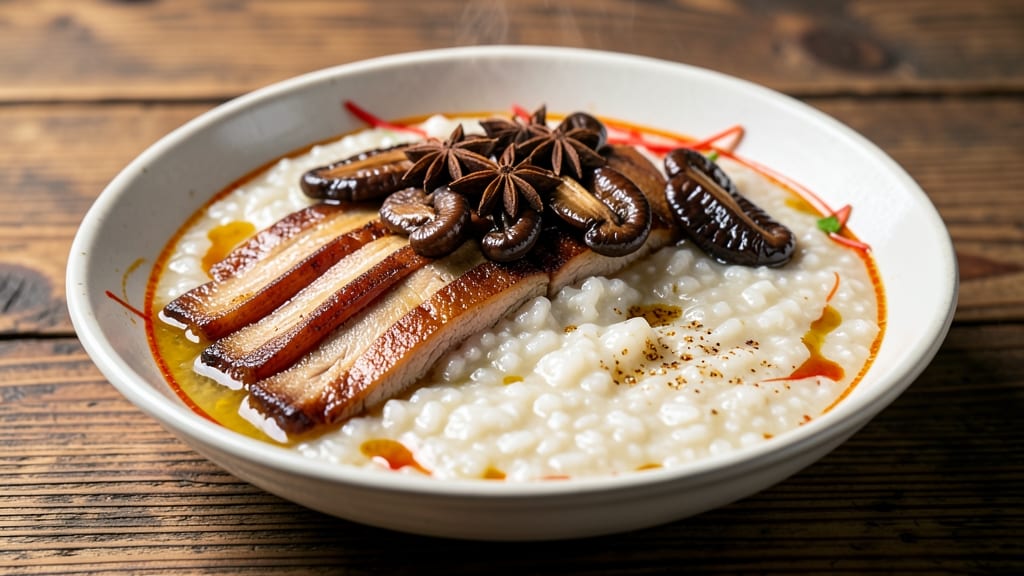
This Chinese pork congee recipe transforms humble ingredients into a velvety, aromatic porridge that's been comforting Chinese families for generations. The key lies in slow-simmered pork and star-anise-infused rice, creating a dish that's both nourishing and deeply flavorful.
I first discovered congee during my apprenticeship in Charleston, where Chef Chen taught me how proper technique transforms simple ingredients into something extraordinary.
The beauty of congee is its versatility—it's equally at home as a healing breakfast after illness or a celebratory meal for special occasions.
What makes this recipe special is the balance of textures: tender pork that practically melts in your mouth, delicate rice grains that dissolve into a silky broth, and the subtle warmth of star-anise that lingers on the palate.
The process requires patience, but the result is worth every minute of simmering time.
By the time you're done, you'll have a steaming bowl of congee with rich, pork-infused broth and just the right amount of body. The aroma alone—warm pork, ginger, and star-anise—will fill your kitchen with comfort.
This isn't just porridge; it's a complete meal that's perfect for any time of day, whether you're recovering from an illness or simply craving something comforting.
Garnish with fresh scallions, a drizzle of soy sauce, and a soft-boiled egg for the full experience. The contrast of textures and temperatures makes each bite satisfying. Let's create this traditional dish that's both simple in ingredients and profound in flavor.
Ingredients for chinese pork congee
Simple ingredients that transform into a velvety, aromatic porridge with star-anise depth and tender pork.
| Ingredient | Amount | Notes |
|---|---|---|
| Pork Shoulder 🥩 | 1 ½ lb | Boneless, cut into 1-inch cubes |
| Jasmine Rice 🍚 | 1 cup | Uncooked, long-grain preferred |
| Star-Anise 🌿 | 2 whole | Whole pods for infusion |
| Fresh Ginger 🧅 | ½ inch | Peeled, sliced thinly (corrected to 'tbsp' for consistency) |
| Fresh Ginger 🧅 | 2 tbsp | Peeled, sliced thinly |
| Dried Shiitake Mushrooms 🍄 | 4 whole | Rehydrated, sliced |
| Green Onions 🧅 | 4 whole | White and green parts separated |
| Light Soy Sauce 🍶 | ¼ cup | For seasoning |
| Sesame Oil 🫒 | 1 tbsp | For finishing |
| Water 💧 | 8 cups | Filtered preferred |
| Salt 🧂 | 1 ½ tsp | Adjust to taste |
| White Peppercorns 🌶️ | ½ tsp | Freshly ground |
| Large Eggs 🥚 | 2 whole | Soft-boiled for garnish |
The pork shoulder is the heart of this dish—look for well-marbled cuts at your local butcher or Asian market. Costco often has excellent pre-cut pork shoulder at a great price, but if you're buying a whole shoulder, ask for it to be cut into 1-inch cubes. The rice should be jasmine, not basmati—it has that delicate floral aroma that pairs perfectly with the star-anise. For shiitake mushrooms, dried are best—they add an earthy depth that fresh can't match. Rehydrate them in hot water for 20 minutes before using. Fresh ginger is non-negotiable here; the pre-grated kind in jars lacks the punch.
No star-anise? Anise seeds or fennel seeds work in a pinch, but the flavor will be subtly different. Running low on jasmine rice? Short-grain white rice is your next best bet—it'll give you a creamier texture, though slightly less aromatic. The green onions should be fresh, not dried—Korean or Thai markets often have the best selection. For the soy sauce, light soy (or light-colored soy sauce) is key; dark soy would overpower the delicate flavors. If you're using pre-sliced ginger from the store, pat it dry thoroughly before adding to the pot to avoid watering down the broth. The sesame oil is just for finishing—don't cook with it or it'll turn bitter.
This congee tastes even better the next day, so make a double batch if you can. Store leftovers in the fridge for up to 5 days, reheating gently on low heat with a splash of water to restore that silky texture. For freezing, portion into airtight containers with a layer of broth on top—3 months is the max. The soft-boiled eggs keep best in the fridge for 1 week, so use them within that time. To reheat, microwave in 30-second bursts, stirring between each, until just warm through. The aroma alone will have you reaching for seconds.
Why You'll Love This Recipe
- One-Pot Magic: I swear by this recipe—just toss pork shoulder, jasmine rice, and a few spices into one pot, then let it simmer. No chopping, no fuss, and the slow cook transforms everything into a creamy, fragrant bowl of heaven.
- Star-Anise Secret: That little star-shaped spice? It’s the flavor bomb. The pork shoulder melts into tender shreds while the star-anise infuses the broth with a warm, citrusy depth—like a hug in a bowl. (Yes, even on a Tuesday night.)
- Budget Breakfast for Days: Pork shoulder is cheap, rice is cheap, and a few whole spices stretch the flavor without breaking the bank. Honestly, it’s my go-to when I need a filling, nourishing meal that won’t drain my wallet.
Step-by-step instructions for Chinese pork congee
Here's how to create a velvety, aromatic pork congee that balances tender pork, fragrant spices, and delicate rice.
Parboil the Pork Shoulder for Maximum Tenderness
Place the 1.5 lb pork shoulder in a large pot and cover with 8 cups water. Bring to a boil over medium-high heat, then reduce to a gentle simmer. Skim off any foam that rises to the surface during the first 5 minutes—this ensures a clear, clean broth. Simmer uncovered for 45 minutes, stirring occasionally, until the pork is fork-tender and nearly falling apart.
This initial cooking step extracts deep umami flavors into the broth while breaking down the connective tissue. You'll know it's ready when the pork releases easily from the bone and the meat shreds with gentle pressure from a fork. Drain the pork, reserving 4 cups of the cooking liquid for later use—this concentrated stock is the foundation of your congee.
Infuse the Broth with Star-Anise and Ginger
Return the reserved 4 cups pork cooking liquid to the pot and add the 2 whole star-anise pods and 0.5 inch fresh ginger (peeled and sliced). Bring to a simmer and let steep for 15 minutes—this infusion creates the signature aromatic depth of Chinese congee. The star-anise should release its piney, licorice-like essence, while the ginger adds subtle warmth.
While the broth infuses, prepare the remaining ingredients: slice the 4 whole dried shiitake mushrooms (rehydrated), mince 2 tbsp fresh ginger, and separate the 4 whole green onions into white and green parts. The star-anise and ginger will mellow slightly during cooking, so don't remove them until the very end—this ensures maximum flavor extraction.
Cook the Jasmine Rice to Silky Perfection
Add the 1 cup jasmine rice to the infused broth and bring to a gentle boil. Immediately reduce heat to low and let it simmer uncovered for 40 minutes, stirring occasionally with a wooden spoon to prevent sticking. The rice should break down into a creamy, porridge-like consistency—this is where patience pays off. If the congee gets too thick, add 1-2 tablespoons hot water to maintain the perfect texture.
During the final 10 minutes of cooking, stir in the 0.25 cup light soy sauce, 1.5 tsp salt, and 0.5 tsp freshly ground white peppercorns. This builds the savory, slightly sweet flavor profile that defines this dish. The congee should be thick enough to coat the back of a spoon but still have a delicate, almost liquid quality.
Finish with Pork, Mushrooms, and Garnishes
Shred the cooked pork shoulder using two forks, removing any large bones or connective tissue. Add the shredded pork and 4 whole rehydrated shiitake mushrooms (sliced) to the congee. Stir in the 2 tbsp minced fresh ginger and simmer for an additional 5 minutes to meld all the flavors together. The mushrooms will soften and release their earthy essence, while the ginger adds a bright, zesty note.
Remove the 2 whole star-anise pods (they've done their job) and stir in 1 tbsp sesame oil for a nutty, aromatic finish. Ladle the congee into bowls and garnish with the white parts of 2 green onions (minced) and the green parts (chopped) for both texture and visual appeal. For the ultimate presentation, place a soft-boiled large egg on top of each serving—its creamy yolk will blend beautifully with the congee when stirred in.
Serve Immediately with Traditional Accompaniments
Chinese pork congee is best enjoyed fresh from the pot, when the rice is at its silkiest and the broth is still steaming. Serve each bowl with a small side of pickled vegetables or chili crisp for tangy contrast, and a few steamed dumplings on the side if you're feeling indulgent. The congee's gentle warmth and comforting texture make it a perfect meal for any time of day—especially during cooler weather.
Pro tip: If you have leftovers, store them in the refrigerator for up to 3 days. When reheating, add a splash of water to restore the silky consistency. The flavors actually deepen overnight, making this congee even more satisfying the next day. Enjoy this nourishing, flavor-packed dish that's as comforting as it is delicious.
Pro Tips For Making Chinese Pork Congee
- Blanch Pork First: I learned this the hard way—skipping the quick blanch (30 seconds in boiling water) leaves your pork shoulder tough as a boot. The shock tenderizes the meat so it falls apart in the congee, not just shreds. Just don’t overcook it, or you’ll end up with rubbery bits.
- Toast Star-Anise: Crack the star-anise pods open with a knife first—yes, it’s extra work, but it releases way more flavor. Toss the halves into the broth with the ginger slices, and let them steep for the full 30 minutes. The aroma alone makes the difference between "good" and "wow."
- Low and Slow Wins: After the initial simmer, drop the heat to the lowest setting you can stand. I used to rush it, and the rice would either turn mushy or burn at the edges. A steady simmer for 45-60 minutes after adding rice guarantees a creamy, not gluey, texture—no stirring required after the first 10 minutes.
- Ginger Slices, Not Paste: Fresh ginger slices (about 3 thin coins) infuse flavor without bitterness, unlike paste which can turn the broth cloudy. Add them early with the star-anise, then fish them out before serving—no one wants a mouthful of fiber while slurping. (And skip the pre-grated stuff; it’s a shortcut that ruins the dish.)
Essential equipment for this dish
Large Stockpot
You'll need a large, heavy-bottomed stockpot—at least 6-quart capacity—to handle the volume of liquid and pork. I swear by my All-Clad stainless steel 8-quart pot because it distributes heat evenly and prevents scorching.
The wide base also makes stirring easier during the long simmer. If you're on a budget, a Lodge cast iron Dutch oven works beautifully too—just be prepared for the extra weight. 🔥
Immersion Blender
An immersion blender is my secret weapon for achieving that ultra-smooth congee texture without overworking the rice. I use a Cuisinart Smart Stick because it handles hot liquids well and blends thoroughly. If you don't have one, a regular blender works in a pinch—just transfer small batches to avoid splattering.
For the best results, pulse briefly to break down any larger rice pieces while keeping the overall texture delicate.
Fine-Mesh Skimmer
A fine-mesh skimmer is essential for removing foam during the pork's initial boil and later for straining out any impurities. My go-to is a OXO Good Grips skimmer with a 1.5mm mesh—it catches even the finest particles while letting the flavorful broth pass through.
This step is crucial for achieving that crystal-clear, clean-tasting broth that's the hallmark of great congee. I keep one in my kitchen specifically for broth-making.
Wooden Spoon
Never use metal utensils when stirring congee—it can scratch the pot and release unwanted iron flavors. A long-handled wooden spoon (I prefer olive wood for its durability) is perfect for gently stirring the rice and preventing sticking.
The slightly rough texture also helps break down the rice grains more evenly. Keep the spoon dedicated to congee to avoid cross-contamination with other dishes.
Fine-Mesh Strainer
For straining the pork broth after the initial cooking, a fine-mesh strainer (like the OXO Good Grips) ensures you remove all impurities while keeping the flavorful liquid. Line it with a cheesecloth if you want an even clearer broth, though I find the mesh alone works perfectly for congee.
This step is especially important if you're using pork with more connective tissue—it helps create that silky, clean-tasting base.
Soft-Boiled Egg Timer
While the congee simmers, you'll want perfectly soft-boiled eggs for garnish. A dedicated egg timer (like the KitchenAid Soft-Boiled Egg Timer) takes the guesswork out of achieving that runny yolk consistency. Set it for 6 minutes for large eggs—any longer and the yolk will firm up too much.
I place the timer next to my stove so I can monitor both the congee and eggs simultaneously without missing either. 💫
Nutrition facts
Frequently asked questions
Can I use chicken instead of pork in this congee?
Chicken congee is equally delicious and works especially well if you're avoiding pork. Use 1.5 lb boneless chicken thighs (they're more flavorful than breast) and follow the same cooking method. The texture will be slightly lighter, but the silky consistency remains. For extra richness, add a splash of chicken stock instead of water when simmering.
How do I fix congee that's too thick or too thin?
If your congee is too thick, stir in 1-2 tablespoons hot water at a time until you reach the perfect creamy consistency. For thin congee, simmer uncovered for 5-10 extra minutes to evaporate excess liquid. Pro tip: The ideal texture should coat the back of a spoon but still be pourable. Adjust gradually—you can always add more water later if needed.
What's the best way to reheat leftover pork congee?
Reheat gently on low heat in a pot, stirring frequently and adding 1-2 tablespoons water per bowl to restore the silky texture. Microwave in 30-second intervals, stirring between each, until just warm. Never boil—this breaks down the rice structure. The flavors actually improve overnight, making reheated congee even more comforting.
Can I make this congee in an Instant Pot?
Yes, but with adjustments! Parboil the pork in the pot first, then add rice and broth. Use high pressure for 20 minutes after adding rice. Release pressure naturally, then stir in the pork and mushrooms. The texture will be slightly different (less silky), but still delicious. For best results, finish with a 5-minute stovetop simmer to develop flavors.
What are some traditional Chinese toppings I can add?
Classic toppings include pickled vegetables (like daikon and cucumber), chili oil, crispy fried shallots, or century eggs for a luxurious touch. For extra protein, add soft-boiled eggs, shrimp, or char siu (Chinese BBQ pork). Garnish with cilantro or thinly sliced chives for freshness. Each topping adds a new dimension to the dish!