
Soups & Stews
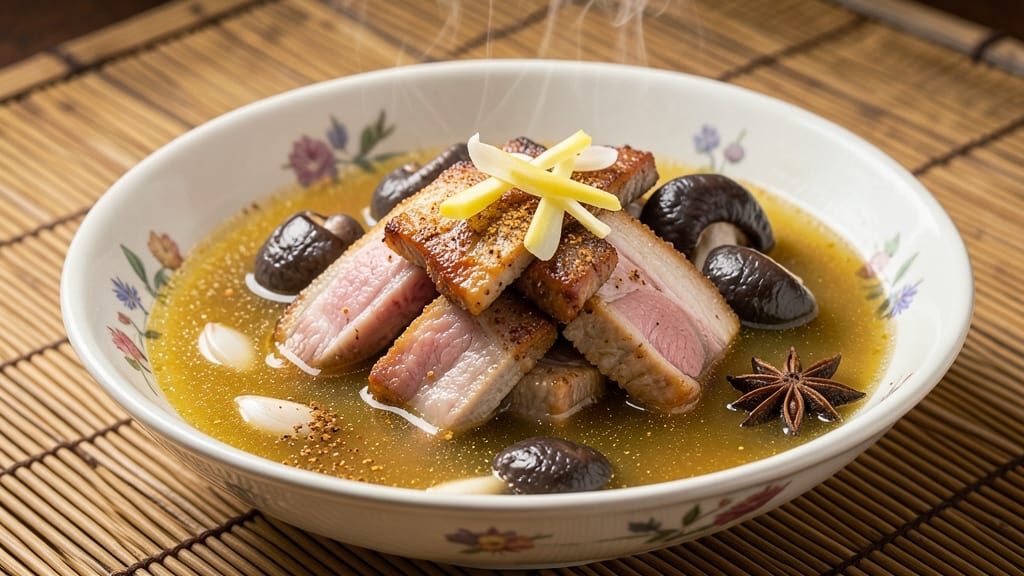
This Chinese pork broth recipe transforms humble ingredients into a fragrant, umami-rich foundation that defines Chinese home cooking. I remember the first time I tasted it in my grandmother's kitchen—steaming bowls of congee topped with tender pork and pickled vegetables, all built on this deeply flavorful broth. The secret lies in charring aromatics and simmering pork bones until they release their marrow, creating a broth so rich it needs no extra seasoning.
What sets this recipe apart is the balance of five-spice powder and star anise, which infuse the broth with warmth without overpowering its natural depth. We're talking 8 hours of slow simmering, but the process is hands-off—just layer the ingredients, let the flavors meld, and you'll end up with a liquid so complex it elevates any meal.
The key is patience; rushing this broth will leave you with something flat and one-dimensional.
This isn't just a broth—it's the heart of a meal. Use it to serve steamed dumplings, braised pork, or a simple bowl of rice.
The aroma alone will draw everyone to the table, and each sip reveals layers of savory, sweet, and slightly smoky notes. It's the kind of dish that gets better with each reheat, developing even more depth over time.
For those who want to take it further, I'll show you how to transform this broth into a complete meal with just a few additional ingredients. The beauty of this recipe is its versatility—it's equally at home in a quick weeknight dinner or a celebratory feast.
Let's get started on creating something that tastes like home.
Ingredients for chinese pork broth
Eight hours of simmering starts with these aromatic, umami-packed ingredients.
| Ingredient | Amount | Notes |
|---|---|---|
| Pork Bones 🍖 | 2 lb | Marbled for rich flavor |
| Fresh Ginger 🧄 | ½ cup | Peeled, sliced into 1-inch pieces |
| Garlic Cloves 🧄 | 12 cloves | Smashed for maximum aroma |
| Star Anise Pods 🌿 | 4 whole | Whole pods for easy removal |
| Five-Spice Powder 🌶️ | 1 tbsp | Authentic Chinese blend |
| Dried Shiitake Mushrooms 🍄 | 4 whole | Rehydrated for umami depth |
| Green Onions 🧅 | 2 whole | White and green parts separated |
| Cinnamon Sticks 🌿 | 2 whole | For subtle warmth |
| White Peppercorns 🌶️ | 1 tsp | Freshly cracked |
| Bay Leaves 🍃 | 2 whole | Dried for aromatic base |
| Light Soy Sauce 🥄 | 2 tbsp | For savory balance |
| Water 💧 | 8 cups | Filtered preferred |
| Sesame Oil 🫒 | 1 tbsp | Added at the end |
The pork bones are non-negotiable—look for marbled cuts from the butcher section, not pre-packaged chicken bones. Asian markets often have the best selection, but most grocery stores carry pork neck bones or knuckle bones. If you can't find marbled bones, use extra pork shoulder chunks instead. The ginger and garlic get charred in a dry pan first—this step unlocks their full flavor, so don't skip it. For the five-spice powder, Penzeys or King's Super Market carry authentic blends, but any Chinese grocery store will have better options than your average supermarket. The shiitake mushrooms should be dried—fresh won't give you that deep, earthy umami.
No star anise? Anise seeds work too, but star anise has that distinct licorice note that's essential here. Running short on soy sauce? Coconut aminos at half the amount gives a similar savory punch. The white peppercorns are key—they add warmth without overpowering. If you only have black pepper, use half the amount. For the sesame oil, Kadoya or La Choy are reliable brands, but any toasted sesame oil will work. The water should be cold—adding it hot can dilute the broth's intensity. And trust me, the extra 10 minutes to char the aromatics is worth it—it's the difference between good broth and restaurant-quality.
This broth tastes even better the next day, so make extra. It keeps for 5 days in the fridge or 3 months frozen. I like to freeze it in ice cube trays for easy portions—just pop out what you need for a quick meal. The aromatics can be removed after simmering, but save the star anise and five-spice powder for future batches. The broth reduces as it cools, so it's perfect for reheating—just add a splash of water to restore consistency. Store it in airtight containers with the lid slightly loose to prevent condensation buildup.
Why You'll Love This Recipe
- No-Chop Start: I swear by this—just toss in whole star anise pods and ginger slices. No peeling, no mincing, no fuss. The bones render all the magic on their own while I sip tea.
- Deep Umami Magic: That first spoonful? Rich, savory, with a whisper of five-spice warmth. The garlic and ginger caramelize into the broth, creating layers of flavor that turn simple rice into a meal.
- Weeknight to Party: Same broth, endless uses. Slurp it straight with dumplings on a Tuesday, or pour it over noodles for company. The star anise gives it that restaurant-quality depth without extra effort.
- Budget Goldmine: Pork bones are cheap, and this recipe stretches them into gallons. Freeze leftovers for future soups—my wallet and freezer both thank me. Honestly, it’s the kind of frugal luxury that makes me proud.
Step-by-step instructions for Chinese pork broth
Here's how to build a rich, aromatic broth that captures all the depth of Chinese cuisine.
Prep and Parboil the Pork Bones
Start by rinsing the 2 lb pork bones under cold water to remove any impurities. Place them in a large stockpot and cover with 8 cups water. Bring to a boil over high heat, then immediately reduce to a gentle simmer. Skim off any foam or scum that rises to the surface during the first 10 minutes—this ensures a clear, clean broth.
Simmer uncovered for 30 minutes to draw out impurities. The water should look cloudy at this stage—this is normal. After the initial boil, drain the water and rinse the bones again with fresh water. This step removes blood and surface proteins that can make the broth cloudy or bitter.
Build the Aromatic Base
Return the rinsed pork bones to the clean stockpot. Add the 0.5 cup fresh ginger (sliced), 12 smashed garlic cloves, 4 whole star anise pods, 1 tbsp five-spice powder, 4 rehydrated dried shiitake mushrooms, 2 whole cinnamon sticks, 1 tsp cracked white peppercorns, and 2 whole bay leaves. Pour in 8 cups fresh water to cover everything.
Bring the mixture to a boil over medium-high heat, then reduce to a gentle simmer. The broth should bubble softly—if it boils vigorously, it will become cloudy. Let it simmer uncovered for 2 hours, skimming any foam that rises. This slow simmer extracts maximum flavor from the bones and aromatics while keeping the broth clear.
Add Soy Sauce and Finish
After 2 hours, stir in the 2 tbsp light soy sauce. This adds a savory depth that balances the broth's natural richness. Continue simmering uncovered for another 1 hour, maintaining a gentle simmer. The broth should now have a deep amber color and a fragrant aroma—this is your signal that the collagen is breaking down and releasing gelatin.
Remove the broth from heat and let it sit for 10 minutes to allow any remaining impurities to settle at the bottom. Then, carefully strain the broth through a fine-mesh sieve into a clean pot, discarding the solids. The result should be a clear, golden liquid with layers of umami flavor.
Finish with Sesame Oil
Return the strained broth to the pot and warm it gently over low heat until just simmering. Off the heat, stir in 1 tbsp sesame oil and the white parts of the 2 green onions (finely chopped). The sesame oil adds a nutty aroma and balances the broth's depth, while the green onions contribute a subtle freshness.
Taste and adjust seasoning if needed—you might want to add a pinch more salt or a splash of soy sauce for balance. Serve the broth hot, garnished with the green parts of the green onions for color and freshness. This broth pairs beautifully with rice, noodles, or as a base for stir-fries.
Pro Tips For Making Chinese Pork Broth
- BLANCH BONES FIRST: I learned this the hard way—skip the blanch, and you’ll end up with cloudy broth. Parboil pork bones for 10 minutes in salted water to remove impurities, then rinse thoroughly. This step isn’t just about clarity; it cuts the bitterness that sneaks in later.
- SMASH GINGER, DON’T SLICE: Thin slices of ginger release flavor too slowly. Use the flat side of a cleaver or heavy pan to smash the ginger into a rough paste—this way, every drop of its oils infuses into the broth immediately. (Yes, it’ll look messy, but your broth won’t.)
- LOW AND SLOW AFTER BOIL: After the initial 30 minutes of simmering, drop the heat until you can barely see bubbles—just a few tiny ones breaking the surface. Too much heat turns collagen to mush instead of gelatin, and you’ll end up with a watery, flavorless mess. Patience here makes the difference.
- TOAST SPICES BEFORE ADDING: Star anise and five-spice powder taste like perfume when toasted first. Dry-toast them in a separate pan for 30 seconds until fragrant, then toss into the broth. This simple step keeps their flavors from dissolving into the background—your broth will taste deeper, not just present.
Make-ahead tips for this recipe
Broth Prep Timeline
Plan your broth-making around your schedule—this recipe takes 8 hours of hands-off simmering, but the work happens in stages. Start by prepping ingredients in the morning, then let the broth simmer while you're at work or running errands. The first 30 minutes of parboiling removes impurities, so don't skip it.
After that, the broth can sit uncovered on the stove at a gentle simmer all day. I often start mine at 9 AM and finish by 5 PM, with just 10 minutes of active work in between. 🕒
Storage Hacks
This broth gets better with age, so make a big batch and store it properly. For fridge storage, transfer to glass mason jars with airtight lids and let it cool completely before sealing. It keeps for 5 days in the fridge, but the flavor peaks after 24 hours.
For freezer storage, use quart-sized freezer bags—leave 1 inch of headspace since liquids expand when frozen. I like to freeze it in 1-cup portions for easy use in future recipes. Label with the date, as it stays good for 3 months in the freezer. ❄️
Reheating Secrets
Reheating broth properly maintains its clarity and depth. For stovetop reheating, use low heat and add ¼ cup water per quart to prevent scorching. Bring to a gentle simmer, then reduce heat to maintain temperature—never boil vigorously.
If using the microwave, heat in 1-minute intervals on 50% power, stirring between each interval. The broth should reach 165°F internally. For extra richness, add a splash of water or pork broth if it thickens too much during reheating. 🔥
Freezer-Friendly Portions
Portioning broth for the freezer saves time and prevents waste. Use ice cube trays for small portions—just pop out cubes as needed for quick meals. For larger batches, freeze in 1-cup or 2-cup portions in flat freezer bags.
Lay the bags flat in the freezer to save space, and label with the date. When ready to use, thaw overnight in the fridge or reheat directly from frozen using the stovetop method above. This method preserves the broth's texture and flavor better than reheating from a large block. 💫
Make-Ahead Meal Ideas
Use your pre-made broth to create complete meals with minimal effort. For congee, combine 1 cup broth with ½ cup rice and simmer for 30 minutes. Top with sliced pork, scallions, and a fried egg.
For noodle soup, add 2 oz fresh egg noodles and ½ lb braised pork to 4 cups broth. Simmer for 5 minutes and garnish with cilantro. The broth's depth elevates simple ingredients into a restaurant-quality meal. 🍜
Flavor Boost Tips
Enhance your broth's depth with these pro techniques. For extra umami, add 1 tbsp fish sauce or 1 tsp oyster sauce during the final 30 minutes of simmering. Need more richness? Add ½ cup pork belly chunks during the initial simmer—they'll render fat that infuses the broth.
For a smoky note, add 1 tsp toasted sesame seeds or a pinch of smoked salt at the end. These tweaks take your broth from good to extraordinary with minimal effort. 💡
Nutrition facts
Frequently asked questions
Can I substitute chicken or beef bones for pork?
While you can technically use chicken or beef bones, pork is ideal for this recipe because its natural fat content creates a richer, more flavorful broth. Chicken bones yield a lighter broth that lacks the deep umami pork provides, while beef bones require much longer simmering times (8+ hours) to break down properly. If you must substitute, use equal weight of pork shoulder chunks instead—they'll render fat that mimics pork bones' richness.
Why does my broth look cloudy even after skimming?
Cloudiness usually means one of two things: either you didn't skim aggressively enough during the first 30 minutes, or the broth boiled too vigorously after adding aromatics. The key is maintaining a gentle simmer—cloudiness comes from proteins and impurities breaking down too quickly. For extra clarity, strain through a cheesecloth-lined sieve after the initial simmer, then strain again through a fine-mesh sieve before serving.
How do I adjust this recipe for a pressure cooker?
Pressure cooking cuts the time dramatically! Start with the same prep steps, then add all ingredients to your pressure cooker with 8 cups water. Seal and cook on high pressure for 2 hours, then quick-release the pressure. Strain and finish with sesame oil as directed. The broth will be just as flavorful but ready in 2.5 hours total. Just be careful not to overfill—leave at least 1 inch of headspace to prevent clogging the valve.
What's the best way to use leftover broth?
This broth is incredibly versatile! Use it as a base for congee (rice porridge), stir-fry sauces, or braising liquids. For extra richness, reduce it by half to make a quick pork sauce—just add cornstarch slurry and simmer. It also freezes beautifully for future use. My favorite quick meal is egg drop soup: simmer 2 cups broth with beaten eggs, scallions, and a splash of soy sauce. The depth of flavor makes even simple dishes taste restaurant-quality.
Can I make this broth without five-spice powder?
Yes, but you'll lose that signature layered warmth. For a substitute, mix ½ tsp cinnamon, ¼ tsp cloves, ¼ tsp fennel seeds, and ¼ tsp black pepper—this mimics the balance of five-spice. If you can't find star anise, anise seeds work too, though they're slightly milder. The broth will still be delicious but will lack the complex aromatic profile that makes it truly authentic. For best results, track down an authentic five-spice blend from an Asian market.